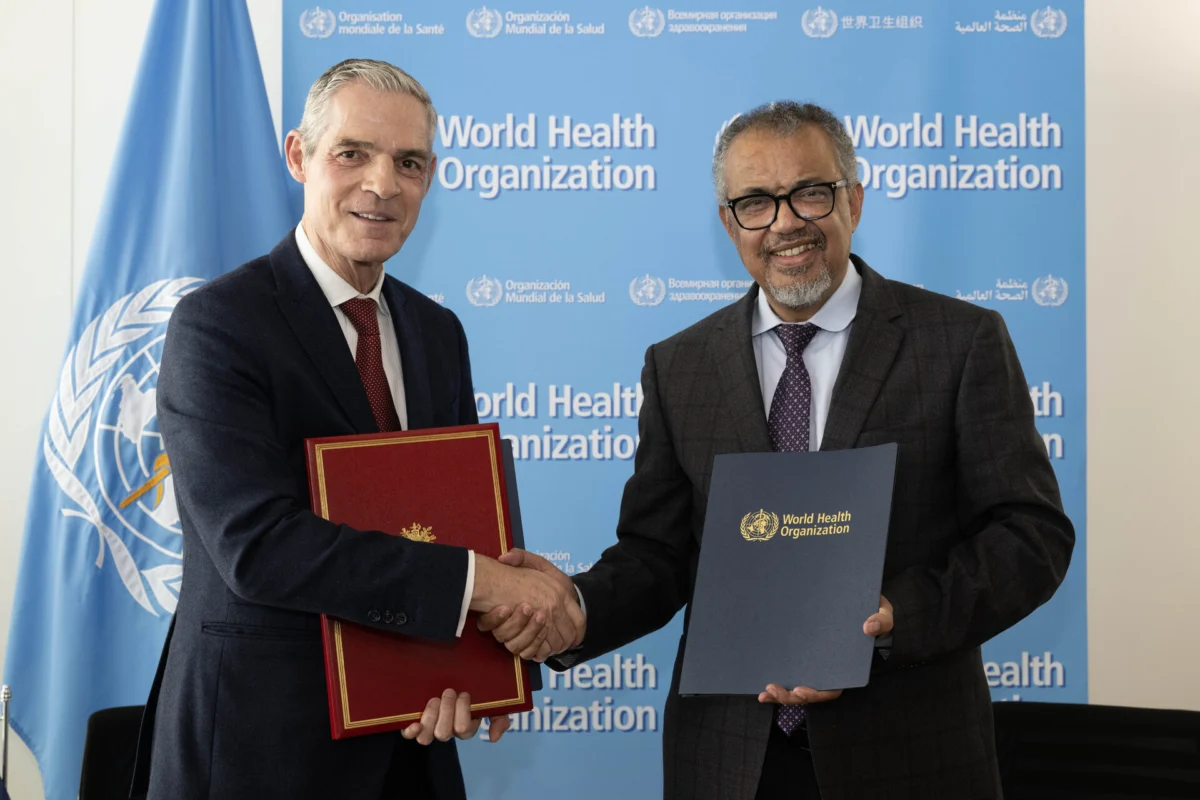
GENEVA — In a significant bolstering of international public health financing, the French government and the World Health Organization (WHO) formally concluded a sweeping funding package valued at €24 million. The official signing ceremony took place on the afternoon of October 17, 2024, at the global health agency’s headquarters in Geneva, Switzerland. His Excellency Mr. Jérôme Bonnafont, Permanent Representative of France to the United Nations and other international organizations in Geneva, met with WHO Director-General Dr. Tedros Adhanom Ghebreyesus to execute seven distinct contribution agreements.
This substantial financial injection originates from the French Ministry of Europe and Foreign Affairs. It operates directly under the umbrella of the overarching France–WHO Framework Agreement spanning from 2020 to 2025. This bilateral strategic instrument is designed to align French developmental and foreign policy priorities with the core normative objectives of the United Nations health agency, while concurrently establishing robust legal, administrative, and financial mechanisms required to operationalize complex international health collaborations.
Strategic Allocation of Funds: Flexibility Meets Emergency Response
A standout feature of the €24 million allocation is the inclusion of €4.5 million in fully flexible, unearmarked voluntary contributions directed into the WHO’s Core Voluntary Contributions Account (CVCA). Unlike strictly earmarked grants—which limit funds to predetermined diseases or regions—fully flexible resources are widely considered the gold standard of international aid. They allow the WHO leadership to swiftly deploy capital where it is most urgently needed, plug critical budgetary gaps, respond to sudden health crises without bureaucratic delays, and sustain foundational normative functions that might otherwise remain underfunded.
The remaining balance of the multi-million-euro package is strategically distributed across a broad spectrum of the WHO’s most pressing operational and programmatic priorities. These encompass structural long-term health initiatives as well as acute humanitarian interventions. Key beneficiaries of this tranche include:
- Non-Communicable Diseases (NCDs): Programs aimed at curbing the global rise of cardiovascular conditions, cancers, chronic respiratory diseases, and diabetes, which collectively account for the vast majority of global mortality.
- Urban Health Labs: Innovative hubs designed to tackle the unique health determinants, environmental stressors, and disease vectors present in rapidly expanding metropolitan areas across the globe.
- One Health Approach: Cross-sectoral initiatives recognizing the intrinsic interconnection between human health, animal health, and resilient ecosystems, particularly vital for preventing zoonotic spillover and antimicrobial resistance.
- WHO Contingency Fund for Emergencies (CFE): Rapid-disbursement funds that enable the WHO to initiate life-saving health interventions within 24 hours of a disease outbreak or humanitarian emergency declaration, long before traditional appeals generate donor funding.
- Targeted Humanitarian Crises: Specific funding allocations dedicated to bolstering the WHO’s ongoing medical responses in Gaza, managing severe cholera outbreaks in vulnerable regions, and delivering specialized mental health and psychosocial support services to populations affected by the conflict in Ukraine.
Furthermore, the agreements guarantee the continuation of critical financial support for the WHO’s specialized emergencies hub located in Lyon, France. The Lyon center serves as a pivotal operational node for global health security, playing an indispensable role in enhancing international epidemic preparedness, logistics, and rapid response capacities.
Chronology and Context of the France-WHO Partnership
To fully understand the weight of the October 17 agreements, it is necessary to examine the historical trajectory of cooperation between Paris and the Geneva-based health agency. France has historically maintained a robust multilateral posture, viewing the WHO not merely as a technical advisory body, but as the central anchor of global health governance.

The institutionalization of this partnership reached a major milestone with the establishment of the 2020–2025 Framework Agreement. Conceived during a period marked by the burgeoning COVID-19 pandemic, this framework streamlined how French development assistance integrates with global health mandates. Over the subsequent four years, French contributions have consistently targeted both structural health system strengthening and immediate crisis management.
In parallel with bilateral funding mechanisms, France has consistently positioned itself at the forefront of broader WHO reform efforts. Paris has been a vocal and financial advocate for transitioning the WHO away from its historical reliance on narrow, unpredictable voluntary contributions toward a more sustainable funding model. This includes championing increases in assessed contributions—the mandatory dues paid by member states—to provide the organization with predictable baseline revenues.
Moreover, France stepped forward as one of the key co-hosts of the WHO’s pioneering Investment Round, launched to mobilize predictable, flexible resources for the Fourteenth General Programme of Work (GPW 14) covering the 2025–2028 period. The GPW 14, which was officially adopted by the World Health Assembly in 2024, sets the strategic blueprint for global health priorities over the coming years, aiming to save millions of lives and address persistent health inequities worldwide.
Diplomatic and Institutional Reactions
The signing ceremony provided an opportunity for both high-ranking officials to articulate their shared vision for multilateral health cooperation and reaffirm their mutual dedication to global health security.
Ambassador Jérôme Bonnafont emphasized the philosophical and strategic underpinnings of his nation’s financial commitment during his remarks in Geneva. "France remains deeply committed to supporting the World Health Organization in its efforts to tackle critical global health challenges," Ambassador Bonnafont stated. "These agreements reflect our shared priorities of promoting health equity, responding to emergencies, and strengthening healthcare systems worldwide. In an era marked by converging crises, robust international cooperation is not merely an option; it is an absolute necessity."
Dr. Tedros Adhanom Ghebreyesus, Director-General of the WHO, expressed profound gratitude on behalf of the organization, highlighting the tangible impact that predictable funding has on vulnerable populations across the globe. "We are immensely grateful to the French Government for its steadfast support to WHO, continued partnership, and leadership in global health," Dr. Tedros remarked. "This contribution will enable us to address key health threats, from non-communicable diseases to emergency response, helping to save lives and protect the most vulnerable populations when they need it most."
Fact-Based Analysis of Implications for Global Health
The timing and composition of France’s €24 million contribution carry significant analytical implications for the broader landscape of international development and humanitarian aid.

First, the inclusion of a substantial unearmarked component (€4.5 million for the CVCA) addresses a long-standing structural vulnerability within the WHO. Historically, up to 80% or more of the WHO’s budget has been strictly earmarked by donors for specific diseases or regions. While earmarking ensures funding for favorite projects, it severely restricts the Director-General’s ability to pivot resources toward neglected crises, emerging pathogens, or administrative overhauls. By increasing flexible funding, France is directly empowering the WHO to exercise institutional agility.
Second, the multi-thematic distribution of the remaining funds underscores an increasingly holistic view of global health security. By simultaneously funding chronic conditions (NCDs), systemic frameworks (One Health and urban health), and acute flashpoints (Gaza, Ukraine, and cholera responses), the agreement acknowledges that modern health security cannot focus exclusively on pandemic response while ignoring endemic diseases and fragile healthcare infrastructure.
Finally, the continued backing of the Lyon emergency center reinforces decentralized operational readiness. As climate change, urbanization, and ecological degradation accelerate the frequency of zoonotic spillovers and extreme weather events, having prepositioned operational hubs like the one in Lyon is vital for shrinking response times between the detection of a pathogen and the deployment of countermeasures.
Broader Impact on the Global Health Architecture
As the international community grapples with complex geopolitical divisions, funding fatigue, and mounting humanitarian needs across multiple continents, the reaffirmation of the France-WHO partnership serves as a stabilizing anchor.
The successful execution of these seven contribution agreements highlights the viability of strategic framework agreements in mobilizing predictable development assistance. It also sets a benchmark for other donor nations participating in the ongoing WHO Investment Round cycle. As the organization transitions into the implementation phase of the Fourteenth General Programme of Work (2025–2028), the financial and diplomatic backing of member states like France will play a decisive role in determining whether the global health community can achieve its ambitious targets for universal health coverage, emergency preparedness, and health equity.
Ultimately, the October 17 ceremony in Geneva transcends a routine diplomatic transaction. It represents a calculated, long-term investment in international solidarity, reinforcing the architecture required to safeguard populations from both chronic health burdens and unforeseen global emergencies in an increasingly interconnected world.