On a quiet Saturday morning in Southern California, Karlo Campana found himself temporarily outmatched. The father of three children under the age of four was playing a miniature game of basketball in his living room, tossing a soft ball toward a door-mounted hoop with his two older children, while his infant son tracked the action from the safety of a bouncy chair.
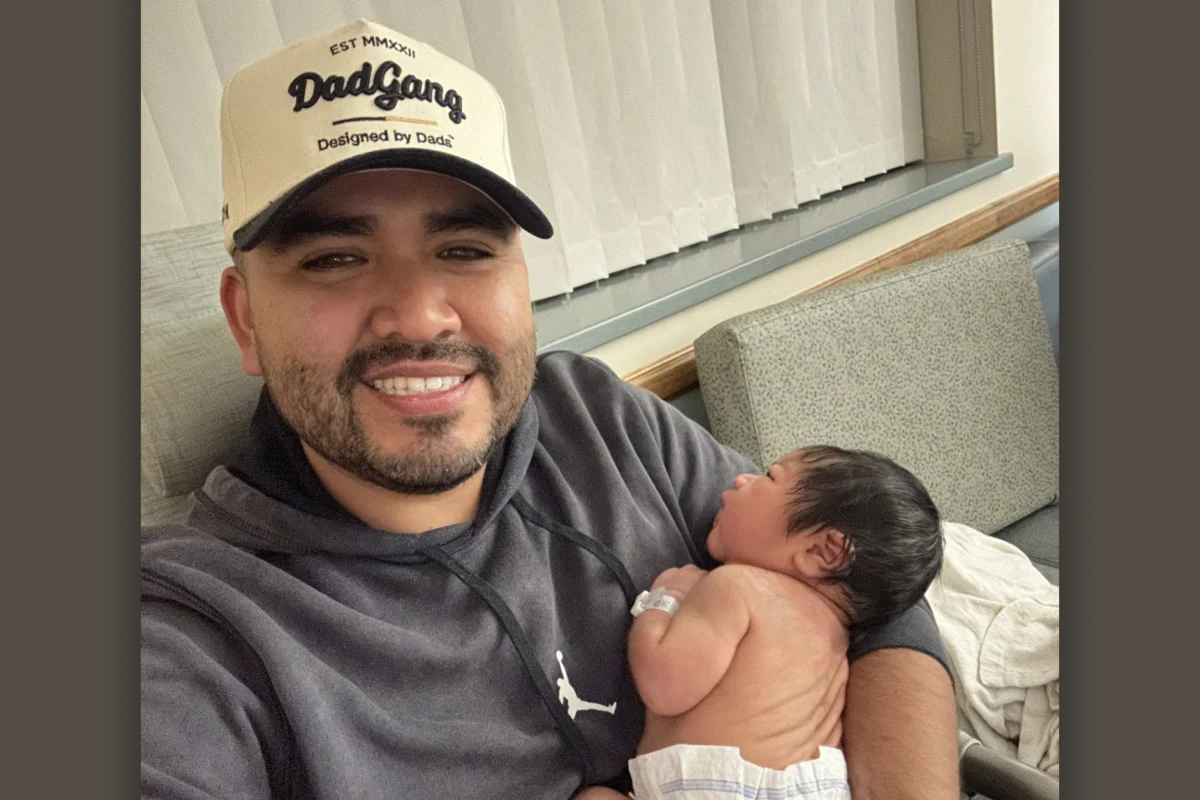
For Campana, an advertising agency employee, moments like these are no longer relegated to exhausted weekends or fleeting evening hours. Following the birth of his youngest son in May, Campana utilized state-mandated paid family leave to stay home, an option he also exercised after the arrival of his daughters.
"You need that adjustment period," Campana said, reflecting on the crucial transition into a sleep-deprived household. For him, having dedicated time off that required neither stressing over professional duties nor worrying about a sudden loss of household income was transformative. "My wife isn’t doing it on her own. She doesn’t feel like she’s alone on this journey. She feels like she has support."
Campana’s experience reflects a rapidly accelerating national trend. Across the United States, particularly in states with established paid family leave legislation, a growing cohort of fathers is stepping away from the office to bond with their newborns. This behavioral shift underscores a broader cultural evolution regarding modern fatherhood, changing domestic responsibilities, and evolving workplace expectations. Yet, this milestone arrives amid heightened economic anxiety, as American families grapple with the escalating costs of raising children and a distinct lack of federal mandates guaranteeing paid leave.
A Historic Shift in State-Level Data
The statistics charting this shift are striking. In California, which established its pioneering paid family leave program two decades ago, men accounted for 51 percent of all bonding claim applications filed in 2025. This represents a monumental pivot from 2004, when the state program was launched and men accounted for a mere 18 percent of such claims.
California is not an isolated outlier. In states like Colorado and Washington, data from recent years reveals that men have similarly surpassed women in filing state-administered bonding claims for the first time in their respective programs’ histories.
This statistical parity or majority among male applicants highlights a deep-seated transformation in how modern fathers view their roles. No longer bound strictly to the traditional archetype of the sole financial provider, contemporary fathers are increasingly embracing domestic and caregiving responsibilities from day one.
The Legislative Landscape and Chronology of Leave
Despite these state-level advancements, the United States remains a global outlier among developed nations regarding federal policy. There is currently no federal law guaranteeing paid parental leave for American workers. Instead, the landscape of paid family leave is a patchwork quilt determined entirely by geography and state legislation.
To date, 14 states plus Washington, D.C., have enacted legislation to establish state-administered paid family leave programs. The chronology of this movement traces back to California, which signed its landmark paid family leave legislation into law in 2002, with benefits officially rolling out in 2004. For years, utilization rates among men remained stubbornly low due to cultural stigma, low wage replacement rates, and a general lack of awareness.
However, the past several years have marked a turning point. States fund these programs through various combinations of employer and employee contributions. California, for instance, relies entirely on employee payroll deductions. To make leave financially viable for working-class and middle-class families, states have steadily increased wage replacement thresholds. In 2025, California boosted the amount of income a worker can recoup while on family leave, allowing benefits to reach as high as 90 percent of a worker’s regular salary.
Molly Weston Williamson, policy director at Paid Leave for All, an organization advocating for universal paid family leave policies, noted that these structural improvements have fundamentally altered the calculus for families.
"We’re in a very different place in terms of our understanding of gender roles, of paternity leave, of dads’ roles than we were 20-plus years ago," Weston Williamson said. She emphasized that higher wage replacement rates made taking leave "a realistic option for a lot more families, and I think we’re seeing dads and moms responding to that change."
Under California’s current provisions, eligible parents can receive up to eight weeks of paid bonding leave within the first year following a birth, adoption, or foster placement. This is separate from the six to eight weeks of paid disability leave typically allocated to mothers for physical recovery immediately following childbirth.
Broader Health and Family Implications
Public health researchers and economists have long studied the ripple effects of paternity leave, consistently finding that its benefits extend far beyond simple paternal bonding. Comprehensive studies published in medical and economic journals indicate that accessible paternity leave yields positive health outcomes for the entire family unit.
Data demonstrates a clear correlation between fathers taking leave and lower occurrences of postpartum depression among mothers. Furthermore, active paternal involvement during infancy has been linked to improved developmental milestones for children, enhanced emotional bonding, and long-term stability within the household. Broader public health analyses have even connected family leave policies to incremental decreases in infant mortality rates, underscoring the vital intersection between social policy and public health.
Despite these proven advantages, experts caution that the available administrative data from state programs only tells part of the story. Weston Williamson points out critical gaps in the current research: "We’re getting one particular vantage point into this data, which is useful and valuable, but it’s only telling us sort of part of the story, and we’d need other kinds of information to better understand the full picture. Is it that more dads are working and therefore are potentially eligible for these benefits? Is it that women are deciding not to take leave?"
Furthermore, state-level figures only capture workers utilizing public programs, omitting individuals who receive fully or partially paid leave through private, employer-sponsored benefit packages. Representatives from the California Employment Development Department, which administers the state’s program, note that while the upward trajectory in male claimants is clear, isolating the precise sociological triggers remains complex.
Economic Pressures and the Affordability Crisis
This surge in paternity leave utilization coincides with a period of acute economic anxiety among American parents. As the federal government and political leaders express a desire to reverse declining birth rates—with figures like President Donald Trump publicly advocating for policies to encourage larger families and expanding access to in vitro fertilization (IVF) and newborn investment accounts—families themselves point to financial hurdles as the primary deterrent to having children.
According to the 2025 American Family Survey published by Brigham Young University, 7 in 10 Americans stated that raising children had become unaffordable. This marked the largest single-year jump in economic pessimism regarding family planning recorded since the survey’s inception more than a decade ago.
Jeremy Pope, a professor of political science at Brigham Young University, noted that while citizens generally resist direct government intervention in personal family planning decisions, the underlying economic anxiety is palpable.
"People really are very worried about the affordability of kids," Pope said. "I don’t think they want government involved in the decision to have kids, but they worry a lot about how much it costs and they would like to see ways of making those costs smaller or getting help with those costs."
This sentiment is echoed in national polling data. A recent survey conducted by the Pew Research Center examining workplace benefits found that among full-time working parents who are not self-employed, 84 percent considered paid parental, family, or medical leave to be "extremely or very helpful." However, only half of those surveyed reported having access to such benefits through their current employment.
Overcoming Cultural Stigma and Generational Divides
For individual fathers like Karlo Campana, navigating the decision to take leave often meant confronting lingering social stereotypes and internal psychological hurdles.
"I felt guilty, for sure," Campana admitted. "I think dads maybe feel they need to be the provider. They need to be the ones that are only helping their family by bringing money or working."
These internal pressures are frequently rooted in generational expectations. Campana recalls that his own father worked three demanding jobs to support the household, leaving little room for daily presence. "It was hard for him to be present, and I think that’s the one thing now—it’s like, ‘No, be present. Be there for your kids.’"
As state policies evolve, wage replacement rates improve, and cultural expectations continue to shift away from rigid 20th-century gender norms, the landscape of American parenting is undergoing a quiet revolution. For a growing number of fathers across California and an expanding map of forward-thinking states, stepping away from the desk to change diapers, soothe crying infants, and support their partners is no longer viewed as an anomaly, but as a fundamental responsibility of modern parenthood.