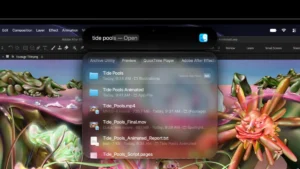
Apple has officially ushered in a transformative era for its flagship portable computer line, unveiling the long-rumored MacBook Pro featuring a fully integrated touchscreen display. While the introduction of touch functionality represents a major shift in Apple’s hardware philosophy, the most striking aspect of the launch is the unprecedented pricing structure. As of October 28, 2026, the tech giant has set a new benchmark for premium computing, with a fully configured 16-inch model reaching a staggering $14,549. This represents a significant departure from previous pricing tiers and signals a new strategic focus on high-performance, enterprise-grade hardware.
The announcement, which occurred late Tuesday afternoon, confirms that Apple is finally abandoning its decade-long resistance to touchscreen laptops. The new MacBook Pro lineup, which is scheduled for preorder on October 30 and retail availability on November 6, utilizes the proprietary PROLED XDR display technology. This hardware leap is intended to bridge the gap between traditional macOS workflows and the intuitive touch-based interactions popularized by the iPad and iPhone ecosystems.
A Chronology of Interface Evolution
The journey to a touchscreen MacBook has been characterized by years of internal debate and iterative design experiments. For nearly a decade, Apple famously resisted the inclusion of a touch interface on its laptop line, with leadership—including the late Steve Jobs and later Tim Cook—frequently arguing that vertical touchscreens were ergonomically inferior to trackpad-driven navigation.
The initial foray into non-traditional input methods began in 2016 with the introduction of the Touch Bar, a thin, dynamic OLED strip that replaced the function row on the MacBook Pro keyboard. While the Touch Bar was met with mixed reviews, it served as a laboratory for Apple’s engineering team to test how users might integrate auxiliary touch inputs into their professional workflows. By 2023, however, Apple formally discontinued the Touch Bar, signaling a pivot back to physical function keys and a temporary retreat from touch-centric UI elements on the Mac.
Between 2023 and 2026, industry rumors intensified as supply chain leaks suggested that Apple was developing a custom "Pro-level" touchscreen glass. The reveal of the PROLED XDR display this week marks the culmination of this three-year development cycle, finally bringing Apple into direct competition with Windows-based rivals like the Microsoft Surface Laptop and various high-end workstation tablets that have featured touch input for years.
Understanding the Price Ceiling: The Hardware Cost Breakdown
The $14,549 price tag is not merely a reflection of brand prestige; it is a direct result of extreme hardware specifications and current global supply chain volatility. According to official configuration data from Apple’s online storefront, the pricing model is driven by several critical components, most notably the transition to high-density storage and advanced silicon.
The core of the machine is the M5 Max chip, featuring an 18-core CPU and a 40-core GPU. This architecture is designed to handle intensive AI processing, real-time 8K video rendering, and complex machine learning simulations—workloads that are increasingly common in professional software development and media production.
The primary cost drivers for the "maxed-out" configuration are as follows:

- Massive Local Storage: The most significant jump in price comes from the storage options. While a 4TB SSD adds $1,000 to the base price, the jump to an 8TB configuration incurs a $3,000 premium. The new 16TB enterprise-tier storage option, a first for the MacBook Pro, commands a $7,000 surcharge alone.
- Unified Memory: To accommodate the memory-hungry nature of modern AI models and heavy multitasking, Apple has introduced a 128GB unified memory tier, which requires a $2,000 investment over the base configuration.
- Display Technology: The integration of the nano-texture glass—a specialized coating designed to reduce glare while maintaining high contrast—adds an additional $150.
For comparison, the previous generation’s 16-inch MacBook Pro, when fully equipped, topped out at approximately $10,149. The $4,400 increase in the price ceiling is one of the most aggressive upward adjustments in the company’s history, highlighting both the increased cost of raw materials—such as the memory components currently affected by global supply shortages—and the premium Apple is placing on its proprietary PROLED technology.
Market Implications and Industry Reactions
The decision to launch such an expensive device during a period of economic caution has sparked immediate discussion among industry analysts. Critics argue that by pushing the price point above $14,000, Apple is effectively moving the MacBook Pro out of the realm of consumer electronics and into the category of specialized industrial equipment, similar to high-end medical imaging workstations or server-side development rigs.
"Apple is clearly betting that the demand for on-device AI processing power is significant enough that professionals will pay whatever is necessary to avoid cloud-based latency," said one analyst familiar with the hardware sector. "By integrating the touchscreen, they are forcing a change in the way software developers and designers interact with their tools, which could lead to a wave of touch-optimized professional applications in the coming year."
However, the high barrier to entry may also limit the adoption of the touchscreen feature. If the technology remains gated behind a $14,000 configuration, the ecosystem of touch-enabled apps for macOS may struggle to gain critical mass. Developers are unlikely to invest resources into optimizing their software for touch if only a tiny fraction of the user base owns the hardware capable of utilizing those features.
Broader Economic and Supply Chain Context
The pricing strategy is also a reflection of the current "AI-first" hardware boom. The semiconductor industry is currently experiencing a period of intense competition for high-bandwidth memory (HBM) and high-performance logic boards. As companies like NVIDIA and Intel compete with Apple for manufacturing capacity at foundries like TSMC, the cost of top-tier silicon has risen substantially.
Furthermore, the integration of 16TB of storage requires specialized controllers that are currently in limited supply. Apple’s decision to offer such extreme specifications suggests a move to secure its position in the high-end creative market, ensuring that power users—such as film editors, data scientists, and software engineers—do not defect to Windows-based workstations that have historically been more modular and easier to upgrade.
Looking Ahead: The November Rollout
As the October 30 preorder date approaches, the technology sector will be closely monitoring the initial sales figures to see if the "touchscreen premium" is a viable path forward for the Mac. While the price is undeniably high, the MacBook Pro has historically been a tool that pays for itself through productivity gains in professional environments.
The launch of the PROLED XDR MacBook Pro is more than just a hardware update; it is a fundamental shift in the definition of a "pro" machine. By embracing touch, Apple is signaling that the future of desktop-class computing is tactile. Whether the market is prepared to pay the price of admission remains the central question for the final quarter of 2026. With units beginning to ship on November 6, the first wave of real-world testing will soon reveal whether the hardware lives up to its ambitious design and industry-leading price tag.
For now, the message from Cupertino is clear: the era of the touch-enabled MacBook Pro has arrived, and it is positioned as the most powerful—and most expensive—tool in the company’s history.