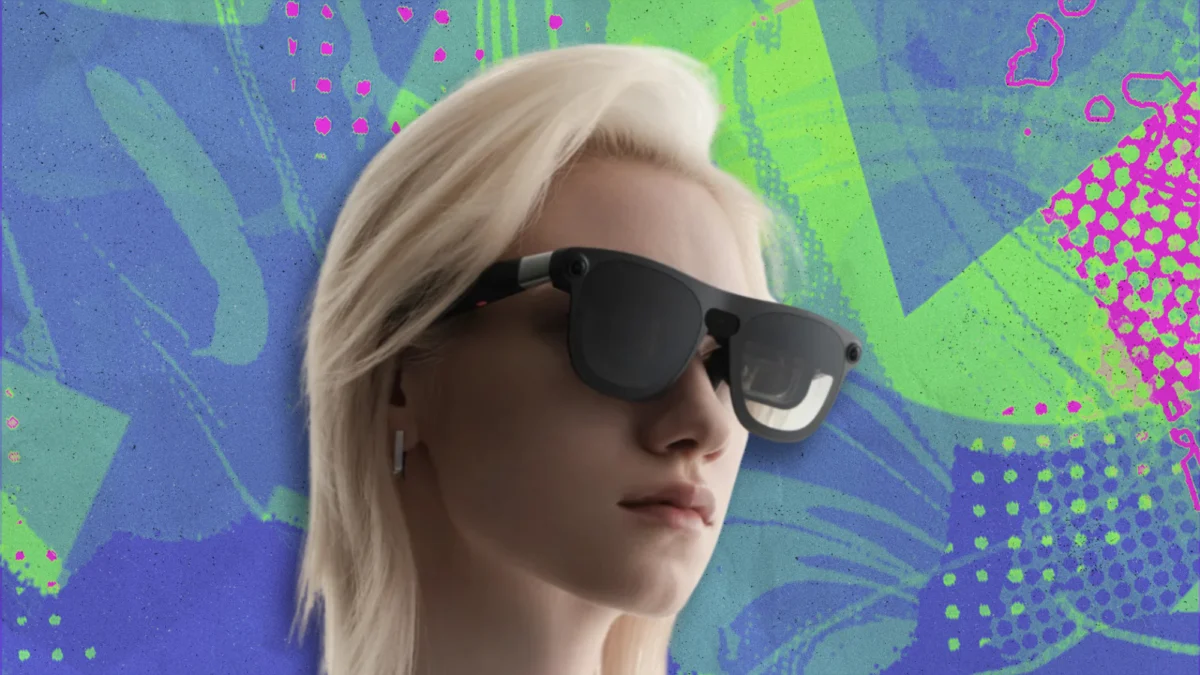
The landscape of personal computing is undergoing a significant transformation as Xreal, a prominent player in the augmented reality (AR) hardware space, has officially opened preorders for the Xreal Aura. These innovative smart glasses, developed in strategic partnership with Google, mark the first commercial deployment of the Android XR platform. This launch represents a milestone in the convergence of spatial computing, where digital information is seamlessly integrated into the physical world, and the established Android software ecosystem.
First unveiled during the Google I/O 2026 developer conference, the Xreal Aura is positioned to bridge the gap between traditional smart glasses and the more immersive, often bulky, virtual reality (VR) headsets. By leveraging a tethered design—a hallmark of Xreal’s previous hardware—the device shifts the heavy processing requirements and power management to an external "puck" controller. This architectural decision allows the glasses themselves to remain lightweight and unobtrusive, an essential factor for long-term wearability.

The Technological Foundation
At the core of the Xreal Aura is the Android XR operating system, a dedicated iteration of Android designed to handle the complex spatial requirements of augmented and virtual environments. The hardware is underpinned by the Qualcomm Snapdragon Reality Elite Platform, a chipset specifically engineered to handle low-latency head tracking, spatial mapping, and high-fidelity visual rendering.
Visually, the device employs dual Sony Micro-OLED displays. These panels are capable of producing a 70-degree field of view, providing a sufficiently wide canvas for virtual screens and interactive objects. With a peak brightness of 1,050 nits and a 120Hz refresh rate, the display system is designed to minimize motion blur and ensure high visibility even in varied lighting conditions. The inclusion of on-board sensors and cameras enables a multi-modal input system, allowing users to navigate interfaces through a combination of hand tracking, voice commands, and spatial gestures, effectively eliminating the need for traditional controllers in many use cases.
Strategic Context and Industry Positioning
The launch of the Xreal Aura occurs during a period of intense competition within the spatial computing sector. The market is currently characterized by a dichotomy: high-end, heavy headsets that offer full isolation, and lightweight smart glasses that offer a more grounded, transparent experience.

The industry has been heavily influenced by the public discourse surrounding the Apple Vision Pro, which popularized the concept of a 360-degree virtual canvas. However, the Xreal Aura attempts to differentiate itself by prioritizing the "transparent" nature of its lenses. Unlike closed-off VR headsets, the Aura is designed to keep the user present within their physical environment, adhering to the philosophy that spatial computing should augment, rather than replace, reality.
This puts the Aura in direct competition with emerging hardware such as the Snap Specs and the forthcoming Meta VR glasses. The Snap Specs, while offering a fully wireless experience, have faced criticism for a bulky aesthetic and a premium price point of $2,195. Meanwhile, Meta’s hardware, anticipated for a spring 2027 release, is expected to offer a different set of trade-offs at a $1,299 price point. At an introductory price of $1,099 for preorders, the Xreal Aura is aggressively positioned to capture early adopters who are looking for a balance between performance, form factor, and price.
Ecosystem Integration: Gemini and Beyond
A critical component of the Xreal Aura’s value proposition is its deep integration with the Google ecosystem. The device is not merely a display peripheral; it is a functional computing node. Users gain access to Gemini, Google’s AI assistant, which is integrated directly into the spatial interface. This allows for context-aware interactions, such as asking questions about physical objects currently in the user’s line of sight or streamlining multi-tasking across various Android applications.

The integration with Google Photos and Google Maps provides a glimpse into the potential for "spatialized" media. Users can transform standard 2D photos and videos into 3D environments, while Google Maps offers an immersive 3D navigation mode. This creates a bridge between existing consumer data and the new frontier of XR, making the transition to spatial computing feel more intuitive for users already invested in Google’s services.
Chronology of Development
The trajectory of the Xreal Aura reflects a rapid maturation of XR technology:
- Early 2026: Initial collaboration between Google, Qualcomm, and Xreal is solidified to develop hardware for the Android XR platform.
- May 2026 (Google I/O): Xreal provides the first public demonstration of the hardware, showcasing its spatial computing capabilities and the Android XR interface.
- October 28, 2026: Xreal officially opens global preorders, detailing the $1,099 early-bird pricing and the mid-November shipping window.
- November 2026: Scheduled onset of consumer shipments, marking the device’s entry into the hands of developers and early adopters.
Implications for Productivity and Entertainment
The manufacturer has explicitly targeted three primary use cases: productivity, entertainment, and immersive social experiences. By allowing users to anchor multiple virtual displays in their room, the device aims to replace physical monitors for remote workers. In the realm of entertainment, the device supports 360-degree and VR180 content, turning platforms like YouTube into immersive viewing theaters.

Furthermore, the launch includes a library of over 150 XR experiences. This initial content catalog is essential for the success of the platform, as it addresses the "empty ecosystem" problem that often plagues new hardware launches. By launching with a curated set of applications, Xreal is signaling that the device is a finished, functional tool rather than a prototype.
Official Statements and Market Reception
Chi Xu, co-founder and CEO of Xreal, emphasized the device’s role in democratizing spatial computing. "We built AURA for people who want the power of spatial computing without being removed from the world around them," Xu stated in the launch press release. He highlighted the importance of keeping the lenses transparent, noting that the goal is to keep the user connected to their surroundings while enjoying the benefits of a massive virtual desktop or immersive media.
From an analytical standpoint, the success of the Xreal Aura will hinge on two factors: the stability of the Android XR software and the comfort of the hardware over extended periods. While the specs are competitive, the industry has historically struggled with the ergonomics of "puck-based" tethered systems, where the cable management can detract from the sense of immersion. However, the use of Android XR provides a software foundation that is arguably more robust and developer-friendly than proprietary closed-source alternatives.

Future Outlook
As the device moves toward its November shipping date, the technology community will be closely watching for feedback on the "spatial anchor" accuracy—the ability of the glasses to keep digital objects firmly in place in the physical world. If the Xreal Aura can deliver on the promise of stable, high-fidelity spatial computing at a price point under $1,300, it may well set the standard for the next generation of smart eyewear.
The broader implications of this release extend beyond Xreal. If the Android XR platform gains traction through devices like the Aura, it could force a paradigm shift in how we interact with mobile devices, potentially moving the industry away from handheld smartphones and toward a future of wearable, gaze-and-gesture-controlled displays. As of October 2026, the Xreal Aura stands as a primary indicator of whether the market is truly ready for the transition to daily-wear spatial computing.
Prospective buyers have until the mid-November shipping date to secure the $180 discount on the standard retail price. As the device enters the competitive fray, the real test will be whether the combination of Gemini-powered AI, the familiarity of Android, and the form factor of glasses can overcome the historical friction associated with AR adoption.