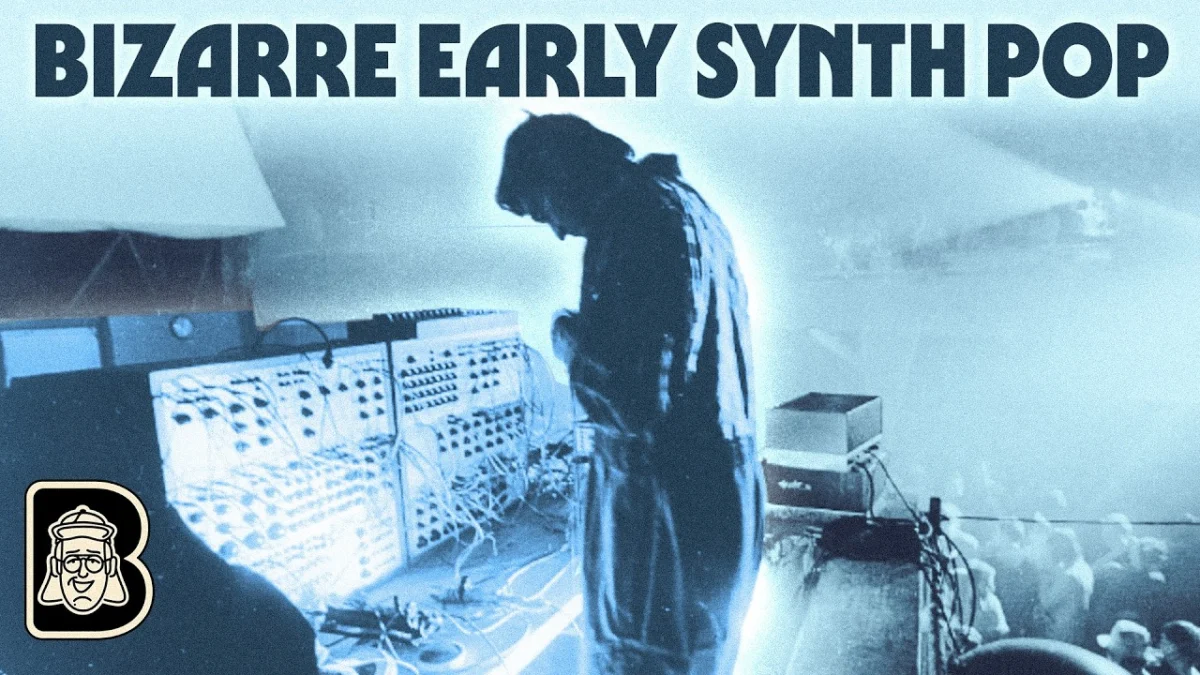
The late 1960s and early 1970s marked a pivotal transformation in modern music history, defined by the sudden, disruptive commercial introduction of electronic pop. While millions of listeners remain familiar with Wendy Carlos’s landmark 1968 release Switched-On Bach, far fewer remember the sprawling wave of derivative and experimental records that followed in its wake. Albums such as Switched-On Rock, Switched-On Country, Switched-On Santa, and Switched-On Bacharach flooded the market during this period, capitalizing entirely on a newfound novelty fad rather than lasting artistic innovation. A comprehensive retrospective featured in a recent installment of the digital media series Bandsplaining explores these quirky, historically significant releases, documenting the awkward yet glorious initial waves of electronic pop music as synthesizers transitioned from academic laboratories into the mainstream commercial consciousness.
The Technological Catalyst and the Voltage-Controlled Revolution
Like many major cultural and artistic shifts of the twentieth century, the emergence of electronic pop was directly enabled by a profound technological breakthrough: the invention of the voltage-controlled, modular synthesizer. Prior to this innovation, electronic music was predominantly generated via massive, room-filling assemblies of vacuum tubes and oscillators housed almost exclusively within elite university research facilities and corporate development departments, such as the Columbia-Princeton Electronic Music Center. These early instruments were notoriously unreliable, extremely expensive, and functionally inaccessible to mainstream musicians, requiring complex manual calibration rather than intuitive performance interfaces.
The landscape changed dramatically with the independent developments of Robert Moog on the East Coast of the United States and Don Buchla on the West Coast. While both inventors pioneered the voltage-controlled paradigm, their instruments reflected distinct philosophies of musical engagement. Moog incorporated a traditional piano-style keyboard, allowing musicians to trigger pitches familiarly, whereas Buchla favored touch plates, spatial controllers, and sequencers.
At its technical core, the modular synthesizer introduced the concept of individual hardware units—or modules—designed to perform singular electronic functions. Robert Moog frequently described a module as a compact box featuring a specific input and output dedicated entirely to either generating a waveform or modifying an existing one. By physically connecting these modules using patch cables, musicians could construct custom signal paths, effectively building a bespoke electronic orchestra.
Wendy Carlos, Robert Moog, and the Commercial Awakening
The commercial viability of this technology was famously proven by Wendy Carlos in collaboration with Robert Moog. Carlos utilized a custom-built Moog modular system to record Switched-On Bach, an album that reimagined classical compositions through synthesized timbre. Released in late 1968, the album became a massive commercial and critical success, ultimately becoming one of the first classical long-playing records to achieve platinum certification.
The success of Switched-On Bach fundamentally altered the perception of synthesized sound, proving that electronics were capable of precise melody, polyphony, and emotional resonance. Prominent classical musicians of the era, including Canadian pianist Glenn Gould, openly championed the record and the Moog synthesizer, praising the precision and clarity afforded by the new technology. Similarly, electronic music pioneers like Daphne Oram in the United Kingdom were concurrently lecturing and demonstrating how these burgeoning technologies would permanently redefine the boundaries of sound production.
Chronology of the Electronic Pop Craze (1967–1972)
The trajectory of electronic pop from underground novelty to chart-ready phenomenon unfolded through a rapid sequence of commercial experiments:
- 1967: The nascent market for home hi-fi audio systems fuels the rise of space-age pop and lounge exotica by artists like Les Baxter and Juan Garcia Esquivel, laying the listening habits for avant-garde arrangements.
- Late 1968: Wendy Carlos releases Switched-On Bach, establishing the commercial viability of the Moog synthesizer and sparking industry-wide interest in electronic renditions of traditional repertoire.
- 1969: Session musician Dick Hyman releases The Minotaur, a genre-blending psychedelic track featuring Indian drones and Greek melodies that climbs to number 38 on the Billboard Hot 100 chart. Concurrently, Gershon Kingsley releases Music to Moog By, featuring the original recording of the instrumental composition Popcorn.
- 1970–1971: Record labels rush to capitalize on the novelty, releasing a wave of thematic "Switched-On" records spanning multiple genres, often utilizing studio session musicians with limited electronic composition experience.
- 1972: The synth-pop outfit Hot Butter re-records Gershon Kingsley’s Popcorn, turning the electronic novelty tune into a massive global hit and cementing the synthesizer’s place in popular culture.
The Road Not Taken: Psychedelia and Genre-Blending
As the music industry scrambled to monetize the synthesizer, artists operating within the orbit of space-age pop and lounge music utilized the technology to explore uncharted sonic territories. One notable example was Dick Hyman’s 1969 single The Minotaur. Released under the moniker Dick Hyman and His Electric Band, the eight-and-a-half-minute track was an ambitious fusion of hypnotic psychedelic grooves, traditional Indian drone structures, and classical Greek modal melodies performed entirely on early electronic hardware.
The Minotaur briefly breached the mainstream consciousness, climbing to number 38 on the Billboard Hot 100 chart in the summer of 1969. Retrospective musicological analysis often points to tracks like The Minotaur as representative of a fascinating road not taken by mainstream electronic pop—a path prioritizing extended, exploratory, cross-cultural psychedelic jams over strict radio-friendly pop structures or classical adaptations.
Simultaneously, composer Gershon Kingsley released Music to Moog By, an album that featured the upbeat track Popcorn. While Kingsley’s original recording established the rhythmic foundation for the tune, it was the 1972 cover version by the band Hot Butter that propelled the composition to international superstardom, topping charts across Europe and North America and demonstrating the immense commercial potential of synthetic dance melodies.
Broader Impact and Industry Implications
The late-1960s Moog craze and the subsequent flood of electronic pop novelties served a crucial transitional function within the history of music technology. By packaging complex electronic engineering inside recognizable musical formats—whether classical Bach arrangements, Latin dance rhythms, or novelty holiday records—producers introduced the general public to the sonic vocabulary of synthesized sound.
This exposure laid the necessary cultural groundwork for the subsequent electronic music revolutions of the late 1970s and 1980s. The novelty records of the Moog era demystified the synthesizer, transforming it from an esoteric, intimidating laboratory instrument into an accessible pop music tool. Without the initial, occasionally awkward wave of experimental adaptations documented by modern music historians and video essayists alike, the later developments of German krautrock, synth-pop, disco, and contemporary electronic dance music might have faced a much steeper path toward mainstream acceptance.