When Walt Whitman self-published the inaugural edition of Leaves of Grass in 1855, the literary landscape of 19th-century America was defined by rigid structures, formal prosody, and a lingering adherence to European traditions. At thirty-six years old, Whitman—a former printer, journalist, and schoolteacher—defied these conventions. The original volume, containing only twelve untitled poems, was met with widespread indifference and, in some quarters, moralistic outrage due to its candid explorations of the body and the self. However, what began as a commercial failure would eventually become the cornerstone of American poetry, fundamentally altering the trajectory of global literature.
A Chronology of a Literary Revolution
The genesis of Leaves of Grass can be traced back to the early 1850s, a period of intense personal and intellectual transformation for Whitman. Working out of a print shop in Brooklyn, he personally oversaw the typesetting and design of the first edition. He bypassed traditional publishing houses, choosing instead to finance the venture himself.
- July 4, 1855: The first edition of Leaves of Grass is published. Only 795 copies are printed, many of which remain unsold for years.
- July 21, 1855: Ralph Waldo Emerson receives a copy of the book. Recognizing its radical departure from contemporary verse, he pens a private letter to Whitman, calling it "the most extraordinary piece of wit and wisdom that America has yet contributed."
- 1856: The second edition is released, featuring an expanded collection of thirty-two poems. Notably, Whitman includes Emerson’s private letter in the appendix and prints a quote from it—"I Greet You at the Beginning of a Great Career"—in gold lettering on the spine, a marketing tactic that underscored his burgeoning confidence.
- 1860–1892: Whitman spends the remainder of his life refining, rearranging, and expanding the collection. By the time of the "Deathbed Edition" in 1892, the book had grown to include hundreds of poems, reflecting the expansion of his philosophy and the trauma of the American Civil War.
The Emerson Connection: Validation in the Face of Obscurity
The role of Ralph Waldo Emerson in the success of Leaves of Grass cannot be overstated. At the time of the book’s release, Emerson was the undisputed arbiter of American literary taste. The reception of Whitman’s work was initially cold; critics often dismissed his free-verse style as undisciplined, or worse, "vulgar."
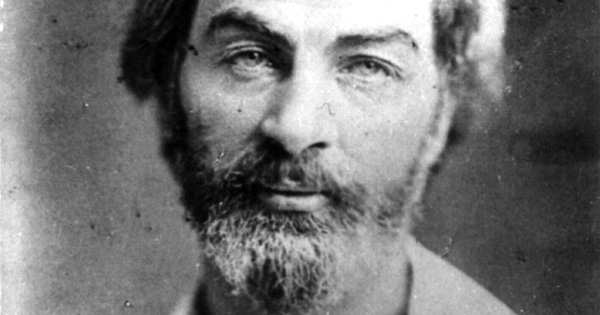
Emerson’s letter served as the catalyst for Whitman’s public acceptance. By publicly citing Emerson’s endorsement, Whitman successfully pivoted the discourse. He transformed his status from an obscure, self-published eccentric to a serious, albeit controversial, artist sanctioned by the intellectual elite. Historians note that Whitman carried the letter with him frequently, presenting it to acquaintances and associates as a form of "literary passport" that granted him entry into circles that might otherwise have ignored him.
Thematic Contributions and Literary Analysis
Leaves of Grass was revolutionary not merely for its form, but for its radical democratic spirit. Whitman sought to collapse the hierarchy between the poet and the common person. In his 1855 preface, he argued that the poet’s role was to serve as a bridge between the physical reality of the world—the rivers, the mountains, the common labor of citizens—and the human soul.
His call to action remains a central point of analysis for modern scholars: "Love the earth and sun and the animals, despise riches, give alms to every one that asks, stand up for the stupid and crazy." This directive was more than poetic license; it was a manifesto for a new kind of American citizenship. By demanding that readers "re-examine all you have been told at school or church or in any book," Whitman established himself as a proponent of intellectual independence, a theme that resonates through the works of later writers such as Allen Ginsberg and the Beat generation.
Statistical Context and Commercial Evolution
While the initial run of 1855 was a commercial failure, the long-term data regarding the work’s distribution illustrates a slow but persistent rise in influence. Unlike contemporary bestsellers of the 1850s, which relied on standard distribution channels and mass marketing, Leaves of Grass gained traction through word-of-mouth and the slow infiltration of the book into academic and intellectual circles.

The shift in perception is documented in the printing history of the text. From the 795 copies in 1855, the work moved into mass-marketed editions in the 20th century. Today, it stands as one of the most widely translated and studied poetic works in history. The cultural impact is further evidenced by its enduring presence in the public domain and its frequent citation in legal and political discourse regarding the American identity.
Broader Implications: The Poet as Social Observer
Whitman’s assertion that "the proof of a poet is that his country absorbs him as affectionately as he has absorbed it" serves as a benchmark for his success. Throughout his career, Whitman did not isolate himself from the social realities of his time. His work during the Civil War, specifically his time as a volunteer nurse in Washington D.C. hospitals, informed the later editions of his poetry. He observed the fractures of a nation and sought to heal them through the unifying power of language.
Furthermore, his writing on the "greatest poet" implies that the role of the artist is not merely to create beauty, but to act as a vessel for the collective experience. By "competing with the laws that pursue and follow time," Whitman suggested that poetry could transcend its immediate moment to become a permanent fixture of national consciousness.
Critical Reception and Enduring Legacy
The critical reception of Whitman has evolved from dismissal to near-canonization. In the late 19th century, critics like Henry James were initially wary of Whitman’s unrefined approach, but by the mid-20th century, the consensus had shifted. The New Critics and later post-modernists viewed Whitman as the progenitor of American free verse. His influence can be observed in the cadence of modern American speech and the structure of contemporary poetry.

Beyond literature, Whitman’s contributions to discussions on music, democracy, and gender roles have been the subject of extensive academic research. His advocacy for a robust, egalitarian society continues to be a focal point in sociopolitical debates. His insistence on the "dignity of the body" and the "equality of the soul" provided a vocabulary for later civil rights movements and democratic advocacy.
Conclusion
Walt Whitman’s journey from a self-published poet in Brooklyn to the "Good Gray Poet" of American history is a testament to the power of persistence and the transformative potential of the written word. Leaves of Grass is not a static collection of poems, but a living document that captures the essence of a rapidly expanding and searching nation.
The significance of the work lies in its invitation to the reader. Whitman did not write to be merely observed; he wrote to be experienced. By challenging his readers to "dismiss whatever insults your own soul," he empowered generations to seek their own truth. More than a century and a half later, the "great career" Emerson predicted has not only been realized; it has become an inseparable component of the American experience, ensuring that the leaves continue to grow, season after season, in the minds of those who read them.