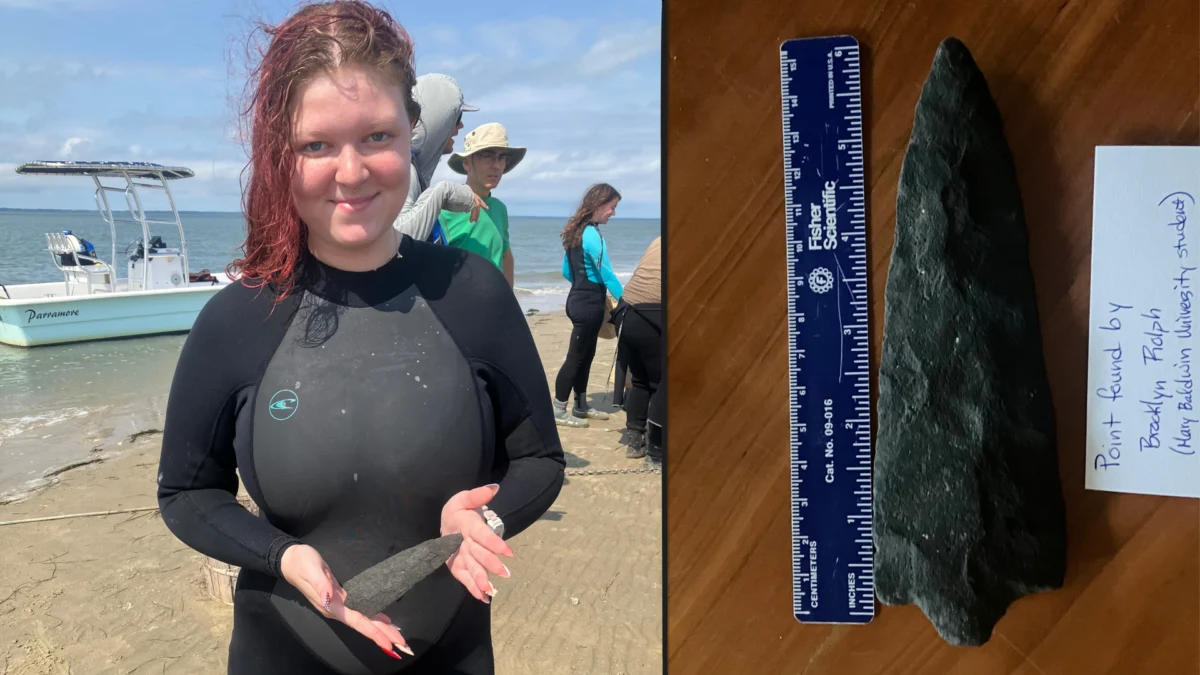
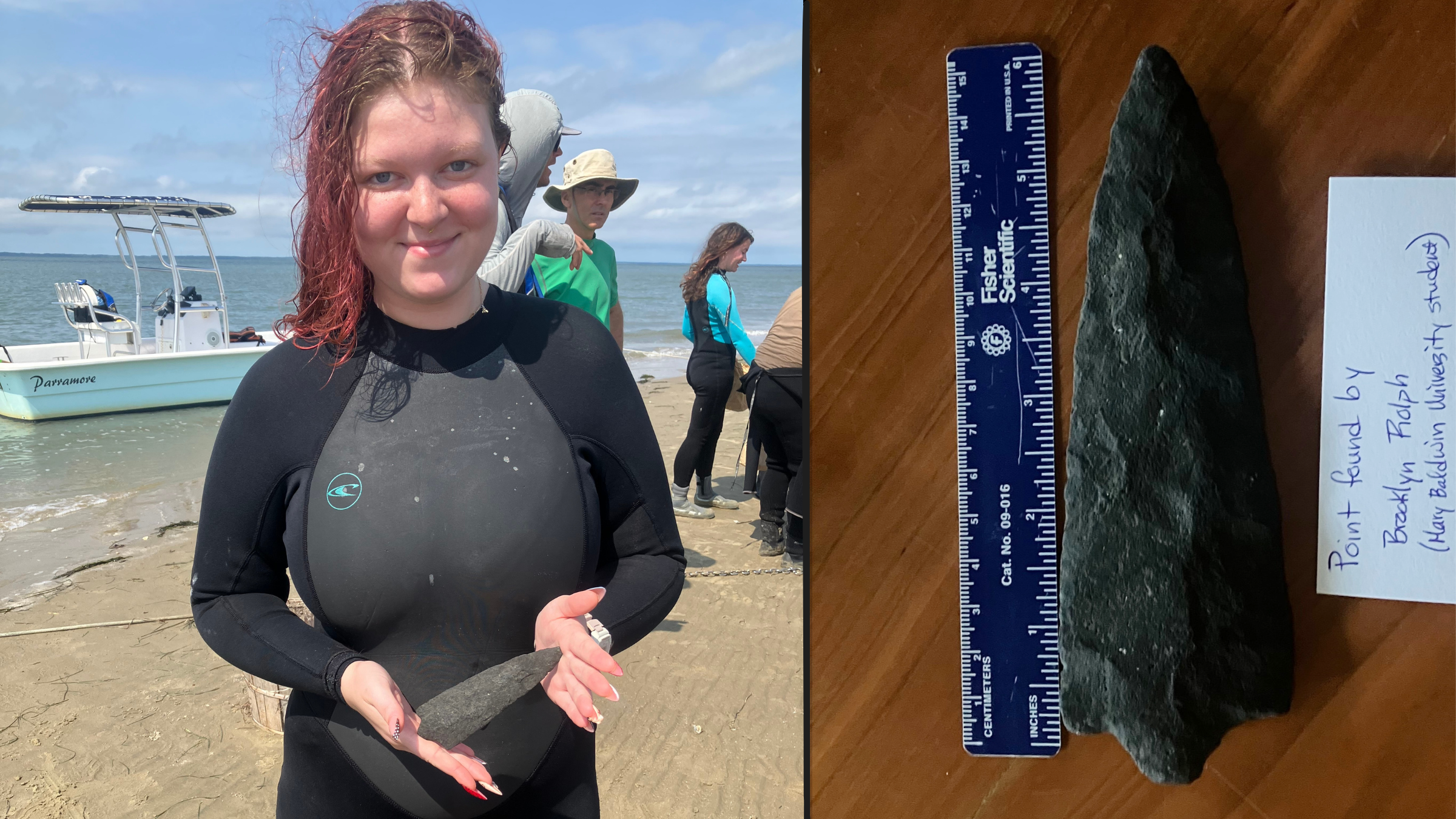
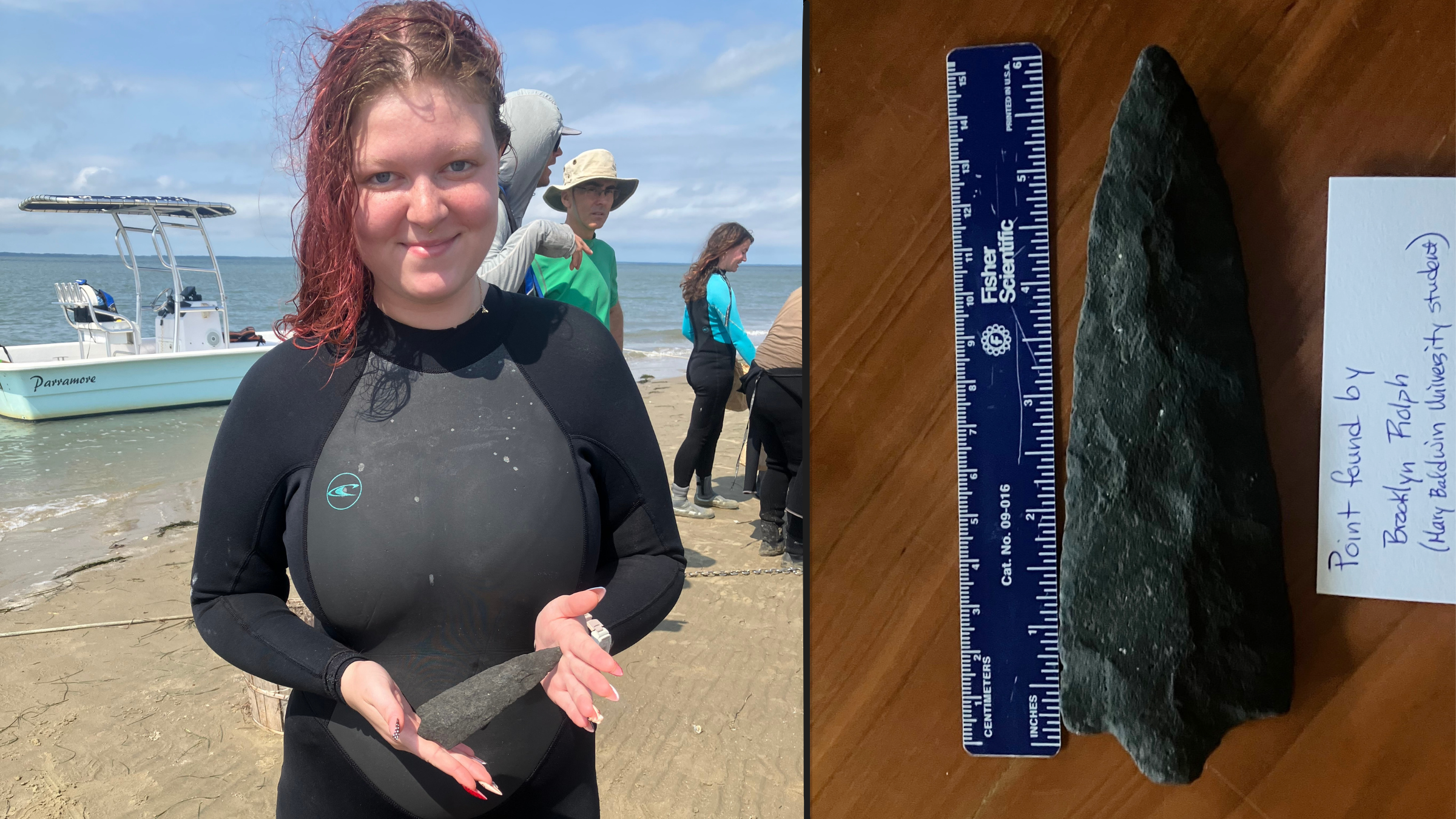
The coastline of the United States has long been a treasure trove for amateur beachcombers, fossil hunters, and marine enthusiasts. From prehistoric shark teeth to washed-up nautical artifacts, the shifting sands and tidal currents of the Atlantic seaboard frequently expose remnants of the deep past. However, a routine fossil-hunting excursion off the coast of Virginia recently yielded an unexpected historical artifact that has captivated archaeologists and local historians alike. Brooklyn Rolph, an undergraduate student at Mary Baldwin University, stumbled upon a meticulously crafted Native American stone spearpoint while wading through coastal waters, transforming a casual hobby into an extraordinary archaeological discovery.
The find, which has since drawn the attention of regional researchers, highlights the dynamic nature of coastal archaeology. As rising sea levels and coastal erosion continue to reshape the shoreline of the Mid-Atlantic region, submerged and intertidal landscapes are increasingly exposed, sometimes revealing thousands of years of human history that had long remained hidden beneath the waves.
The Discovery: A Routine Hunt Turned Extraordinary
The momentous event took place while Brooklyn Rolph was engaging in a popular regional pastime: searching the shallow coastal waters for fossilized shark teeth. Equipped with a wetsuit and a keen eye for unusual shapes amidst the sand and shells, Rolph was scanning the seafloor when an object caught her attention.
Unlike the dark, glossy triangular shapes of prehistoric shark teeth, this object possessed a distinct symmetry and flaked texture that signaled human workmanship. Upon closer inspection, Rolph realized she was holding an ancient stone spearpoint—a projectile tool crafted by Indigenous peoples long before European contact. Measuring several inches in length, the artifact exhibited the classic pressure-flaking techniques characteristic of sophisticated stone tool production.
Recognizing the potential significance of her find, Rolph chose not to keep the artifact as a simple curio. Instead, she brought the spearpoint to academic and archaeological professionals for proper identification and documentation, ensuring that the historical context of the object could be studied and preserved. Photographs released by Mary Baldwin University depict Rolph in her wetsuit holding the stone point, alongside a detailed scale image showing the precise measurements of the weapon fragment against a blue six-inch ruler.
Background Context: The Changing Submerged Landscapes of Virginia
To understand how a Native American artifact ended up submerged off the coast of Virginia, one must examine the ancient geography of the North American eastern seaboard. During the last glacial maximum, roughly 20,000 to 18,000 years ago, sea levels were significantly lower than they are today. The continental shelf—now covered by tens or hundreds of feet of Atlantic Ocean water—was a vast, exposed coastal plain.
For millennia, Indigenous populations inhabited these coastal and riverine corridors, hunting, gathering, and establishing seasonal camps along waterways that have since been swallowed by rising sea levels. As the ice sheets melted at the end of the Pleistocene epoch, global sea levels rose steadily, inundating thousands of square miles of ancestral homelands.
Consequently, the continental shelf of the Mid-Atlantic region is an immense, largely unexplored archaeological landscape. While underwater archaeology in the United States has traditionally focused on historic shipwrecks, maritime researchers are increasingly turning their attention to submerged prehistoric sites. Artifacts like the spearpoint discovered by Rolph often wash out of submerged or eroding archaeological deposits, carried by currents onto beaches or shallow shoals where they are serendipitously uncovered by beachgoers, divers, and fossil hunters.
Chronology of Coastal Finds and Archaeological Significance
While isolated finds of projectile points along beaches are relatively rare, they are not entirely unprecedented. Amateur beachcombers and commercial fishermen occasionally pull prehistoric stone tools, pottery shards, and even mammalian fossils—such as the bones of mastodons and dire wolves—from the ocean floor.
The chronology of such discoveries typically follows a standard trajectory:
- Initial Exposure: Natural coastal erosion, dredging operations, or severe weather events like nor’easters displace sediments, uncovering submerged artifacts.
- Discovery: Individuals engaging in recreational activities, such as shell collecting, shark-tooth hunting, or scuba diving, encounter the exposed items.
- Notification: Responsible finders report the discovery to state archaeological agencies, local universities, or museums.
- Analysis and Documentation: Archaeologists analyze the lithic material, style, and manufacturing technique to estimate the age and cultural affiliation of the artifact.
- Preservation: The artifact is cataloged into regional archives or displayed in educational exhibits to foster public awareness of local Indigenous history.
Although the exact age of Rolph’s discovered spearpoint is still being formally evaluated through typological analysis, similar projectile points found in the region often date back thousands of years, spanning the Paleo-Indian, Archaic, or Woodland periods. Each diagnostic artifact serves as a critical data point, helping archaeologists map out ancient migration routes, settlement patterns, and technological developments of the Indigenous nations that once thrived in the Chesapeake Bay watershed.
Academic and Institutional Responses
The academic community has responded to Rolph’s discovery with a mixture of excitement and educational emphasis. Representatives from Mary Baldwin University praised the student for her responsible handling of the artifact. Rather than treating the spearpoint as a personal collectible, her decision to consult with researchers underscores the importance of ethical stewardship in amateur archaeology.
Local historical societies and state heritage programs frequently remind the public that while finding artifacts on public beaches can be an exhilarating experience, the legal and ethical frameworks surrounding cultural resources are strict. In many jurisdictions, removing artifacts from state-owned submerged lands or protected historical sites is regulated to prevent the destruction of valuable archaeological contexts. When items are unearthed by natural processes, reporting them to state archaeologists ensures that the scientific data associated with the find—such as its precise geographic coordinates—is not lost.
Furthermore, academic institutions view such discoveries as powerful pedagogical tools. The story of an undergraduate student making a tangible connection to the ancient past provides a compelling entry point for discussions on anthropology, geology, and environmental change. It bridges the gap between theoretical classroom instruction and hands-on engagement with the physical remnants of history.
Broader Impact and Implications for Future Research
The unearthing of the Native American spearpoint off the Virginia coast carries broader implications for how researchers approach coastal heritage management. As climate change accelerates sea-level rise and intensifies coastal erosion, thousands of known and unknown archaeological sites face the immediate threat of destruction.
Heritage managers and marine archaeologists are currently engaged in a race against time to document endangered sites before they are permanently washed away. In this context, citizen scientists, beachcombers, and fossil hunters play an invaluable role. By serving as extra eyes and ears along hundreds of miles of coastline, amateur enthusiasts frequently alert professionals to sites and artifacts that would otherwise go unnoticed until lost forever.
However, researchers also emphasize the need for a collaborative relationship between avocational collectors and professional archaeologists. Uncontrolled looting or the unrecorded removal of artifacts from archaeological sites strips items of their context, destroying the scientific value of the objects. When finders act responsibly—documenting the location, photographing the artifact, and contacting the appropriate authorities—they contribute directly to the preservation of regional history.
For Brooklyn Rolph, a casual search for shark teeth evolved into a lasting contribution to regional history. The stone spearpoint now stands as a physical testament to the deep, enduring human presence along the Virginia shoreline—a reminder that beneath the modern waves and shifting sands lie millennia of untold stories waiting to be brought back to the surface.