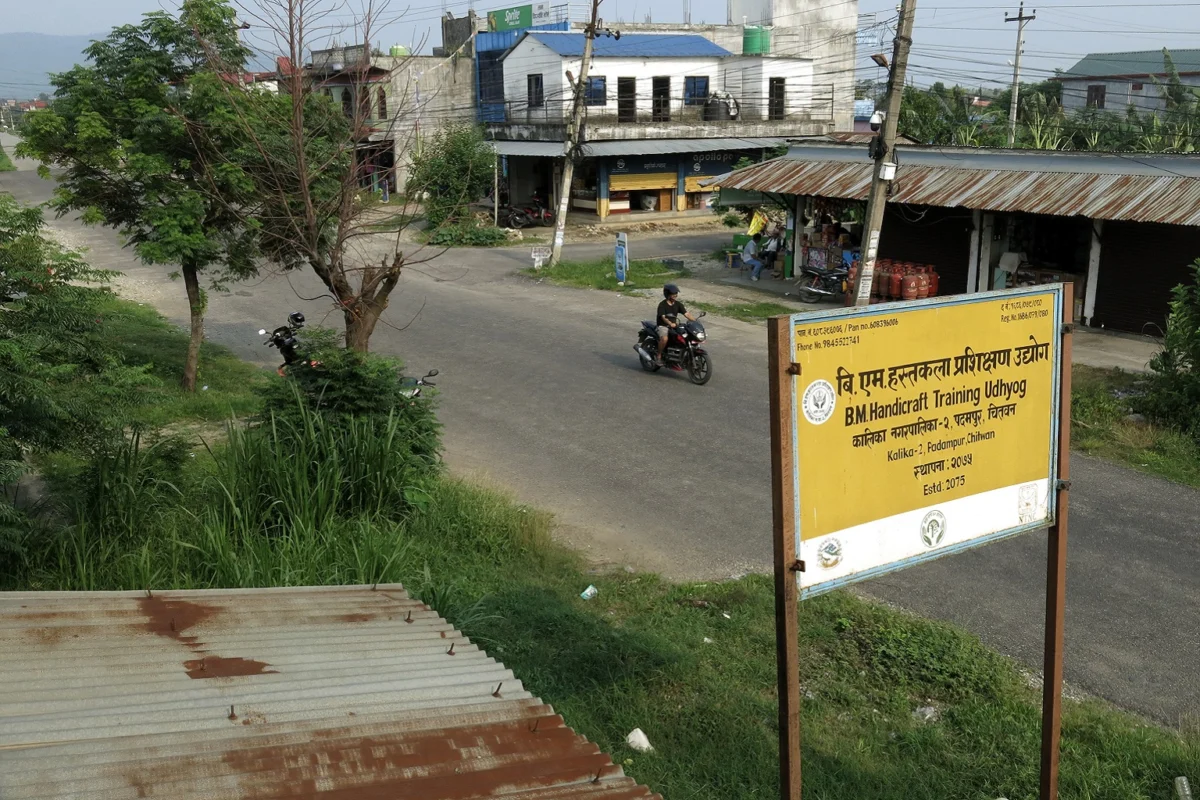
The whir of a spinning wheel on a rooftop in Naya Padampur, south-central Nepal, signals far more than just the production of ivory yarn. For 73-year-old Bin Maya Gurung, whose practiced fingers guide the strands while smile lines crinkle at the corners of her eyes, the rhythmic motion of the machinery represents the literal bedrock of her family’s well-being and financial security. Seated atop a building that houses a thriving wool-spinning enterprise, Gurung embodies a quiet revolution that has swept across rural Nepal over the past two decades. What began as a modest community-level initiative has blossomed into a powerful network of women-led microenterprises, fundamentally altering the socio-economic fabric of the country while forging an unexpected alliance with environmental conservation.
The expansion of these grassroots businesses mirrors a global recognition that empowering women economically can yield massive ecological dividends. In regions buffering critical protected areas, such as the Chitwan National Park, women-led microenterprises provide viable alternative incomes that drastically reduce household reliance on forest resources like timber and firewood. By shifting away from extractive livelihoods, these enterprises help alleviate human pressure on vulnerable ecosystems, allowing conservation efforts to flourish hand-in-hand with local economic development. Yet, despite mounting evidence of their dual benefits, rural Nepali women navigating this entrepreneurial path continue to face systemic hurdles, including social conservatism, strict property laws, and financial exclusion.
From Displacement to Danger: The Genesis of a Livelihood
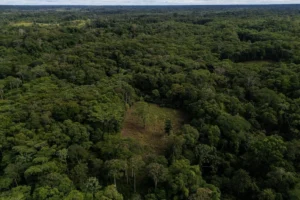
To understand the transformative impact of Gurung’s enterprise, one must examine the tumultuous history of her community. Decades ago, Gurung resided in a settlement called Padampur, located squarely within the boundaries of what is now Chitwan National Park—a globally renowned sanctuary for vulnerable and endangered megafauna, including single-horned Asiatic rhinoceroses, Bengal tigers, and gharial crocodiles. In the 1990s, as part of a state-led push to consolidate conservation zones and protect wildlife habitats, the Nepali government ordered the forced relocation of Padampur’s residents to an area outside the park’s borders, which subsequently became known as Naya (new) Padampur.
The early days in Naya Padampur were marked by profound scarcity. The landscape was freshly deforested to accommodate the displaced population, lacking basic resources, infrastructure, and irrigation systems for viable farming. Furthermore, the newly established settlement sat on the literal doorstep of untamed wilderness, with wild rhinoceroses frequently roaming near residential areas.

To sustain her family during these lean years, Gurung relied on producing and selling raksi, a traditional Nepali spirit. Brewing the liquor required a constant and heavy supply of firewood, forcing Gurung to make daily, perilous treks into the forest right outside the settlement. These journeys carried an extraordinarily high risk of fatal wildlife encounters.
Gurung’s dangerous daily routine highlights a grim reality that persists across rural Nepal: women bear a disproportionate burden of subsistence labor, which frequently exposes them to human-wildlife conflict. Because traditional domestic duties—such as collecting water, fodder, and firewood—fall squarely on women, they are routinely compelled to venture directly to the forest edge. A comprehensive 2026 study analyzing tiger attacks in human-dominated landscapes across Nepal between 2010 and 2024 revealed a sobering disparity. While women accounted for less than half of all reported tiger attacks during this 14-year window, the fatality rate among female victims exceeded 70%, compared to under 50% for men. For decades, women like Gurung engaged in a daily calculus of survival, risking their lives simply to bring home enough income to feed their families.
The Shift Toward Community Forestry and Grassroots Enterprise
Gurung’s escape from this dangerous cycle coincided with a massive national pivot toward decentralized environmental management and rural development. In 1993, the Parliament of Nepal passed the landmark Forest Act, a progressive piece of legislation that empowered local communities to form community forest user groups and take over the management of state-owned national forests. Today, these user groups successfully manage roughly one-third of Nepal’s total forest cover, restoring agency to local populations while rehabilitating degraded landscapes.
Concurrently, international organizations and non-governmental entities flooded rural districts with training programs and funding designed to stimulate micro-enterprises. Prominent among these were the United Nations Development Programme’s (UNDP) Micro Enterprise Development Programme and various initiatives spearheaded by the National Trust for Nature Conservation (NTNC). These organizations conducted vital workshops focusing on business literacy, financial management, and marketable skills tailored to rural women.
Across the buffer zones surrounding Chitwan, these targeted interventions catalyzed a diverse array of businesses. Indigenous women began utilizing non-timber forest products to craft elephant grass weaving, organic soaps, natural honey from beekeeping, and sustainable handicrafts. According to case studies published by the Climate and Development Knowledge Network (CDKN), these enterprises do far more than stimulate local economies; they actively benefit the broader ecosystem.

"Planting of bamboo, coffee, and broom grass on fallow land has supported soil conservation, while the establishment of a permanent tree nursery by a women’s cooperative has helped prevent soil erosion and landslides," CDKN noted in a formal analysis of forest-based enterprises in Nepal.
Sensing an opportunity to break free from her reliance on forest extraction, Gurung took matters into her own hands. Having observed women engaging in wool-spinning in neighboring communities and familiarizing herself with the work of the NTNC, she mobilized a collective of 25 women and reached out to the conservation trust for training. That initial workshop laid the cornerstone for a two-decade business journey that permanently transformed Gurung’s life, lifting her family out of subsistence vulnerability and virtually eliminating her need to collect firewood from the forest.
Scaling Up: Economic Empowerment and Social Transformation
The wool-spinning workshop initiated by Gurung did not merely secure her own financial independence; it planted the seed for a sprawling enterprise that has reshaped the regional economy. During one of her teaching sessions, Gurung mentored Buddhimaya Ghale, who has since risen to become the director of the sprawling spinning enterprise. Today, the organization directly employs approximately 600 women within the Naya Padampur area and another 300 across various districts in Nepal.
Depending on the hours they can dedicate to crafting handmade textiles, participating women earn anywhere from 8,000 to 40,000 Nepalese rupees ($52 to $263 USD) per month. For many households, this steady income stream is life-changing. Gurung herself used her earnings to finance her grandson’s university education and open multiple bank accounts to secure her family’s long-term financial future.
Beyond immediate financial relief, the establishment of women-led microenterprises triggers a profound shift in social dynamics. According to Ghale, earning an independent income alters a woman’s standing within both the household and the broader community. By contributing directly to family finances, women gain the leverage necessary to assert themselves as decision-makers in domestic affairs. As they transition into business leaders, they progressively dismantle entrenched patriarchal norms.

Sanjay Chaudhary, co-founder of Tharu Community Women’s Hand—an organization providing handicraft and business skills workshops for Indigenous women in the Chitwan area—observes similar transformations firsthand. Chaudhary notes that female entrepreneurs in his community, including his own wife and sister, have become vocal participants in town meetings and public forums.
"They’re more empowered, and they started challenging so many social norms, and it’s very good that they’ve started questioning so many conventional narratives," Chaudhary said.
Data strongly reinforces these qualitative observations. A 2022 empirical study conducted in the Parbat district of Nepal revealed an overwhelming 96% of women involved in microenterprises felt fully confident in their ability to financially support their families using their self-generated income. Furthermore, a 2026 study published in the academic journal Business & Society underscored the profound, multi-layered sustainable impacts generated by female entrepreneurs across rural communities globally.
Overcoming Structural Hurdles and the Financial Landscape
Despite these documented success stories, the path to establishing a microenterprise remains an uphill climb for the vast majority of Nepali women. The barriers are deeply entrenched, spanning social resistance, institutional gender bias, legal complications, and complex regulatory frameworks.
Ghale recalls that her own entry into the workforce was fraught with domestic friction, noting that she had to strike out independently because her husband initially opposed her employment. For women who manage to overcome domestic resistance, the broader commercial environment presents additional obstacles. Chaudhary points out that Nepal’s traditional business sector remains heavily male-dominated. When women attempt to secure commercial loans or navigate bureaucratic registration processes, they frequently face overt skepticism, with institutional gatekeepers questioning their family background or demanding to know the whereabouts of their husbands.

Property rights represent another foundational roadblock. According to a 2026 study by the Climate Policy Initiative (CPI), only about 20% of women in rural Nepal hold legal ownership of land. Because commercial banks traditionally require immovable property as collateral for loans, this glaring disparity effectively locks women out of formal financial systems.
The Nepali government has attempted to address these structural inequities through policy reforms. The country’s 2015 Constitution formally granted equal land ownership rights to both men and women, and various commercial institutions—such as Nabil Bank, which introduced the specialized "Smart Nari Ghar Karja" homeownership loan for women—have rolled out targeted financial products. However, implementation on the ground has lagged behind progressive legislation.
Arjun Chapagain, a sustainable forest management coordinator for the Federation of Community Forestry Users Nepal (FECOFUN), notes that policy intent rarely matches operational reality. "Even in that case, the people just keep only their name here, but again, the control is with the man," Chapagain explained, highlighting how de jure property rights frequently fail to translate into de facto economic control.
Consequently, formal finance remains largely elusive for female entrepreneurs. The CPI study revealed that an astonishing 88% of surveyed women relied entirely on personal savings to launch their microenterprises, while only 56% had ever accessed formal financial services. The report’s authors attribute this persistent funding gap to the cumulative impact of "cumbersome application processes, stringent evaluation criteria, lack of guarantors, limited advisory support, geographic constraints, and gender bias—particularly for smaller enterprises."
Compounding these financing difficulties are complex regulatory requirements. To qualify for formal business loans, microenterprises must be legally registered with the state. Yet, a 2026 World Bank Group evaluation of Nepal’s microenterprise landscape found that for roughly 78% of informal businesses, the bureaucratic and financial costs of formalization far outweigh the potential benefits. Data from the Nepal Department of Industry, cited by The Kathmandu Post, shows that new registrations for micro and small industries plummeted by nearly 75% over a five-year period. Without targeted policy interventions tailored to the scale of microenterprises, experts warn that these businesses will remain trapped in a subsistence cycle, unable to achieve their full growth potential.

Fusing Enterprise with Environmental Conservation
Despite the regulatory and financial bottlenecks, local experts argue that prioritizing women-led microenterprises is the missing link in securing community buy-in for conservation initiatives. In buffer zones surrounding protected areas like Chitwan, residents face stringent legal restrictions on traditional resource extraction, including bans on unregulated fishing, hunting, and unauthorized timber harvesting. These restrictions have historically bred resentment toward park authorities and conservation mandates.
Chaudhary emphasizes that integrating community-level enterprise development into conservation planning can actively reverse these negative sentiments. "If the park administrations could promote or motivate women for forest-based enterprises, then that could be the biggest strength," Chaudhary said. "That could help to make the mindset or narratives positive."
Furthermore, successful enterprises demonstrate that economic activity can coexist with ecological preservation when resource utilization is efficient and low-impact. The elephant grass weaving techniques taught by Tharu Community Women’s Hand utilize forest resources with minimal disruption to the landscape. Rather than clear-cutting timber, women harvest fast-growing grasses, and small amounts can yield significant quantities of finished handicrafts.
To mitigate safety risks entirely, the organization collaborates directly with local mahouts (elephant handlers). During their routine patrols inside Chitwan National Park, the mahouts harvest and extract the necessary elephant grasses, sparing women the dangerous journey into wildlife-dense habitats.
Back on the rooftop in Naya Padampur, Bin Maya Gurung’s spinning wheel continues to hum. After decades of labor, her reliance on forest products has been reduced to a memory. Though her body shows the natural signs of aging, her work endures as a testament to what is possible when rural women are given the tools, training, and autonomy to forge their own paths. With every thread spun by the collective’s artisans, Gurung’s legacy is woven directly into the economic and ecological future of rural Nepal—ensuring that wheels across the country will continue to spin long after she is gone.