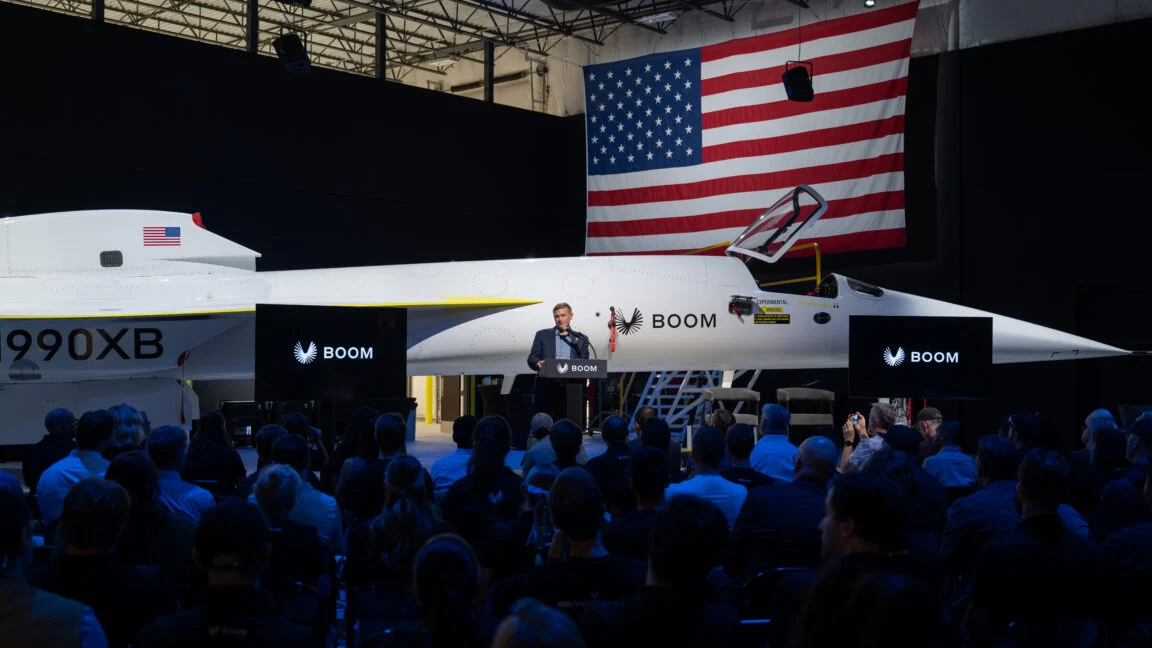
Boom Supersonic, the ambitious aerospace venture seeking to reintroduce commercial supersonic flight, is navigating a turbulent period marked by skepticism from major airline partners and sudden strategic pivots. While company leadership continues to champion a renaissance in high-speed travel and energy innovation, industry experts and key stakeholders are casting doubt on the feasibility of the company’s core milestones. Amid delayed production timelines for its flagship Overture airliner and the sudden loss of a monumental data center energy customer, Boom faces mounting pressure to prove the viability of its dual-pronged industrial strategy.
The skepticism surrounding Boom’s timeline crystalized following public remarks from United Airlines CEO Scott Kirby. As one of Boom’s earliest and most prominent commercial backers, United holds conditional purchase agreements for the Overture airliner. However, during an interview on the Office Hours: Business Edition podcast, Kirby offered a blunt assessment of the aerospace company’s operational schedule. While ’29 is their official timeline, Kirby remarked to podcast host Monica Langley, it is not going to happen in ’29—it is going to take longer.
This candid evaluation builds upon previous statements made by Kirby in March, during which he assessed the commercial prospects of the Overture entering service at a 50-50 probability. Although Kirby has consistently praised Boom CEO Blake Scholl and the innovative spirit of the enterprise, he emphasized that the company still confronts substantial engineering, financial, and regulatory hurdles before the aircraft can achieve federal certification and carry its first paying passengers.
Regulatory Landscape and Historical Context of Supersonic Flight
The pursuit of commercial supersonic travel has long been defined by technological and regulatory roadblocks. Decades ago, the Concorde offered high-speed transatlantic service, but its operations were ultimately hindered by high fuel costs, severe noise pollution restrictions, and limited route profitability, culminating in its retirement in 2003. Commercial supersonic flight over land within the United States was effectively barred by Federal Aviation Administration (FAA) regulations due to the disruptive impact of thunderous sonic booms.
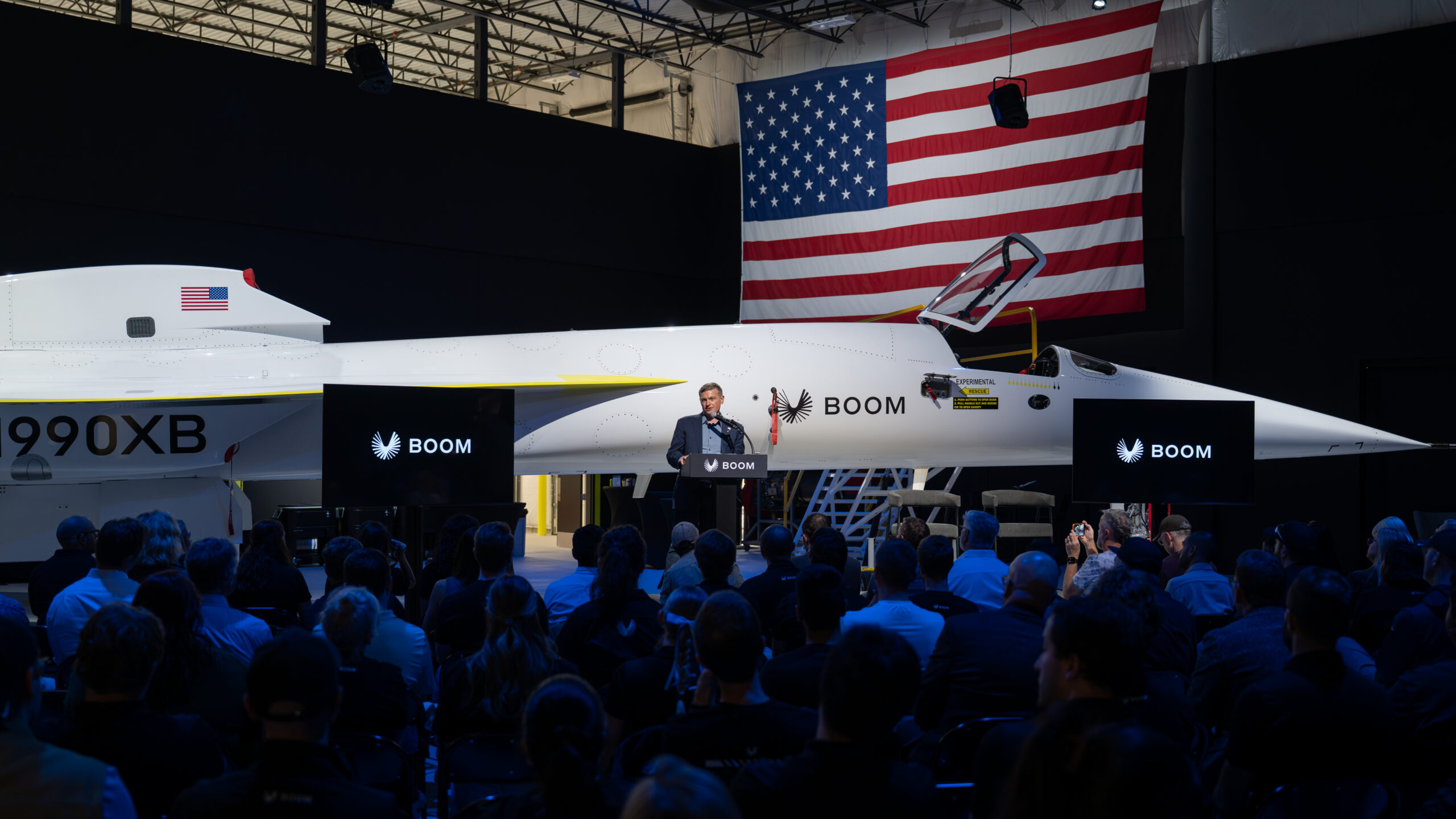
Boom Supersonic has sought to rewrite this narrative by embracing technological alternatives designed to mitigate ground-level noise. Through test flights of its XB-1 demonstrator aircraft conducted between 2024 and 2025, the company has explored the Mach cutoff phenomenon. This aerodynamic strategy involves flying just beyond supersonic speeds at elevated altitudes under specific atmospheric conditions, causing shockwaves to refract upward and dissipate before reaching the ground, thereby theoretically enabling quieter overland travel.
The regulatory environment has also experienced significant shifts to accommodate modern aerospace innovations. Following an executive order issued by the White House in June 2025 aimed at positioning the United States at the forefront of supersonic flight, the FAA proposed new rules in July 2026. These proposed regulations outlined pathways for quiet supersonic airliners to operate commercially over U.S. landmasses, signaling a potential opening of domestic routes that were previously off-limits to high-speed commercial aviation.
Despite these regulatory tailwinds, the physical infrastructure meant to support production has faced scrutiny. Boom completed the construction of its primary Overture manufacturing facility at Piedmont Triad International Airport in Greensboro, North Carolina, back in 2024. However, the facility has remained largely inactive in the months since, prompting questions from state lawmakers and local officials who authorized more than $50 million in public funds to support the development of the site.
Concurrently, other entities are pursuing distinct technological routes to sonic mitigation. Since October 2025, NASA has conducted flight tests with its experimental X-59 aircraft, which features a distinctive, elongated needle-like nose designed to shape shockwaves and reduce a traditional sonic boom into a gentle rumble. Unlike Boom’s Mach cutoff approach, the X-59 represents a specialized design philosophy focused on reshaping the acoustic signature of the aircraft itself.
Pivoting Toward the AI Energy Sector
Faced with long development cycles in commercial aerospace, Boom Supersonic has sought alternative revenue streams by capitalizing on the exponential energy demands of the artificial intelligence sector. The company has aggressively expanded into the production of natural gas turbines intended to power energy-hungry AI data centers.
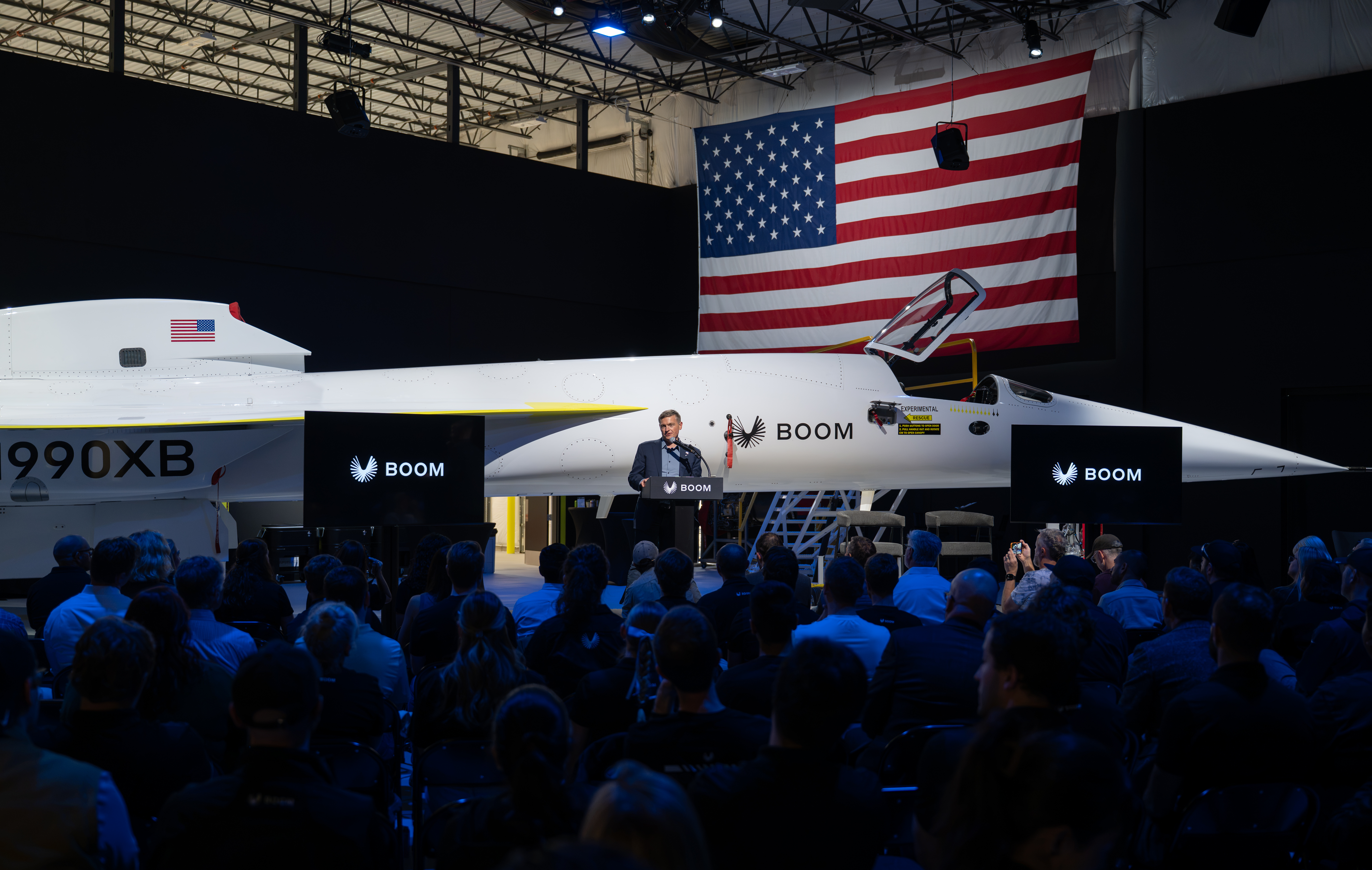
On October 22, Boom unveiled a second major production facility in Centennial, Colorado. Dedicated to manufacturing a 42-megawatt natural gas turbine named Superpower, the factory opening underscored the political and economic crossover between aerospace engineering and grid infrastructure. The unveiling event featured high-profile political support, including U.S. Secretary of Energy Chris Wright and Colorado Governor Jared Polis, mirroring the federal backing the company has received for its aviation initiatives.
Boom’s strategic diversification aligns with broader market trends. As major tech enterprises scale up advanced computing infrastructure, many data center developers have encountered severe constraints within traditional electrical power grids. Consequently, the industry has increasingly turned to natural gas solutions, with some developers utilizing mobile gas generators or aeroderivative turbines originally engineered for aviation and marine applications to rapidly bring facilities online.
Setbacks in the Energy Market
Despite the high-profile launch of its energy division, Boom’s foray into the data center power market has already encountered major turbulence. In late September, CEO Blake Scholl acknowledged via social media that the company had lost a massive $1.25 billion contract. The agreement would have seen data center developer Crusoe purchase 29 of Boom’s gas turbines.
Crusoe has played a central role in constructing extensive data center campuses across Texas for tech giants including Oracle, Google, and Microsoft. These facilities frequently utilize diverse energy configurations, blending traditional grid power, renewables, and natural gas solutions. The abrupt cancellation of the Crusoe deal represents a notable financial and strategic blow to Boom’s near-term revenue projections, even as Scholl asserted that the company anticipates delivering approximately 250 megawatts of Superpower turbine capacity to alternative client sites.
Synergy Between Aviation and Power Generation
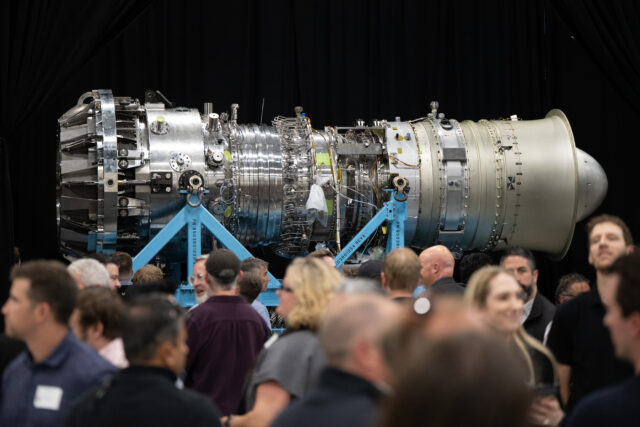
Boom leadership maintains that its dual focus on aviation and power generation is mutually reinforcing, driven by shared core engine technology. The company recently completed the assembly of a prototype turbine core designated the Sprint Core. This modular core is engineered to serve as the foundational building block for both the Superpower natural gas turbines intended for data centers and the Symphony propulsion system designed to power the Overture airliner.
To validate this technology, Boom scheduled initial test firings of the Sprint Core at the Colorado Air & Space Port, with ignition trials anticipated ahead of the Thanksgiving holiday. Successful testing of the core would represent a tangible engineering milestone, providing empirical data to support the company’s ambitious performance claims.

Implications and Outlook for the Future
The convergence of commercial aerospace ambitions and high-tech energy manufacturing places Boom Supersonic at a critical crossroads. On one hand, the company benefits from favorable regulatory shifts, executive branch support, and innovative engineering concepts that seek to bridge the gap between aviation and stationary power generation. On the other hand, the stark warnings from major airline partners regarding the 2029 delivery timeline—coupled with the sudden dissolution of a billion-dollar supply contract in the data center sector—underscore the immense financial and operational risks facing the enterprise.
As Boom prepares to conduct crucial tests on its Sprint Core technology and attempts to ramp up production schedules at its Colorado and North Carolina facilities, the coming months will test the company’s resilience. Whether Boom can successfully navigate these industrial hurdles, satisfy its conditional airline orders, and regain lost ground in the competitive energy market remains one of the most closely watched narratives in modern advanced manufacturing.