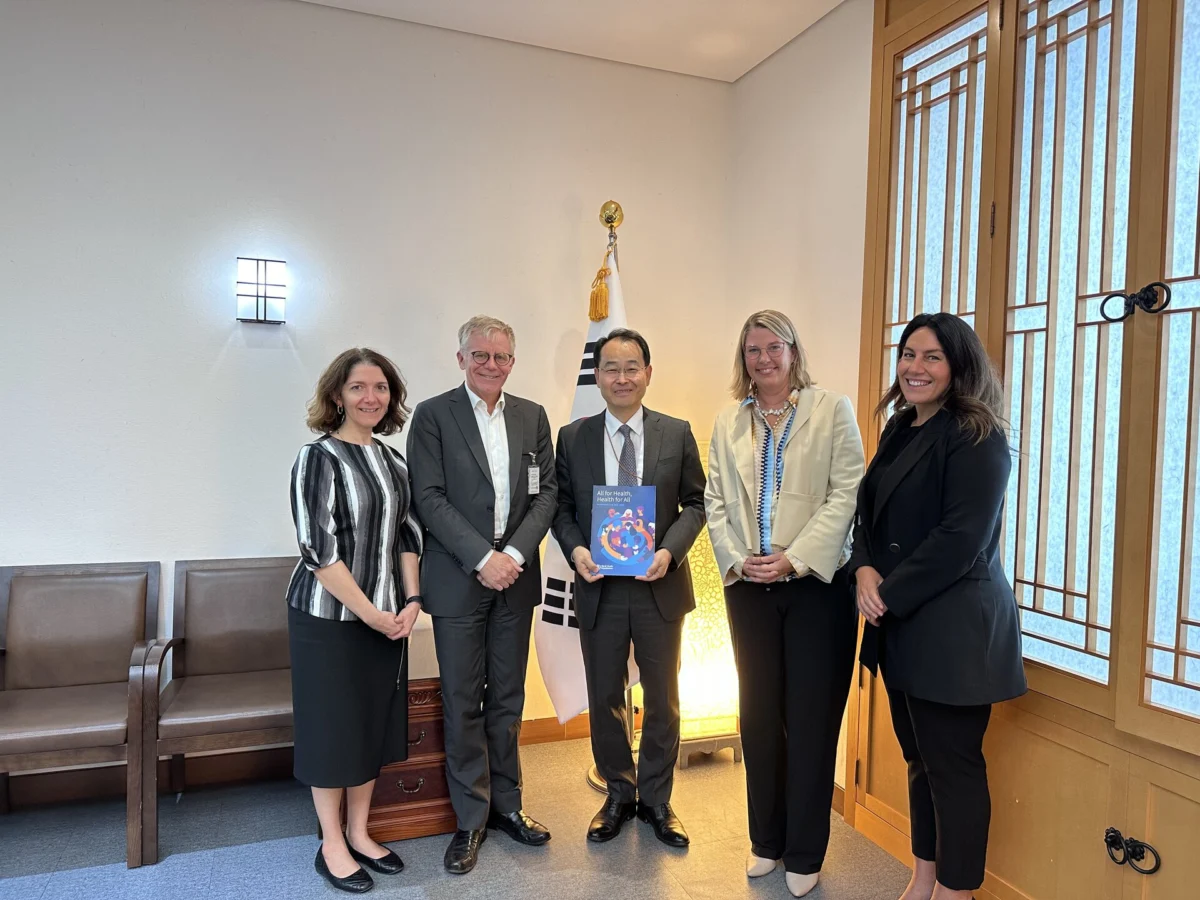
The World Health Organization (WHO) and the Government of the Republic of Korea recently convened their second Strategic Dialogue in Seoul, marking a significant milestone in a collaborative relationship that has spanned more than seven and a half decades. Held from August 28 to 29, 2024, the two-day high-level gathering brought together key decision-makers from both entities to align future strategic priorities, evaluate ongoing joint initiatives, and fortify multilateral responses to emerging global health security threats.
The delegation representing the global health body was led by Dr. Catharina Boehme, Assistant Director-General for External Relations and Governance at the WHO. She was accompanied by a comprehensive team of international public health experts, comprising both in-person delegates and virtual participants representing all three tiers of the Organization: headquarters, regional offices, and country-level operations. On the host nation’s side, the high-level delegation was spearheaded by Dr. Hye-Jin Kim, Deputy Minister for Planning and Coordination at the Ministry of Health and Welfare of the Republic of Korea. The Korean delegation included senior leadership figures such as Dr. Young-Mee Jee, Commissioner of the Korea Disease Control and Prevention Agency (KDCA), alongside high-ranking representatives from the Ministry of Foreign Affairs and the Ministry of Food and Drug Safety.
This pivotal meeting underscores the remarkable economic and diplomatic evolution of the Republic of Korea. Once a primary recipient of international development assistance and humanitarian aid in the wake of the Korean War, the nation has successfully transitioned into a major donor country and a recognized global leader in public health innovation, biotechnology, and international development finance. Today, Seoul plays an indispensable role on the international stage, providing crucial financial, technical, and logistical support to numerous WHO initiatives designed to bolster health systems in low- and middle-income nations.
Historical Context and Evolution of the Partnership
To fully understand the significance of the second WHO-Republic of Korea Strategic Dialogue, one must examine the deep historical roots connecting the two entities. The formal partnership began shortly after the establishment of the Republic of Korea in 1948 and the subsequent founding of the World Health Organization. During the devastating aftermath of the Korean War in the early 1950s, the WHO, alongside other United Nations agencies, played a critical role in establishing basic public health infrastructure, managing infectious disease outbreaks such as cholera and tuberculosis, and training domestic medical personnel in a war-torn society.
Throughout the subsequent decades of rapid industrialization and economic growth—often referred to as the Miracle on the Han River—the Republic of Korea steadily built its internal capacity. By the late 20th century, the country had successfully transitioned from being a recipient of international health aid to a self-sufficient nation capable of managing its own domestic health security. Entering the 21st century, Seoul expanded its foreign policy objectives to embrace the concept of global citizenship, significantly increasing its Official Development Assistance (ODA) commitments.
In recent years, the partnership has shifted from traditional donor-recipient paradigms toward a peer-to-peer strategic alliance focused on health security, universal health coverage (UHC), digital health innovations, and biomedical research and development. The institutionalization of the Strategic Dialogue framework represents the latest evolution in this journey, offering a structured platform to harmonize bilateral strategies with global health mandates, such as the WHO’s Thirteenth General Programme of Work (GPW 13) and Sustainable Development Goal 3 (SDG 3), which aims to ensure healthy lives and promote well-being for all at all ages.
Chronology and Key Proceedings of the 2024 Strategic Dialogue
The two-day summit in Seoul was meticulously structured to cover a wide array of pressing global health topics, ranging from pandemic preparedness to sustainable financing mechanisms.

On the opening day, August 28, 2024, the plenary sessions commenced with opening remarks from Dr. Boehme and Deputy Minister Dr. Hye-Jin Kim. The morning sessions focused heavily on reviewing past milestones achieved through the WHO-Republic of Korea partnership, including joint efforts in vaccine manufacturing, regulatory harmonization, and emergency response training. Officials from the Korea Disease Control and Prevention Agency presented updates on domestic enhancements to epidemic intelligence and disease surveillance systems, which have served as regional benchmarks following lessons learned from previous outbreaks like MERS and COVID-19.
The afternoon discussions on the first day pivoted toward multilateral collaboration and sustainable financing. The WHO delegation presented the comprehensive WHO Investment Case report, highlighting the organization’s funding needs and strategic priorities for the coming biennium. Mr. Jonghan Park, Director-General for Development Cooperation at the Ministry of Foreign Affairs, engaged in substantive dialogues regarding how Korean ODA allocations can be most effectively channeled to support WHO’s core programmatic work, particularly in the Western Pacific region and vulnerable African nations.
On August 29, 2024, the second day of the Strategic Dialogue featured specialized breakout sessions addressing regulatory capacities, antimicrobial resistance (AMR), and digital health transformations. Recognizing the Republic of Korea’s advanced standing in medical device manufacturing and biopharmaceuticals, discussions explored ways to leverage Korean technological expertise to improve global access to safe, effective, and affordable medical countermeasures.
Furthermore, in strict alignment with the WHO’s institutional objective to enhance strategic engagement with legislative bodies, the WHO delegation participated in targeted consultations outside the executive ministries. Dr. Boehme and her team met with several influential Members of the National Assembly of the Republic of Korea who have consistently championed international health security, global health governance, and increased budgetary allocations for foreign medical assistance within the legislative branch. These parliamentary discussions underscored the bipartisan commitment within South Korean politics toward maintaining a robust and active foreign aid agenda.
Supporting Data and Financial Commitments
The partnership between the WHO and the Republic of Korea is underpinned by substantial financial contributions and technical resource-sharing. Over the past decade, Seoul has consistently ranked among the prominent state contributors to various specialized WHO funds, including the Contingency Fund for Emergencies (CFE), the WHO Academy, and targeted initiatives combating neglected tropical diseases and non-communicable diseases.
According to recent financial tracking data from the WHO, the Republic of Korea’s voluntary contributions have enabled the organization to rapidly deploy emergency health teams, secure essential personal protective equipment (PPE), and support vaccine rollouts in resource-constrained settings. During the height of the COVID-19 pandemic, the Korean government provided critical financial aid and donated millions of diagnostic kits and vaccine doses through bilateral and multilateral channels, including the COVAX facility.
The discussions in Seoul also emphasized the ongoing collaboration surrounding the WHO Global Training Hub for Biomanufacturing, established in the Republic of Korea. This flagship initiative is designed to provide comprehensive training in the production of vaccines, insulin, monoclonal antibodies, and other essential biologics to personnel from low- and middle-income countries. By transferring critical manufacturing know-how, the hub directly addresses structural inequities in global vaccine access—a vital lesson derived from the systemic supply chain bottlenecks experienced during recent global health emergencies.
Official Reactions and Institutional Statements
Participants from both delegations expressed profound optimism regarding the long-term implications of the second Strategic Dialogue. The alignment of institutional goals achieved during the conference is expected to serve as a blueprint for future bilateral engagements across the international development landscape.

Dr. Catharina Boehme commended the Republic of Korea for its steadfast leadership and visionary approach to international solidarity. "The Republic of Korea stands as a stellar example of how sustained domestic health investments, combined with a commitment to global multilateralism, can transform a nation from an aid recipient into a global health superpower," Dr. Boehme stated during the closing plenary. "Our partnership over the past 75 years has saved countless lives. The strategic priorities we have aligned upon during these past two days in Seoul will ensure that our joint efforts remain agile, effective, and prepared to tackle the complex health emergencies of the 21st century."
Echoing these sentiments, Deputy Minister Dr. Hye-Jin Kim emphasized the moral and strategic imperatives driving South Korea’s foreign health policy. "As a nation that has experienced the profound hardships of conflict and poverty, the Republic of Korea deeply understands the fundamental human right to health," Dr. Kim remarked. "Our collaboration with the World Health Organization is a cornerstone of our foreign policy and our commitment to global public goods. Through this second Strategic Dialogue, we have not only reaffirmed our historical ties but have also charted a forward-looking course to address antimicrobial resistance, enhance biomanufacturing capabilities, and achieve universal health coverage globally."
Dr. Young-Mee Jee, Commissioner of the KDCA, added that technical cooperation between Korean public health agencies and the WHO remains vital for regional and global health security. "Disease pathogens do not respect national borders. Our work with the WHO ensures that epidemiological data, best practices, and rapid response protocols are shared transparently and efficiently across the international community," Dr. Jee noted.
Broader Impact and Global Implications
The successful conclusion of the second WHO-Republic of Korea Strategic Dialogue carries significant implications for the broader architecture of global health governance. At a time when traditional multilateral institutions face mounting geopolitical tensions, budgetary constraints, and complex polycrises—ranging from climate-induced health emergencies to protracted conflicts—stable and deepening partnerships between multilateral organizations and advanced middle-power donor states are more critical than ever.
By reinforcing their alliance, the WHO and Seoul are signaling a unified commitment to the principles of global health security, equity, and evidence-based policymaking. The focus on regional biomanufacturing hubs directly addresses the structural vulnerabilities exposed by past pandemics, promising a more decentralized and resilient global supply chain for life-saving medical products.
Furthermore, the integration of legislative engagement—exemplified by the WHO delegation’s meetings with members of the National Assembly—highlights an increasingly sophisticated approach to diplomacy that recognizes the essential role of national parliaments in sustaining long-term foreign assistance budgets and ratifying international health instruments, such as the ongoing negotiations surrounding the global pandemic agreement.
As the international community looks ahead to the implementation of the strategic priorities agreed upon in Seoul, the WHO-Republic of Korea partnership will undoubtedly serve as a benchmark for effective international cooperation. Through sustained financial investment, technical innovation, and unwavering political will, both parties have demonstrated that international solidarity remains the most potent tool in safeguarding the health and well-being of the global population against the uncertainties of tomorrow.