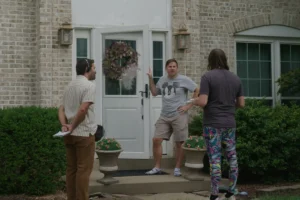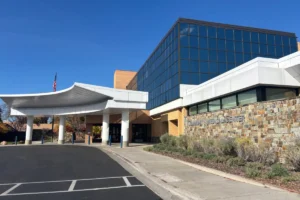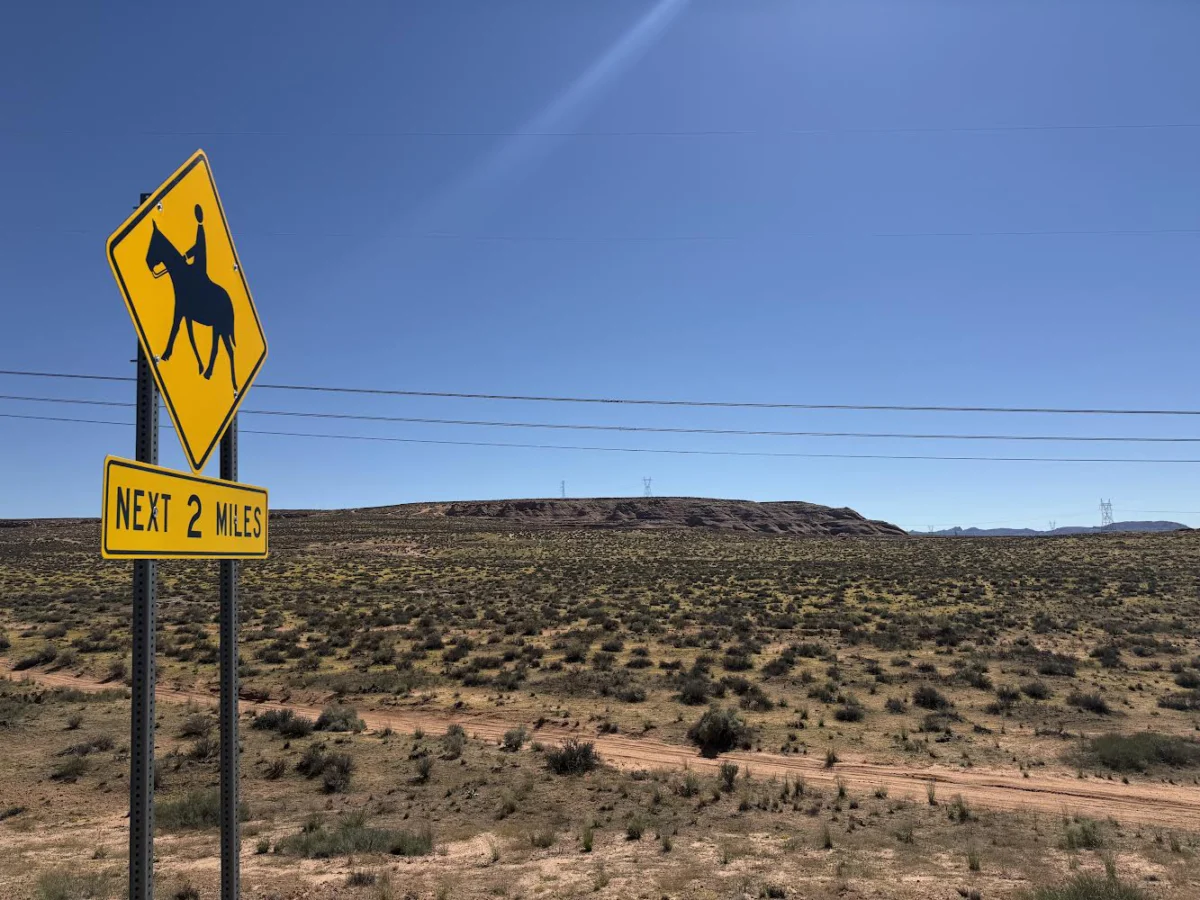
The quiet, sun-baked desert community of Page, Arizona, sits as a majestic gateway to the American Southwest, bordered by dramatic red-rock formations, sprawling Joshua trees, and the iconic, winding curves of Horseshoe Bend along the Colorado River. Home to roughly 7,000 residents, this scenic tourist hub was built on wide horizons, pristine air, and a tranquil pace of life. Today, however, that tranquility has been thoroughly fractured. A proposed $10 billion mega data center—meant to house the massive computational infrastructure driving the artificial intelligence revolution—has turned the town into ground zero for an escalating national conflict.
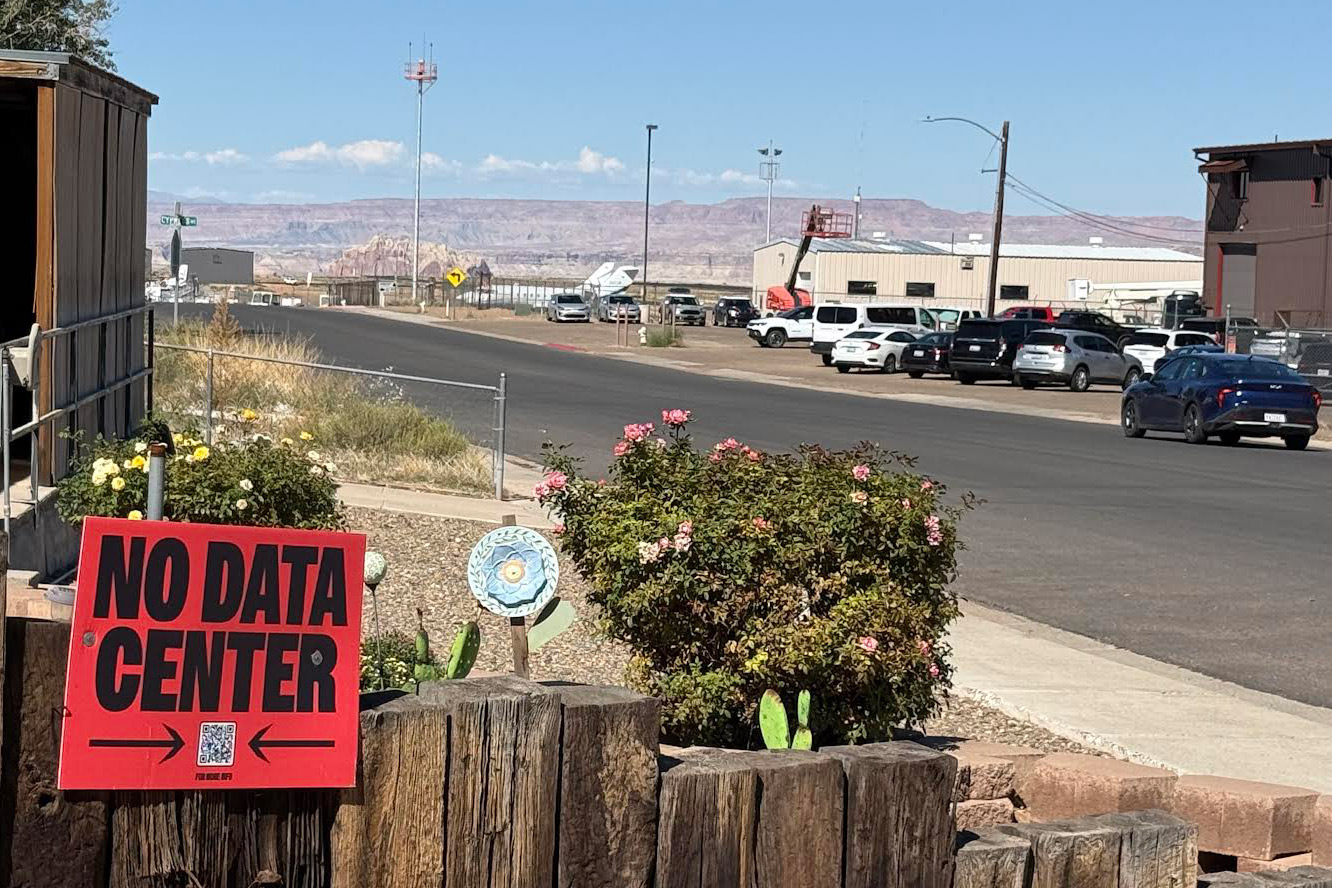
Doug Herrera, a 64-year-old resident, still lives in the modest home his late father constructed. Growing up against the backdrop of historic regional industries, Herrera bears lingering questions about whether his father’s fatal battle with cancer was linked to industrial pollutants from legacy uranium mining operations in the area. Now, those historical anxieties have been violently reawakened. Staring out from his front porch at a yard sign bearing the bold declaration "No Data Centers," Herrera articulates a sentiment shared by a rapidly growing fraction of his neighbors: a deep-seated fear that the arrival of a hyperscale technological facility will jeopardize public health, ravage the local ecosystem, and fundamentally alter the character of their rural sanctuary.
"I’m a patriot, but I’m highly against the data center," Herrera said, gesturing toward the surrounding horizon. "There is light pollution, sound pollution. The temperature is going to rise."
Across the United States, a sudden and unprecedented buildout of artificial intelligence infrastructure is dividing communities, reshaping state economies, and injecting an unexpected, volatile issue into midterm elections. What began a few years ago as quiet municipal land transactions have mushroomed into fierce grassroots movements. The friction between high-tech economic promises and localized environmental and health anxieties is testing long-standing political coalitions, particularly in reliably red states where the vast majority of these sprawling facilities are being built.
The Anatomy of a Grassroots Rebellion
Hyperscale data centers are massive, warehouse-like structures containing tens of thousands of square feet of densely packed computer servers, cooling units, and heavy-duty electrical equipment. To sustain the staggering energy demands required to train and run complex AI models, these facilities gobble up immense quantities of electricity. When regional power grids experience peak demand, the facilities routinely lean on backup gas turbines and diesel generators to maintain uninterrupted operations.
Emerging environmental and public health research has begun to shed light on the hidden tolls of these modern colossi. According to recent scientific modeling—including studies spearheaded by researchers at the University of California-Riverside—air emissions from backup power generation and grid strain could contribute to nearly 1,300 premature deaths annually nationwide by 2030, carrying an estimated public health burden exceeding $20 billion.
Furthermore, the continuous mechanical hum of industrial-scale cooling towers and backup generators frequently exceeds 90 decibels, a volume threshold known to cause permanent hearing damage with prolonged exposure. Environmental advocacy organizations also point out that complex cooling infrastructure often incorporates synthetic substances known as per- and polyfluoroalkyl substances (PFAS), or "forever chemicals," which can accumulate in human tissue and leach into local watersheds. Additionally, the massive electrical draw of these complexes creates localized "data heat islands," driving up ambient temperatures in surrounding neighborhoods, while security and operational lighting exacerbate light pollution linked by researchers to disruptions in circadian rhythms and chronic health conditions.
"We’re just starting to see the very early edge of the wave of the research into health impacts of data centers," said Alison Steele, executive director of the Environmental Health Project. "By the time we have a substantial volume of research, it’s going to be too late, because the decisions are being made now."
In Page, these mounting concerns translated directly into political upheaval. In July, local voters decisively ousted the sitting mayor following intense community backlash over the City Council’s prior approval of a 500-acre land sale designated for the potential data center project. Although the exact footprint within that acreage remains undetermined, the mere prospect of industrial neighbors has mobilized residents to sign petitions, attend contentious council meetings, and plaster front yards with protest signage.
Jan Boehme, who lives directly adjacent to the proposed development zone, echoed the neighborhood’s collective dread while standing near her own protest sign. "We’re against it," Boehme said. "In this area, there are a lot of houses, and I’m concerned about all the noise and what it means for our health."
A Nationwide Flashpoint in Red States
The localized rebellion in Page is far from an isolated incident. Nationally, there are roughly 1,400 operational data centers, with an additional 2,000-plus facilities in various stages of planning and construction. According to data from market intelligence firm Cleanview, roughly 60 percent of all data center capacity currently under construction is concentrated in states that President Donald Trump won by five percentage points or more. Excluding the dominant Northern Virginia market, a staggering 92 percent of new capacity is located within states carried by the president in 2024.
This geographic distribution has created a profound political paradox. Historically, rural and suburban districts in conservative states have welcomed industrial projects promising jobs, infrastructure investments, and broad economic expansion. However, the sheer scale, resource consumption, and environmental footprint of AI data centers have caught local populations off guard.
Lee Hannah, a political science professor at Wright State University in Dayton, Ohio, notes that the speed of the backlash has stunned local and state leaders who greenlit these projects just a couple of years ago without anticipating organized resistance.
"Two years ago, a lot of these data centers went up and there was not an organized, watchful opposition," Hannah explained. "That opposition has come up in a grassroots way so quickly that decisions made a year office by local officials or state governments to get behind a data center are suddenly career-ending."
This dynamic has placed conservative coalitions in vulnerable territory. While national leadership, including President Trump, has championed data center expansion as an absolute economic and geopolitical imperative necessary to maintain technological superiority over global rivals like China, grassroots conservatives living adjacent to these facilities find themselves aligned with environmental groups in demanding a halt to unchecked construction.
Political Fallout in Key Midterm Races
The data center backlash has injected profound unpredictability into competitive elections across the country, turning ribbon-cutting ceremony photographs from a year ago into radioactive campaign material.
In Arizona’s high-stakes 1st Congressional District, the battle over data centers has become a central fault line in the race for the House seat. Republican candidate Jay Feely, who secured his primary victory with an endorsement from President Trump, has defended data centers as critical infrastructure necessary for national security and technological competition. Conversely, his Democratic opponent, Amish Shah, has called for an immediate legislative and regulatory pause on new data center construction within the district. Polling indicates that the issue carries significant political weight; a public opinion survey conducted by Noble Predictive Insights revealed that 57 percent of registered voters in Arizona oppose the construction of additional large data centers.
A similar political storm is battering candidates in Ohio, the state hosting the highest volume of local ballot referendums and municipal initiatives targeting data center developments. Driven by roughly $2.5 billion in state and local tax incentives doled out over the past decade, tech giants including Meta, Amazon, and Google have blanketed regions of Ohio with sprawling server complexes.
The resulting friction has taken center stage in Ohio’s marquee U.S. Senate race. Former Democratic Senator Sherrod Brown has launched a blistering media campaign targeting his Republican opponent, Jon Husted, painting him as the primary architect of the state’s aggressive tech incentive programs.
"They’re devouring our farmland, sucking up our water, and using our energy," Brown asserts in widely circulated campaign advertisements that label Husted "the face of data centers."
Internal party memorandums, such as an August document circulated by the National Republican Senatorial Committee and obtained by political media outlets, acknowledge the severe political vulnerability the issue poses, warning that data centers have become an "anchor hanging around Husted’s neck."
In response, Husted and his campaign have sought to deflect criticism by framing data center approvals as fundamentally local decisions, while asserting that incoming tech firms should bear the full financial burden of upgrading necessary regional infrastructure, including electrical grid enhancements.
Public opinion data underscores the depth of the voter sentiment. An October survey conducted by Ohio Northern University and SurveyUSA found that 55 percent of Ohio adults oppose further data center expansion, with approximately two-thirds expressing a negative view regarding the facilities’ environmental impact on their communities. Gallup polling similarly indicates that Americans harbor deeper apprehensions about data centers in their immediate vicinities than they do about traditional heavy infrastructure projects, including nuclear power plants.
Industry Response and the Path Forward
Faced with a rising tide of public skepticism, legal challenges, and municipal moratoriums, the data center industry has pushed back, emphasizing its commitment to corporate responsibility and regulatory compliance.
Dan Diorio, executive vice president of state policy and government affairs at the Data Center Coalition, pointed to comprehensive industry reviews—particularly in mature markets like Virginia—arguing that routine utilization of backup power sources such as diesel generators is statistically minimal. He maintained that existing state and federal air quality and environmental regulations adequately mitigate potential emissions and ecological footprints.
"Data centers are committed to being responsible partners where they operate," Diorio said.
Yet, for residents living in the shadow of proposed facilities—from the rolling hills of Ohio to the red-rock expanses of Page, Arizona—regulatory assurances offer little comfort against the looming reality of transformed landscapes, strained electrical grids, and uncertain health outcomes. As the midterm elections approach, the debate over the infrastructure of the digital age has ceased to be a mere discussion of economic policy; it has evolved into a fundamental referendum on quality of life, local autonomy, and the true cost of the artificial intelligence revolution.