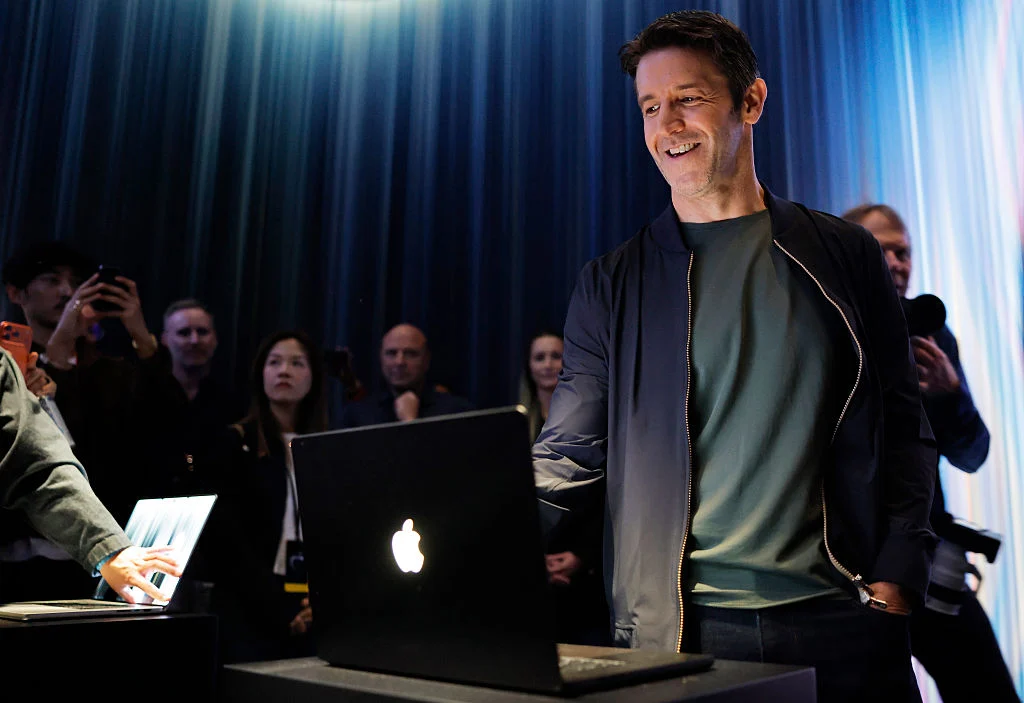
In the wake of a highly anticipated product showcase in Los Angeles this October, Apple’s new CEO, John Ternus, has moved to recalibrate public perception regarding the company’s trajectory in the rapidly evolving artificial intelligence sector. Speaking with Wired’s Steven Levy, Ternus addressed lingering industry criticism that Apple has been a laggard in the AI race, positioning the company’s methodical approach not as a deficit, but as a deliberate commitment to user-centric integration.
The event, which served as a significant milestone for the tech giant, arrives at a moment of transition. Ternus, who formally assumed the role of CEO in early September 2026, inherits a company navigating the most profound technological shift of the decade. While rivals have aggressively pursued generative AI as a standalone product feature, Apple has maintained a more guarded, ecosystem-integrated philosophy.
A Chronology of Apple’s AI Evolution
To understand the current discourse, one must look at the timeline of Apple’s recent AI integration efforts. For years, Apple focused its machine learning investments on hardware optimization, such as the Neural Engine in its A-series and M-series chips, rather than outward-facing generative chatbots.
In mid-2024, industry analysts began voicing concerns that Apple was falling behind competitors like OpenAI, Google, and Microsoft. These concerns intensified as those companies rolled out multimodal models that significantly disrupted traditional search and productivity software. Apple remained characteristically quiet, continuing to prioritize privacy-focused, on-device processing.
The turning point occurred in the summer of 2026. Following months of speculation, Apple launched a significantly revamped, AI-powered version of Siri. While the update was lauded for its integration and improved natural language processing, it was met with a lukewarm reception from some critics who questioned whether the update arrived too late to capture the market’s imagination. By the time of the October 2026 Los Angeles event, the narrative had solidified into a "wait-and-see" approach for the new leadership team.
The Philosophy of Invisible Utility
Ternus’s defense of Apple’s strategy hinges on the concept of "invisible utility." During his interview, the CEO clarified that the company’s primary objective is not to win the race for the most powerful model, but to solve user problems in ways that render the underlying technology secondary to the user experience.
"We don’t want to ship AI for AI’s sake," Ternus stated. "When we’re doing it right, people won’t have to think about whether it was AI that made this happen or more traditional software. What matters is, did we build something that they really love?"
This perspective reflects a long-standing Apple design ethos: the technology is a means to an end. By focusing on how AI can assist with photo editing, predictive text, or workflow automation without demanding that the user interact with an "AI agent" directly, Apple hopes to avoid the friction and potential disillusionment associated with the current boom-and-bust cycle of generative AI hype.
Market Data and Competitive Analysis
The pressure on Apple is reflected in the market data. According to recent quarterly reports, while Apple’s hardware revenue remains resilient, investors have expressed concerns regarding the company’s ability to sustain its premium service growth if it does not offer a competitive "AI-first" experience.
Recent surveys of enterprise and consumer tech users indicate that while "AI features" are a marketing buzzword, adoption rates for complex AI agents remain significantly lower than for integrated, functional tools. Apple’s decision to integrate AI directly into the OS—rather than creating a separate "Apple AI" app—is a high-stakes bet that consumer behavior will favor seamlessness over novelty.

Industry analysts have noted that this strategy effectively protects Apple’s ecosystem lock-in. If AI becomes an essential layer of the iOS and macOS experience, it reinforces the value of Apple hardware, which is optimized to run these processes with higher security and lower latency than cloud-based competitors.
Implications of the "Human-Centric" Approach
A critical question posed to Ternus during the interview concerned the existential threat that AI agents might pose to the current app-based economy. If an AI can perform tasks—such as booking a flight or managing a calendar—without the user ever opening a specific application, the current business model of the App Store could face disruption.
Ternus remained optimistic about the human element in product creation. "That could make life really easy, I suppose, but the creation of products is a deeply human and personal thing, something that we love to do," he said. His response suggests that Apple views AI as an evolution of its existing tools, rather than a replacement for the software-centric ecosystem that has defined the last two decades of digital commerce.
From a business standpoint, this suggests that Apple intends to act as a gatekeeper for AI services, ensuring that even as agents become more capable, they remain tethered to the privacy and security standards of the Apple platform.
Reactions and Industry Outlook
The industry reaction to Ternus’s comments has been mixed. Supporters of the "Apple Way" argue that the company is playing a long game, waiting for the technology to mature before integrating it into its core services. Critics, however, argue that the speed of innovation in AI is unprecedented and that "methodical" could quickly become synonymous with "obsolete."
"Apple is fundamentally a hardware company that uses software to sell that hardware," says one analyst familiar with the company’s strategy. "By downplaying the ‘AI’ label, they are protecting their brand from the potential volatility of the current market. But they are also taking a risk that they might be perceived as irrelevant if they don’t provide the ‘wow’ factor that competitors are now using to define the next generation of computing."
The Road Ahead for the Ternus Administration
As John Ternus settles into his tenure, the challenge is clear: he must reconcile Apple’s reputation for perfectionism with the market’s demand for rapid innovation. The Los Angeles event was a clear attempt to demonstrate that Apple’s AI is functional, mature, and ready for deployment.
Whether this strategy will be enough to satisfy shareholders and tech enthusiasts remains to be seen. The company is currently investing heavily in its internal data center infrastructure to facilitate more robust, private-cloud-based AI processing—a sign that Apple is not ignoring the compute-heavy requirements of modern AI.
Ultimately, the shift in narrative—from "Apple is behind" to "Apple is being deliberate"—is the core of Ternus’s communication strategy. By framing AI as a hidden utility rather than a headline product, Apple is attempting to insulate itself from the volatility of the AI sector while ensuring that its ecosystem remains indispensable.
The coming months will be a litmus test for this strategy. As the new products showcased in Los Angeles reach consumers, the true measure of success will not be the technical specifications of the AI models powering them, but the degree to which these tools improve the daily lives of the hundreds of millions of users who rely on Apple devices. If Ternus can successfully shift the conversation from "AI capabilities" to "human value," he will have succeeded in steering Apple through one of its most challenging transitional periods in history.
The company’s commitment to privacy, combined with its hardware-software synergy, remains its most significant competitive advantage. As the tech landscape continues to shift, the world will be watching to see if this "human-first" approach is the correct response to the silicon-driven revolution of the late 2020s. For now, the message from the top of Apple is clear: the focus remains on the user, not the algorithm.