Crossing multiple time zones often leaves humans grappling with jet lag—a disorienting physical state where the internal circadian clock insists it is the dead of night while local clocks read midday. For years, scientists understood this physiological friction as a uniquely human inconvenience or a quirk of modern, high-speed international travel. However, groundbreaking new research published in the journal Science reveals that this phenomenon is not exclusive to humanity. Wild animals traversing vast geographical expanses experience their own versions of jet lag, and for seabirds navigating by the Sun, this internal desynchronization carries a measurable, navigational cost.
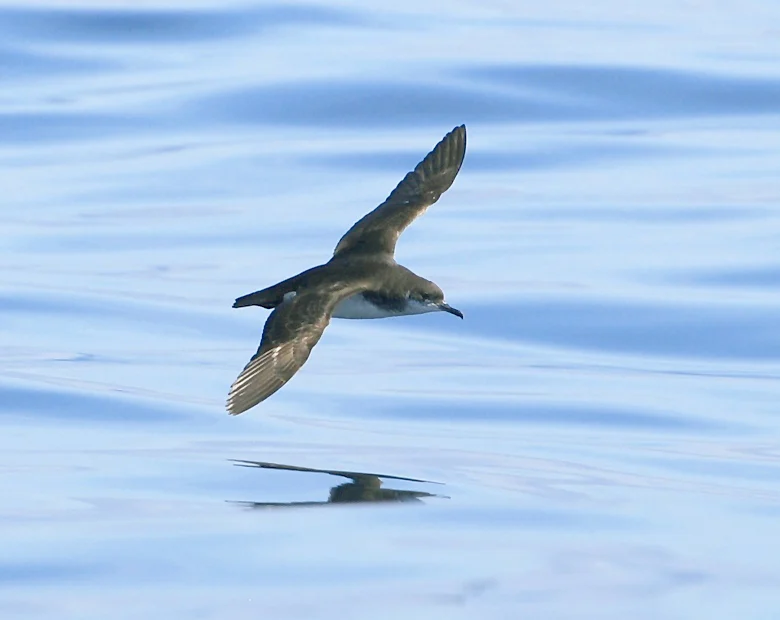
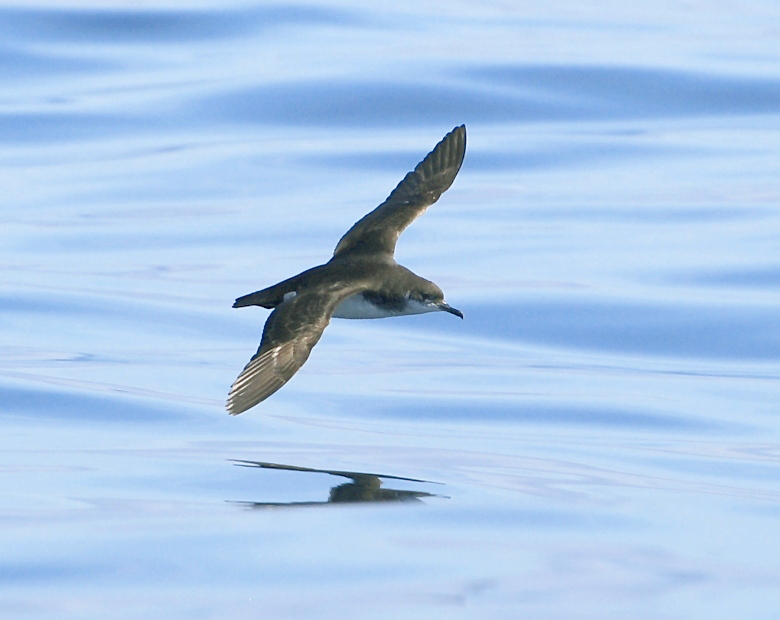
The study, led by behavioral and sensory ecologists at the University of Oxford, centers on the Manx shearwater—a medium-sized seabird native to the North Atlantic. Known for their striking black-and-white plumage, pigeon-like statures, and exceptionally long wings, Manx shearwaters are elite oceanic travelers closely related to albatrosses. The majority of the global population breeds along the rugged coastal islands of the United Kingdom and Ireland, with Wales hosting roughly half of all breeding pairs. From these subterranean burrows, the birds routinely launch themselves on grueling foraging excursions that span anywhere from a single day to two consecutive weeks, covering hundreds or even more than a thousand kilometers across the open North Atlantic in search of food.
When it is time to return to their nests, shearwaters rely on a sophisticated two-part navigation system. First, they deploy a map sense—a yet-fully-deciphered mechanism hypothesized to rely heavily on olfactory cues—to determine their precise geographic coordinates relative to their colony. Once they establish their position, they switch to a sun compass, using the position of the celestial body in the sky to chart a direct, unwavering homeward trajectory. Yet, this celestial reliance introduces a fundamental physical challenge: the Sun is not a stationary landmark. As Earth rotates, the Sun sweeps across the sky from east to west, changing its azimuth continuously throughout the day.
To use the Sun as a reliable compass, an animal must possess a precise internal clock that accounts for the changing time of day. If an animal intends to travel due south at sunrise, it must move at a 90-degree angle clockwise from the Sun. By solar noon, however, that same animal must travel directly toward the Sun, and by sunset, 90 degrees counterclockwise. While almost all animals, including birds, possess a genetically hardwired circadian clock, the biological timing mechanism of the Manx shearwater is not entirely frictionless when subjected to rapid longitudinal displacement.
The Chronology and Mechanics of Avian Miscalculation
The biological roots of this oceanic jet lag lie in how seabirds maintain their internal timepieces. Manx shearwaters recalibrate their internal clocks exclusively at twilight—during the distinct windows of dawn and dusk. Consequently, for every single degree of longitude a bird traverses between sunrise and sunset, its internal circadian clock falls approximately four minutes out of sync with the local solar time of its new location.
As a result of this minute temporal displacement, a homing shearwater miscalculates where the Sun should be positioned in the sky relative to its actual geographic coordinates. When a bird flies rapidly eastward, its desynchronized clock causes it to veer off course in a clockwise direction. Conversely, when it journeys westward, the temporal lag forces it to drift counterclockwise.
While behavioral scientists had previously documented comparable compass skews in captive animals—such as classic experiments involving penguins physically transported across longitudinal lines by researchers—this new study marks the first time the phenomenon has been clearly and definitively demonstrated in wild, free-ranging animals navigating under their own power. Detecting this subtle effect in the wild has historically proven exceptionally difficult because the directional errors are remarkably small, demanding massive empirical datasets to unmask statistical significance.
Two Decades of High-Tech Tracking Data
The breakthrough was made possible by an extraordinary, multi-decade data collection effort spearheaded by Oxford researchers. Tim Guilford, a behavioral ecologist and senior supervisor on the study, alongside long-time Oxford shearwater researcher Chris Perrins, began outfitting Manx shearwaters with miniature GPS tracking devices in 2004. At the time, GPS technology had just recently evolved to become light and compact enough to be safely mounted on a bird of this size without impeding its flight dynamics.
Over the span of twenty years, the Oxford team accumulated an unprecedented repository of movement data: precise tracks from 3,688 individual foraging trips executed by 1,045 distinct birds originating from colonies along the western coasts of the United Kingdom.
Armed with this expansive database, lead author Patrick Lewin and his colleagues filtered out the erratic, looping flight paths characteristic of active foraging—during which birds execute countless short dips and turns to hunt—and isolated the distinct homeward legs of the journeys. According to the researchers, homing flights are remarkably straightforward to identify. Once a shearwater decides to return to its burrow, it transitions into a high-performance endurance mode, flying continuously in a near-perfect straight line at maximum velocity for extended periods.
For every recorded homing flight, the researchers reconstructed the bird’s exact path, pinpointing where it had last witnessed the sunrise—the exact moment its internal clock was last successfully synchronized with local time. At every subsequent GPS waypoint along the journey, the team calculated the longitudinal distance the bird had covered east or west, mathematically modeling how much that displacement would bend its sun-based compass. Because the researchers knew with absolute certainty that every bird was targeting its specific home burrow, they could directly compare theoretical navigation errors against the birds’ actual spatial deviations.
Empirical Findings and Navigational Adjustments
The temporal shifts documented by the team were remarkably subtle. The maximum time displacement observed across thousands of flights was approximately one hour, with the vast majority of instances registering far smaller discrepancies of just 10 to 15 minutes. To a human observer, such a minor internal time shift would be virtually imperceptible, yet its geometric impact on avian navigation is undeniably detectable.

Analyzing 335 homing flights conducted entirely out of sight of land, the researchers found that the shearwaters veered off course precisely in alignment with the theoretical predictions of sun compass bias. To ensure scientific rigor, the team rigorously tested alternative hypotheses, evaluating whether crosswinds, the Coriolis effect, or magnetic compass anomalies could account for the directional drift. None of the alternative variables matched the empirical data. "Our observed biases match by far the best to the Sun compass biases that we would expect," Lewin noted.
Despite these systematic errors, the cost of avian jet lag proved to be surprisingly low. The navigational discrepancies induced by the time shifts peaked at roughly 15 degrees. However, because Manx shearwaters possess a robust map sense alongside their compass, they are capable of periodically assessing their true position, recognizing when they are drifting, and executing mid-flight corrections.
The research team calculated that for a shearwater executing a grueling 1,000-kilometer east-bound flight in a single day—representing the upper extreme of observed distances—the cumulative directional error averages about seven degrees. When factored into continuous positional checks, this error adds a mere five extra kilometers to the total length of the journey, representing a negligible energetic penalty for a high-endurance seabird.
Broader Impacts, Implications, and Future Research
Beyond the open ocean, the study also tracked birds navigating along coastlines. Interestingly, shearwaters flying parallel to landmasses still drifted slightly closer to or farther from the shore depending on the mathematical predictions of their compass error. This mirrors historical findings from Oxford two decades prior, which demonstrated that homing pigeons with experimentally shifted internal clocks exhibit identical coastal and roadside drifting behavior. These parallel findings have led behavioral ecologists to propose a dual-system navigation hypothesis: birds may continuously run two concurrent navigation systems—one reliant on a compass and another on familiar landmarks—maintaining a dynamic equilibrium where neither system completely dominates.
While the current study illuminates the geometric consequences of avian jet lag, it leaves open vital questions regarding its physiological toll. Researchers have yet to determine whether Manx shearwaters experience secondary symptoms common in humans, such as sleep deprivation, altered metabolic rates, or anomalous hunger pangs at odd hours. The Oxford team’s next phase of research aims to investigate whether these longitudinal time shifts influence foraging timing, the volume of food delivered to chicks, and overall breeding success.
Furthermore, scientists believe that jet lag is likely a routine physiological reality for a wide array of migratory and foraging animals. Any organism equipped with an internal circadian clock that rapidly traverses significant longitudinal distances within a single diurnal cycle is theoretically susceptible. This primarily impacts avian species and fauna inhabiting high-latitude polar regions, where longitudinal lines converge tightly over short physical distances.
Beyond advancing our fundamental understanding of evolutionary biology and animal navigation—insights that are increasingly valuable to engineers designing bio-inspired autonomous navigation systems—the research offers a fascinating comparative perspective on human health. While chronic jet lag is well-documented to inflict severe, long-term systemic damage on human physiology, studying organisms that navigate these temporal shifts as a standard part of their ecological niche may eventually inspire novel biomedical interventions to mitigate the impacts of circadian desynchronization in humans.