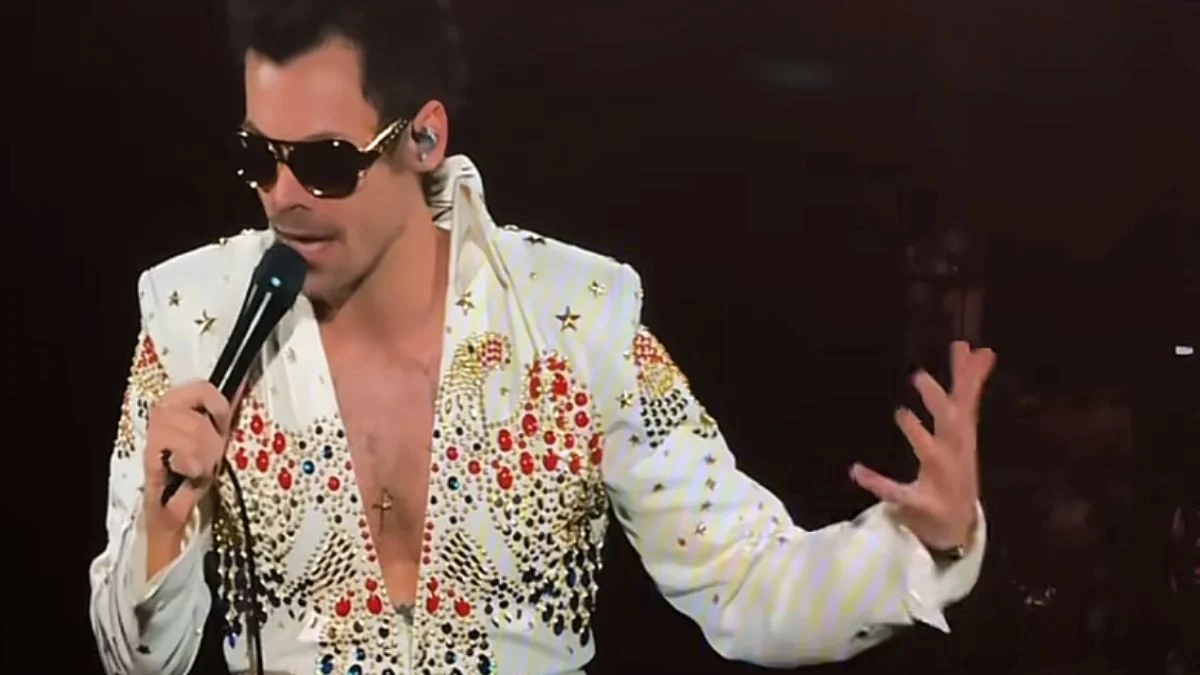
The intersection of high-profile entertainment and the mounting pressures of urban inflation became a central theme during the most recent installment of Harry Styles’ residency at Madison Square Garden. On the evening of Friday, October 30, while performing as part of his "Harryween" celebration, the pop icon deviated from his musical setlist to address a subject that has increasingly frustrated residents and visitors alike: the rising cost of living in New York City, specifically the exorbitant price of specialty coffee and the pervasive culture of digital tipping.
The Madison Square Garden Rant
Dressed in an elaborate, rhinestone-encrusted white jumpsuit and cape—a deliberate homage to Elvis Presley—Styles paused the festivities to address his audience. The singer, who has spent significant time in New York City throughout his extensive 30-show "Together, Together" residency, expressed palpable disbelief regarding the standard retail pricing of a cappuccino in the metropolitan area.
"The scariest thing about this Halloween is the price of caffeinated beverages in this city," Styles remarked to a sold-out crowd. "It is astronomical. It is out of control. They have to be stopped. It’s a cappuccino. It cannot be ten dollars. It simply cannot be."
Beyond the base price of the beverage, Styles highlighted the psychological and economic pressure associated with modern point-of-sale systems. "Then you have the screen turned around at you, and you’re looking at 20, 22, 24 percent tip options," he added. "It is entirely out of control."
His comments resonated with a demographic that has become increasingly vocal about "tip fatigue"—a phenomenon where consumers feel socially pressured to add gratuities for counter-service transactions that traditionally did not require them.
Chronology of the Residency
The "Together, Together" residency at Madison Square Garden has been a cornerstone of the New York City concert calendar throughout the autumn of 2026. The series of 30 performances was designed to create an immersive experience for fans, blending Styles’ contemporary discography with nostalgic nods to his career origins.
Leading up to the October 30 "Harryween" performance, Styles had already garnered significant media attention for his stage presence and costume choices. Earlier in the week, he opted for a deep-cut reference, recreating his 2010 X Factor audition outfit. During the same show, he performed Stevie Wonder’s "Isn’t She Lovely," the very track he sang for Simon Cowell and the judging panel when he was just 16 years old. This chronological journey through his career served as a prelude to the Halloween-themed finale, which concluded on October 31.
Economic Context: Inflation and the "Third Wave" Coffee Market
While Styles’ commentary was delivered in a lighthearted, observational manner, it touches upon a legitimate economic shift in New York City. The "third wave" coffee movement, which prioritizes high-quality beans, precise brewing methods, and ethical sourcing, has fundamentally altered the price point of a standard morning beverage.
According to data from the Bureau of Labor Statistics and industry reports on food service trends, the cost of dining out in New York City has outpaced national averages consistently over the last three years. Supply chain volatility, rising commercial rents, and increased labor costs have forced many independent coffee shop owners to raise prices to maintain margins.
A standard 12-ounce cappuccino in a mid-to-high-end Manhattan café now frequently ranges between $6.50 and $9.00 before tax. When adding a 20% gratuity—the standard expectation prompted by most digital payment interfaces—the total cost for a single drink often exceeds $10.00. For the average consumer, this represents a significant increase compared to historical norms, fueling the "tip fatigue" that Styles referenced on stage.
The Psychology of Digital Tipping
Industry analysts note that the shift toward digital payment platforms like Square, Toast, and Clover has revolutionized the tipping landscape. These platforms utilize algorithms that suggest higher tip percentages by default. Research from hospitality schools suggests that "anchoring"—the practice of displaying high percentage options first—often nudges consumers to pay more than they might have if they were using cash.
Styles’ public frustration reflects a growing sentiment among the public that these digital prompts have removed the voluntary nature of tipping, transforming it into an expected tax on daily consumption. By speaking out, Styles has aligned himself with a segment of the population that feels that service industry compensation should be structured into base wages by employers rather than being offloaded onto the consumer via checkout screens.
Reactions and Industry Implications
While the singer’s comments were made in the context of a stage performance, they prompted immediate reactions across social media platforms. Fans and critics debated whether a global celebrity’s complaint about $10 coffee was "out of touch" or a relatable observation from someone who lives and works within the city’s high-cost ecosystem.
Representatives from local hospitality organizations have remained mostly neutral, noting that the costs associated with operating a small business in New York City—including high taxes and energy bills—are frequently misunderstood by the general public. "The price of a cup of coffee is not just the price of the beans and the milk," said one consultant in the hospitality sector. "It is the price of the rent for the space, the wages for the staff in a high-cost-of-living city, and the insurance requirements."
However, the fact that a major cultural figure used his platform at Madison Square Garden to critique the "tip creep" phenomenon signals that this issue has reached a critical mass in public discourse. Economists suggest that as inflation stabilizes, consumers may become less tolerant of such practices, potentially forcing a market correction or a shift in how service workers are compensated.
Broader Impact of the "Harryween" Residency
The "Together, Together" residency has been lauded by critics for its logistical scale and the consistency of the performance. By hosting 30 nights, Styles effectively turned a section of Manhattan into a temporary hub for his global fanbase, driving significant revenue for the city’s tourism, hospitality, and retail sectors.
The residency’s conclusion on October 31 marked the end of an era for the singer’s touring schedule, with the "Harryween" shows serving as the high-water mark for fan engagement. The decision to perform at the legendary Madison Square Garden for such an extended period allowed Styles to engage in a level of dialogue with his audience that is typically impossible during traditional, single-night arena stops.
His candid remarks about the cost of living serve as a reminder that even for the most successful entertainers, the mundane anxieties of urban life—such as the rising cost of a daily ritual—remain constant. The incident at the Garden will likely be remembered not just for the musical performances, but for a brief, unscripted moment that captured the economic frustrations of a generation currently navigating an expensive, rapidly evolving, and increasingly digital-first economy.
As the residency closes, the debate regarding the future of the hospitality industry continues. Whether or not businesses will adjust their pricing or payment structures in response to the public pushback remains to be seen. For now, Styles’ critique has provided a focal point for a conversation that extends far beyond the walls of the venue, highlighting the gap between consumer expectations and the fiscal realities of the modern metropolitan coffee shop.