As delegates, civil society leaders, and international environmental experts gathered in Yerevan, Armenia, for the United Nations’ 17th biodiversity conference (COP17), they were greeted in the main hallway by a striking and deliberate installation. Organized by the NGO Friends of the Earth International, a mural depicting a herd of elephants immediately confronted attendees. Rather than celebrating the modest population rebounds achieved by a few isolated elephant herds in recent decades, the exhibit deployed the idiom of the "elephant in the room" to underscore a grim economic reality: the deeply entrenched, frequently ignored global financial architectures that actively drive widespread ecological destruction and biodiversity loss.
The visual metaphor set a somber tone for a summit tasked with reviewing the halfway point of the Kunming-Montreal Global Biodiversity Framework (GBF). Adopted by 196 nations in December 2022, the GBF laid out an ambitious roadmap to halt and reverse ecological decline by the end of the decade. Yet, as negotiators deliberated in Yerevan, a prevailing consensus emerged that the world is woefully off-track. According to a comprehensive U.N. review published just ahead of the summit, 22 out of the framework’s 23 targets are currently failing to meet their projected trajectories, casting a long shadow over the proceedings and forcing a hard look at the economics of global conservation.
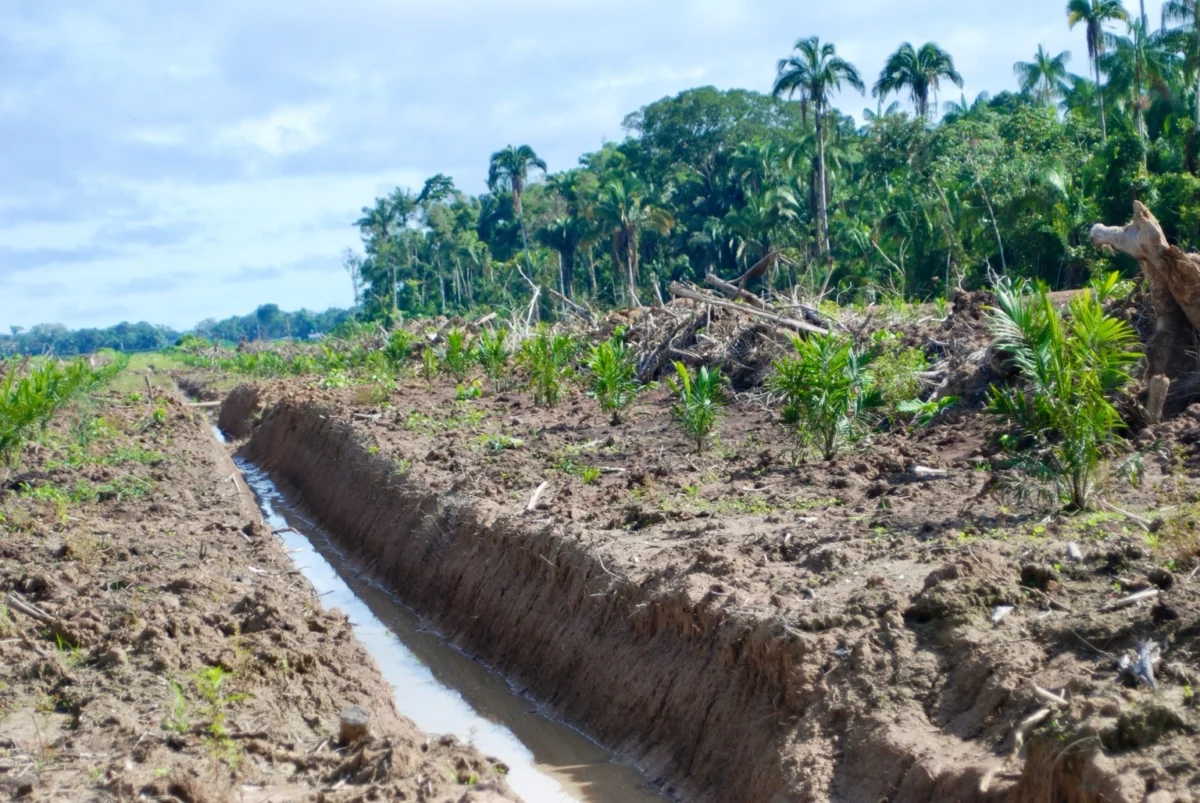
The Economics of Destruction: Nature-Negative Investments Outpace Protection
At the heart of the crisis lies a profound imbalance in global capital allocation. Addressing a packed press conference during the summit, An Lambrechts, a biodiversity politics expert with Greenpeace International, highlighted a staggering metric from the United Nations Environment Programme’s (UNEP) State of Finance for Nature 2026 report. "It is astounding that the global economy is spending only $1 on nature protection for each $30 that it spends on nature destruction," Lambrechts told reporters.

This dramatic disparity is further contextualized by broader ecological baselines. WWF International’s landmark Living Planet report revealed that monitored populations of wild vertebrates plummeted by an average of 73% between 1970 and 2022. The report’s authors explicitly identified climate change, intensive agriculture, and the unbridled flow of private and public capital toward nature-averse industries as the primary drivers of this collapse.
Under Target 18 of the Kunming-Montreal framework, member nations pledged to slash at least $500 billion annually by 2030 from subsidies and financial supports that actively harm biodiversity, such as unsustainable industrial fishing and chemical-heavy agriculture. However, UNEP data indicates that financial support for these "nature-negative" activities remains shockingly high, hovering around $7.3 trillion per year.
UNEP Executive Director Inger Andersen emphasized the systemic nature of the crisis in a policy statement released during the summit. "Nature is not a luxury we protect when economies can afford it," Andersen said. "Nature is what makes economies possible. The arrival of finance ministers at COP17 sends an important signal. Biodiversity loss is not simply an environmental problem. It is an economic problem, and the solutions must reach into the heart of economic decision-making."
The Widening Biodiversity Finance Gap
Compounding the problem of runaway destructive investments is a chronic shortfall in promised conservation funding. The GBF outlined a target of mobilizing at least $200 billion annually from all public and private sources by 2030 to stem and reverse species loss. Yet, data from a recent Organisation for Economic Co-operation and Development (OECD) report indicates that total global biodiversity finance by 2025 struggled to reach $92 billion.

Furthermore, international financial flows from the Global North to the Global South—where the vast majority of the planet’s terrestrial and marine biodiversity resides—have fallen significantly short of expectations. The framework established targets of delivering $20 billion annually by 2025 and $30 billion by 2030 from developed to developing nations. The OECD assessment suggests that international public biodiversity finance likely missed its 2025 target by approximately $4 billion.
Funding for the management of protected areas has similarly stagnated. An analysis led by the NGO Campaign for Nature showed that international funding dedicated to establishing and managing protected areas—crucial for achieving the cornerstone "30 by 30" target of protecting 30% of the world’s land and oceans by 2030—dropped from $1.2 billion in 2023 to $1 billion in 2025.
Pledges and Progress: Financial Announcements at COP17
Despite the sobering metrics, COP17 served as a venue for renewed financial commitments and innovative funding mechanisms aimed at closing the widening gap. On October 26, COP17 President and Armenian Environment Minister Hambardzum Matevosyan announced that the summit had successfully marshaled approximately $1.8 billion in new conservation financing.
Among the most notable announcements was a $500 million pledge from the Netherlands toward the Tropical Forest Forever Facility (TFFF). Initially launched at the 2025 U.N. climate conference, the TFFF is designed to reward tropical forest nations financially for maintaining low deforestation rates, with a mandatory provision that at least 20% of disbursements directly benefit Indigenous Peoples and local communities.

Simultaneously, the Global Environment Facility (GEF) announced a separate $500 million mobilization for international nature action, including roughly $60 million allocated directly to the Global Biodiversity Framework Fund (GBFB) to accelerate implementation of the GBF in developing countries.
Private and philanthropic capital also stepped into the arena. Prior to the official opening of the summit, the Species Recovery Alliance—a coalition of private donors and conservation organizations—pledged $500 million dedicated entirely to recovering threatened species. Additionally, the Value Nature Fund announced a €300 million (roughly $334 million) investment strategy targeting regenerative agriculture and forestry practices across Europe and North America. On October 27, Germany unveiled a €300 million public-private package to bolster the Legacy Landscapes Fund, which helps emerging economies execute their National Biodiversity Strategies and Action Plans (NBSAPs).
However, not all funding mechanisms have met their ambitions. The Cali Fund, envisioned to capture $1 billion annually from corporate profits derived from digital sequence information on genetic resources, faced a difficult reality check. Despite a target requiring that at least 50% of its revenues support Indigenous communities, the fund had accumulated just over $10,000 in deposits by the time COP17 drew to a close on October 31.
Confronting the "Elephant in the Room": Subsidies and Tax Incentives
Financial analysts and delegates at Yerevan repeatedly emphasized that injecting new capital into conservation will prove futile if governments continue to subsidize the very industries destroying the natural world. Guido Broekhoven, interim global director of multilateral policy at WWF International, stressed that meaningful subsidy reform would create a powerful "snowball effect" across all other environmental targets.

"We cannot continue subsidizing the destruction of nature at the same time as trying to find the money that is needed for implementation of action," Broekhoven stated during a press briefing.
Experts pointed out that environmentally harmful incentives extend well beyond direct agricultural subsidies into the realm of preferential tax treatments, particularly those benefiting fossil fuel extraction. "Tax incentives for destructive businesses and illicit financial flows are as indefensible and untenable as misdirected subsidies," Lambrechts argued. "These resources should instead flow to those at the front lines of nature protection."
According to Greenpeace assessments, only about a quarter of current NBSAPs submitted by GBF signatories explicitly account for these hazardous financial flows. Nevertheless, negotiators identified glimmers of political will in Yerevan to build a standardized pathway for phasing out harmful subsidies.
Armenia’s Leadership and the Yerevan Call
Host nation Armenia utilized its presidency to elevate the subsidy debate to the forefront of global environmental diplomacy. On October 26, the Armenian government launched the Yerevan Call on Incentives Positive to Biodiversity. Environment Minister Hambardzum Matevosyan threw his weight behind the "Friends of Target 18" coalition, a bloc of nations dedicated to fostering international cooperation to dismantle nature-negative subsidies.

Internally, Armenia has taken proactive steps, analyzing 24 domestic programs backed by public financing to evaluate their ecological impacts and realign them toward nature-positive outcomes, a process documented by the United Nations Development Programme’s Biodiversity Finance Initiative (BIOFIN).
Alfred DeGemmis, director of international policy at the Wildlife Conservation Society, acknowledged the intense domestic political hurdles associated with overhauling established state subsidies, but praised Armenia’s diplomatic leadership. "I think there is consensus that they are no longer an elephant in the room that we can’t speak of, or it’s too complex to take on," DeGemmis told Mongabay. "Pero rather, it’s something that we have to figure out."
Implications for the Road to 2030
As COP17 concluded in Yerevan, the overarching takeaway for the international community is clear: biodiversity conservation can no longer be decoupled from macroeconomic policy. With the 2030 deadline for the Kunming-Montreal Global Biodiversity Framework fast approaching, the systemic failure to curb harmful subsidies, coupled with stagnant international aid and underperforming private mechanisms, threatens the viability of global environmental targets.
Whether the political commitments forged in Armenia—exemplified by the Yerevan Call and the influx of specialized conservation funds—will translate into tangible regulatory reforms remains an open question. For policymakers, finance ministers, and environmental advocates alike, the coming years will test whether global economic systems can be successfully re-engineered to value living ecosystems as the foundational bedrock of human society, rather than an expendable externality.