The impact of erratic weather patterns is being felt acutely on the urban and peri-urban farms of southern Nigeria, where shifting precipitation regimes are upending the cultivation cycles of waterleaf (Talinum fruticosum). In downtown Calabar, capital of Cross River State, smallholder farmers survey patches of struggling vegetation, contending with an agricultural crisis driven by extreme weather. For small-scale growers like 33-year-old Enono Koka, the margins of survival for her crops have narrowed drastically. Gesturing across a large farm where most plants perished following relentless rainfall between August and September, Koka notes that only a resilient few survived.
Similar narratives echo across agricultural plots throughout the region. Joy David Okon, a farmer in her sixties, returned from visiting her son in September to find her once-promising waterleaf beds transformed into weed-choked marshlands. The juxtaposition of waterlogged plots during the peak of the rainy season and scorched earth during the dry months illustrates a mounting systemic strain on West African agriculture. As changing climate dynamics bring heavier deluges to coastal urban zones alongside lengthening dry spells, foundational vegetable crops are faltering, setting off a chain reaction that ripples from smallholders to open-air markets, local restaurants, and household kitchen tables.
A Botanical Anchor in Tropical Diets and Folk Medicine
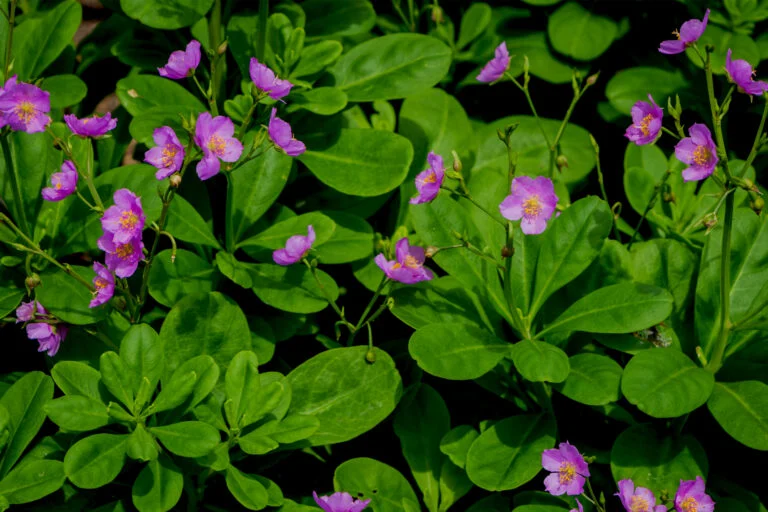
Scientifically classified as a weed but culturally embraced as an indispensable vegetable, Talinum fruticosum occupies a central role in the culinary and medicinal traditions of tropical regions, particularly in southern Nigeria. The plant is typically propagated not from slow-germinating seeds, but through vegetative stem cuttings harvested from mature crops. Under optimal conditions, these cuttings develop into fleshy, succulent plants featuring spoon-shaped leaves and delicate pink flowers within roughly 30 days. The plant’s high moisture content causes it to secrete a characteristic slimy juice when shredded or cooked, giving it its vernacular name.

Although comprehensive national production and consumption statistics remain unavailable, empirical research underscores the vegetable’s ubiquity in Nigerian diets. A comprehensive 2017 study assessing dietary habits in Ota, Nigeria, revealed that 82% of 502 surveyed respondents regularly consumed waterleaf. Among them, 41% reported eating the vegetable on a daily basis, while 19% incorporated it into their meals at least once every two weeks.
In southern Nigeria, waterleaf is seldom consumed in isolation. Instead, it serves as the essential, softening base for iconic, nutrient-dense regional soups such as edikang ikong and afang, where it is typically paired with more fibrous vegetables like fluted pumpkin (Telfairia occidentalis) or Gnetum africanum. Beyond the kitchen, traditional folk medicine practitioners utilize waterleaf extracts to alleviate gastrointestinal discomfort and reduce internal body heat.
Despite its recognized resilience compared to other leafy herbs—exhibiting a capacity to adapt to diverse soil types and moderate temperature fluctuations—recent scientific investigations demonstrate that the plant has strict physiological limits when confronted with environmental extremes.
Scientific Insights: Navigating Drought and Waterlogging
To understand the physiological thresholds of the crop, an international team of researchers from academic institutions in Canada, Ghana, Sri Lanka, and the United States conducted a controlled greenhouse study between September 2024 and July 2025. Their findings, published in the journal Crops in September, quantified the comparative impacts of acute drought versus heavy soil saturation on waterleaf seedlings.

The study revealed that while prolonged waterlogging severely impairs the plant’s development, severe drought inflicts even greater physiological damage. Efoo Bawa Nutsukpo, an agricultural scientist involved in the research, noted that leaf area decreased by a factor of 1.9 under waterlogging conditions, but plummeted by 3.8-fold under severe drought. Furthermore, photosynthetic capacity was hampered in both scenarios, with the reduction proving significantly more pronounced during dry spells.
These experimental findings mirror the cyclical crises reported by farmers on the ground. Waterleaf yields routinely experience severe dips during the peak heat of December to March, when inadequate soil moisture causes unwatered crops to wither rapidly. Conversely, the increasingly prolonged and torrential downpours of the wet season create waterlogged environments that suffocate root systems, inhibit nutrient uptake, and snap fragile stems.
Macro-Level Climatic Shifts and Flooding Crises
The agricultural vulnerabilities facing waterleaf cultivators are symptomatic of broader shifts in Nigeria’s meteorological landscape. Historically, the nation’s tropical climate featured two distinct seasons: a wet season spanning from April to October characterized by regular rainfall, followed by a dry season marked by arid, humid heat. Because approximately 80% of Nigeria’s agricultural workforce consists of smallholder farmers reliant on rain-fed irrigation, the transition between these seasons has traditionally dictated agricultural output.
However, recent decadal analyses indicate that climate patterns have grown increasingly erratic. A 2026 study examining precipitation trends across Nigerian savanna regions between 1981 and 2022 documented a significant decline in annual rainfall in areas such as the capital, Abuja. Conversely, southern and coastal zones have experienced intensifying downpours, leading to frequent and devastating urban and rural flooding.

These shifting regimes have culminated in unprecedented environmental disasters. In 2022, compounding heavy seasonal rainfall with the emergency release of water from Cameroon’s Lagdo Dam triggered catastrophic floods that inundated an estimated 569,251 hectares of farmland across Nigeria. Two years later, the 2024 rainy season surpassed those losses, sweeping through 29 of the country’s 36 states and destroying nearly 1 million hectares of crops, according to data from the United Nations Food and Agriculture Organization (FAO).
Although national agencies such as the Nigerian Meteorological Agency (NiMet) have attempted to strengthen early-warning systems and issue seasonal climate predictions—such as forecasting normal-to-below-normal rainfall in states like Cross River—farmers report a stark disconnect between forecasts and daily reality. Persistent, high-intensity storms have continued to batter tender crops, leading growers to supplement traditional decomposed manure with synthetic fertilizers in an effort to accelerate growth, occasionally rendering stems brittle and more susceptible to physical damage.
Economic Ripple Effects Across Markets and Restaurants
The compounding pressures of climate shocks, shifting precipitation, and high input costs have severely disrupted the supply chain, translating into acute market stress for vendors, restaurateurs, and consumers.
In Calabar’s bustling food markets, vendors like Anthony report dwindling profit margins and heightened customer friction. Where he once cleared approximately 60,000 naira ($45) on busy weekends, sluggish sales and inventory spoilage have forced him to cut his wholesale purchases

in half. Consumers, meanwhile, face exorbitant price hikes for diminished quantities. Faith Onayi, a resident of Rivers State, notes that single bunches of waterleaf have shrunk to sizes smaller than a fist while costing upwards of 1,000 naira ($0.75). For households accustomed to preparing traditional family meals like afang soup, the price surge has forced dietary substitutions away from leafy greens.
Commercial food vendors face an even narrower margin. Margaret Ibok, a restaurateur specializing in waterleaf-based soups, explains that because waterleaf cannot be easily substituted without altering the fundamental integrity of dishes like edikang ikong, vendors must absorb exorbitant wholesale cost increases. Where she once purchased a stock of waterleaf for 3,000 naira ($2.30), prices have climbed to 8,000 naira ($6) or more, driving the cost of a single pot of soup to 30,000 naira ($22.50) and wiping out operating capital.
The scarcity of waterleaf has consequently depressed sales for complementary vegetables, such as fluted pumpkin and Gnetum africanum, as consumers bypass traditional soup ingredients altogether. On social media platforms like Facebook and X, Nigerian users frequently trade market observations, humorously likening the once-abundant vegetable to precious commodities like gold.
Macroeconomic Pressures and Food Inflation
The crisis in the vegetable sector does not occur in a vacuum. It is heavily compounded by macroeconomic shocks, most notably a 65% surge in fuel prices since February, driven by regional conflicts in the Middle East. Higher transportation costs have escalated the expenses associated with moving agricultural produce from rural farms to urban markets.

These combined pressures have driven national food inflation skyward. According to data from the National Bureau of Statistics, Nigeria’s annual food inflation rate climbed steeply from 8.9% in January to 19.6% later in the year. Farmers warn that the prolonged saturation of soils may soon threaten other staple crops, such as cassava, potentially driving up the cost of staple derivatives like garri as tubers soften and rot underground.
Adaptation Strategies and Future Outlook
Agricultural scientists maintain that technological and infrastructural interventions can help stabilize year-round availability. Nutsukpo emphasizes that improved water management, enhanced field drainage, and the construction of raised planting beds can significantly mitigate the risks posed by excessive precipitation.
While advanced agricultural frameworks such as controlled environment agriculture—including soilless systems and high-tech greenhouses—offer resilience against climate volatility in North America and Europe, their adoption in Nigeria remains limited. Prohibitive installation costs restrict these capital-intensive technologies to large-scale commercial enterprises, leaving smallholder farmers reliant on field-level adaptations.
For small-scale growers like Enono Koka in Calabar, the immediate strategy is one of cautious restraint. Choosing to halt the planting of new stem cuttings until the persistent rains subside completely, Koka reflects the cautious stance of a farming community waiting out a volatile season. As Nigeria grapples with the converging realities of climate change, macroeconomic instability, and shifting hydrological cycles, the path toward securing the nation’s agricultural baseline will demand targeted infrastructural investment, enhanced meteorological integration, and robust support for the smallholder farmers who feed the region.