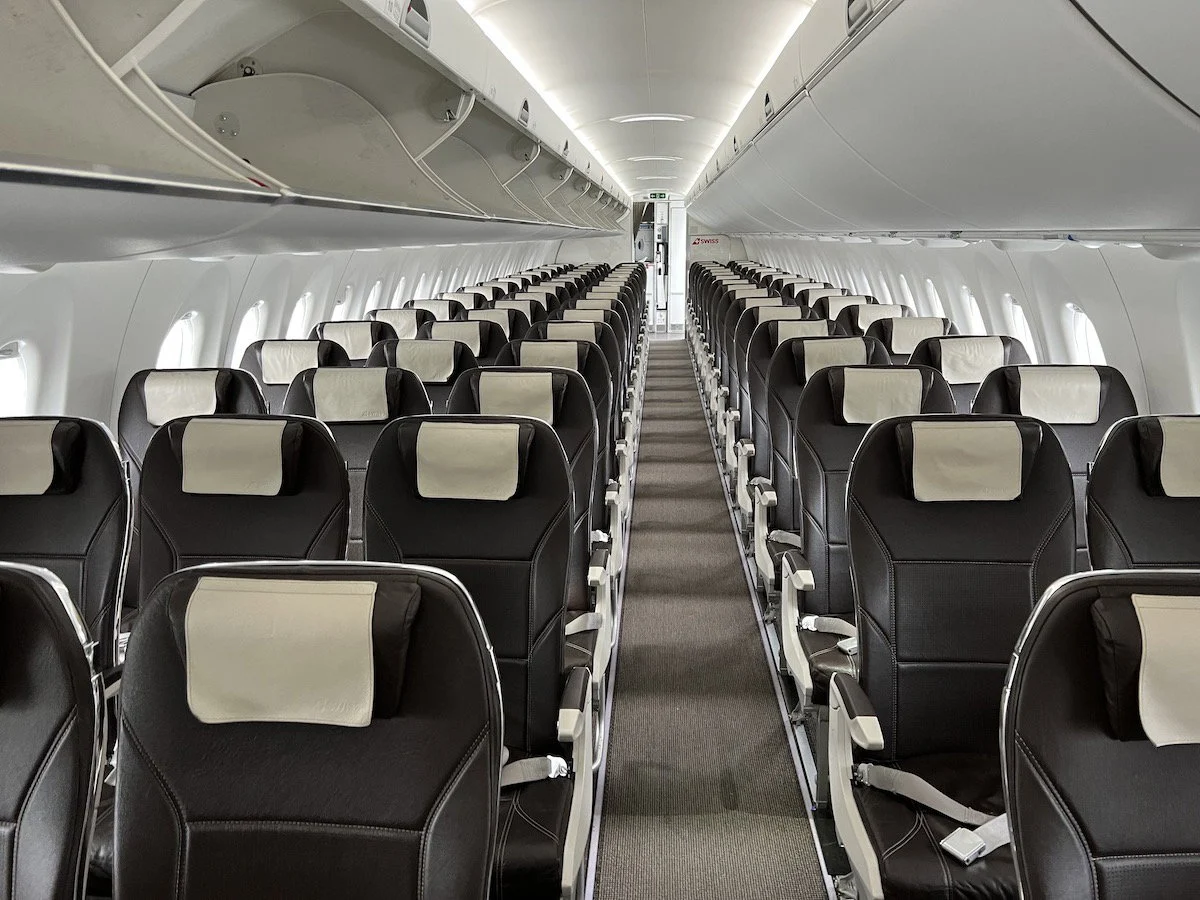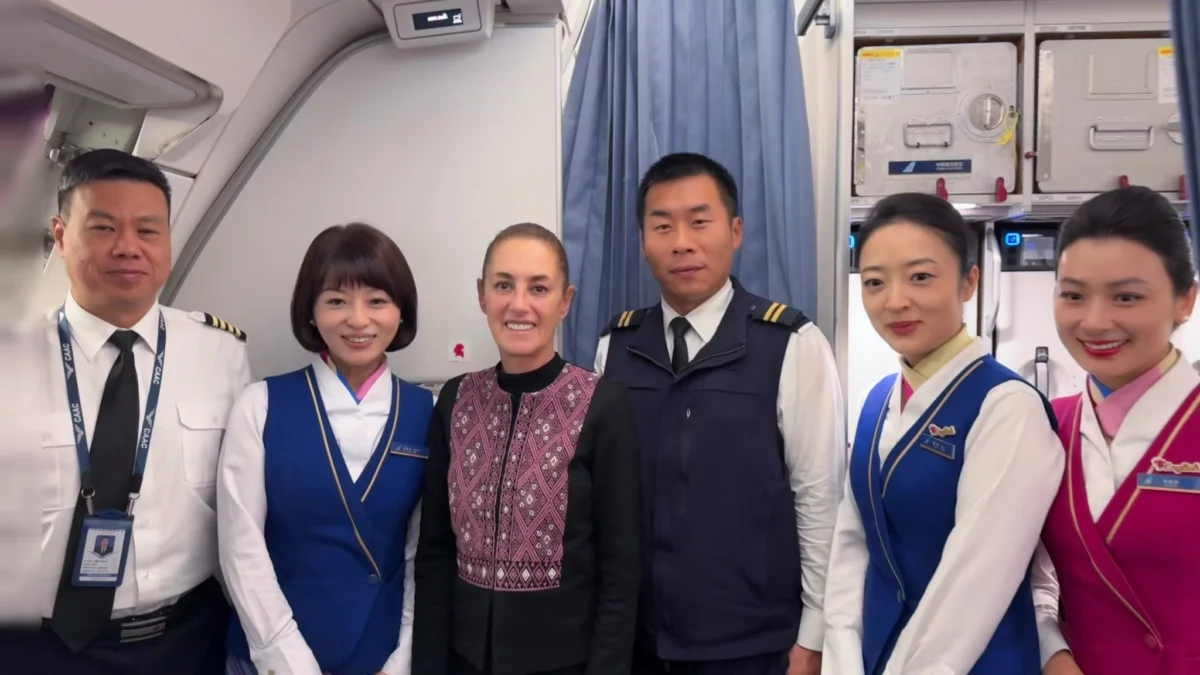
Mexico’s President Claudia Sheinbaum recently completed a 21-hour journey to Shenzhen, China, to represent her nation at the Asia-Pacific Economic Cooperation (APEC) summit. Choosing to fly economy class on China Southern Airlines—specifically occupying seat 33B, a middle seat—the 64-year-old leader has once again ignited a global conversation regarding the intersection of populist governance, fiscal austerity, and the practical demands of high-level diplomacy. This journey, which involved a technical stop in Tijuana, highlights a consistent departure from the traditional expectations of heads of state, who typically utilize dedicated government aircraft for international travel.
The Chronology of a Transpacific Journey
The logistical profile of President Sheinbaum’s trip underscores the sheer physical toll of choosing commercial aviation for long-haul state travel. Departing Mexico City early Sunday, November 15, 2026, Sheinbaum boarded China Southern flight CZ8032. The journey was split into two primary segments: an initial 3-hour, 12-minute flight to Tijuana, followed by a 14-hour, 56-minute transpacific leg to Shenzhen. Factoring in the two-and-a-half-hour ground stop, the total travel time exceeded 20 hours.
Upon arrival at Shenzhen Bao’an International Airport, the contrast between the president’s travel method and her reception was striking. Despite arriving in a standard economy seat, Sheinbaum was met with a full state-level welcome, including an honor guard and an airport bus designated for dignitaries. This juxtaposition—a leader emerging from the back of an Airbus A350-900 only to be greeted with the pomp of a presidential motorcade—has become a hallmark of her administration’s visual messaging. Her return flight, CZ8031, saw the president sharing images with the flight crew, reinforcing the public-facing image of a leader who identifies with the common traveler.
A Legacy of Austerity: From AMLO to Sheinbaum
President Sheinbaum’s commitment to commercial travel is not an isolated incident but a continuation of the policy established by her predecessor, Andrés Manuel López Obrador (AMLO). The ideology driving this trend is rooted in the belief that the "luxury" of a presidential jet is an affront to the taxpayers of a country still grappling with significant economic inequality.
The centerpiece of this policy was the disposal of Mexico’s Boeing 787-8 "Dreamliner," a state-of-the-art aircraft purchased by a previous administration. After years of struggling to find a buyer, the Mexican government finalized the sale of the jet to Tajikistan in 2023 for approximately $92 million. The funds were earmarked for the construction of two major public hospitals, effectively tethering the sale of the aircraft to the state’s social welfare agenda.
Since taking office, Sheinbaum has mirrored this approach. In April 2026, she famously flew economy to Europe for a diplomatic tour, where she was photographed working on her laptop in a cramped coach seat. By eschewing the presidential fleet—a standard tool for most G20 leaders—the administration aims to project an image of humility and fiscal discipline. However, the recurring nature of these trips raises fundamental questions about the operational efficiency of the Mexican executive branch.
The Cost of Performance: Analyzing Productivity and Security
While the political optics of flying economy are overwhelmingly positive among the administration’s domestic base, geopolitical and logistical analysts point to several drawbacks. The primary concern is the "opportunity cost" of the leader’s time. A head of state is expected to arrive at a summit prepared, rested, and capable of high-level negotiations. Research into executive productivity suggests that long-haul travel in cramped conditions significantly impairs cognitive performance, sleep quality, and physical recovery.

Furthermore, there is the issue of security. While the Mexican government maintains that commercial travel is safe, security experts argue that a president is a high-value target. Traveling on commercial flights limits the ability of security detail to manage the environment effectively. Dedicated aircraft provide secure, encrypted communications channels and a mobile office space that a middle seat in economy simply cannot replicate.
The comparison to the United States’ approach offers a stark study in contrasts. In May 2025, the Pentagon accepted a Boeing 747-8 from the State of Qatar, now utilized as a specialized transport for U.S. President Donald Trump. While the U.S. model represents the opposite extreme—a $400 million flying command center—the rationale remains consistent: the president must have the infrastructure to lead, command, and communicate from anywhere in the world.
Comparative Perspectives on Executive Travel
History is replete with examples of leaders navigating the tension between modesty and necessity. Prince Philip of the United Kingdom famously commented on the evolution of air travel during his life, noting that while aviation had improved significantly, it remained "ghastly" if one were relegated to the economy cabin.
In the Mexican context, the decision to fly coach has become a proxy for the broader "austerity" (austeredad republicana) movement. By traveling alongside ordinary citizens, the president avoids the perception of being part of a detached political elite. Yet, for many in the international diplomatic community, the move is viewed with curiosity. When a head of state arrives on a commercial flight, it creates a "dissonance of scale"—the leader is the most important person on the plane, yet occupies the least significant seat.
Implications for Future Diplomacy
The long-term implications of this travel policy remain to be seen. If the Mexican presidency continues to prioritize commercial travel, it may signal a permanent shift in how the nation conducts its foreign policy. The potential risks include:
- Diplomatic Exhaustion: Repeated long-haul travel without the rest afforded by premium cabins could lead to health issues or reduced effectiveness during critical summit negotiations.
- Operational Vulnerability: The reliance on commercial schedules makes the president susceptible to flight delays, cancellations, and the lack of private, secure communication environments.
- Public Perception Cycles: As the novelty of the "economy president" wears off, the administration may find that the public focus shifts from the act of traveling to the results of the diplomatic meetings themselves.
Ultimately, the choice to fly in seat 33B is a strategic decision. It is designed to signal that the Mexican president is a public servant, not a sovereign with the trappings of a monarchy. Whether this policy of performative austerity serves the nation better than a secure, efficient government aircraft remains a subject of intense debate.
As the world continues to watch how President Sheinbaum maneuvers on the global stage, the "economy class" policy will likely remain a defining characteristic of her administration. Whether this practice will persist through future administrations or eventually be abandoned in favor of operational pragmatism is a question that will occupy political scientists and aviation experts alike for the duration of her tenure. For now, the image of the Mexican president walking down the jet bridge after a 15-hour flight is the definitive symbol of a government trying to redefine the relationship between its leaders and the people they serve.