Deciding on accommodation for a first-time visit to Québec City involves navigating a unique urban geography defined by centuries-old stone fortifications, dramatic elevation changes, and distinct historic districts. Travelers must weigh the distinct advantages of booking small boutique properties nestled inside the UNESCO-recognized old city walls, larger chain hotels situated just outside the historic gates, or properties spread out along the scenic St. Lawrence River waterfront in Lower Town. Understanding how these distinct geographic zones intersect is critical for optimizing both travel itineraries and daily mobility during a Canadian vacation.
During a recent three-night excursion to the destination, lodging at the Hôtel du Vieux-Québec within the historic Upper Town placed visitors directly amid the centuries-old streetscapes, retail boutiques, and local dining establishments that characterize the provincial capital. However, subsequent exploration of the surrounding neighborhoods revealed that various accommodations located just outside the stone ramparts offer comparable proximity to primary tourist corridors, occasionally providing modern amenities or loyalty program benefits that are less common among historic boutique properties.

Historical Context and Geographic Layout of Old Québec
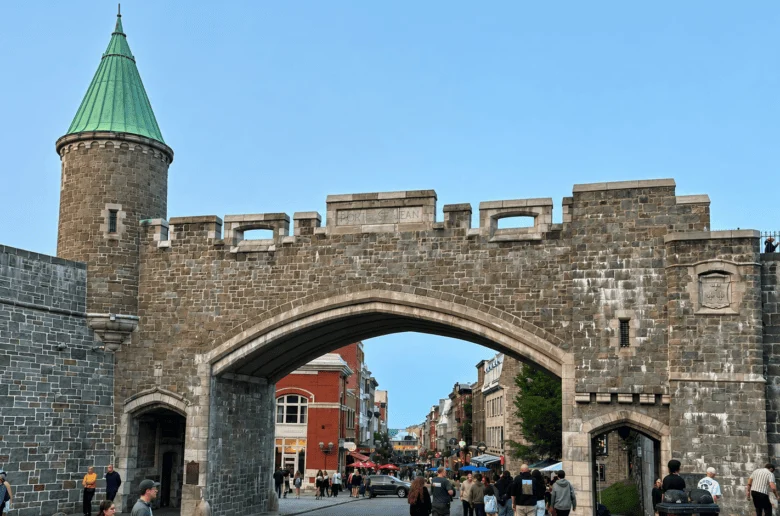
Québec City holds the distinction of being the only remaining fortified city north of Mexico, a status that heavily influences its contemporary layout and tourism infrastructure. The surviving defensive works, comprising stone ramparts, historic gates, and strategic bastions, evolved under both French and British colonial rule. Today, these fortifications serve as a central architectural feature of the destination, with accessible grassy slopes and elevated walkways that frequently double as public recreational spaces for residents and visitors alike.
The Historic District of Old Québec, designated as a UNESCO World Heritage site in 1985, is fundamentally divided into two primary tiers: Upper Town (Haute-Ville) and Lower Town (Basse-Ville). Upper Town sits atop the formidable Cap Diamant bluff, housing prominent landmarks such as the landmark Fairmont Le Château Frontenac, Dufferin Terrace, and the Notre-Dame de Québec Basilica-Cathedral. Conversely, Lower Town sprawls along the harbor below the cliffside, encompassing the historic Place Royale, the cobblestone commercial corridor of Rue du Petit-Champlain, and the revitalized Old Port waterfront.
This dramatic topography means that hotel descriptions broadly referencing "Old Québec" can denote drastically different elevations. A property located on the upper plateau requires entirely different transit considerations than one situated down by the riverbanks, particularly for travelers who prefer returning to their rooms midday or those with mobility considerations.

Analyzing Upper Town Accommodations: Culture, Convenience, and Architecture
Choosing to stay within the stone walls of Upper Town places travelers at the epicenter of the city’s historical narrative. Accommodations along thoroughfares such as Rue Saint-Jean or near the historic basilica place visitors within immediate walking distance of prominent cultural sites, museums, and local culinary establishments.
For instance, dining options such as Sapristi—an Italian restaurant situated near the historic Saint-Jean Gate—illustrate the practical advantages of an Upper Town address. Guests staying within this zone can easily transition from historical sightseeing to dinner without coordinating vehicular transport or navigating complex transit schedules. The architectural density of Upper Town features a high concentration of independent boutique hotels, guest houses, and the iconic Fairmont Le Château Frontenac, catering primarily to tourists seeking an immersive historical ambiance.
However, the popularity of this district also translates to higher pedestrian traffic volumes and premium room rates during peak travel seasons. Visitors must balance the undeniable charm of stepping directly out onto centuries-old stone streets against potential noise levels and the persistent presence of tourist crowds during peak afternoon hours.

Exploring Lower Town and the Maritime District
Descending the cliffside reveals a distinct atmosphere centered around maritime history and artisanal commerce. The Petit-Champlain district, while compact in geographic scale, offers narrow pedestrian corridors flanked by restored stone buildings housing specialty boutiques and bistros.
Accommodations situated in Lower Town, such as the upscale Auberge Saint-Antoine or Hôtel 71, place guests directly adjacent to the St. Lawrence River waterfront and cultural institutions like the Musée de la civilisation. While these locations offer immediate access to the scenic riverfront and historic trading squares like Place Royale, guests must factor in the physical effort required to transition back to Upper Town for evening dining or sightseeing.
To bridge this topographical divide, the historic Old Québec funicular operates directly between Dufferin Terrace near the Château Frontenac and the lower terminus on Rue du Petit-Champlain. While pedestrians can also utilize a network of outdoor staircases and steep sloping streets, the funicular provides a direct mechanized transit link. Nevertheless, the steep vertical drop visible from the funicular tracks serves as a permanent reminder that short linear distances on a conventional map frequently entail strenuous vertical climbs.

Evaluating Lodging Options Outside the Historic Walls
For travelers prioritizing specific hotel brand loyalty, convention access, or broader room amenities, properties located immediately outside the historic fortifications present a compelling alternative. Urban planners and local tourism authorities note that modern developments situated along the periphery of the old city bridge the gap between historic exploration and contemporary hospitality standards.
Prominent examples include the Québec City Marriott Downtown, situated at Place d’Youville immediately outside the Saint-Jean Gate. This specific location demonstrates that staying beyond the formal stone boundary does not necessarily isolate visitors from the historic core; guests can step out of the hotel lobby and traverse the gate into Rue Saint-Jean in a matter of moments.
Similarly, properties such as the Hilton Québec and Delta Hotels Québec are positioned near Parliament Hill and the Québec City Convention Centre. According to data from the local tourism board, Destination Québec cité, these larger-scale downtown properties typically offer extensive amenities—including indoor swimming pools, expansive fitness centers, and comprehensive business facilities—that are structurally challenging to integrate into historic properties within the cramped confines of the old walls.

Furthermore, these parliament-area hotels cater extensively to business travelers, convention attendees, and members of major hospitality loyalty programs such as Marriott Bonvoy and Hilton Honors, providing valuable redemption and point-earning opportunities for frequent travelers.
Broader Implications and Strategic Recommendations for Travelers
Selecting the optimal accommodation in Québec City requires a multi-variable analysis extending beyond simple brand preference or baseline room rates. Travel industry analysts recommend that prospective visitors map out their specific daily itineraries and cross-reference exact hotel addresses against targeted points of interest before finalizing reservations.
- For First-Time Visitors and Sightseers: Properties located inside Upper Town walls or immediately adjacent to historic gates (such as near Saint-Jean Gate or Place d’Youville) offer maximum walkability to primary architectural sites, reducing the need for daily vehicular or public transit usage.
- For Loyalty Program Members and Business Travelers: Large-scale properties near Parliament Hill and the convention center provide superior amenities, larger floor plans, and reliable point-earning structures while maintaining reasonable walking access to the historic district.
- For Scenic and Maritime Enthusiasts: Lower Town accommodations place guests steps away from the St. Lawrence River and artisanal shopping districts, provided visitors are comfortable utilizing the funicular or tackling steep inclines during daily excursions.
Ultimately, whether choosing a historic boutique inn nestled within the ancient ramparts or a full-service international hotel on the city’s modern periphery, understanding the unique topography and urban layout of Québec City remains the foundation of a successful travel experience.