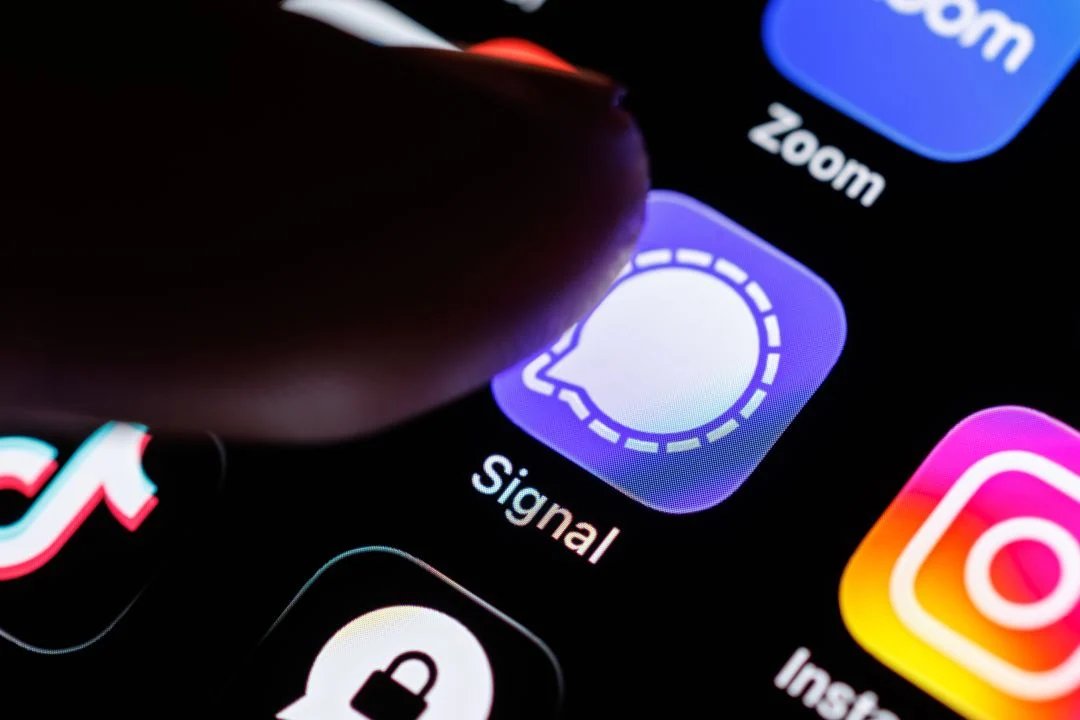
In a significant escalation of the ongoing struggle between privacy-focused software developers and the architects of modern operating systems, the encrypted messaging service Signal announced on Friday, November 21, 2026, that it is implementing strict new limitations on screen capture capabilities across its mobile and desktop platforms. This move, which restricts the ability of users to take screenshots within the application, represents a proactive defense against the rising tide of agentic AI integration in mainstream software environments.
Signal President Meredith Whittaker, who has long been a vocal critic of the surveillance-capitalist model of technology, framed the policy shift as a necessary reaction to an "existential threat." The core of the issue lies in the evolution of operating systems like Windows, macOS, Android, and iOS, which are increasingly embedding agentic AI tools that possess the capability to scan, index, and transmit visual data from a user’s screen to local or remote databases. By doing so, these operating systems effectively bypass the end-to-end encryption that Signal provides, turning the user’s own device into a potential vulnerability.
The Rise of Agentic AI and the Privacy Paradox
The fundamental premise of Signal’s security architecture is that data in transit is shielded from prying eyes through advanced cryptographic protocols. However, the emergence of "agentic AI"—systems capable of observing, interpreting, and acting upon information on a user’s screen—creates a "privacy paradox." Even if a message is encrypted while traveling through the ether, it must be decrypted to be displayed on the user’s screen. If the operating system itself is monitoring that screen in real-time to "assist" the user with AI-powered insights, the privacy guarantee is essentially nullified.
Whittaker noted that by granting AI agents the permission to scrape the visual layer of the operating system, the companies behind these platforms are effectively undermining the autonomy of the user. Once data is captured by an OS-level agent, it falls outside the purview of Signal’s security model. This sensitive information can be stored, analyzed, or utilized for training machine learning models, often without the explicit or granular consent of the user, and certainly without the protection of end-to-end encryption.
Chronology of the Escalation
The friction between Signal and OS providers has been building for years, but the intensity has spiked in 2026 due to the rapid deployment of AI-integrated desktop and mobile environments.
- Mid-2024: Industry leaders began announcing "Recall" and "AI-assistant" features for major operating systems, prompting early concerns from privacy advocates regarding the persistence of screen-scraping logs.
- Early 2025: Signal began exploring methods to obfuscate or block screenshots on desktop clients, recognizing that the lack of control over the Windows and macOS environments made them the weakest links in the chain.
- June 2026: Meredith Whittaker publicly warned that the integration of AI agents into core system functions was fundamentally incompatible with the principles of secure communication.
- November 2026: The official rollout of universal screenshot blocking across Android and iOS marks the first time a major messaging platform has directly intervened in the user’s ability to interact with their own device’s screen-capture hardware to protect data integrity.
Technical Implications and Limitations
Technically, the implementation of these restrictions involves the application requesting the operating system’s API to forbid the creation of screenshots or screen recordings within the context of the Signal application window. While this prevents a user (or a malicious piece of software acting on the user’s behalf) from easily capturing a conversation, it does not provide a perfect shield.
Whittaker herself acknowledged the "incomplete" nature of this solution. The cat-and-mouse game between privacy software and OS-level surveillance is inherently lopsided. Because the operating system controls the hardware and the display output, there are "sneaky ways" an AI agent could potentially intercept data—such as via screen-reading accessibility APIs or through hardware-level capture that does not trigger a software-based screenshot flag.
Furthermore, Signal has allowed users to toggle this setting off, recognizing that some users may prioritize functionality or specific accessibility needs over the blanket security policy. However, Whittaker warned that doing so effectively "breaks" the privacy guarantees that the app is designed to uphold, effectively opting the user into the data-collection streams of the OS provider.

The Broader Industry Landscape
The move by Signal puts the company in direct opposition to the strategic direction of Big Tech firms like Microsoft, Apple, and Google. These companies view agentic AI as the future of human-computer interaction, aiming to make devices more "helpful" by having them understand context. However, for a platform like Signal, the definition of a "helpful" OS is diametrically opposed to the definition of a "secure" one.
Industry analysts suggest that this confrontation is a harbinger of a broader trend: the fragmentation of the digital experience. As OS providers move toward a more integrated, AI-monitored model, independent applications that value privacy will be forced to move toward a more "walled garden" approach themselves. This creates a challenging user experience where privacy comes at the cost of interoperability.
From a regulatory standpoint, the situation is complex. While many jurisdictions are grappling with how to regulate AI, the focus has largely been on the training of models and their outputs, rather than the "agentic" monitoring of user screens. Signal’s move may force a conversation among policymakers about whether an operating system should have the right to monitor the visual content of encrypted applications, or whether users should have an absolute right to prevent OS-level agents from accessing specific "private zones" on their devices.
Responses and Market Reaction
While there has been no official statement from Microsoft, Apple, or Google regarding this specific update, privacy advocates have largely lauded the move. The Electronic Frontier Foundation (EFF) and similar organizations have long argued that user autonomy must include the right to keep screen content invisible to background processes.
Conversely, some critics argue that such measures might frustrate the average user. If a user needs to capture a QR code for a login or a screenshot of a transaction for record-keeping, a hard block might create significant friction. However, Signal’s stance remains firm: the danger of mass, automated data exfiltration by AI agents outweighs the inconvenience of the occasional blocked screenshot.
Future Outlook
As we move further into 2027 and beyond, the battle for "screen privacy" will likely intensify. The industry is currently at a crossroads: either operating systems will provide granular controls that allow users to "opt-out" of AI monitoring for specific apps, or apps like Signal will continue to build increasingly aggressive defenses that may lead to them being blocked or relegated to the margins of mainstream app stores.
The Signal announcement is not merely a software update; it is a declaration of independence from the operating system. By asserting that the privacy of a conversation is the responsibility of the application and that the OS should be a neutral conduit—rather than an active participant—Signal is attempting to draw a line in the sand.
Whether this defense holds against the increasing sophistication of OS-level AI agents remains to be seen. What is clear is that the definition of a "secure messaging app" has fundamentally changed. It is no longer just about encrypting the message in transit; it is now about protecting the message from the very device used to read it. As Whittaker emphasized, the integrity of a conversation is only as strong as the environment in which it is viewed. In an era of pervasive AI, the battle for privacy has moved from the network layer to the display layer, and Signal has officially fired the first shot.