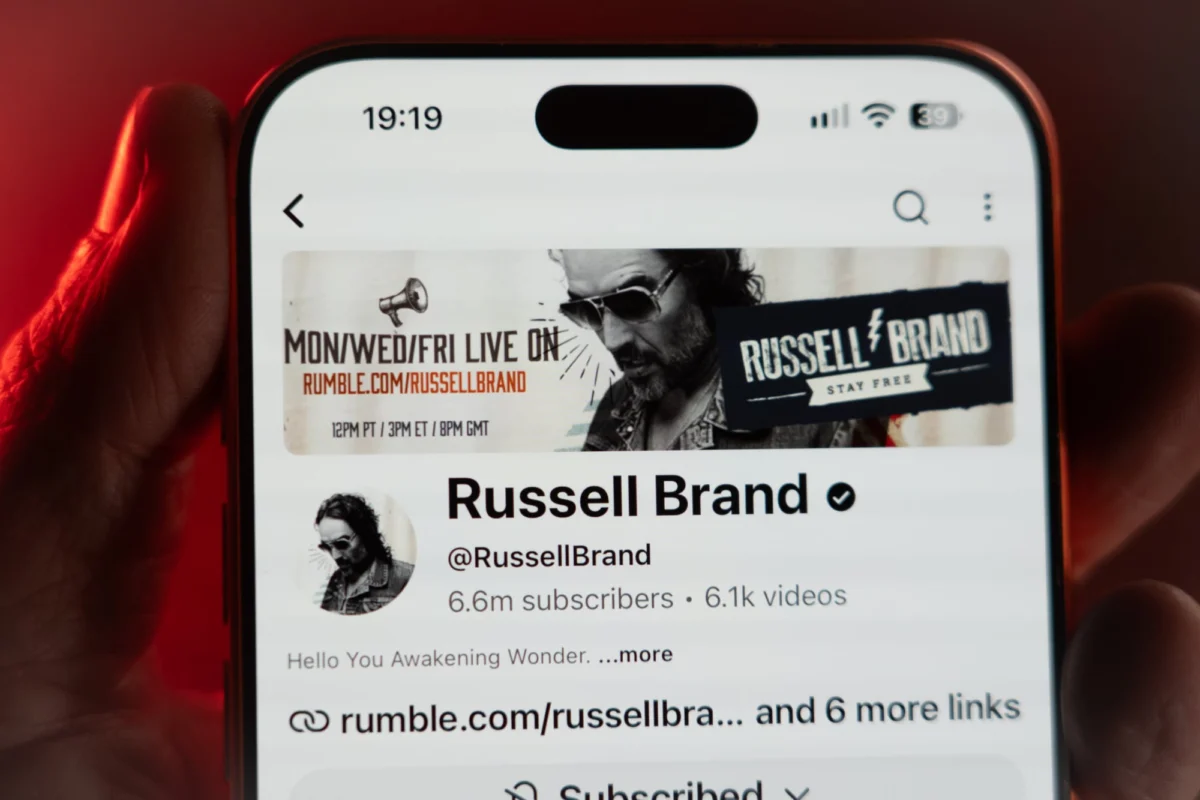
The intersection of digital influence and the penal system has reached a critical juncture following the imprisonment of Russell Brand, the former comedian and social media personality. On November 9, 2026, Brand was sentenced to 10 years and six months in prison after being found guilty of one count of rape and three counts of sexual assault. Just six days later, his wife, Laura Gallacher, uploaded a video to Brand’s YouTube channel—which boasts over 6 million subscribers—featuring a message in which he continued to assert his innocence. This incident has ignited a fierce debate in the United Kingdom regarding the limits of free speech, the responsibilities of global technology platforms, and the potential for incarcerated individuals to use external proxies to influence public opinion and distress their victims.
A Chronology of the Controversy
The erosion of Russell Brand’s digital standing began well before his sentencing. In September 2023, following the emergence of credible allegations of sexual violence, YouTube took the unprecedented step of suspending Brand from its Partner Program. This effectively stripped the channel of its ability to generate ad revenue, citing a violation of the platform’s "creator responsibility policy." Despite the loss of monetization, the channel remained active, serving as a platform for Brand to pivot toward religious content, specifically "Sunday Service" broadcasts.
The timeline of the recent escalation is as follows:
- November 9, 2026: Russell Brand is sentenced to 10 years and six months in prison.
- November 15, 2026: Laura Gallacher posts an hour-long video titled "The Good Work Continues." In the video, she reads a prepared statement from Brand claiming he is a victim of a miscarriage of justice.
- November 16, 2026: The Ministry of Justice launches an investigation into whether Brand violated prison communication rules.
- November 18, 2026: Initial reports emerge that Google (YouTube’s parent company) declined an initial takedown request on the grounds that the video did not explicitly breach the platform’s community guidelines.
- November 19, 2026: Faced with mounting political and public pressure, Google confirms that its teams are actively reviewing the content.
The Legal and Ethical Dilemma for Tech Giants
The central tension in this story lies in the disparity between the expectations of government authorities and the internal policies of private technology corporations. YouTube’s decision to leave the video online initially highlighted the limitations of current content moderation frameworks. Unlike illegal content, such as child sexual abuse material or terrorist propaganda, which platforms are legally mandated to remove, expressions of innocence by a prisoner—even one convicted of violent sexual crimes—fall into a murky "gray area" of content moderation.
Google’s spokesperson noted that while the channel is demonetized, the content itself must be evaluated against specific community guidelines. Critics argue that this technical approach ignores the broader societal harm. For the victims of the crimes, the existence of a high-traffic video that refutes their lived experience and the jury’s verdict can be deeply retraumatizing. Mia Latter, a public accuser of Brand who was not part of the final trial, articulated this sentiment clearly, stating that the video served as a reminder of the immense burden placed on the women who stood in court to testify against him.
Prison Regulations and the Role of Proxies
The Ministry of Justice in England and Wales maintains strict protocols regarding the correspondence of inmates. Under current guidelines, prisoners are generally restricted from discussing the details of their crimes in any communication intended for public broadcast. Exceptions are rarely granted and are usually reserved for formal appeals or legal representations regarding conviction or sentencing.

The investigation now underway aims to determine if Brand’s statement constitutes a breach of these rules. Justice Secretary Alex Norris has been vocal in his condemnation, labeling the broadcast "completely unacceptable." Legal experts suggest that the Prison Service of England and Wales is weighing the prisoner’s right to maintain his innocence against the potential for "serious distress" to victims. The outcome of this investigation could set a significant precedent for how the UK handles "digital proxies"—family members or associates who act as conduits for inmates to communicate with their followers from behind bars.
The Legislative Impasse: The Online Safety Act
The incident has triggered a debate in Parliament regarding whether the current Online Safety Act is fit for purpose. Labour MP Jess Phillips has been a leading voice in calling for a review of the legislation, arguing that the law did not anticipate a scenario where an incarcerated individual would retain such a massive, ready-made megaphone. While the existing framework empowers regulators to hold platforms accountable for illegal content and the protection of minors, it remains ambiguous regarding the dissemination of controversial statements from prisoners.
Prime Minister Andy Burnham has urged social media companies to exercise moral judgment, calling for "decency" rather than immediate legislative overreach. Conversely, some political figures, including Conservative leader Kemi Badenoch, have urged caution, emphasizing that the rule of law must be applied consistently. The risk, as noted by observers, is that creating laws to silence specific individuals could lead to broader, "draconian" censorship measures that could be abused by future administrations.
Societal and Platform Implications
The case of Russell Brand serves as a case study for the evolution of the "Influencer-to-Prisoner" pipeline. As digital platforms become integral to an individual’s personal brand, the reach of that brand does not necessarily evaporate upon incarceration. This creates a unique challenge for both penal institutions and the companies that facilitate global communication.
If the UK government chooses to move forward with new legislation, it will face the difficult task of defining "public interest" versus "victim harassment." The current situation is also testing the resolve of tech companies. While Google’s initial reluctance to remove the content was based on a strict interpretation of platform rules, the move to investigate the video on November 19 suggests that the company is feeling the weight of the social and political fallout.
As of November 21, the video remains accessible, serving as a static point of contention. The outcome of the Ministry of Justice’s inquiry and any subsequent action taken by Google will likely influence future policies regarding how platforms manage the digital presence of convicted violent offenders. For now, the episode highlights a modern reality: in the age of social media, the walls of a prison cell are no longer entirely opaque, and the battle over the narrative of a crime can continue long after the verdict has been delivered. The question remains whether the digital age requires a new set of ethical and legal guardrails to prevent the further victimization of survivors, or if the principle of free expression—even for the convicted—must remain absolute in the digital town square.