
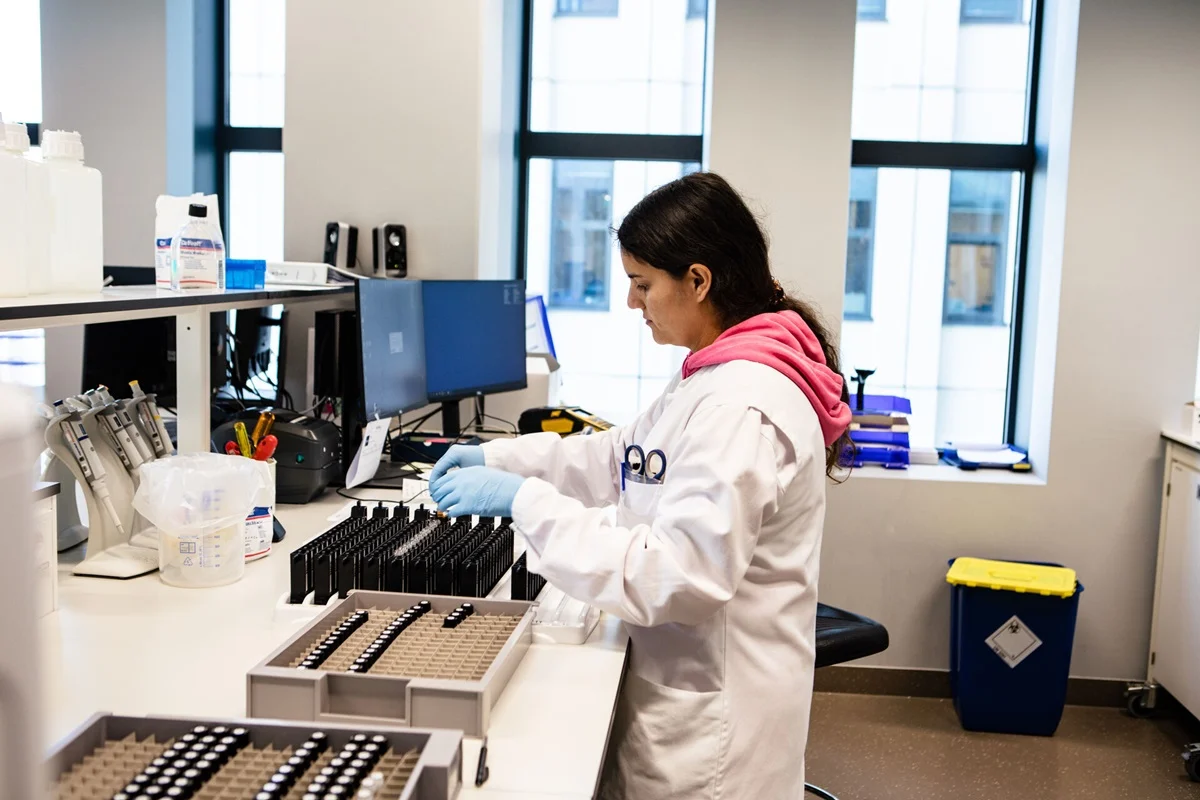
The World Health Organization (WHO) today issued a compelling call to action, urging global citizens to recommit to collaborative efforts and unwavering support for scientific advancement as the foundational pillars of improved global health. Under the banner of "Together for Health. Stand with Science," the theme for World Health Day 2026, the organization marks the 78th anniversary of its establishment on April 7, 1948, igniting a comprehensive, year-long public health initiative. This ambitious campaign underscores the profound interconnectedness of human well-being and the critical role of evidence-based innovation in navigating the complex health landscape of the 21st century.
The trajectory of human health over the past century stands as a testament to the transformative power of scientific progress, amplified by unprecedented international cooperation. Since the turn of the millennium, global maternal mortality rates have witnessed a significant decline of over 40%, while deaths among children under the age of five have been reduced by more than 50%. These are not mere statistics; they represent millions of lives saved, families preserved, and futures secured. This remarkable progress is directly attributable to the relentless pursuit of knowledge, the refinement of technological capabilities, the cultivation of specialized skills, and the synergistic collaboration across diverse scientific disciplines, societal sectors, and national borders. Conditions that were once formidable, even life-threatening challenges – such as uncontrolled hypertension, the diagnosis of aggressive cancers, or the debilitating impact of HIV infection – are increasingly being transformed into manageable health issues, thereby extending lifespans and significantly enhancing the quality of life for billions across the globe.
However, the narrative of progress is shadowed by the escalating and multifaceted nature of contemporary health threats. The profound impacts of climate change, characterized by extreme weather events, shifting disease vectors, and resource scarcity, are creating new vulnerabilities. Environmental degradation, from pollution to biodiversity loss, further exacerbates these challenges. Geopolitical instability and ongoing conflicts disrupt essential health services, displace populations, and create fertile ground for disease outbreaks. Compounding these issues are the persistent burdens of communicable and non-communicable diseases, coupled with increasingly strained healthcare systems struggling to meet escalating demands. Furthermore, the ever-present specter of emerging infectious diseases, with their potential for rapid epidemic or even pandemic spread, looms large. In response to this complex web of threats, thousands of dedicated scientists, in concert with organizations like the WHO, are working tirelessly to accelerate research, develop innovative policies, and create essential tools and technologies. Their efforts are crucial not only for protecting communities in the present but also for safeguarding the health and resilience of future generations.
A Century of Scientific Triumph and Evolving Challenges
The history of public health is intrinsically linked to the evolution of scientific understanding and application. The early 20th century witnessed breakthroughs that fundamentally reshaped our approach to disease. The widespread adoption of germ theory, for instance, revolutionized hygiene practices and led to the development of antiseptic techniques, dramatically reducing hospital-acquired infections. The advent of antibiotics, most notably penicillin discovered by Alexander Fleming in 1928 and later mass-produced during World War II, marked a watershed moment in the fight against bacterial infections, transforming previously fatal conditions into treatable illnesses. Vaccines, building on the pioneering work of Edward Jenner in the late 18th century, have eradicated or significantly controlled numerous devastating diseases, including smallpox, polio, and measles, saving countless lives and preventing widespread disability.
The latter half of the 20th century and the dawn of the 21st century have seen further leaps in scientific and technological innovation. The development of diagnostic imaging technologies such as X-rays, CT scans, and MRI machines has revolutionized disease detection and treatment planning. The mapping of the human genome has opened new frontiers in personalized medicine, genetic screening, and the understanding of hereditary diseases. Advances in antiviral therapies have transformed the prognosis for individuals living with HIV, turning a once-fatal diagnosis into a manageable chronic condition for many. The continuous improvement of surgical techniques, anesthetic agents, and critical care medicine has further enhanced the capacity to treat complex injuries and illnesses.
These achievements, while monumental, have not occurred in a vacuum. They are the product of sustained investment in research and development, robust public health infrastructure, and a global commitment to sharing knowledge and resources. The WHO itself, established in the aftermath of World War II with the aim of promoting international cooperation in health, has played a pivotal role in coordinating global health efforts, setting standards, and advocating for equitable access to healthcare. Its convening power has facilitated critical dialogues, fostered partnerships, and driven the agenda for global health security.
The Interplay of Science, Collaboration, and Global Health Security
Tedros Adhanom Ghebreyesus, Director-General of the World Health Organization, articulated the profound significance of the campaign’s theme: "Science is one of humanity’s most powerful tools for protecting and improving health. People in every country live longer and healthier lives on average today than their ancestors did, thanks to the power of science. Vaccines, penicillin, germ theory, MRI machines and the mapping of the human genome are just some of the achievements that science has delivered that have saved lives and transformed health for billions of people." His statement underscores the tangible benefits that scientific innovation has brought to humanity, highlighting specific examples that resonate with the lived experiences of people worldwide.
The efficacy of scientific advancements is amplified when they are widely disseminated and adopted. Every success in enhancing human health is a reflection of the collective endeavor involving scientific institutions, policymakers, healthcare professionals, and the public. For instance, the global effort to combat the COVID-19 pandemic, despite its immense challenges, demonstrated the extraordinary speed at which scientific research can progress when resources are mobilized and collaboration is prioritized. Within a remarkably short period, scientists developed and deployed effective vaccines, refined diagnostic tests, and shared crucial epidemiological data, showcasing the potential of a united front against a common enemy.
The WHO’s 78-year history is replete with examples of its leadership in fostering global health progress through scientific collaboration. Its role in eradicating smallpox, a disease that ravaged humanity for centuries, stands as perhaps its most significant achievement. This triumph was the result of a coordinated global vaccination campaign, driven by scientific evidence and supported by political will and immense human effort. Similarly, the organization’s ongoing work in combating polio through sustained vaccination efforts and its leadership in developing international health regulations to prevent the spread of infectious diseases are critical contributions to global health security.
Navigating the Complexities of Modern Health Threats
Despite the remarkable progress, the emergence of novel and resurgent health threats presents formidable challenges. Climate change, in particular, is recognized as a significant multiplier of health risks. Rising global temperatures contribute to the spread of vector-borne diseases like malaria and dengue fever into new regions, while heatwaves pose direct risks to human health, especially for vulnerable populations. Changes in precipitation patterns can lead to both increased flooding, which can contaminate water sources and spread waterborne diseases, and drought, which can exacerbate malnutrition and food insecurity. The WHO has consistently highlighted the need for a "One Health" approach, recognizing that the health of people is inextricably linked to the health of animals and the environment. This holistic perspective is essential for addressing complex threats that transcend traditional disciplinary boundaries.
Environmental degradation, including air and water pollution, continues to have a profound impact on public health. Air pollution alone is estimated to cause millions of premature deaths annually worldwide, contributing to respiratory diseases, cardiovascular problems, and certain types of cancer. The depletion of natural resources and the loss of biodiversity can disrupt ecosystems, impacting food security and increasing the risk of zoonotic disease emergence.
Geopolitical tensions and conflicts further complicate the global health landscape. They disrupt supply chains for essential medicines and medical equipment, displace populations who are then more vulnerable to disease, and undermine the capacity of health systems to respond to emergencies. The ongoing humanitarian crises in various parts of the world underscore the devastating impact of conflict on health outcomes.
Convening Global Action for a Healthier Tomorrow
In alignment with the World Health Day 2026 theme, a significant event is being convened to galvanize international cooperation. The WHO, in collaboration with the G7 Presidency of France, is organizing a One Health Summit in Lyon, France, from April 5-7. This pivotal gathering will bring together Heads of State, leading scientists, policymakers, and community leaders to forge stronger, more coordinated strategies for addressing interconnected health challenges. The summit aims to foster dialogue, share best practices, and commit to concrete actions that integrate human, animal, and environmental health approaches.
Furthermore, from April 7-9, the WHO will host the Global Forum of its Collaborating Centres network. This forum will convene representatives from over 800 academic and research institutions spanning more than 80 countries. These centers are vital partners, providing essential support to WHO’s research endeavors, technical assistance, and capacity-building initiatives across the globe. The forum will serve as a platform for knowledge exchange, the identification of research priorities, and the strengthening of partnerships to accelerate scientific discovery and its translation into public health action.
Dr. Sylvie Briand, WHO Chief Scientist, emphasized the indispensable role of science in navigating uncertainty and achieving health security: "Science transforms uncertainty into understanding and reveals the pathways to protect and heal our communities. Without the clarity of rigorous scientific inquiry, we risk being led by bias and misconception – and too often toward treatments that fail us or even place us in harm’s way. Today, we must stand together with science so that our collaboration is sustained, supported and enhanced for the better health of generations to come." Her statement highlights the critical need to safeguard the integrity of scientific processes and ensure that evidence-based decision-making remains paramount in public health policy.
The WHO reiterates its unwavering commitment to ensuring that scientific evidence continues to guide health decision-making at all levels of governance and practice. The organization, in partnership with its extensive network of collaborators, is dedicated to generating and translating evidence across a vast spectrum of health priorities. This includes critical areas such as infectious disease surveillance and response, the management of chronic conditions, the promotion of mental health and well-being, the advancement of nutrition, and the mitigation of environmental health risks. By providing robust scientific guidance and technical support, WHO empowers countries to deliver effective, equitable, and sustainable healthcare services.
The historical achievements in global health unequivocally demonstrate that when nations unite behind scientific principles and evidence-based strategies, their capacity to respond to health crises is not only enhanced but also their ability to build more resilient, equitable, and effective health systems for the future is significantly strengthened. In this critical juncture, the WHO’s call to action resonates with urgency and clarity: governments, institutions, and individuals are implored to champion and collaborate on scientific endeavors, ensuring that the pursuit of knowledge and the application of evidence consistently inform health policies and shape our everyday decisions. The journey towards a healthier world is a shared one, built on the bedrock of science and sustained by the power of collective action.










Leave a Reply