
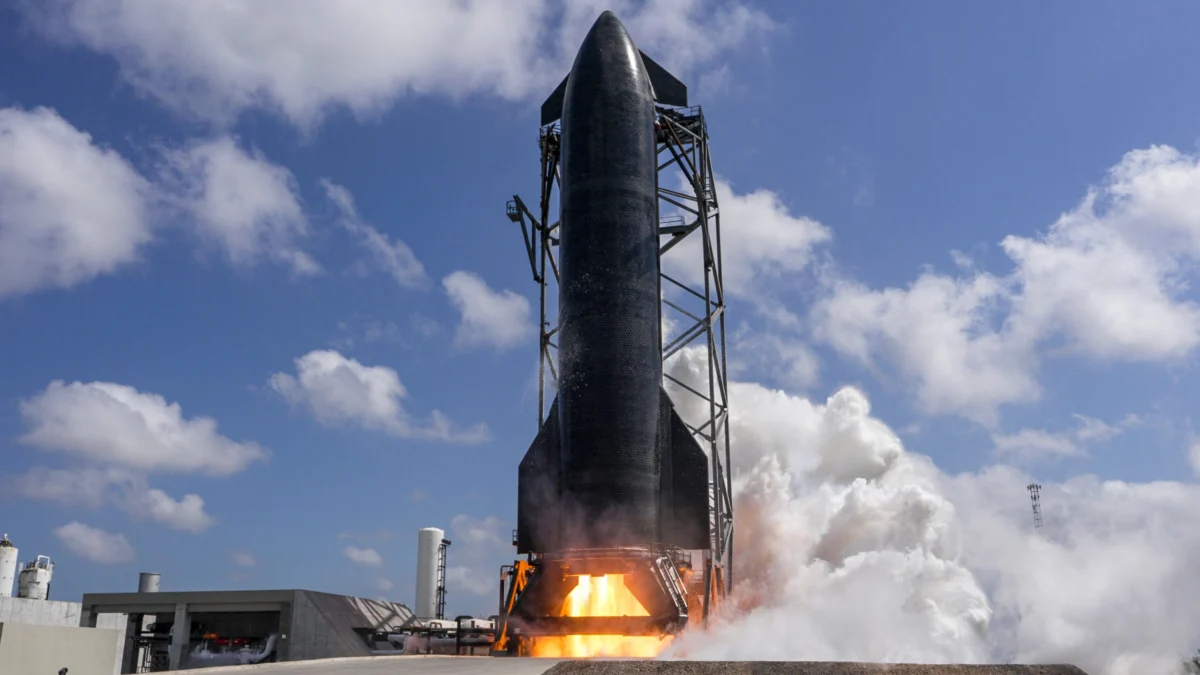
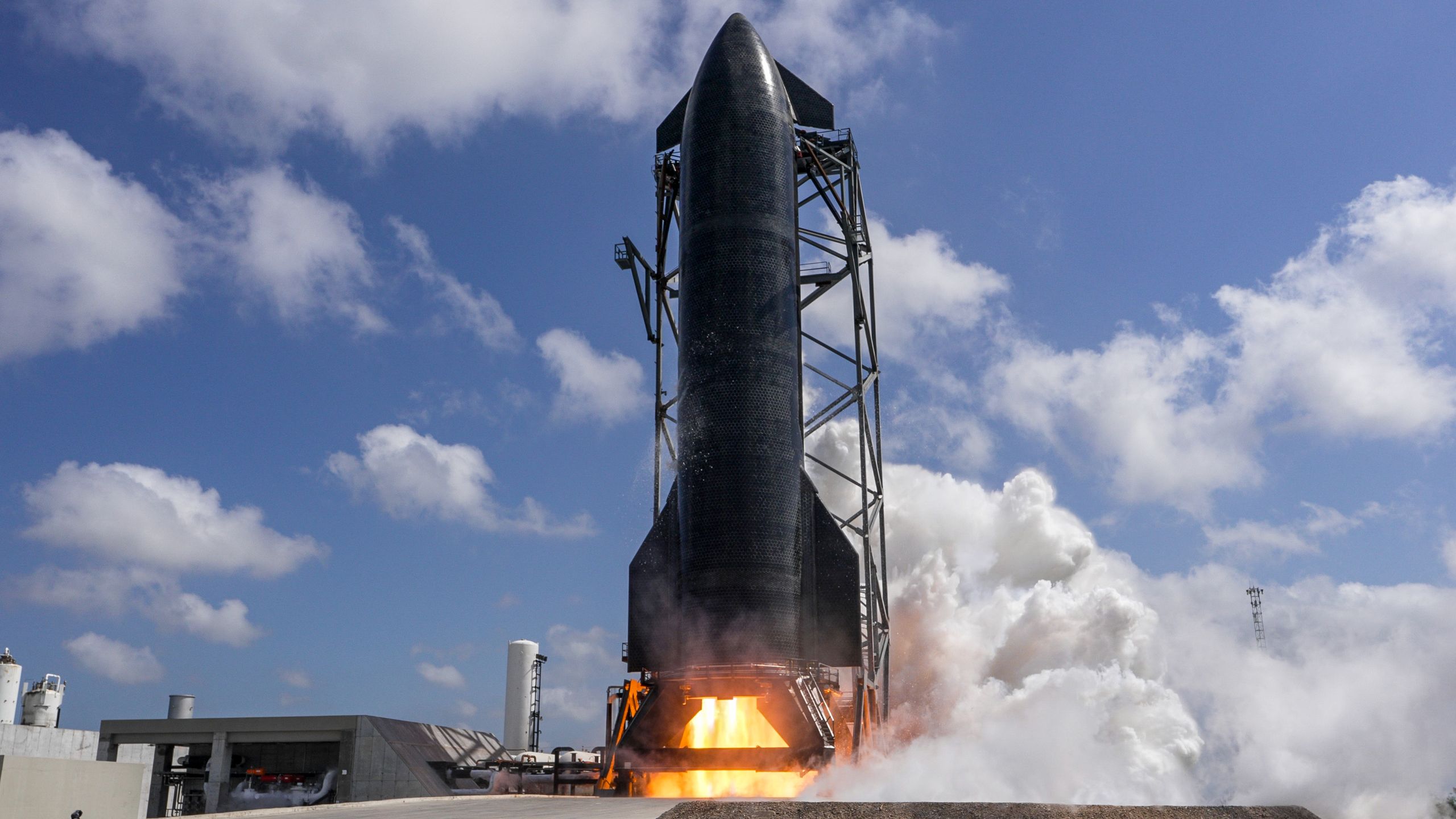
SpaceX has successfully completed a pivotal full-duration static fire test of the upper stage of its Starship V3 vehicle, a crucial milestone on the path to its next orbital test flight, tentatively scheduled for early to mid-May. This achievement marks the first full-duration ignition for the V3 variant, signaling a significant advancement in the development of the colossal Starship megarocket, which is poised to revolutionize space exploration, including future crewed missions to the Moon and beyond.
The successful test, announced by SpaceX via X (formerly Twitter) on April 14, 2026, involved the Starship V3 upper stage firing its engines for the entire intended duration. This demonstration of sustained engine performance is vital for validating the vehicle’s propulsion system and ensuring its readiness for the upcoming Flight 12, which will be the twelfth overall test flight for the Starship program and the maiden voyage for this enhanced V3 configuration.
A New Era of Starship: The V3 Advancements
The Starship V3 represents a significant evolution from its predecessors, boasting a larger size and considerably increased power. When fully assembled, Starship V3 stands at an impressive 408.1 feet (124.4 meters), approximately 4 feet (1.2 meters) taller than the V2 model. This augmented stature is accompanied by a substantial boost in performance, primarily attributed to the integration of the new V3 Raptor engines.
These upgraded engines are instrumental in enabling Starship V3 to achieve its ambitious payload capacity. According to SpaceX founder and CEO Elon Musk, this latest variant is designed to transport over 100 tons to low Earth orbit (LEO). This represents a more than twofold increase compared to the V2 model, which had a LEO payload capacity of around 35 tons. This enhanced capability is a game-changer for future space endeavors, allowing for the deployment of larger payloads, more complex scientific instruments, and ultimately, more ambitious human missions.
Chronology of Progress: Building Towards Flight 12
The successful static fire of the Starship V3 upper stage follows a series of critical developmental tests and incremental progress. The Starship program has undertaken 11 suborbital test flights to date, with the most recent occurring in October 2025. The last five of these missions utilized the V2 configuration, providing valuable data and operational experience.
The path to the V3 static fire was not without its challenges. Just four weeks prior to the upper stage test, SpaceX conducted the first static fire of a Starship V3 first stage. However, that particular test was curtailed due to an issue with ground equipment and involved only 10 of the booster’s 33 Raptor engines, rather than a full engine ignition. The successful completion of the upper stage’s full-duration static fire demonstrates that the propulsion systems are maturing and the kinks are being worked out.
The Static Fire: A Critical Test of Engine Performance
A static fire test is a fundamental procedure in rocket development. It involves igniting the rocket’s engines while the vehicle remains securely tethered to the ground. This allows engineers to meticulously monitor engine performance, thrust levels, fuel consumption, and the overall integrity of the propulsion system under operational conditions. For a full-duration static fire, the engines are run for their intended mission duration, providing the most comprehensive data possible.
For Starship V3, a successful full-duration static fire of the upper stage is particularly important. The upper stage, often referred to as the Starship spacecraft itself, is responsible for carrying the payload and, in future missions, the astronauts to their destination. Its engines must perform flawlessly for extended periods to achieve orbital insertion and, for lunar missions, to execute complex maneuvers. The test conducted on April 14, 2026, served as a vital validation of these critical systems.
Broader Implications: The Starship Program and NASA’s Artemis Missions
The advancements in Starship technology are directly linked to NASA’s ambitious lunar exploration program, Artemis. SpaceX’s Starship has been selected by NASA to serve as the first crewed lunar lander for the Artemis program. This designation underscores the pivotal role Starship is expected to play in returning humans to the lunar surface for the first time since the Apollo era.
NASA’s Artemis 2 mission, which recently completed a successful journey around the Moon and back with four astronauts, has paved the way for more complex missions. The agency is now actively preparing for Artemis 3, which aims to test crucial docking operations in Earth orbit. This will involve the agency’s Orion capsule connecting with one or both of the contracted lunar landers: SpaceX’s Starship and Blue Origin’s Blue Moon lander.
Artemis 3 is currently targeted for launch in mid-2027. If this mission proceeds as planned and demonstrates successful lunar landing capabilities, Artemis 4 is slated for late 2028. This subsequent mission aims to land astronauts near the lunar south pole, with either Starship or Blue Moon serving as the landing vehicle. The successful development and operational readiness of Starship V3 are therefore directly tied to the timeline and success of these monumental NASA endeavors.
Analysis of Progress and Future Outlook
The consistent progress in SpaceX’s Starship development program, highlighted by the recent full-duration static fire of the V3 upper stage, indicates a steady march towards achieving orbital flight and beyond. Each successful test flight and ground test brings the company closer to its ultimate goals of making humanity a multi-planetary species and facilitating extensive lunar operations.
The V3’s increased payload capacity and potential for reusability are key factors in making space access more affordable and sustainable. This not only benefits government agencies like NASA but also opens doors for commercial ventures, satellite deployment, and potentially even space tourism on an unprecedented scale.
While the exact launch date for Flight 12 remains a target, the successful static fire test provides a strong indication that SpaceX is on track to meet its early to mid-May launch window. The performance of the V3 Starship during this flight will be closely watched by the space industry and the global public alike, as it represents a significant step forward in the evolution of super heavy-lift launch vehicles and the future of space exploration. The company’s relentless iteration and commitment to rapid development continue to push the boundaries of what is possible in rocketry.









Leave a Reply