
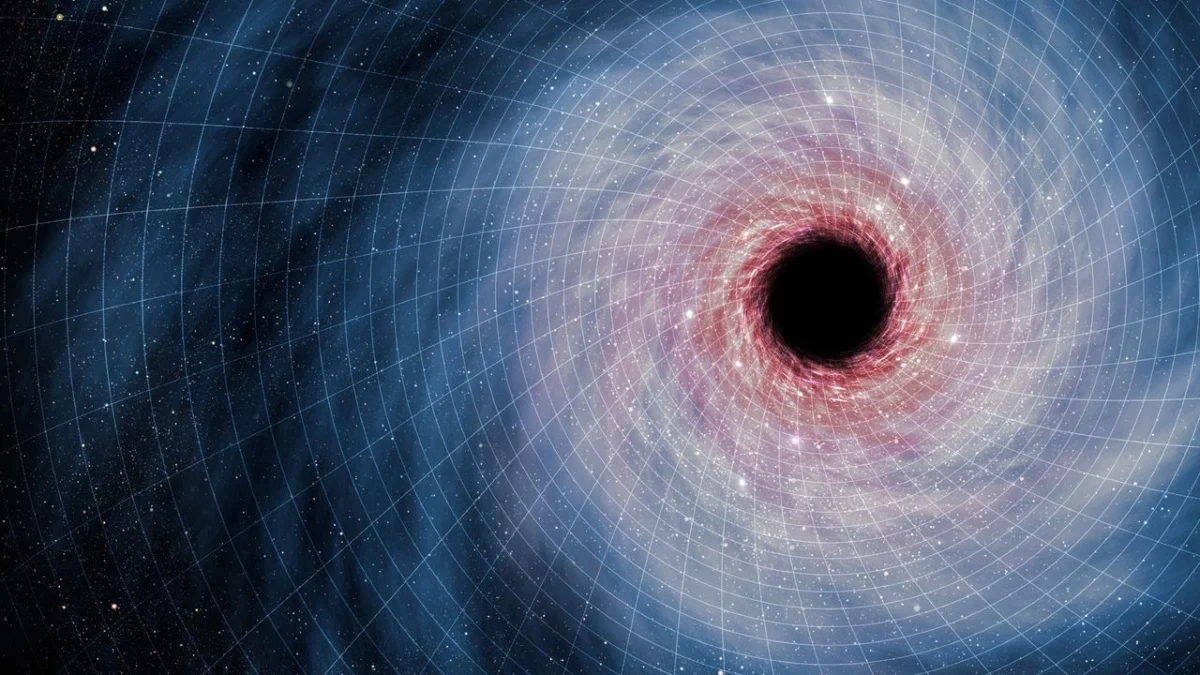
A groundbreaking theoretical study is challenging long-held assumptions about the ultimate fate of black holes, suggesting that these enigmatic cosmic objects may not completely evaporate as predicted by Stephen Hawking’s seminal theory. Instead, researchers propose that the universe’s potential hidden dimensions could leave behind stable, microscopic remnants, preserving the information they have consumed and resolving a profound paradox in physics.
This new theoretical framework, published in the journal General Relativity and Gravitation, posits that the cosmos may possess three additional spatial dimensions beyond the four we perceive (three spatial and one temporal). These unseen dimensions, curled up and imperceptible at our scale, could exert a repulsive force that halts the final stages of black hole evaporation. This revolutionary idea directly confronts the information loss paradox, a theoretical quandary that has puzzled physicists for decades and appears to violate the fundamental tenets of quantum mechanics.
The Enduring Mystery of Black Hole Evaporation
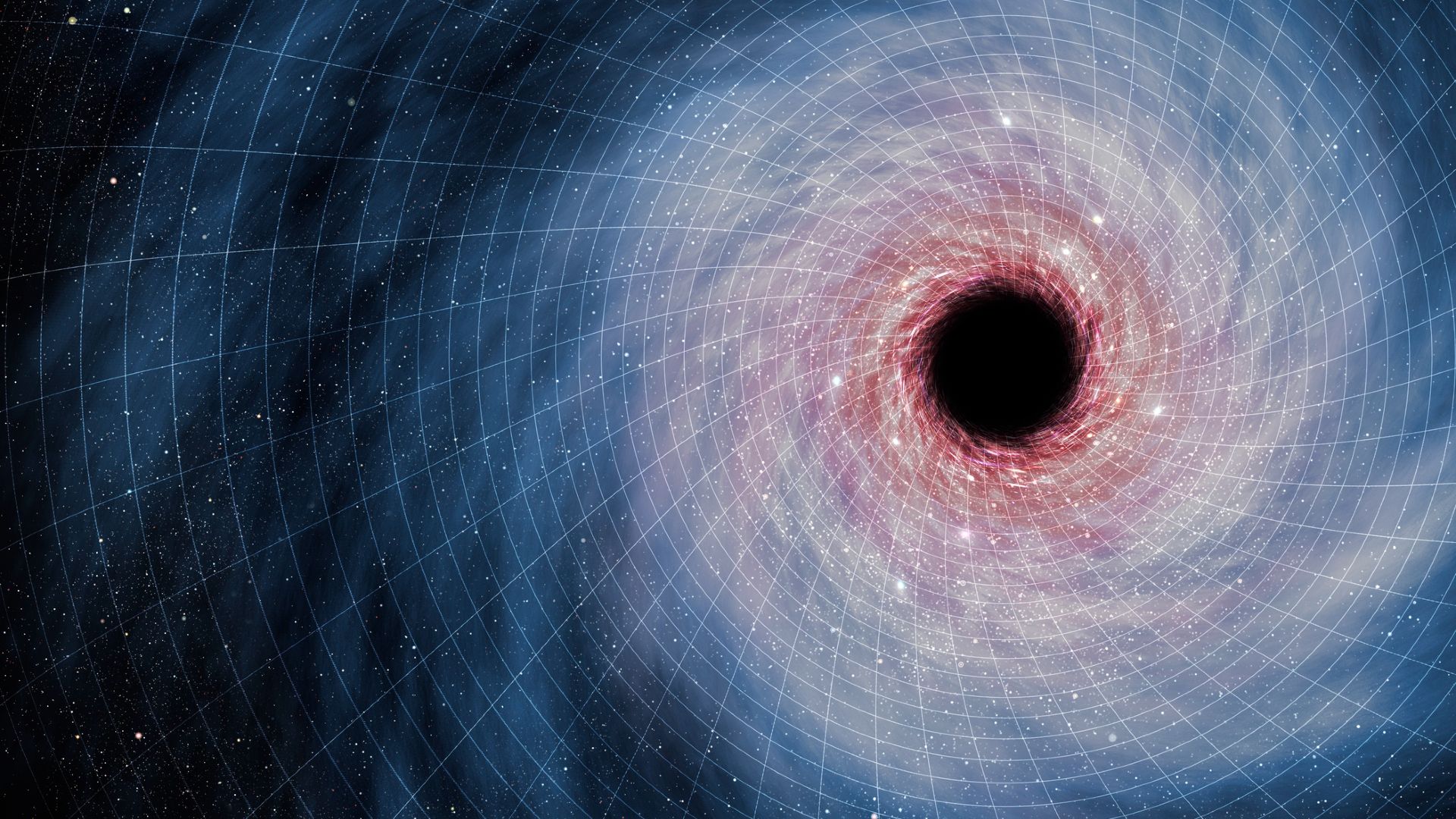
For decades, black holes have been understood as the universe’s ultimate prisons, regions of spacetime so dense that nothing, not even light, can escape their gravitational pull. However, this seemingly absolute nature was challenged in the 1970s by theoretical physicist Stephen Hawking. He proposed that black holes are not entirely black but slowly emit radiation, known as Hawking radiation, and consequently, evaporate over immense timescales.
This evaporation process, while a triumph of theoretical physics, introduced a vexing problem: the information loss paradox. Imagine destroying a book by burning it. While the book is consumed, the information it contained – the words, the story – is not truly lost. It is merely transformed into smoke, ash, and heat, and in principle, could be reconstructed. However, Hawking’s theory suggested that when a black hole evaporates completely, all the information about the matter and energy that fell into it vanishes from the universe. This apparent loss of information directly contradicts a cornerstone of quantum mechanics, which dictates that information cannot be destroyed.
"Imagine you throw a book into a fire," explained Richard PinÄá, a senior researcher at the Slovak Academy of Sciences’ Institute of Experimental Physics and a co-author of the study. "The book is destroyed, but in principle you could reconstruct every word from the smoke, ash, and heat – the information is scrambled, not lost." The paradox arises because, unlike a fire, a completely evaporated black hole appears to leave no trace of the information it once contained.
Physicists have grappled with this paradox for years, exploring various hypotheses, including the possibility that information might be encoded in Hawking radiation itself or that it could be stored in a remnant left behind. The latest research offers a compelling new avenue for resolution, rooted in the very fabric of spacetime.
The Role of Hidden Dimensions and Geometric Torsion
The study’s novel proposition hinges on the existence of a higher-dimensional universe. Our observable universe, with its familiar four dimensions, is theorized to be embedded within a larger, seven-dimensional spacetime. Three of these dimensions are not readily apparent to us because they are "compactified" – curled up into incredibly small structures, making them invisible at macroscopic scales.
"We experience three dimensions of space and one of time – four dimensions in total," PinÄák stated. "Our model proposes that the universe actually has seven dimensions: the four we know, plus three tiny extra dimensions curled up so tightly that we cannot directly perceive them."
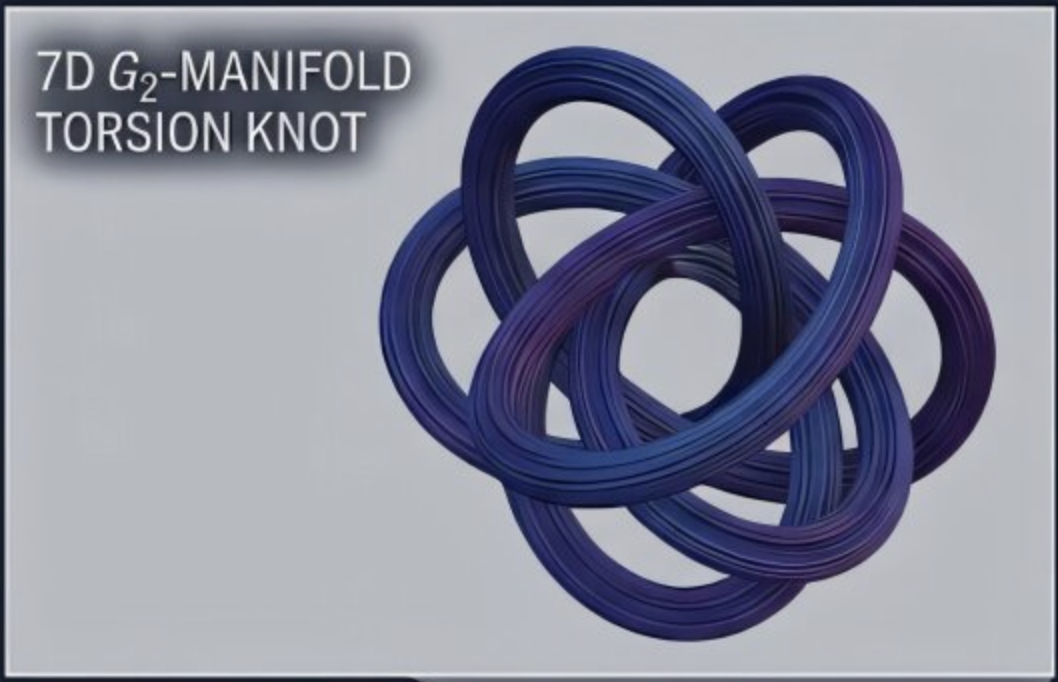
The arrangement and "folding" of these hidden dimensions are governed by complex geometric structures, particularly a symmetrical framework known as a Gâ‚‚ geometry. This mathematical concept, often explored in advanced theoretical frameworks like M-theory, a candidate for a "theory of everything" in string theory, dictates the intricate relationships between these unseen spatial extents.
"Think of it like origami," PinÄák elaborated. "The way you fold the paper determines what the final shape can do." In this cosmological context, the specific folding of the Gâ‚‚ geometry generates a phenomenon known as torsion. Torsion can be conceptualized as a twisting or contortion of spacetime itself, distinct from the curvature described by Einstein’s general relativity.
Torsion: The Cosmic Brake and the Birth of Remnants
This geometric torsion, arising from the hidden dimensions, is theorized to exert a crucial physical influence on black holes. The research indicates that torsion generates a repulsive force that becomes significant at extremely high densities, particularly as a black hole approaches the end of its evaporation cycle.
As a black hole radiates away its mass, it shrinks. According to the new model, as the black hole’s density reaches a critical point, the repulsive force generated by spacetime torsion begins to counteract the inward pull of gravity. This repulsive force acts like a cosmic brake, preventing the black hole from shrinking further and vanishing entirely.
"This repulsive force acts as a brake, halting the evaporation before the black hole vanishes completely," PinÄák explained.
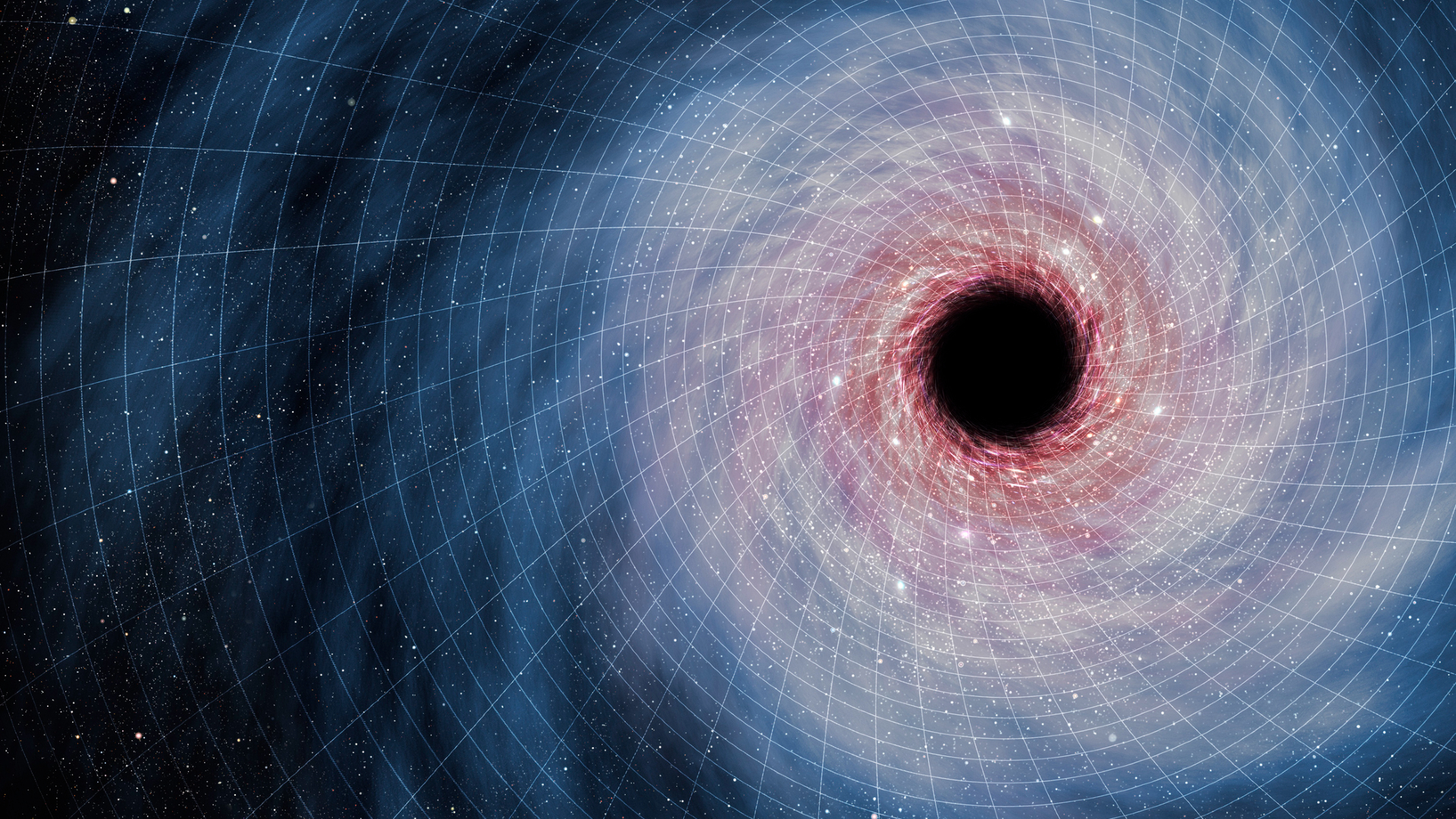
Instead of disappearing into nothingness, the black hole is theorized to stabilize into a minuscule remnant. This remnant would be incredibly small, with a mass estimated to be around 9 x 10â»â´Â¹ kilograms – a staggering 10 billion times smaller than an electron. Despite its minuscule size, this remnant would retain all the information that was originally consumed by the black hole, thus resolving the information loss paradox. The information is believed to be encoded within subtle oscillations of the remnant, known as quasinormal modes, which act as carriers of the otherwise "lost" data.
Unexpected Links to Particle Physics
Perhaps one of the most intriguing aspects of this new theory is its unexpected connection to the fundamental forces governing particle interactions. The study suggests that the presence of three hidden dimensions, coupled with the geometric torsion effect, precisely reproduces the conditions necessary for the Higgs mechanism. This mechanism is the fundamental process by which elementary particles, such as electrons and quarks, acquire mass.
"The same torsion field… generates a potential energy landscape that is identical in form to the one responsible for giving mass to the W and Z bosons – the carriers of the weak nuclear force," PinÄák noted. This profound link suggests that the same underlying structure responsible for black hole stability also dictates a fundamental aspect of particle physics, bridging the gap between the cosmic and the subatomic. This connection ties the behavior of black holes to the electroweak scale, a well-established energy regime in particle physics, lending further credence to the model’s potential validity.
Confronting the Limits of the Theory
While the theory offers an elegant solution to a persistent paradox, it is not without its challenges. The current understanding of black hole evaporation relies on a semiclassical approximation, which is expected to break down at extremely small scales, near the Planck mass (approximately 10-5 grams). At this scale, quantum gravitational effects become dominant and require a complete theory of quantum gravity, which remains an elusive goal for physicists.
"As the black hole shrinks toward the Planck scale, all existing models – ours included – must eventually confront the transition into the deep quantum-gravity regime," PinÄák acknowledged. The new work does not claim to provide a complete theory of quantum gravity but rather proposes a specific mechanism for how new physics might emerge at the very final stages of evaporation, stabilizing the black hole.
"What distinguishes our approach is that we do not claim semiclassical evaporation operates all the way down to the remnant mass," PinÄák clarified. "At that point, a new physical effect… takes over and stabilises the configuration."
The Quest for Empirical Evidence
Directly testing this theory presents a formidable challenge, as the energy scales involved are far beyond the capabilities of current particle accelerators. However, the model does make specific, testable predictions. For instance, it predicts the existence of hypothetical Kaluza-Klein particles, which are associated with extra dimensions. The theory suggests these particles would have masses around 1018 gigaelectronvolts, a staggering 14 orders of magnitude heavier than the top quark, the most massive elementary particle known. The detection of even lighter versions of these particles by current or future accelerators would serve to invalidate the model.
Another potential avenue for empirical verification lies in observing the final moments of black hole evaporation, particularly for primordial black holes that may have formed in the early universe. Future gamma-ray telescopes and advanced gravitational wave detectors could potentially offer indirect evidence of these stable, information-preserving remnants.
"The important point is that the predictions are concrete – the model can be wrong, which is what makes it scientific," PinÄák emphasized.
Future Directions and Implications
The researchers plan to further refine their framework by integrating it more deeply with established theories like M-theory and by exploring the precise mechanisms by which information is stored within the hypothetical remnants. If this theory is substantiated, it could fundamentally alter our understanding of gravity, quantum mechanics, and the very architecture of the universe. The concept of black holes leaving behind information-rich, stable remnants would have profound implications, reshaping our cosmic perspective and potentially offering a unified view of the fundamental forces.
The research paper detailing these findings is:
PinÄák, R., Pigazzini, A., Pudlák, M., & BartoÅ¡, E. (2026). Geometric origin of a stable black hole remnant from torsion in G$$_2$$-manifold geometry. General Relativity and Gravitation, 58(3). https://doi.org/10.1007/s10714-026-03528-z







Leave a Reply