
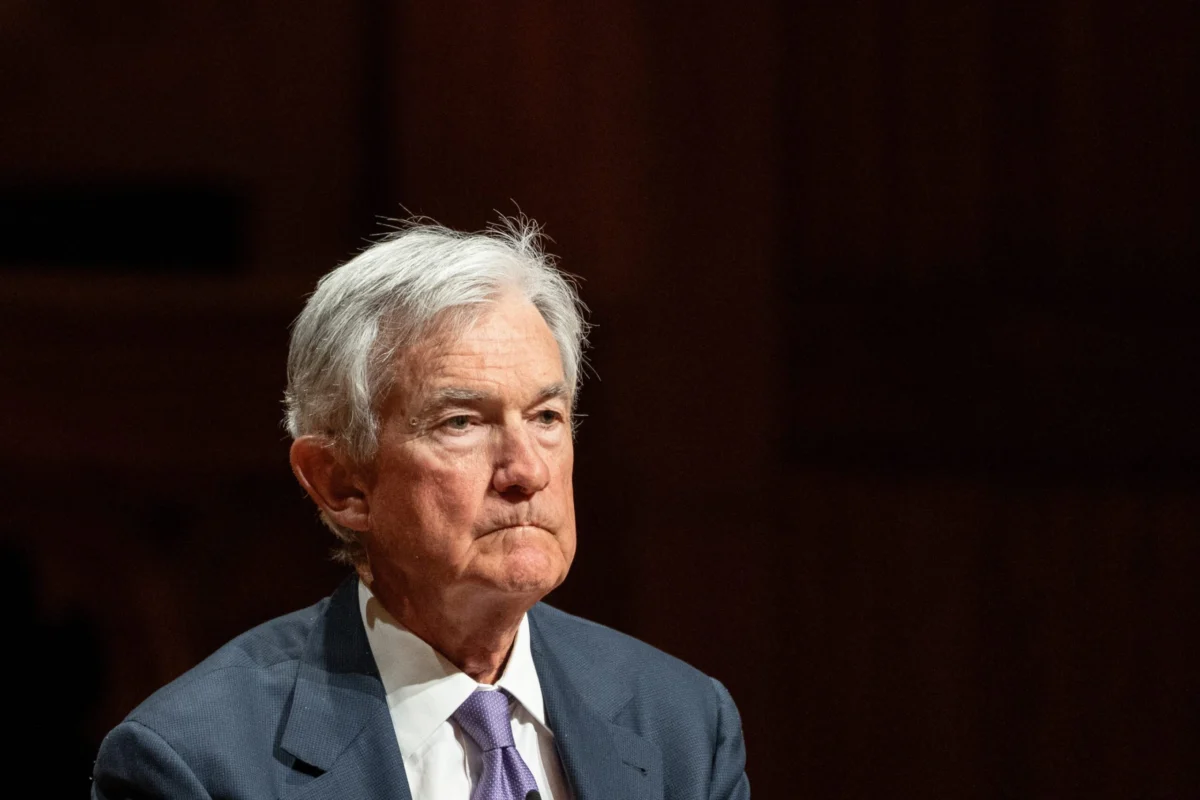
The complex interplay of presidential power, institutional independence, and political maneuvering is once again casting a shadow over the leadership of the U.S. Federal Reserve. Following former President Donald Trump’s announcement that Kevin Warsh, a former Fed Governor, was his nominee to lead the central bank, a critical question emerged: Would Trump cease his long-standing public feud with current chairman Jerome Powell, whom he also nominated in 2017, to pave the way for a new era at the Fed? The answer, unequivocally, appears to be no. In a recent interview with Fox News, the former president confirmed his intent to continue a criminal probe into Chairman Powell concerning renovations at the Fed building, an investigation that has already prompted Department of Justice subpoenas served on the central bank. This decision not only prolongs a period of unprecedented tension between the executive branch and the nation’s independent central bank but also introduces a significant and potentially insurmountable obstacle for Trump’s own preferred candidate, Kevin Warsh, as his nomination faces the scrutiny of the Senate Banking Committee.
A Deepening Rift: The President vs. The Fed Chair
The relationship between Donald Trump and Jerome Powell has been fraught with tension almost since Powell’s appointment. Initially nominated by Trump in November 2017 and confirmed with strong bipartisan support, Powell was seen as a safe, conventional choice. However, the honeymoon period was short-lived. As the Federal Reserve, under Powell’s leadership, began a series of interest rate hikes aimed at normalizing monetary policy after years of ultra-low rates, Trump’s criticism grew increasingly vocal. The former president repeatedly lambasted Powell and the Federal Reserve for what he perceived as policies that hindered economic growth, frequently calling the Fed "loco," "pathetic," and "incompetent." These public broadsides, unprecedented for a sitting president against a Fed chair, sparked widespread concern among economists, policymakers, and market participants about the erosion of the central bank’s crucial independence.
The most recent escalation came with Trump’s remarks to Fox News yesterday, where he stated, "Don’t you think we have to find out what happened there? I have to find out." He added, perhaps with characteristic hyperbole, "I’ve held back from firing him. I’ve wanted to fire him, but I hate to be controversial, you know?" This statement not only reaffirmed his ongoing antagonism but also explicitly linked it to a criminal probe concerning renovations at the Fed building. Chairman Powell himself announced in January that the Department of Justice had served subpoenas on the central bank relating to his testimony about work on the offices overlooking the National Mall. While details of the specific allegations remain somewhat opaque, the mere existence of a DOJ probe, actively pursued by a former president and prospective nominee, against the current Fed chair represents an extraordinary and potentially destabilizing development for the institution. The implication of political influence in a legal inquiry targeting an independent agency head is a profound departure from established norms and raises serious questions about due process and institutional integrity.
The Warsh Nomination: An Ideal Candidate Faces an Uphill Battle
Into this highly charged atmosphere steps Kevin Warsh, Trump’s nominee for the Federal Reserve chairmanship. Among Republicans and many market analysts, Warsh is largely viewed as an ideal candidate. His pedigree is impressive: he previously served as a Governor on the Federal Reserve Board under Chairman Ben Bernanke from 2006 to 2011, giving him invaluable firsthand experience with the central bank’s operations during a period of immense economic upheaval, including the 2008 financial crisis. Warsh is known for his staunch advocacy of Fed independence, a quality that offers considerable relief to both Wall Street and Washington policymakers wary of political encroachment. Furthermore, he has consistently signaled a more optimistic outlook on the U.S. economy than the current incumbent, suggesting a potential shift in monetary policy direction, possibly towards a more dovish stance or at least a different approach to interest rates and quantitative easing.
Warsh’s path back to the central bank, however, is anything but smooth. His nomination is slated for Senate Banking Committee hearings, currently penciled in for April 21. The committee is held by a slim Republican majority of 13 members, two ahead of their Democratic counterparts. This narrow margin means that any defection within Republican ranks could jeopardize the nomination. One such critical voice has emerged in Senator Thom Tillis (R-NC), who has made it explicitly clear that he will block Warsh’s progression through the confirmation process if the criminal case against Powell is not dropped. "My position has not changed," Tillis previously stated, "I will oppose the confirmation of any Federal Reserve nominee, including for the position of Chairman, until the DOJ’s inquiry into Chairman Powell is fully and transparently resolved." This stance is not personal, but rather a principled stand for the institutional integrity of the Federal Reserve.
The implications of Tillis’s position are significant. If he holds firm, the committee would be effectively split, and indeed, it would only take one additional maverick vote among the remaining Republicans to nix Warsh’s chances. Trump, in his Fox interview, expressed a hope that Tillis would eventually back down, remarking, "He’s on his way out… and I think he doesn’t want the legacy of stopping a great person who could be great… I know he said what he said, and maybe it’s true, in which case I’ll have to live with it." This statement reveals Trump’s awareness of the challenge but also his characteristic confidence that political pressure might eventually sway the senator.
Broader Implications: The Erosion of Fed Independence and Institutional Norms
The ongoing saga surrounding the Fed chairmanship transcends individual personalities and nominations; it strikes at the heart of the Federal Reserve’s independence, a cornerstone of stable economic policy in the United States. The Fed’s ability to conduct monetary policy free from political interference is widely regarded as essential for maintaining price stability, fostering maximum employment, and ensuring investor confidence. History is replete with examples where political interference in central banking has led to disastrous economic consequences, including hyperinflation and financial instability.
Trump’s repeated threats to fire Powell, coupled with his latest move to continue a criminal probe against him, represents a profound challenge to this independence. While a president cannot directly fire a Fed chair without cause, the constant public attacks and the instigation of investigations create an environment of uncertainty and pressure that can undermine the institution’s credibility and effectiveness. Market participants and policymakers closely watch these developments, as any perceived politicization of the Fed can lead to increased volatility, higher borrowing costs, and a general erosion of trust in economic governance.
Moreover, the precedent set by a president actively pursuing a criminal investigation against a sitting or outgoing head of an independent agency carries grave implications for the broader institutional framework of the U.S. government. It blurs the lines between executive oversight and political retribution, potentially weaponizing legal processes for political ends. This could deter highly qualified individuals from seeking roles in independent agencies, fearing that their tenure might be subject to politically motivated scrutiny or legal action.
A Hill to Climb for Warsh: Perceptions and Policy
Even if Kevin Warsh somehow navigates the treacherous path of Senate confirmation, his challenges will likely only intensify upon assuming the chairmanship. The perception that he is a "White House pawn" – a concern voiced by Democrat sources who believe there is little Warsh could do to convince critics otherwise – would be a formidable obstacle. He would face the daunting task of convincing colleagues, many of whom have dedicated their careers to upholding the Fed’s institutional credibility and independence, that his decisions are based purely on economic principles rather than political directives. This skepticism could complicate internal consensus-building, a crucial element for effective monetary policy.
On the policy front, Warsh has articulated a clear vision for the central bank. He has advocated for scaling back the Fed to its core remit and has expressed a bullish outlook on the productivity benefits of artificial intelligence (AI), suggesting that such advancements could provide a basis for initiating a rate-cutting cycle. He has also advanced proposals to fundamentally reshape the Fed’s relationship with the bond market, indicating a desire to recalibrate the central bank’s balance sheet and its role in financial markets. While these opinions have been public for some time, selling them internally at the Fed, particularly amidst heightened skepticism about his motives, may prove significantly harder than under normal circumstances. The need to constantly prove his independence could overshadow his policy agenda, forcing him to tread carefully to avoid further accusations of political subservience.
The Role of Congress and the Future of the Fed
The Senate Banking Committee hearings for Warsh in April will be more than just a procedural step; they will be a critical forum for debating the future direction of the Federal Reserve and the sanctity of its independence. Senator Tillis’s unwavering stance highlights the power of individual senators, even within a narrow majority, to influence the confirmation process. His position reflects a broader concern among some Republicans about preserving institutional norms, even when it means diverging from their party’s executive leader. If Tillis holds firm, and no other Republican crosses the aisle, Warsh’s nomination could be stalled indefinitely, forcing Trump to either withdraw the nomination, pursue a different candidate, or concede on the Powell probe.
The outcome of this confirmation battle will have lasting implications. A successful Warsh nomination, particularly one achieved under the shadow of a criminal probe against his predecessor, would require him to immediately and forcefully assert the Fed’s independence. Conversely, a stalled nomination due to political interference could plunge the Fed into a prolonged period of leadership uncertainty, potentially impacting its ability to respond effectively to economic challenges.
A Shared Principle Amidst Conflict
Despite the deep disagreements on policy and the bitter personal feud, there remains a fundamental principle that both Jerome Powell and Kevin Warsh appear to endorse: the Federal Reserve must be kept well away from politics and, even further, from the court system. Powell’s advice to his potential successor, "Stay out of elected politics," encapsulates the institutional wisdom that has guided the Fed for decades. Warsh, as an economist who advocates for scaling back the Fed’s expansive mandate and reshaping its relationship with financial markets, is demonstrably not a man who wishes to see the central bank tangled in legal battles or political controversies.
Ironically, Trump’s persistent focus on the Fed building’s bricks-and-mortar activities—a reflection, perhaps, of his real estate background and penchant for development—might, in the event Warsh makes it through the hearings, inadvertently offer some breathing room. If the executive branch’s preoccupation with the Fed shifts away from monetary policy decisions towards administrative minutiae, it could provide Warsh with a crucial opportunity to establish his independent authority and steer the central bank back to its core economic mission without constant political interference. However, this is a tenuous hope in a landscape increasingly defined by unprecedented political pressures on a vital independent institution. The ultimate test will be whether the Fed, under any new leadership, can successfully reaffirm its role as an impartial steward of the nation’s economy.







Leave a Reply