
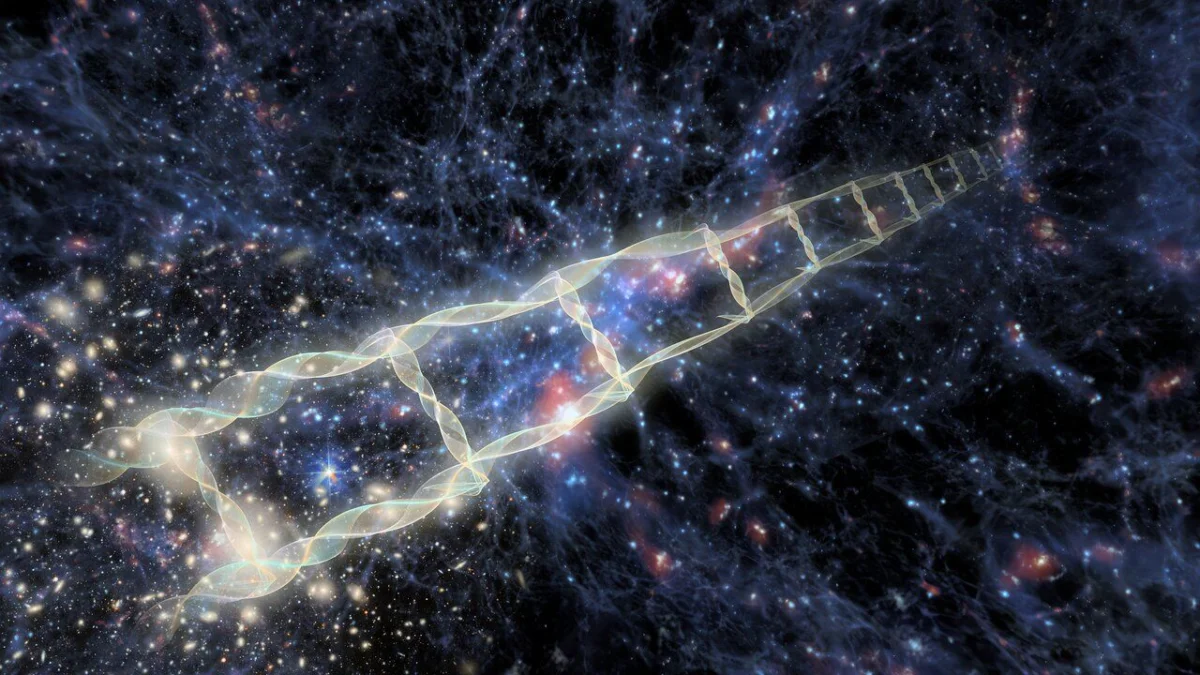
A profound conundrum, often referred to as the "Hubble tension," is currently challenging the very foundations of our understanding of the universe. This fundamental disagreement arises from conflicting measurements of the universe’s expansion rate, the Hubble constant. Now, a landmark comprehensive analysis, meticulously combining decades of independent astronomical observations, has reinforced the severity of this discrepancy. Far from being a mere statistical anomaly, the persistent tension strongly suggests that our prevailing standard model of cosmology is incomplete, paving the way for potentially revolutionary new physics.
The quest to quantify the universe’s expansion rate, the Hubble constant ($H_0$), has historically bifurcated into two primary observational approaches. The first leverages measurements derived from the cosmic microwave background (CMB), the faint afterglow of the Big Bang, which originated approximately 380,000 years after the universe’s inception. This "early universe" approach provides a snapshot of the cosmos in its infancy. In stark contrast, the second method focuses on the "late universe," examining the ongoing expansion of the local cosmos. This is achieved through observations of celestial objects known as "standard candles." These are astronomical entities, such as certain types of stars and supernovae, whose intrinsic brightness is known. By comparing this intrinsic luminosity to their observed brightness, astronomers can deduce their distance, and the degree to which their light has been stretched (redshifted) by the expansion of space offers a measure of that expansion.
Despite the apparent simplicity of these methods, the values derived for the Hubble constant from these two distinct observational epochs consistently diverge by a margin that far exceeds statistical uncertainties. This persistent, significant disagreement is the crux of the Hubble tension, a puzzle that has vexed cosmologists for years. In response to this escalating crisis, a substantial consortium of astronomers convened for a dedicated symposium. Their objective was to rigorously evaluate the most robust methodologies and datasets available for constraining the Hubble constant, and critically, to determine whether the tension was indeed a genuine physical phenomenon or an artifact of observational limitations.
The culmination of this monumental collaborative effort was published on April 10th in the prestigious journal Astronomy & Astrophysics. This seminal paper presents what is widely considered the most precise determination of the Hubble constant to date, derived from an unprecedented synthesis of observational data. Crucially, the analysis confirms that the tension not only persists but is more pronounced than ever, lending significant weight to the hypothesis that our current cosmological paradigm is fundamentally flawed.
"That’s precisely why the Hubble tension is so captivating," explained Dr. Richard Anderson, an astrophysicist at the University of Göttingen and a co-author of the study, in an email correspondence with Live Science. "The comparison between the Hubble constant value derived from the late and early universe scrutinizes fundamental physics on cosmological scales. It unequivocally signals that something vital is missing from our current understanding."
The Pinnacle of Local Universe Expansion Measurement
Historically, the calculation of cosmic distances has relied on the concept of a "cosmic distance ladder." Each rung on this ladder represents an increasingly distant celestial object, with the calibration of one rung informing the distance measurements of the next. This intricate system has typically involved objects such as pulsating Cepheid variable stars, whose period-luminosity relationship is well-established, allowing astronomers to determine their distances within our own Milky Way galaxy and nearby galaxies. Extending this ladder further, Type Ia supernovae, known for their consistent peak brightness, have been instrumental in measuring distances to galaxies billions of light-years away.
However, the recent community-driven initiative, launched at the International Space Science Institute Breakthrough Workshop in Bern, Switzerland, in March 2025, has elevated this approach to an entirely new level. This effort has established a comprehensive survey of the nearby universe, termed the Local Distance Network (LDN). Achieving such a detailed and integrated network was once deemed "potentially unreachable" just a decade ago, underscoring the remarkable progress made by the astronomical community.
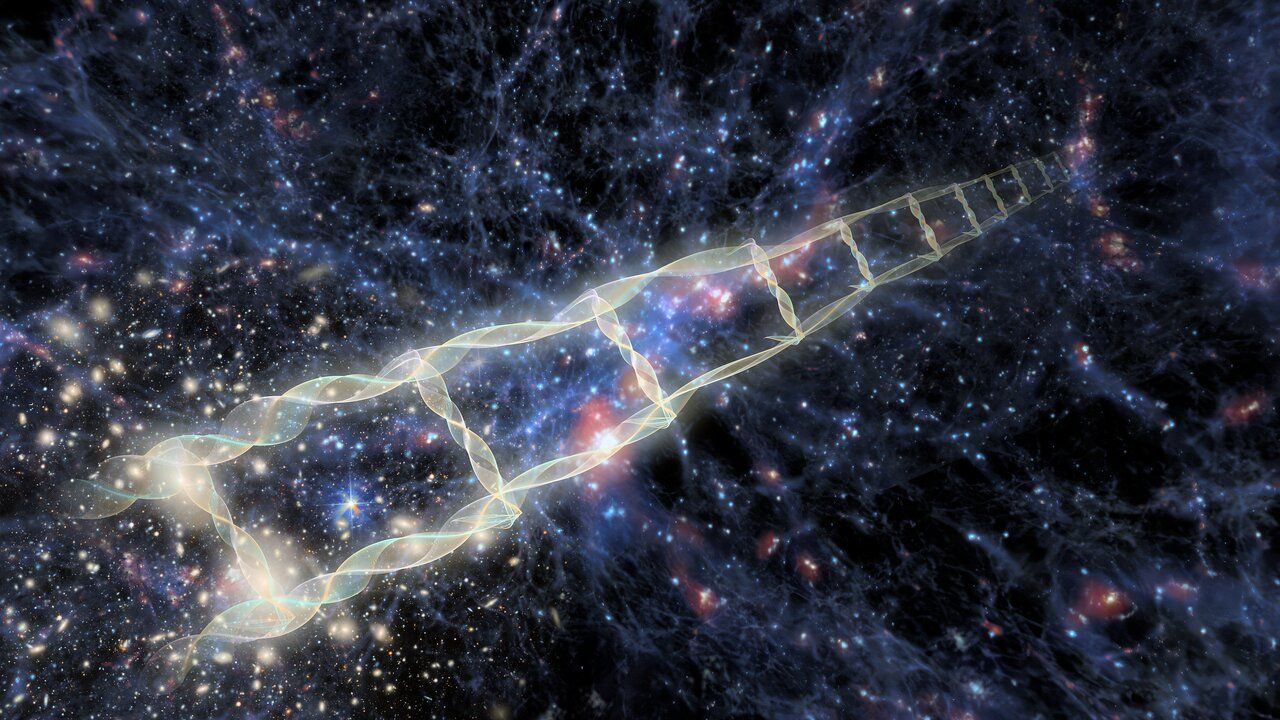
"This isn’t merely a new value for the Hubble constant," the researchers articulated in a statement released by the National Science Foundation’s NOIRLab. "It’s a community-built framework that transparently and accessibly integrates decades of independent distance measurements." This collaborative framework is designed to enhance the reliability and robustness of cosmological measurements by incorporating redundancy. By cross-referencing data from various independent techniques and observatories, potential systematic errors and statistical anomalies inherent in any single method can be significantly mitigated.
A key strength of the LDN lies in its ability to perform rigorous "leave me out" analyses. In these tests, researchers systematically exclude data from specific measurement techniques, such as Cepheid-based distance calculations. The observation that the overall results for the constrained Hubble constant exhibit minimal change upon exclusion of any single method provides compelling evidence for the robustness and internal consistency of the network.
Constructing a Cosmic Network: Anchors and Beyond
The foundational element of the Local Distance Network is built upon "anchors"—celestial objects whose distances have been meticulously determined through direct geometric methods. The gold standard for such measurements is parallax, which relies on observing the apparent shift in an object’s position against a more distant background as the observer’s perspective changes. While sophisticated space-based observatories are crucial for measuring parallax for distant stars, the fundamental principle can be intuitively understood by a simple terrestrial experiment: holding a finger at arm’s length and observing its apparent shift in position when alternating between closing one eye and then the other.
The LDN incorporates multiple such local-universe anchor points. These include the galaxy NGC 4258, situated over 20 million light-years away, whose distance has been precisely measured using the maser emission from its central supermassive black hole. The Magellanic Clouds, a pair of dwarf galaxies orbiting the Milky Way at an average distance of about 200,000 light-years, also serve as critical anchors. Furthermore, numerous variable stars within our own Milky Way have been incorporated, providing essential calibration points for closer distances.
Beyond these foundational anchors, the network expands to encompass a vast array of objects with meticulously measured distances. This includes dying old red giant stars, whose brightness at the tip of their asymptotic giant branch is a reliable distance indicator, and "megamasers"—exceptionally luminous cosmic lasers generated within the accretion disks surrounding supermassive black holes. These phenomena provide powerful beacons for probing deeper into the universe.
The researchers also integrated data from over 7,500 galaxies, observed by some of the world’s most powerful astronomical facilities, including the Hubble Space Telescope and the Dark Energy Spectroscopic Instrument (DESI). These observations extend to distances exceeding one billion light-years, providing an unprecedentedly detailed map of the local universe’s expansion.
The result of this exhaustive and collaborative endeavor is the most precise direct measurement of the Hubble constant in the local universe to date: 73.50 kilometers per second per megaparsec, with a remarkable relative uncertainty of just 1.09%. This finding solidifies the reality of the Hubble tension; the discrepancy is not an artifact of measurement error or statistical fluctuation, but rather a genuine reflection of our incomplete understanding of the cosmos.
The persistence of this tension has profound implications, suggesting that the measurements derived from the early universe, particularly those based on the CMB, may also require deeper re-examination. "One intriguing, relatively recent, and perhaps more natural idea involves primordial magnetic fields, which could alter the scale of the structure observed in the CMB," offered Dr. John Blakeslee, director of research and science services at NOIRLab and a co-author of the study. Such fields, if present in the early universe, could have influenced the distribution of matter and energy in ways that are not accounted for in current cosmological models.
Implications for New Physics and the Universe’s Future
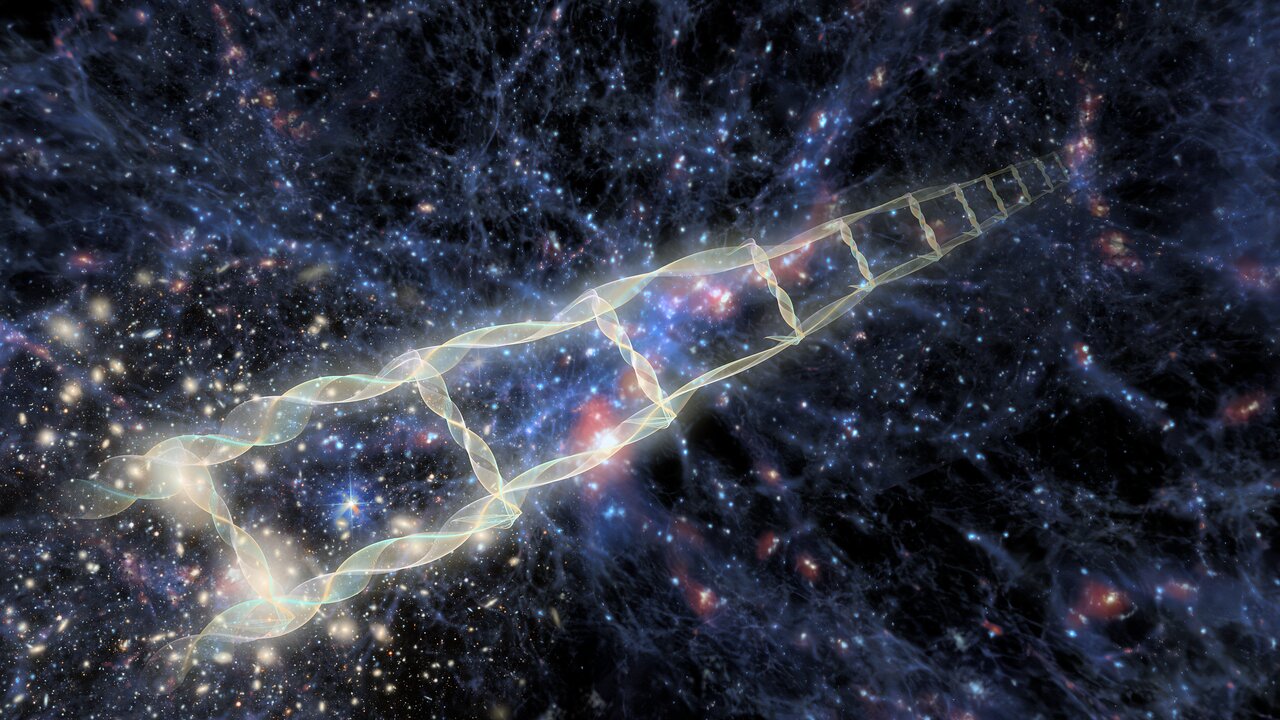
This groundbreaking research significantly bolsters the growing conviction that new physics are essential to unravel the mysteries of dark energy, the enigmatic force driving the accelerated expansion of the universe, and to ultimately determine the universe’s ultimate fate. The modular nature of the Local Distance Network is particularly encouraging. As next-generation observatories come online and deliver even more precise data, this framework will be readily adaptable, offering the potential to finally resolve the Hubble tension. However, this hope has been a recurring theme in cosmology for over a decade, underscoring the persistent challenge.
The standard model of cosmology, known as the Lambda-CDM model, has been remarkably successful in explaining a wide range of cosmological observations, from the formation of large-scale structures to the abundance of light elements. However, the Hubble tension, alongside other emerging anomalies such as the "Alps anomaly" (a discrepancy in the Hubble constant derived from Type Ia supernovae and Cepheid variables) and potential issues with the large-scale structure of the universe, suggests that this model may be an incomplete description of reality.
Potential solutions to the Hubble tension often involve speculative extensions to the standard model. These include the possibility of a "dark energy phase transition" occurring at some point after the Big Bang, or the existence of additional relativistic particles in the early universe that would have affected its expansion rate. Another avenue of research explores modifications to gravity itself, suggesting that our understanding of how gravity operates on cosmic scales might be flawed. The consistent results from the Local Distance Network provide a crucial benchmark against which these theoretical extensions can be tested.
The collaborative spirit evident in the creation of the Local Distance Network represents a paradigm shift in cosmological research. By pooling resources, expertise, and data, scientists are not only achieving unprecedented levels of precision but also fostering a more transparent and reproducible scientific process. This unified approach is vital for tackling complex, long-standing problems like the Hubble tension, which may ultimately lead to a more profound and complete understanding of our universe. The journey to deciphering the cosmos is ongoing, and the Hubble tension, once a point of contention, is now a beacon guiding us toward undiscovered frontiers of physics.
References:
Casertano, S., Anand, G., Anderson, R. I., Beaton, R., Bhardwaj, A., Blakeslee, J. P., Boubel, P., Breuval, L., Brout, D., Cantiello, M., Reyes, M. C., Csörnyei, G., De Jaeger, T., Dhawan, S., Di Valentino, E., Galbany, L., Gil-MarÃn, H., Graczyk, D., Huang, C., . . . Nota, A. (2026). The Local Distance Network: A community consensus report on the measurement of the Hubble constant at ∼1% precision. Astronomy and Astrophysics, 708, A166. https://doi.org/10.1051/0004-6361/202557993








Leave a Reply