
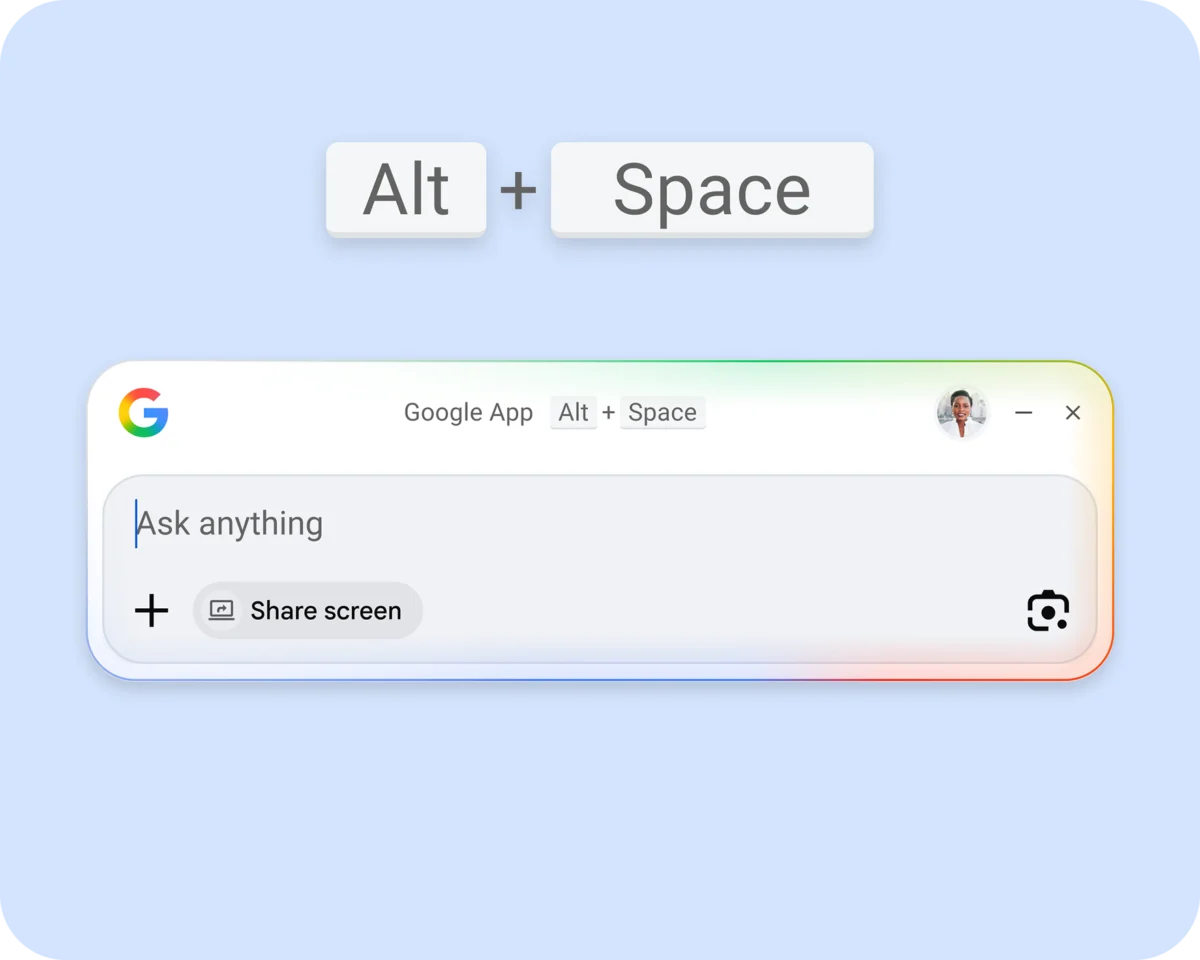
Google has officially launched its first standalone desktop application for Gemini on macOS, marking a pivotal moment in the company’s aggressive artificial intelligence strategy and addressing a long-standing user demand for native AI integration on Apple’s platform. This move introduces a dedicated AI assistant experience to Mac users, who, despite having access to Google’s vast web services, have yet to see a native Google search application for the operating system. The Gemini app aims to bridge this gap by offering a sophisticated AI companion directly accessible from the desktop, designed to integrate seamlessly into the Mac workflow.
The Genesis of a Native Experience: Responding to User Demand
The development of the Gemini Mac app was driven by persistent requests from the macOS user community for a native application. Google’s Josh Woodward, a prominent voice within the company’s AI initiatives, confirmed these user pleas, stating that the feedback directly influenced the decision to prioritize a dedicated Mac client. This responsiveness underscores Google’s commitment to expanding Gemini’s reach beyond web browsers and mobile devices, acknowledging the unique preferences of desktop users.
Remarkably, the development cycle for this significant application was extraordinarily swift. A small, dedicated team at Google managed to conceptualize, build, and deliver the initial version of the Gemini Mac app in less than 100 days. This rapid turnaround, which reportedly included the integration of over 100 features, highlights Google’s agility and intense focus on AI deployment. CEO Sundar Pichai further revealed that the application was built entirely using "Google Antigravity," a proprietary development platform that appears to be central to Google’s accelerated product delivery capabilities, particularly in AI-centric projects. While details on Antigravity remain somewhat proprietary, its mention suggests a highly efficient and integrated development environment that can significantly streamline the creation of complex, feature-rich applications. The app’s foundation in Swift, Apple’s native programming language, further signifies Google’s dedication to optimal performance and deep integration within the macOS ecosystem, promising a responsive and intuitive user experience that aligns with Apple’s design principles.
A Deeper Dive into Gemini’s Desktop Capabilities
Accessing the Gemini app on Mac has been designed for immediate convenience and efficiency, mirroring the quick access methods found in other desktop utility applications. Users can invoke a Gemini prompt bar at any time by simply pressing Option + Space, a shortcut that will feel familiar to those accustomed to macOS’s native Spotlight search or Windows’ search functionalities. This instant access positions Gemini as a persistent, on-demand AI assistant, ready to field queries or assist with tasks without requiring a browser window to be open.
Beyond general question-answering, which leverages Gemini’s robust large language model capabilities akin to its web counterpart, the desktop app introduces a critical differentiator: contextual awareness of open windows. This feature allows Gemini to access and understand information displayed within other applications on the user’s Mac, providing a more personalized and relevant assistance experience. For instance, a user working on a document could ask Gemini for summaries or related information based on the content currently visible on their screen, or generate creative text inspired by an image being viewed. This level of integration moves Gemini beyond a simple chatbot to a more proactive and assistive desktop companion, reminiscent of the deeper system-level integrations seen with Microsoft’s Copilot on Windows.
The Mac Gemini app comes fully equipped with a comprehensive suite of features and model types available in the web version, ensuring feature parity from day one. Users can upload various file types for analysis, summarization, or content generation, making it a powerful tool for professionals and creatives alike. The inclusion of "notebooks" allows users to organize their prompts, responses, and research, facilitating more complex and ongoing projects. Advanced tools like "Deep Research" suggest capabilities for in-depth information retrieval and synthesis, while "Canvas" hints at a collaborative or visual workspace within the AI environment. Furthermore, the app boasts access to Google’s cutting-edge image, video, and music generation models, empowering users to create multimedia content directly from their desktop through AI prompts. This comprehensive feature set positions the Mac app as a versatile AI powerhouse, with Google indicating that more functionalities are already in the pipeline for future updates, promising continuous evolution of its capabilities.
Strategic Distribution: Bypassing the App Store
One of the most notable decisions surrounding the launch of the Gemini Mac app is Google’s chosen distribution method. The company has opted not to list the application in the official Mac App Store. Instead, users are required to download and install the app via a .DMG (disk image) file directly from Google’s dedicated website (gemini.google/mac/). This approach carries significant implications for both Google and its users.
For Google, bypassing the App Store offers several strategic advantages. It allows the company to retain full control over the application, including its update cycles, monetization strategies (if any are introduced later), and data collection policies, without being subject to Apple’s stringent review processes and guidelines. Crucially, it also enables Google to avoid Apple’s standard 15-30% commission on in-app purchases or subscriptions, preserving revenue streams should advanced features or premium tiers be introduced in the future. This direct distribution model is a common practice for many major software developers who prefer autonomy over their products.
However, this decision also presents potential challenges. The Mac App Store serves as a central, trusted repository for applications, offering users a streamlined discovery process, automatic updates, and a perceived layer of security through Apple’s vetting. By distributing outside of it, Google might face hurdles in terms of discoverability and user adoption, particularly among less tech-savvy users who are accustomed to the App Store ecosystem. Furthermore, downloading software directly from websites can raise security concerns for some users, who might be wary of installing applications from unverified sources, even if the source is a reputable company like Google. Google’s clear branding and direct link on its official Gemini website will likely mitigate many of these concerns, but the initial friction for some users might be higher. Despite this, the app is globally available in all regions and languages where Gemini support is currently offered, ensuring broad accessibility.
Google’s Broader AI Ambition and Timeline
The launch of the Gemini Mac app is not an isolated event but a significant stride within Google’s overarching, multi-year strategy to embed AI at the core of its product ecosystem. This journey began with foundational research into large language models (LLMs) such as LaMDA, which eventually led to the public release of Bard, Google’s experimental conversational AI service. Bard served as a crucial testing ground, gathering user feedback and iterating rapidly in response to the burgeoning generative AI landscape, heavily influenced by the emergence of OpenAI’s ChatGPT.
The evolution from Bard to Gemini marked a strategic rebranding and a substantial upgrade in Google’s AI capabilities. Gemini was introduced as a family of multimodal models, designed from the ground up to understand and operate across text, code, audio, image, and video. This multimodal nature positions Gemini as a more versatile and powerful AI, capable of handling complex tasks that integrate various data types. The release of Gemini Pro and the more advanced Gemini Ultra models showcased Google’s commitment to pushing the boundaries of AI performance, competing directly with the most sophisticated models in the industry.
The desktop app for Mac, therefore, represents a logical progression in this timeline, signifying Google’s intent to make Gemini not just a web utility but an integral part of users’ operating system experience. This move directly challenges competitors like Microsoft, which has deeply integrated its Copilot AI into Windows 11, and anticipates future AI developments from Apple itself, which is expected to enhance its own on-device AI capabilities in upcoming macOS versions. By establishing a native desktop presence, Google aims to secure its foothold in the burgeoning market for AI-powered productivity tools, ensuring Gemini is readily available wherever users work, regardless of their preferred operating system.
The "Antigravity" Advantage: A Glimpse into Google’s Development Future
The mention of "Google Antigravity" as the platform entirely responsible for building the Gemini Mac app offers a fascinating, albeit speculative, insight into Google’s internal development methodologies. While specific details about Antigravity are not publicly available, its name and the context in which it’s mentioned — enabling rapid development (less than 100 days for 100+ features) for a complex, AI-driven application — suggest it is a highly advanced, potentially AI-first, integrated development environment (IDE) or platform.
Such a platform would likely leverage AI tools and automation to accelerate various stages of software development, from code generation and testing to deployment. This could include AI-assisted coding, automated bug detection, smart component reuse, and streamlined integration with Google’s vast AI model infrastructure. If Antigravity is indeed an AI-powered development platform, it represents a significant internal innovation for Google, allowing its engineering teams to build sophisticated applications at unprecedented speeds. This capability would be a strategic asset, enabling Google to quickly iterate and deploy new AI features and products across its diverse ecosystem, maintaining a competitive edge in the fast-paced AI race. The ability to deliver a Swift-coded, feature-rich native Mac app so quickly also hints at Antigravity’s potential for cross-platform development efficiencies, possibly abstracting away some complexities of platform-specific implementations while still allowing for native language integration.
Industry Reactions and Competitive Landscape
The launch of Gemini on Mac is likely to elicit a range of reactions across the tech industry. For industry analysts, this move solidifies Google’s aggressive strategy to permeate all major computing platforms with its AI offerings. It’s a direct response to the ongoing "AI platform war," where companies are vying to make their AI the default choice for users across devices. This positions Google more squarely against Microsoft, whose Copilot AI is deeply integrated into the Windows operating system and its productivity suite. Microsoft has been proactive in bringing Copilot to various platforms, but a dedicated, full-featured Google AI app on Mac provides a robust alternative.
Apple’s reaction, though unstated, will be closely watched. While Apple has its own AI assistant in Siri, its generative AI capabilities have historically lagged behind competitors. With rumors of significant on-device AI enhancements coming to macOS and iOS, Google’s Gemini app provides a powerful third-party AI option that could either spur Apple to accelerate its own developments or present a challenge in maintaining ecosystem control. The choice by Google to bypass the App Store is also a subtle power play, asserting independence from Apple’s platform rules, a tension point that has been central to the tech industry for years.
From the perspective of the broader AI community, the Gemini Mac app validates the trend of moving AI from a purely cloud-based service to a more integrated, local, and context-aware desktop utility. It signifies that AI is becoming less of a separate tool and more of an ambient, always-available assistant embedded within the operating system experience.
Implications for the macOS User and Developer Ecosystem
For macOS users, the Gemini app promises enhanced productivity and a new level of AI-powered assistance directly on their desktop. The convenience of the Option + Space shortcut, combined with the app’s ability to understand on-screen context, could fundamentally change how some users interact with their Macs, offering instant answers, content generation, and research capabilities without interrupting their workflow. However, the direct download model will require users to adjust their habits, potentially navigating macOS’s security settings (Gatekeeper) to allow installation from an "unidentified developer," a minor but notable hurdle for some.
For the developer ecosystem, particularly those focused on Swift and macOS development, Google’s choice to build a major application entirely in Swift is a significant endorsement of Apple’s native language. It demonstrates that Swift is capable of powering complex, high-performance applications from a major tech player, potentially encouraging more developers to invest in native macOS development rather than relying solely on cross-platform frameworks. It also shows Google’s willingness to embrace platform-specific best practices to deliver a superior user experience, rather than simply porting web technologies.
Looking Ahead: The Future of Desktop AI
The launch of the Gemini Mac app is more than just a new application; it’s a clear signal of the intensifying race to integrate advanced AI directly into the operating system experience. As AI models become more sophisticated and capable, their utility increases dramatically when they can interact seamlessly with a user’s local environment, applications, and data. This trend suggests a future where AI is not just a tool you open, but an omnipresent, intelligent layer that enhances every aspect of desktop computing.
Google’s commitment to delivering a native, feature-rich Gemini experience on Mac, built with advanced internal tools and delivered with remarkable speed, positions it as a formidable player in this evolving landscape. While the distribution model presents a unique challenge, the app’s capabilities and Google’s strategic intent indicate that desktop AI is no longer a futuristic concept but a present reality, continuously evolving to become an indispensable part of our digital lives. As more features are rolled out and integrations deepen, Gemini on Mac is poised to redefine productivity and interaction for a significant segment of the global computing population.










Leave a Reply