
The first year of the Trump administration has been characterized by a radical restructuring of the federal bureaucracy, but few agencies have felt the impact as acutely as the Federal Emergency Management Agency (FEMA). Historically the backbone of the nation’s response to natural disasters, FEMA has spent the last twelve months navigating a series of internal purges, spending freezes, and philosophical shifts that critics and insiders alike say have brought the agency to the brink of functional collapse. As the United States approaches a new hurricane and wildfire season, the agency finds itself at a crossroads, caught between the legacy of a departed Secretary of Homeland Security and the uncertain vision of a new leader.
The Era of Austerity: Kristi Noem and the Spending Freeze
The instability at FEMA began in earnest with the appointment of Kristi Noem as the Secretary of Homeland Security. Under her tenure, the Department of Homeland Security (DHS) instituted what was described as a comprehensive "freeze" on nearly all disaster recovery and response spending. This policy was framed by the administration as a necessary measure to curb federal waste and ensure fiscal responsibility, but its practical effects were felt immediately by communities awaiting federal aid.
Billions of dollars in previously approved funding for reconstruction and mitigation were held in limbo. The paralyzing effect of this freeze was most visible during the catastrophic July 4 floods in Central Texas. As local officials scrambled to rescue residents and repair critical infrastructure, the expected surge of federal support was delayed by administrative hurdles and a lack of high-level spending authorization. This period also saw a significant reduction in the agency’s efforts to prepare for future disasters through the Building Resilient Infrastructure and Communities (BRIC) program, which was essentially mothballed.
Furthermore, allegations of political bias emerged as leaked data suggested that aid requests from Democrat-controlled states were being slow-walked or denied at a higher rate than those from Republican-leaning counterparts. While the administration denied these claims, the perception of a politicized disaster response further eroded trust between federal and state emergency managers.
A Leadership Vacuum and the Musk Purge
Compounding the spending freeze was a dramatic reduction in the agency’s human capital. As part of a broader initiative led by Elon Musk to "purge" the federal civil service of what the administration termed "redundant" or "inefficient" personnel, FEMA’s workforce was slashed. Career civil servants with decades of institutional knowledge in logistics, recovery coordination, and flood mapping were removed or opted for early retirement.
Earlier this year, internal memos from DHS revealed plans to reduce FEMA’s on-the-ground response staffing by approximately 50 percent. The rationale was that states should be the primary actors in disaster response, and that a bloated federal presence hindered local autonomy. However, emergency management experts warned that such a drastic reduction in force would leave the agency unable to handle multiple concurrent major disasters—a scenario that has become increasingly common due to changing climate patterns.
The Firing of Noem and the Rise of Markwayne Mullin
The trajectory of the agency took another turn last month with President Trump’s sudden firing of Kristi Noem. Her departure followed a string of controversies, including her handling of immigration enforcement and allegations of improper personal spending. Most damaging to her standing within the administration were claims that she had misled Congress regarding DHS operations, leading to a breakdown in legislative relations.
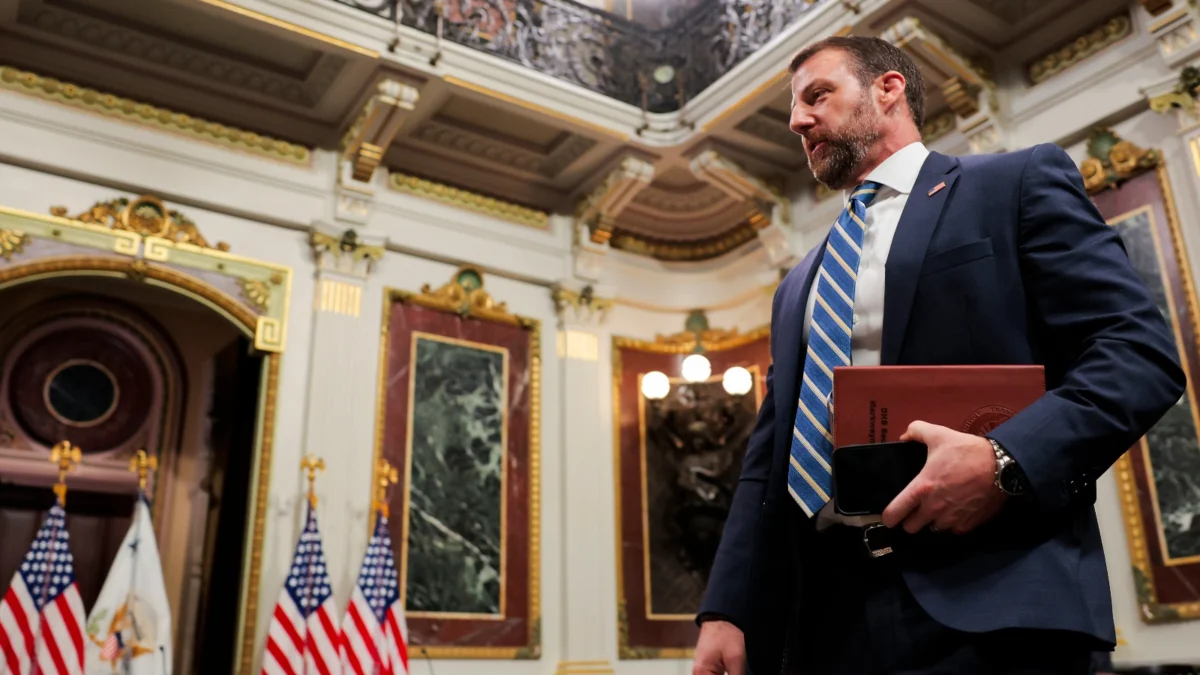
In her place, the President appointed former Oklahoma Senator Markwayne Mullin. Mullin’s arrival was initially met with a sense of cautious optimism among some FEMA employees. Unlike Noem, who relied on a rotating cast of interim officials, Mullin vowed to appoint a permanent administrator to lead FEMA. He also moved quickly to dismiss several of Noem’s top deputies, a move interpreted by many as an attempt to clear the "micromanagement" that had paralyzed the agency’s core functions.
In public statements, Mullin has dismissed the previous spending freeze as an inefficient way to manage a federal agency. "We are going to stop the micromanaging," Mullin stated during a recent visit to disaster-stricken areas. He promised to unfreeze reconstruction payments that had been stuck in the pipeline for months, offering a glimmer of hope to cities and states struggling to balance their budgets after major weather events.
Persistent Paralysis and the Role of Karen Evans
Despite Mullin’s rhetoric, the reality on the ground remains complicated. While some reconstruction payments have been released, many significant expenses still require approval from Karen Evans, Noem’s handpicked interim administrator who remains in her post until a permanent successor is confirmed by the Senate.
The agency’s long-term resilience programs remain largely inactive. For nearly a year, FEMA has not offered new long-term infrastructure aid money from its primary mitigation programs. It was only after a direct court order last month that the agency abandoned its plan to eliminate another key resilience program entirely. This "wait and see" atmosphere has created a sense of dread among regional officials. One official, speaking on the condition of anonymity, described the current state of the agency as "collectively waiting for the other shoe to drop."
The Crisis in Flood Insurance and Mitigation
One of the most immediate concerns for local governments is the disruption of the National Flood Insurance Program (NFIP). The program, which provides subsidized flood insurance to five million American households, relies on a complex rating system that rewards cities for proactive flood protection measures.
Recently, the contract with the private company responsible for managing this rating system was allowed to lapse. As a result, the discount program has been suspended. This means that currently, no federal entity is actively monitoring whether U.S. cities and counties are adhering to building codes in floodplains or implementing flood mitigation strategies. Without these incentives and monitoring, experts fear a return to high-risk development patterns that will inevitably lead to higher disaster costs in the future.
A Philosophical Shift: Toward a Balkanized Response
The leadership change has also highlighted a fundamental shift in the federal government’s philosophy regarding disaster management. Both President Trump and Secretary Mullin have signaled a desire for a more "balkanized" approach, where the federal government plays a secondary role to the states.
During a visit to North Carolina, Mullin articulated this vision clearly: "We shouldn’t look at FEMA as being a first responder, but as supporting the first responders you already have." He argued that states are "much more equipped" to handle the immediate aftermath of a disaster, with the federal government stepping in only to assist with the "first heavy lift."
This perspective has sparked a debate within the emergency management community. While many agree that states should be well-prepared, there is a stark reality regarding the disparity in state resources.
- Wealthy States: States like Florida and Texas have robust, well-funded emergency management departments capable of handling significant events.
- Vulnerable States: States like Mississippi, Louisiana, and West Virginia often lack the tax base and infrastructure to manage large-scale recoveries without substantial, immediate federal intervention.
Andrew Rumbach, a senior fellow at the Urban Institute, warns that a smaller federal role coupled with smaller federal resources could have "hugely significant impacts" on poorer, storm-vulnerable regions. While some states might use the autonomy to experiment with innovative solutions—such as Hawaii’s interest in modular housing for fire survivors—others might lack the oversight to ensure funds are distributed equitably between wealthy and impoverished communities.
Case Study: Maryland’s Path to Independence
The impact of this "austerity federalism" is already being felt in states like Maryland. Following devastating river floods in the western part of the state last year, the Trump administration denied a request for $30 million in reconstruction aid. Despite meticulous documentation provided by Governor Wes Moore’s administration, the request was rejected, leaving the state to fund repairs for roads and bridges that cost a fifth of the impacted county’s total budget.
In response, Maryland has been forced to innovate out of necessity. The state launched its first-ever "state disaster recovery fund," providing an initial $500,000 to the hardest-hit areas. State lawmakers are now workshopping legislation to establish a permanent grant fund for climate resilience. However, local authorities acknowledge that while they can plan for independence, they cannot truly afford it without a federal backstop for major catastrophes.
Chronology of FEMA’s Transformation (2024-2025)
- Early 2024: DHS Secretary Kristi Noem implements a "spending freeze" on disaster recovery funds.
- Mid 2024: The Musk-led civil service purge begins; FEMA staffing levels are targeted for a 50% reduction.
- July 2024: Central Texas floods occur; federal response is delayed, drawing sharp criticism from local officials.
- Late 2024: A "Review Council" of governors is convened to draft a report on shifting FEMA’s responsibilities to the states.
- Last Month: President Trump fires Kristi Noem; Markwayne Mullin is appointed as DHS Secretary.
- Current Month: Mullin vows to end the spending freeze but maintains a "states-first" policy; NFIP discount programs are suspended due to lapsed contracts.
- May 2025 (Projected): The Review Council’s final report on the future of FEMA is expected to be published.
The Road Ahead: A System in Limbo
As the administration prepares to publish the findings of its "Review Council" in May, the future of FEMA remains obscured by a "wait and see" mentality. The agency is currently a hybrid of its former self and a yet-to-be-realized state-centric model.
For the thousands of employees remaining at the agency, morale is reportedly at an all-time low. The transition from a proactive, well-funded federal leader to a "supporting" agency has left many questioning the mission they signed up for. More importantly, the lack of a permanent administrator means that long-term strategic planning is effectively on hold.
The true test of this new "supporting role" doctrine will come with the next major hurricane or wildfire. If the federal government successfully empowers states to lead, it could represent a landmark shift in American governance. However, if the reduction in federal oversight and funding leads to a fragmented and unequal response, the costs—both in dollars and human lives—could be staggering. For now, the nation’s emergency management system remains in a state of precarious transition, waiting for a clear direction that has yet to emerge.










Leave a Reply