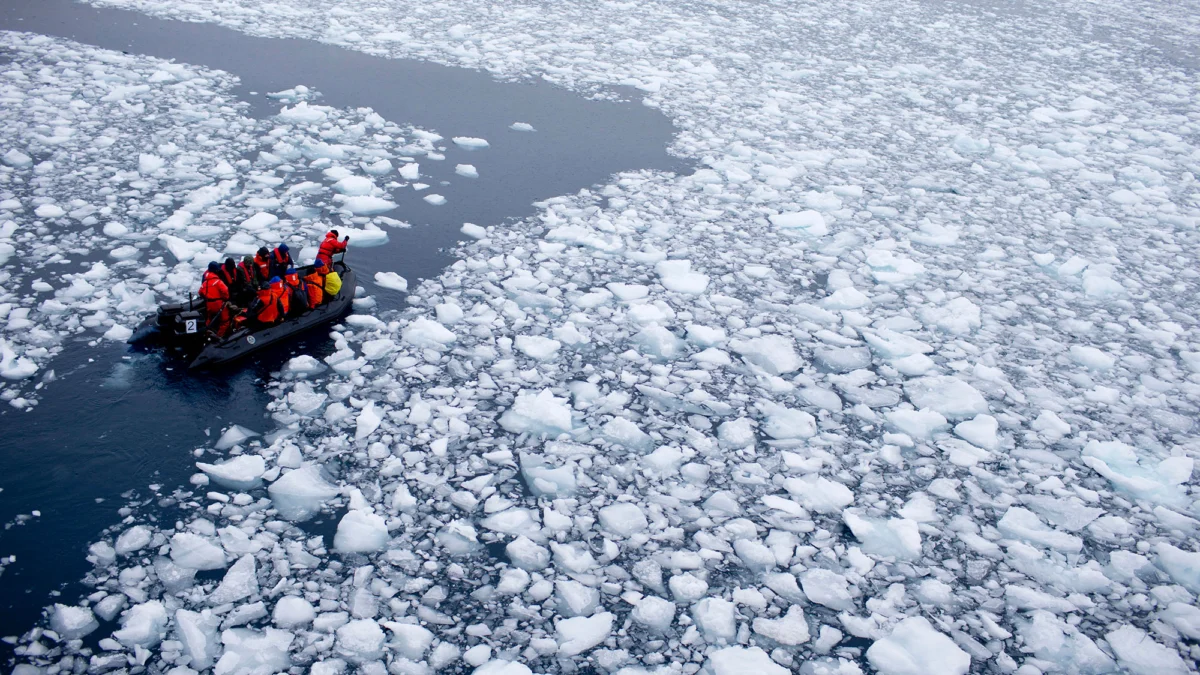
For decades, the frozen expanse of the Southern Ocean appeared to defy the global trend of melting ice. While the Arctic suffered from a visible and consistent decline in sea ice cover, the waters surrounding Antarctica saw a surprising, albeit modest, expansion of floating ice from the late 1970s until roughly 2014. This phenomenon often served as a point of scientific inquiry and, at times, public confusion regarding the pace of global warming. However, the narrative shifted abruptly in 2016. In a sudden and dramatic reversal, Antarctic sea ice began to contract at an unprecedented rate, reaching record lows that have persisted for nearly a decade.
A new study led by Earle Wilson, a polar oceanographer at Stanford University, has finally pinpointed the mechanisms behind this erratic behavior. Published in the journal Proceedings of the National Academy of Sciences (PNAS), the research reveals that the Southern Ocean’s internal dynamics—specifically a volatile combination of salinity, shifting wind patterns, and deep-ocean heat—are the primary drivers of this instability. The findings suggest that the ocean acts as a massive thermal regulator, modulating sea ice levels through a process of "stratification" followed by a "violent release" of energy. This discovery has profound implications for the global climate, as the stability of the Antarctic ice sheet is the only barrier preventing a catastrophic 190-foot rise in global sea levels.
The Robotic Sentinels: Argo Floats in the Southern Ocean
The breakthrough in understanding these complex oceanic shifts was made possible by a sophisticated network of autonomous underwater probes known as Argo floats. These torpedo-shaped robots, roughly the size of a human, are designed to operate in the harshest environments on Earth. Unlike traditional research vessels, which are limited by seasonal weather and sea ice, Argo floats can remain in the water for years, drifting passively with the currents.
The floats operate on a repeating cycle: they sink to depths of several thousand feet, gathering high-resolution data on water temperature, pressure, and salinity. Every ten days, they ascend to the surface, transmitting their findings to orbiting satellites before beginning the cycle again. In the Southern Ocean, these robots provided a rare look beneath the ice, revealing a vertical temperature profile that is the exact opposite of most global oceans.
In a typical temperate or tropical ocean, the sun warms the surface layer, creating a warm "lid" over the cold, deep water. In Antarctica, the frigid polar air cools the surface water to near-freezing temperatures. Below this cold surface layer, however, lies a reservoir of relatively warmer, saltier water. The Argo floats captured the intricate "churn" of these layers, allowing scientists to see how heat was being stored and eventually released.
The Era of Expansion: 1970 to 2014
To understand why the ice collapsed in 2016, researchers first had to explain why it grew in the preceding decades. The study indicates that during the late 20th and early 21st centuries, increased precipitation and the melting of land-based glaciers led to a "freshening" of the Southern Ocean’s surface. Because fresh water is less dense than salt water, it formed a buoyant layer on top of the ocean.
This process, known as stratification, acted as a thermal insulator. The fresh, cold surface layer prevented the warmer, denser water below from rising. Effectively, the warmth was trapped in the deep ocean, allowing the surface to remain cold enough for sea ice to expand even as global atmospheric temperatures rose. During this period, the Antarctic sea ice extent grew by approximately 1% per decade, reaching a record maximum in 2014. This growth, however, was a double-edged sword; while the surface appeared stable, a massive amount of "pent-up" heat was accumulating just a few hundred meters below the waves.
The 2016 Collapse: A Violent Release of Heat
The tipping point arrived in 2016. The study describes a shift in atmospheric circulation that fundamentally altered the ocean’s structure. As the planet warms, the temperature gradient between the equator and the poles intensifies, which in turn strengthens and shifts the "Westerlies"—the powerful winds that circle Antarctica.
In 2016, these intensified winds began to push surface waters away from the continent and agitated the ocean’s layers. This "churn" broke the stratification that had been in place for decades. "What we witnessed was basically this very violent release of all that pent-up heat from below that we linked to the sea ice decline," Earle Wilson explained. The warm water that had been sequestered in the depths surged to the surface, melting the sea ice from below.
The impact was immediate. In a single season, the Southern Ocean lost an amount of ice equivalent to the size of several large European nations. Since that initial crash, the ice has struggled to recover, hitting new record lows in 2022 and 2023. This suggests that the system may have entered a new state of equilibrium where the deep-ocean heat is more readily accessible to the surface.
Atmospheric Forcing and Natural Variability
A critical question remains: how much of this change is a direct result of human-induced climate change, and how much is due to natural cycles? The Southern Ocean is influenced by several large-scale climate patterns, including the Southern Annular Mode (SAM) and the El Niño-Southern Oscillation (ENSO).
However, the consensus among climate scientists is that the strengthening of the Southern Hemisphere’s wind belts is closely linked to the depletion of the ozone layer and the increase in greenhouse gas concentrations. These anthropogenic factors have pushed the winds further south and made them more turbulent. While natural variability likely played a role in the timing of the 2016 event, the underlying warming trend provided the "fuel" for the collapse.
Zachary Labe, a climate scientist at Climate Central who was not involved in the study, noted that the research reinforces the idea that the ocean is a dominant player in Antarctic stability. "Recent research has shown that both atmospheric and oceanic warming is likely contributing to the sudden change in Antarctic sea-ice extent since 2016," Labe said. "This paper helps to further develop the point that deeper ocean warmth is a significant player."
Global Implications: The 190-Foot Threat
The decline of Antarctic sea ice is not merely a regional concern; it is a critical factor in global sea-level projections. While the melting of floating sea ice does not directly raise sea levels (much like a melting ice cube in a glass of water), its disappearance removes a vital protective barrier for Antarctica’s land-based ice sheet.
The Antarctic ice sheet contains enough water to raise global sea levels by approximately 190 feet (58 meters). Much of this ice is held in place by floating ice shelves that act as "buttresses," slowing the flow of glaciers into the sea. Sea ice serves as a secondary buffer, absorbing the energy of ocean waves before they can reach and erode the fragile ice shelves. When sea ice disappears, the ice shelves are exposed to more "violent underwater storms" and mechanical stress, accelerating their disintegration.
Furthermore, sea ice plays a crucial role in the "albedo effect." Bright white ice reflects up to 80% of incoming solar radiation back into space. When the ice melts, it exposes the dark ocean water, which absorbs the sun’s heat, leading to further warming in a self-reinforcing feedback loop. This process, known as polar amplification, is already well-documented in the Arctic and now appears to be accelerating in the Antarctic.
The Need for Enhanced Monitoring
The study highlights a significant gap in our ability to monitor the polar regions. While the Argo floats have been revolutionary, the Southern Ocean remains one of the least observed places on Earth. The extreme cold and the presence of seasonal ice make it difficult for sensors to survive and transmit data.
"Overall, we need more international support to continue building observing networks across the Antarctic polar region, both for oceanic and atmospheric monitoring," Labe emphasized. Scientists are currently working on "ice-sensing" floats that can detect when they are under ice and store data internally until they reach open water, but these technologies require sustained funding and international cooperation.
Without more granular data, climate models remain limited in their ability to predict the future of the Southern Ocean. The recent volatility suggests that the "old rules" of Antarctic climate science may no longer apply, and the region could be more sensitive to atmospheric changes than previously thought.
A Precarious Future
The big question for the coming decades is whether the Antarctic sea ice will ever return to its pre-2014 levels. While natural fluctuations may lead to occasional years of growth, the long-term outlook remains grim. The accumulation of heat in the Southern Ocean is a slow process with a long "memory," meaning the warming that has already occurred will continue to influence the region for generations.
Earle Wilson suggests that while we might see short-term recoveries, the overarching trajectory is clear. "The long term, multi-decade trend will be negative," Wilson said. "That would be my guess, but we don’t know for sure."
The transformation of the Southern Ocean represents a fundamental shift in the Earth’s climate system. As the "lid" of fresh water and sea ice continues to weaken, the vast reservoir of heat in the deep ocean stands ready to accelerate the decline of the world’s largest ice mass. For coastal cities around the world, the fate of the Antarctic sea ice is a bellwether for the future of the global shoreline. The research provided by Wilson and the Argo float network serves as a stark reminder that the deep ocean hides secrets that, when revealed, can change the map of the world.