
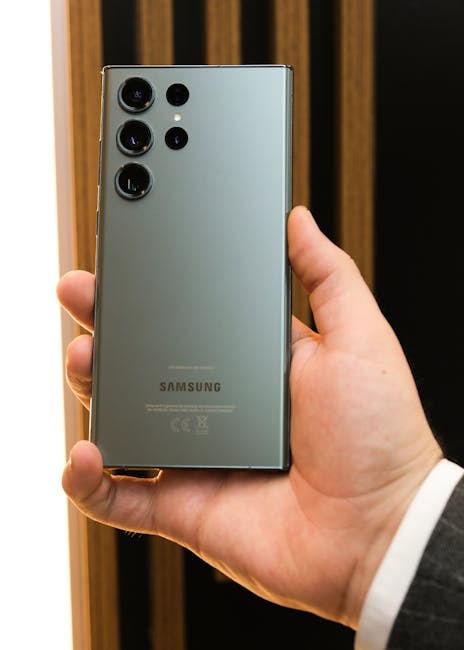
Samsung Galaxy S24 May Get: A Deep Dive into Potential Upgrades and Features
The Samsung Galaxy S24, the highly anticipated successor to the S23 series, is poised to introduce a raft of significant upgrades and innovative features, solidifying its position as a flagship contender in the fiercely competitive smartphone market. While official specifications remain under wraps, industry leaks, patent filings, and an analysis of Samsung’s historical release patterns allow for a comprehensive exploration of what users can realistically expect from the S24. This article delves into the most probable enhancements across key areas: display technology, processing power and performance, camera capabilities, battery life and charging, design and build materials, software features and AI integration, and connectivity advancements.
Display Technology: Brighter, Smarter, and More Durable
The display is consistently a focal point for Samsung’s Galaxy S series, and the S24 is unlikely to deviate from this trend. We can anticipate further refinements to the Dynamic AMOLED 2X panels, promising even greater peak brightness for enhanced outdoor visibility and HDR content consumption. Expect improvements in color accuracy and contrast ratios, delivering a more immersive visual experience. A significant area of focus will likely be under-display camera (UDC) technology. While Samsung has experimented with UDC on its foldables, the S24 could see a more refined and less obtrusive implementation on its main line, potentially leading to a truly notch-less and hole-punch-free full-screen experience on certain models. Furthermore, Samsung’s commitment to durability suggests an upgrade in screen protection. The adoption of Corning’s latest Gorilla Glass Victus 3 or an even more advanced iteration is highly probable, offering superior scratch and shatter resistance. Variable refresh rate technology, already a staple, will likely see further optimization, allowing for even more granular control over power consumption by dynamically adjusting the refresh rate from 1Hz to 120Hz or potentially even higher. The rumored introduction of anti-reflective coatings on a more widespread scale across the S24 lineup would further enhance usability in bright conditions, reducing glare and eye strain.
Processing Power and Performance: Unleashing the Next Generation of Mobile Computing
At the heart of any flagship smartphone lies its processor, and the Galaxy S24 is expected to feature the latest and most powerful silicon available. Depending on the region, it will likely be powered by either the Qualcomm Snapdragon 8 Gen 3 for Galaxy or Samsung’s own Exynos 2400 chipset. Both are anticipated to offer substantial performance gains over their predecessors, with significant improvements in CPU and GPU efficiency. This translates to smoother multitasking, faster app loading times, enhanced gaming performance with higher frame rates and graphical fidelity, and more efficient AI processing. The focus will be not just on raw power but also on power efficiency, crucial for extending battery life. We can also expect a notable increase in RAM capacity. While 8GB and 12GB have become standard, the S24 could push these boundaries, potentially offering 12GB and even 16GB of RAM on higher-tier models, ensuring seamless operation even with demanding applications and extensive multitasking. Improved thermal management will also be a critical consideration, preventing performance throttling during prolonged intensive use. Samsung’s advancements in cooling solutions, perhaps incorporating vapor chambers or graphene, will be essential to harness the full potential of these powerful new chipsets.
Camera Capabilities: Revolutionizing Mobile Photography and Videography
The camera system is where Samsung consistently pushes the boundaries, and the Galaxy S24 is poised for a significant leap forward. While the megapixel count is not the sole determinant of camera quality, we can anticipate sensor improvements that capture more light and detail, especially in low-light conditions. The main sensor could see an increase in resolution, or a focus on larger pixel sizes for better light gathering. Periscope zoom lenses, already present on some models, are likely to be refined, offering even greater optical zoom ranges and improved image stabilization for sharper zoomed shots. Computational photography will play an even larger role, with AI algorithms enhancing image processing for richer colors, better dynamic range, and reduced noise. Expect advancements in Nightography, Samsung’s term for its low-light photography prowess, with even more sophisticated scene recognition and noise reduction techniques. For videography, higher frame rate recording at 8K resolution, improved HDR video capture, and more advanced stabilization features are highly probable. Samsung might also introduce new AI-powered camera features, such as object removal, advanced portrait modes with more realistic bokeh effects, and real-time video enhancements. The integration of more sophisticated image signal processors (ISPs) within the new chipsets will be key to unlocking these advanced camera capabilities.
Battery Life and Charging: Enduring Power and Rapid Replenishment
Battery life remains a primary concern for smartphone users, and the Galaxy S24 is expected to address this with a combination of larger battery capacities and more efficient hardware. While exact mAh figures are speculative, incremental increases across the S24 lineup are probable, especially for the Ultra model. More importantly, the power efficiency of the new chipsets and display technology will significantly contribute to extended usage times. Fast charging capabilities will also see an upgrade. While Samsung has been somewhat conservative compared to some competitors in pushing extreme charging speeds, the S24 could introduce faster wired charging, potentially exceeding the 45W offered on current models. Wireless charging speeds are also likely to see a boost, and reverse wireless charging capabilities will likely remain, allowing users to charge other Qi-compatible devices like earbuds or smartwatches. The focus will be on achieving a balance between speed and battery longevity, ensuring that fast charging doesn’t degrade the battery’s health over time. Advanced battery management software, leveraging AI, will also play a crucial role in optimizing power consumption and extending the overall lifespan of the battery.
Design and Build Materials: Refined Aesthetics and Enhanced Durability
Samsung has a knack for refining its design language with each generation, and the S24 will likely continue this trend. Expect a continuation of the premium build quality, with a likely combination of glass and metal construction. The frame might see a shift to titanium on the Ultra model, offering a lighter yet more robust build, mirroring trends seen in other high-end devices. Subtle design tweaks could include flatter edges for a more modern aesthetic, or a more integrated camera housing for a cleaner look. The S Pen, a signature feature of the Ultra variant, is expected to be further refined, potentially offering improved latency and new functionality within the software. Water and dust resistance ratings will undoubtedly remain at their industry-leading IP68 standard. The overall aesthetic will likely prioritize a sleek and ergonomic feel, with a focus on premium materials and meticulous craftsmanship. Color options will likely be diverse, catering to a wide range of user preferences.
Software Features and AI Integration: The Intelligence Layer
The integration of Artificial Intelligence (AI) is no longer an option but a necessity for flagship smartphones, and Samsung is heavily investing in this area. The Galaxy S24 will undoubtedly feature enhanced AI capabilities powered by its new chipsets and Samsung’s own AI initiatives. This could manifest in a variety of ways: more intelligent virtual assistants that understand context and proactively offer assistance, AI-powered photo and video editing tools that go beyond simple enhancements, improved predictive text and language translation capabilities, and smarter battery optimization. Samsung’s "Galaxy AI" branding is expected to be central to its software strategy, showcasing a suite of AI-driven features designed to simplify and enhance the user experience. Generative AI models could be integrated for content creation, such as writing assistance or image generation. Furthermore, the S24 will run on the latest Android operating system with Samsung’s One UI overlay, which will likely be optimized to take full advantage of the new hardware and AI capabilities. Expect a commitment to long-term software updates, ensuring the device remains secure and feature-rich for years to come.
Connectivity Advancements: Faster, More Reliable, and Future-Proofed
In terms of connectivity, the Galaxy S24 is expected to embrace the latest standards. Support for Wi-Fi 7, the next generation of wireless networking, is highly probable, offering significantly faster speeds, lower latency, and improved capacity compared to Wi-Fi 6E. This will be particularly beneficial for demanding tasks like high-resolution streaming, cloud gaming, and large file transfers. 5G connectivity will, of course, be standard, with enhanced support for various sub-6GHz and mmWave bands for broader and faster cellular coverage. Bluetooth 5.4 or a subsequent iteration is also expected, providing improved range, stability, and power efficiency for connecting to accessories. Ultra-Wideband (UWB) technology, which enables precise spatial awareness and location tracking, could see wider adoption and improved functionality, potentially enhancing features like digital car keys or augmented reality experiences. The S24 will also likely incorporate the latest eSIM technology, offering greater flexibility in managing mobile plans and potentially supporting dual eSIM configurations.
Conclusion: A Refined Flagship Poised for Dominance
The Samsung Galaxy S24 is shaping up to be a significant evolutionary leap for the S series. While minor iterative upgrades are always expected, the anticipated advancements in display technology, processing power, camera capabilities, battery efficiency, and AI integration point towards a device that will not only meet but likely exceed user expectations. The focus on a more immersive visual experience, unparalleled performance, and intelligent software assistance, coupled with continued leadership in design and build quality, positions the Galaxy S24 as a formidable contender for the title of the ultimate smartphone. Samsung’s ability to seamlessly integrate these cutting-edge technologies into a user-friendly and reliable package will ultimately determine its success in an increasingly discerning market. The precise specifications will be revealed at its official launch, but the trajectory of innovation suggests a device that will set new benchmarks for what a flagship smartphone can achieve.




Leave a Reply