
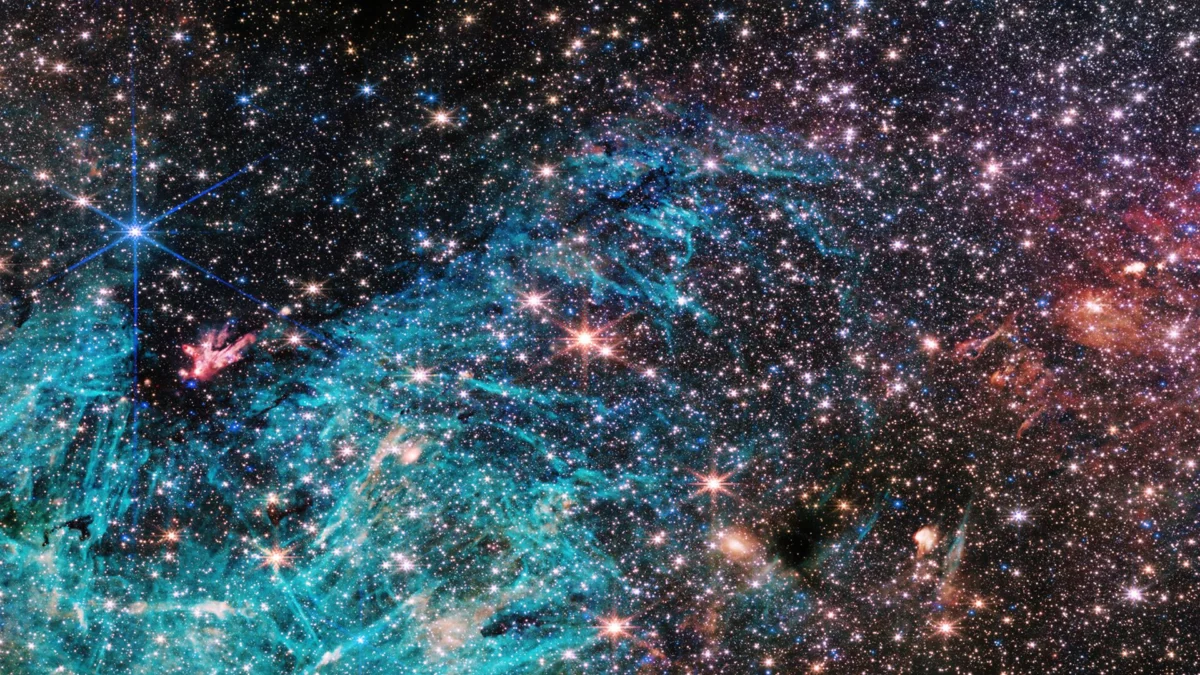
New observations captured by the James Webb Space Telescope (JWST) have revealed that Sagittarius A*, the supermassive black hole residing at the exact center of our Milky Way galaxy, is enveloped by a surprisingly dense and abundant trove of heavy metals. This unprecedented astronomical finding offers scientists crucial, long-sought-after clues regarding the cosmic distribution of heavy elements and how planetary bodies—including Earth—ultimately acquired their unique chemical compositions. However, while solving certain puzzles of stellar nucleosynthesis, these revelations simultaneously threaten to deepen one of the most persistent and confounding mysteries surrounding our local galactic core.
In the precise lexicon of astrophysics and astronomy, the term "metals" carries a far broader definition than it does in everyday terrestrial metallurgy. Astronomers classify any chemical element heavier than hydrogen and helium as a metal. This expansive category encompasses vital life-sustaining and structural elements such as oxygen, carbon, neon, and nitrogen, alongside heavier transition metals like iron, nickel, gold, and platinum.
These elements are not primordial relics of the Big Bang, which initially forged almost exclusively hydrogen and helium, accompanied by trace amounts of lithium. Instead, heavier metals are manufactured over immense stretches of time through stellar alchemy: the intense heat and immense gravitational pressure of nuclear fusion inside the cores of evolving stars. When these stars exhaust their primary fuel supplies, they undergo dramatic evolutionary shifts—often culminating in violent supernova explosions or powerful stellar winds—that eject their newly forged heavy elements out into the interstellar medium. Over billions of years, these enriched gas clouds collapse to form subsequent generations of stars, rocky planets, and complex planetary systems.
The Galactic Core Environment and JWST Contributions
The region immediately surrounding Sagittarius A*—situated roughly 26,000 light-years away from Earth in the constellation Sagittarius—presents one of the most extreme physical environments in the Milky Way. This Central Molecular Zone contains immense clouds of gas and dust, intense magnetic fields, high-energy radiation, and a dense swarm of aging stars. For decades, studying this chaotic and obscured neighborhood proved nearly impossible for optical telescopes due to the thick veil of cosmic dust blocking visible light waves.
The advent of the James Webb Space Telescope, equipped with its state-of-the-art Near-Infrared Camera (NIRCam) and Mid-Infrared Instrument (MIRI), has fundamentally transformed this dynamic. By observing the cosmos in infrared wavelengths, JWST can effortlessly pierce through the obscuring dust lanes of the galactic center, granting astronomers unprecedented, high-resolution views of the innermost parsecs of our galaxy.
Recent spectroscopic data gathered by the observatory indicate that the gas and plasma swirling in the immediate gravitational domain of Sagittarius A* possess an extraordinarily high concentration of metallic elements. This dense accumulation significantly exceeds standard galactic baseline models, leaving astrophysicists to re-evaluate the chemical enrichment history of the Milky Way’s central bulge.
Chronology of Galactic Center Exploration and Metallicity Studies
To understand the significance of the latest JWST findings, it is helpful to trace the chronological milestones of humanity’s exploration of the Milky Way’s center and the evolution of galactic metallicity studies:
- 1918: Astronomer Harlow Shapley correctly deduces the center of the Milky Way by mapping the distribution of globular clusters, placing the galactic core far away in the direction of Sagittarius.
- 1933: Karl Jansky discovers celestial radio waves emanating from the direction of the Sagittarius constellation, marking the birth of radio astronomy and the eventual detection of Sagittarius A.
- 1974: Astronomers Bruce Balick and Robert Brown discover a compact, exceptionally bright radio source at the very center of the system, which later receives the designation Sagittarius A (Sgr A).
- 2002–2020: Decades of meticulous infrared monitoring by research teams using the W.M. Keck Observatory and the European Southern Observatory’s Very Large Telescope track the rapid orbits of stars looping around Sgr A*, definitively proving the presence of a supermassive black hole weighing approximately 4 million times the mass of our sun.
- 2021: The launch of the James Webb Space Telescope on December 25 opens a new technological era, providing the infrared sensitivity required to study the dust-obscured nuclear star cluster of the Milky Way in fine chemical detail.
- 2023–2024: JWST begins targeting the Galactic Center as part of dedicated Guaranteed Time Observation programs, yielding groundbreaking high-resolution spectroscopic data that reveal unexpected chemical abundance gradients, culminating in the recent heavy metal discoveries.
Supporting Data and Compositional Analysis
The data returned by JWST’s sensitive spectrometers offer quantifiable metrics that continue to puzzle theoretical astrophysicists. Spectral lines corresponding to iron-peak elements and alpha elements (such as magnesium, silicon, and sulfur) show an enrichment factor that is measurably higher than the average metallicity found in the outer galactic disk where our solar system resides.
According to preliminary analytical models, the mass fraction of metals in the gas surrounding Sagittarius A* suggests that the central parsec has undergone extraordinarily efficient star formation cycles over the past 10 billion years. Multiple generations of massive, short-lived stars have lived, died, and redistributed their heavy metal yields directly into the accretion flow feeding the central black hole.
Furthermore, the spatial distribution of these elements indicates that they are not uniformly mixed throughout the nuclear stellar cluster. Instead, pockets of exceptionally metal-rich gas exist alongside more pristine, lower-metallicity inflows. This patchy chemical landscape suggests that the galactic center has experienced episodic bursts of star formation rather than a single, continuous evolutionary pathway.
Scientific Implications and Unresolved Mysteries
While the discovery of abundant heavy metals near Sagittarius A* sheds light on the general lifecycle of galactic nuclei, it simultaneously complicates one of the most prominent mysteries concerning our supermassive black hole: the "Paradox of Youth" or the presence of young stars near the core.
For years, astronomers have been baffled by the existence of dozens of young, massive stars—known as the S-stars—orbiting perilously close to Sagittarius A*. Standard astrophysical theory dictates that the crushing tidal forces exerted by a supermassive black hole should tear apart any gas cloud attempting to collapse and form stars, rendering the immediate vicinity a graveyard of stellar material rather than a nursery for newborn stars.
The new revelation that heavy metals are heavily concentrated in this region adds a fresh layer of complexity to this paradox. High metallicity increases the efficiency with which gas can cool through radiative emission. When gas clouds possess abundant heavy elements, they radiate thermal energy much faster, which can theoretically facilitate cloud fragmentation and collapse even under extreme gravitational tidal forces.
However, high metallicity also alters stellar evolutionary tracks, making stars hotter, brighter, and shorter-lived, while fundamentally changing the dynamics of accretion disks. Astrophysicists are now tasked with reconciling how these dense metal reservoirs interact with the powerful magnetic fields and relativistic winds generated by Sagittarius A*.
Expert Reactions and Forward-Looking Analysis
Although formal peer-reviewed analyses and consensus statements from major international space agencies continue to emerge, the astronomical community has responded with intense interest and rigorous debate. Leading galactic dynamics researchers note that these findings cement JWST’s role as an indispensable instrument for decoding the chemical evolution of galaxies.
By comparing the Milky Way’s core chemistry with external galaxies observed by JWST—such as distant barred spirals and active galactic nuclei—scientists hope to determine whether our galaxy’s metal-rich core is a common cosmic phenomenon or an anomalous evolutionary quirk. Understanding the chemical fingerprint of Sagittarius A* not only refines models of stellar nucleosynthesis but also provides essential boundary conditions for theories regarding how supermassive black holes co-evolve with their host galaxies across the span of cosmic time. As researchers continue to parse the wealth of spectroscopic data flowing from the telescope, the heavy metal shroud around our galaxy’s central engine will undoubtedly remain a focal point of intense astrophysical investigation for years to come.









Leave a Reply