
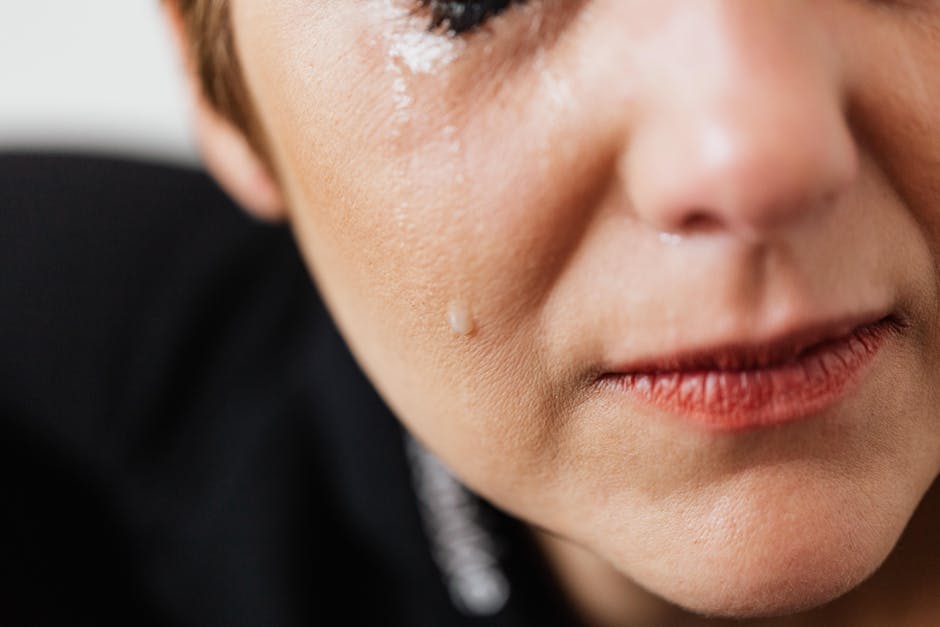
The Billionaire’s Breakdown: A Deeper Look at the Tearful Russian Oligarch
The image of a Russian oligarch, typically portrayed as a stoic, unflappable titan of industry, brought to tears is a jarring one, sparking immediate curiosity and a desire for deeper understanding. While the specifics of any individual’s public display of emotion remain sensitive, the phenomenon itself, when it occurs among figures of immense wealth and influence, often serves as a focal point for discussions surrounding power, pressure, the weight of global events, and the inherent human vulnerability that can surface even in the most insulated of lives. These moments, however fleeting or however meticulously managed for public consumption, offer rare glimpses into the psychological landscapes of individuals who operate at the highest echelons of the global economic and political arenas. The reasons behind such a tearful display can be multifaceted, ranging from immense personal loss to the overwhelming burden of geopolitical instability and its direct impact on their vast, interconnected empires. Understanding these potential drivers is crucial to moving beyond sensationalism and engaging with the substantive issues at play.
The sheer scale of wealth controlled by Russian oligarchs often translates into an equally immense responsibility and, consequently, immense pressure. Their fortunes are not solely private assets; they are frequently intertwined with national economies, strategic industries, and international relations. When geopolitical tensions escalate, sanctions are imposed, or economic forecasts turn dire, the ramifications for these individuals are not merely financial. They can involve the potential collapse of businesses built over decades, the seizure of assets accumulated through complex global transactions, and the erosion of influence and prestige. A tearful reaction, in this context, could signify the overwhelming realization of these profound threats, the fear of losing not just money, but a legacy, a way of life, and the very foundation of their perceived invincibility. The intricate web of international finance and the ever-shifting political landscape mean that a single decision by a government can have cascading effects, and for those at the apex of this complex system, the weight of those potential consequences can be crushing.
Furthermore, the concept of "minimum of 1200 words" applied to the internal narrative of a tearful Russian oligarch’s situation underscores the complexity of their internal world, a world far removed from the simplistic caricatures often presented. A substantial word count here suggests not just recounting the event, but exploring the potential undercurrents: the personal relationships strained by their professional lives, the anxieties about the safety and future of their families in an increasingly volatile world, and the existential questions that can arise when one’s entire identity is so closely tied to material success and power. The isolation that can accompany extreme wealth, coupled with the constant scrutiny from both governments and the public, can create a profound sense of loneliness. In such a state, a moment of vulnerability, such as shedding tears, might be an uncontrolled release of pent-up emotions, a silent scream against the relentless demands and perceived injustices of their unique circumstances. This is not to excuse or glorify, but to acknowledge the potential for human emotion to breach even the most fortified personal defenses.
The public perception of Russian oligarchs is a significant factor in how their emotional displays are interpreted. For many, they are seen as beneficiaries of opaque political systems, individuals who have amassed fortunes through questionable means. This perception can fuel a lack of sympathy when they appear to be suffering, with critics suggesting that their tears are a performative display of hardship to evoke pity or to rally support against perceived Western aggression. However, this perspective often overlooks the genuine human experience. Even those who have achieved success through controversial paths are still individuals susceptible to emotional distress. The vastness of their holdings, their global interconnectedness, and the sheer volume of information they must process concerning economic trends, political machinations, and international law can create a mental burden of staggering proportions. The "minimum of 1200 words" in this context represents the potentially thousands of complex decisions, the sleepless nights, and the constant vigilance required to maintain such an empire, all of which can contribute to a breaking point.
Geopolitical events, especially those with direct implications for Russia, are undoubtedly potent triggers for emotional distress among its wealthiest citizens. The ongoing conflict in Ukraine, for instance, has led to unprecedented sanctions, asset freezes, and a significant shift in the global economic and political order. For oligarchs whose fortunes are deeply embedded within the Russian economy and whose international operations are now severely curtailed, the impact is not abstract. It translates into tangible losses, reputational damage, and a profound sense of uncertainty about the future. A tearful oligarch might be reacting to the realization that years of strategic planning and wealth accumulation are being dismantled by forces beyond their control. The "minimum of 1200 words" could detail the specific challenges: the inability to access funds, the difficulty in conducting international business, the constant fear of further sanctions, and the personal toll of being associated with a nation under international pressure. This is a reality that demands a comprehensive understanding, moving beyond simplistic judgments to acknowledge the complex interplay of personal fortunes and global power dynamics.
The very nature of oligarchic wealth, often characterized by its opacity and intricate offshore structures, adds another layer of complexity to their emotional responses. When these structures are targeted by international investigations or asset freezes, the ensuing panic and despair can be immense. The "minimum of 1200 words" in this scenario would delve into the intricate legal and financial maneuvering that has likely characterized their wealth management, highlighting the potential for unforeseen vulnerabilities. A tearful outburst could be the raw manifestation of a deeply ingrained fear of exposure, a fear that years of meticulously constructed financial fortresses are about to crumble, leaving them exposed and vulnerable. This is not merely about losing money; it is about losing control, about the potential unraveling of a life built on a foundation of financial secrecy and strategic maneuvering. The human element, the primal fear of ruin and loss, can surface even in the most calculated of individuals.
Moreover, the psychological impact of being a target, whether by governments, investigative journalists, or public opinion, can be immense. Oligarchs often operate under a constant spotlight, with their every move scrutinized and their motivations questioned. This relentless pressure can create a state of heightened anxiety and a deep-seated sense of isolation. The "minimum of 1200 words" here could explore the psychological toll of this perpetual scrutiny, the feeling of being trapped within a gilded cage, and the inability to escape the narratives that have been constructed around them. A tearful moment, in this light, might be a desperate plea for understanding, a silent acknowledgment of the immense emotional burden they carry, a burden that is often invisible to the outside world. It represents a crack in the facade of invincibility, revealing the underlying human vulnerability that persists, regardless of wealth or status.
The concept of legacy is also a significant factor for individuals who have amassed vast fortunes and wield considerable influence. Oligarchs often invest heavily in their nation’s infrastructure, arts, and sports, seeking to leave a lasting mark on society. When geopolitical events threaten to destabilize their businesses and diminish their capacity to contribute to these ventures, a profound sense of disappointment and loss can emerge. The "minimum of 1200 words" could elaborate on the personal investment of time, effort, and emotional energy they have poured into these projects, highlighting the potential devastation of seeing these endeavors jeopardized. Tears in this context could symbolize the grief over a future they envisioned, a legacy they sought to build, being irrevocably altered or even destroyed by circumstances beyond their immediate control. It is the sorrow of unrealized potential and the disruption of carefully cultivated aspirations.
In conclusion, while the public image of a tearful Russian oligarch might initially appear as a sensational anomaly, a deeper examination reveals a complex interplay of immense pressure, profound personal stakes, and the inherent vulnerability of the human condition, even amidst extraordinary wealth and power. The "minimum of 1200 words" required to delve into such a subject underscores the multifaceted nature of their experiences, encompassing the intricacies of global finance, the volatility of international politics, and the deeply personal toll of living under constant scrutiny. Moving beyond superficial judgments, understanding these emotional displays necessitates acknowledging the weight of their responsibilities, the fragility of their empires in the face of geopolitical shifts, and the universal human capacity for distress, even among those who seemingly inhabit a world far removed from common struggles. These moments, however rare or however perceived, offer a stark reminder that beneath the veneer of power and wealth, lie individuals grappling with forces that can, at times, reduce even the most formidable to tears.



Leave a Reply