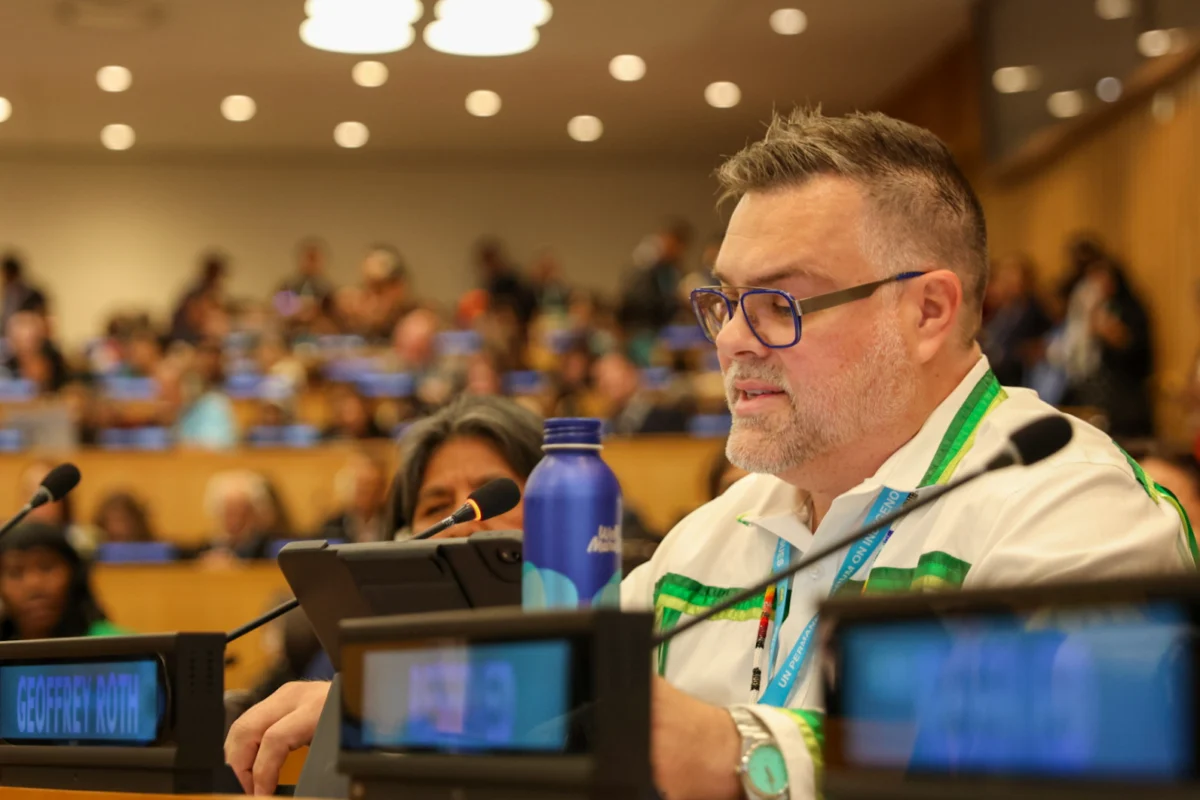
The United Nations Permanent Forum on Indigenous Issues, or UNPFII, convened its 25th session at the United Nations headquarters in New York this week, with a primary focus on the deteriorating state of Indigenous health across the globe. Experts and Indigenous leaders gathered to underscore a critical and often overlooked reality: for Indigenous populations, health is not merely the absence of disease or access to clinical care, but a condition inextricably linked to the vitality of the natural environment. On the second day of the forum, participants highlighted how health inequalities are being drastically compounded by a trifecta of environmental degradation, extractive industrial activities, and the accelerating climate crisis.
This year’s forum coincides with the release of a landmark study by Geoffrey Roth, a former member of the Permanent Forum and a descendant of the Standing Rock Sioux. Roth’s research presents a scathing critique of current international frameworks, arguing that the fragmented approach adopted by United Nations agencies—which typically addresses health, environmental protection, and land rights through siloed mandates—has consistently failed Indigenous peoples. By treating these issues as separate categories, global policy often ignores the structural drivers of illness, such as land dispossession and the erosion of Indigenous governance. Roth’s study positions environmental destruction not as an external pressure, but as a "direct manifestation of injury" to the collective and individual well-being of Indigenous communities.
The Holistic Definition of Indigenous Well-being
The testimony provided at the UNPFII suggests a radical departure from Western biomedical models. Roth emphasized that for Indigenous communities, the definition of health encompasses clean water, healthy forests, access to traditional foods, and the preservation of cultural practices. When an ecosystem is compromised by mining, deforestation, or pollution, the impact on human health is immediate and multifaceted. This holistic view is supported by the United Nations Declaration on the Rights of Indigenous Peoples (UNDRIP), which recognizes that the right to health is inseparable from the right to land and self-determination.
Minnie Grey, the former executive director of the Nunavik Regional Board of Health and Social Services in northern Canada, provided a poignant example from the Arctic. She explained that the melting of ice and snow is not just a geographic change but a direct threat to the nutritional security of the Inuit. "We are people of the Arctic: We need the ice, we need the snow, and we need the wildlife that depend on it," Grey stated. As hunters find it increasingly difficult to navigate thinning ice, the traditional food systems that sustain Arctic nutrition are collapsing, forcing a transition to processed, store-bought foods that lead to higher rates of metabolic diseases.
Environmental Degradation as a Risk Multiplier
The forum’s discussions identified climate change as a "risk multiplier" that intensifies existing biological and social pressures. Extreme weather events, such as the droughts and flooding seen across the Americas and Africa, are degrading water quality and increasing the prevalence of waterborne diseases. Furthermore, the climate crisis is fueling a secondary epidemic: a mental health crisis characterized by "ecological grief" and "climate anxiety." This is particularly prevalent among Indigenous youth, who are witnessing the rapid disappearance of ancestral ecosystems that form the basis of their identity.
In Alaska, the devastation caused by severe storm events, such as Typhoon Halong, has led to the forced relocation of entire coastal villages. These communities, driven from their homes by coastal erosion and thawing permafrost, face the trauma of displacement alongside the loss of traditional weather forecasting systems and harvesting grounds. This disconnection from the land creates a cycle of vulnerability that clinical interventions alone cannot fix.
The health impacts of industrial extraction were also highlighted through the lens of the Munduruku people in Brazil. Despite government efforts to crack down on illegal mining, the Munduruku territory remains one of the hardest-hit regions in the Amazon. Community members continue to report chronic illnesses linked to mercury pollution, including childhood paralysis, neurological disorders, and persistent respiratory infections. This case study illustrates that even when extractive activities are halted, the environmental "injury" persists, causing intergenerational health crises that last long after the machinery has left.
Armed Conflict and Resource Competition
A second major study presented at the forum by Hanieh Moghani, Hannah McGlade, and Geoffrey Roth examined the intersection of armed conflict and Indigenous health. The researchers found that conflicts in Indigenous territories are frequently driven by competition over natural resources. As global demand for minerals and timber rises, Indigenous lands often become strategic battlegrounds. This leads to mass displacement, the destruction of agricultural livelihoods, and the erosion of social cohesion.
The Democratic Republic of the Congo (DRC) serves as a grim example of this trend. Just weeks before the forum began, Indigenous Batwa women and children in South Kivu province were subjected to fresh attacks by armed groups, including the Alliance Fleuve Congo and the March 23 (M23) movement. These attacks are part of a broader pattern of violence aimed at clearing the Batwa from lands rich in natural resources. Analysts noted that the escalating conflict has also taken a massive environmental toll, with tree cover loss in the region doubling since the outbreak of violence in late 2021. In 2023 alone, an estimated 3,019 acres of forest were lost, further stripping the Batwa of their medicinal plants and food sources.
Roth noted that the health impacts of such conflicts are both immediate—resulting from physical trauma and the disruption of healthcare services—and long-term, manifesting as lasting psychological stress and the permanent loss of spiritual connections to the land.
The Vulnerability of Isolated Peoples
The forum also addressed the extreme risks faced by Indigenous peoples in voluntary isolation or initial contact. Ginny Alba Medina, an Indigenous leader and lawyer from the national organization for Colombia’s Amazon peoples (OPIAC), argued that for these groups, the right to health is synonymous with the "principle of no contact."
Because isolated groups lack immune defenses against common external pathogens, any intrusion—whether by miners, loggers, or missionaries—can trigger lethal epidemics. Medina warned that allowing extractive activities or an armed presence in these territories is not just a violation of land rights, but an immediate threat to the physical and cultural survival of these populations.
Policy Stagnation and the Path Forward
Despite the urgency of the testimonies shared at the UNPFII, global policy remains slow to adapt. The World Health Organization (WHO) recently developed a draft Global Plan of Action (GPA) on the health of Indigenous people, which advocates for Indigenous-led ecosystem stewardship. However, in February, the WHO Executive Board decided to delay the consideration of this plan until 2027 to allow for further consultation. Advocates at the forum expressed frustration with this delay, noting that the health of Indigenous communities cannot wait another three years for coordinated international action.
Wilton Littlechild, a Cree chief and legal expert, emphasized that the legal recognition of Indigenous treaties and territories is a foundational prerequisite for any health strategy. "Indigenous people have these treaties, which are tools to protect their health," Littlechild remarked. He argued that if governments truly wish to address health inequalities, they must first respect the sovereignty of Indigenous nations over their lands.
Implications for Global Biodiversity and Health Goals
The consensus among leaders at the forum is that global climate and biodiversity goals, such as the "30 by 30" initiative to protect 30% of the planet’s land and water by 2030, cannot be achieved without the active leadership of Indigenous peoples. As the primary stewards of the world’s remaining biodiversity, Indigenous communities provide a blueprint for sustainable living that directly promotes human health.
Ruth Mercredi, a traditional healer from Yellowknife, Canada, concluded the session with a sobering reflection on the changing world. "Today, we are getting sick of the water, of the food, of the air," she said. "Whatever we are putting in our bodies. We have to now be mindful of that when we didn’t have to before."
The 25th session of the UNPFII serves as a call to action for United Nations agencies and member states to move beyond a fragmented "clinic-based" approach to health. The evidence presented suggests that the path to Indigenous well-being lies in a multi-sectoral strategy that prioritizes land tenure, environmental restoration, and the protection of cultural sovereignty. Without these structural changes, Indigenous peoples will continue to bear the disproportionate burden of a global environmental crisis they did little to create.