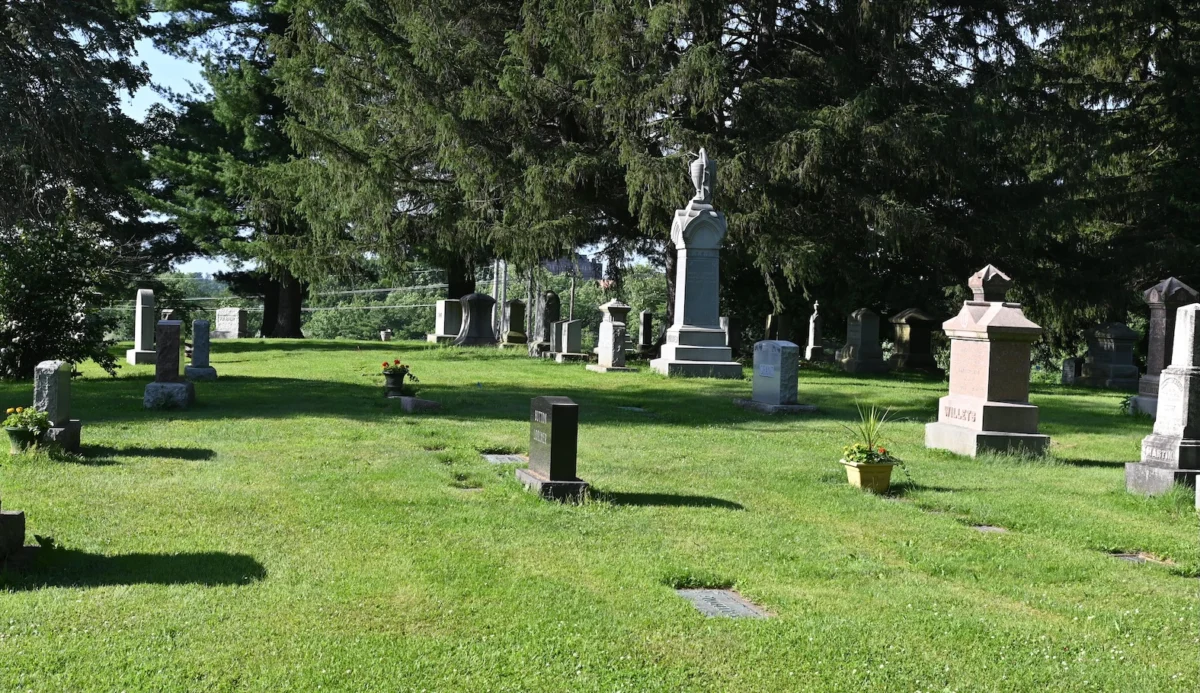
Researchers at Cornell University have identified one of the largest and oldest known communities of ground-nesting bees in the world, located within the seemingly manicured and sterile confines of the East Lawn Cemetery in Ithaca, New York. The discovery of millions of Andrena regularis, commonly known as the regular miner bee, highlights a growing scientific consensus that cemeteries serve as critical, albeit overlooked, biodiversity hotspots in increasingly urbanized landscapes. The study, recently published in the journal Apidologie, estimates that this single cemetery hosts a population ranging from 3 million to 8 million bees, challenging traditional perceptions of what constitutes a healthy wildlife habitat.
The regular miner bee is a solitary species, distinct from the more famous social honey bee. While honey bees live in complex hives with a queen and thousands of workers, approximately 90 percent of the world’s 20,000 bee species are solitary. The Andrena regularis is characterized by its black and tan fuzzy exterior and its habit of digging intricate tunnels into the earth to lay eggs. These subterranean homes are constructed in the early spring, coinciding with the blooming of fruit trees, making these insects vital contributors to the regional agricultural economy, particularly New York’s multi-million-dollar apple industry.
The Cornell Discovery and Population Dynamics
The research team, led by Jordan Kueneman, a community ecologist at Cornell University, utilized density-based sampling to reach their staggering population estimates. By counting the number of bees emerging from specific square-meter plots and extrapolating those figures across the cemetery’s acreage, the team found densities that were previously thought impossible for such a species. In some areas, thousands of individuals were observed emerging from a single square meter of soil.
The health of the population was further confirmed by the sex ratio of the emerging bees. In the world of miner bees, producing female offspring requires more metabolic resources than producing males. A high proportion of females, as observed at East Lawn, indicates an environment with abundant food resources and low stress, allowing mothers to invest heavily in the next generation.
"It was an extraordinary size, and a lot of that has to do with extraordinary density," Kueneman noted. The research suggests that the cemetery has hosted this colony for decades, if not longer, providing a stable environment that few other urban locations can offer.
Why Cemeteries are Ideal Habitats
The choice of a cemetery as a primary nesting site is not accidental. The specific characteristics that make land suitable for human burial—well-drained soil, lack of frequent flooding, and stability—are the exact requirements for ground-nesting bees. If a site is "easy to dig" for a grave, it is often easy to dig for a bee.
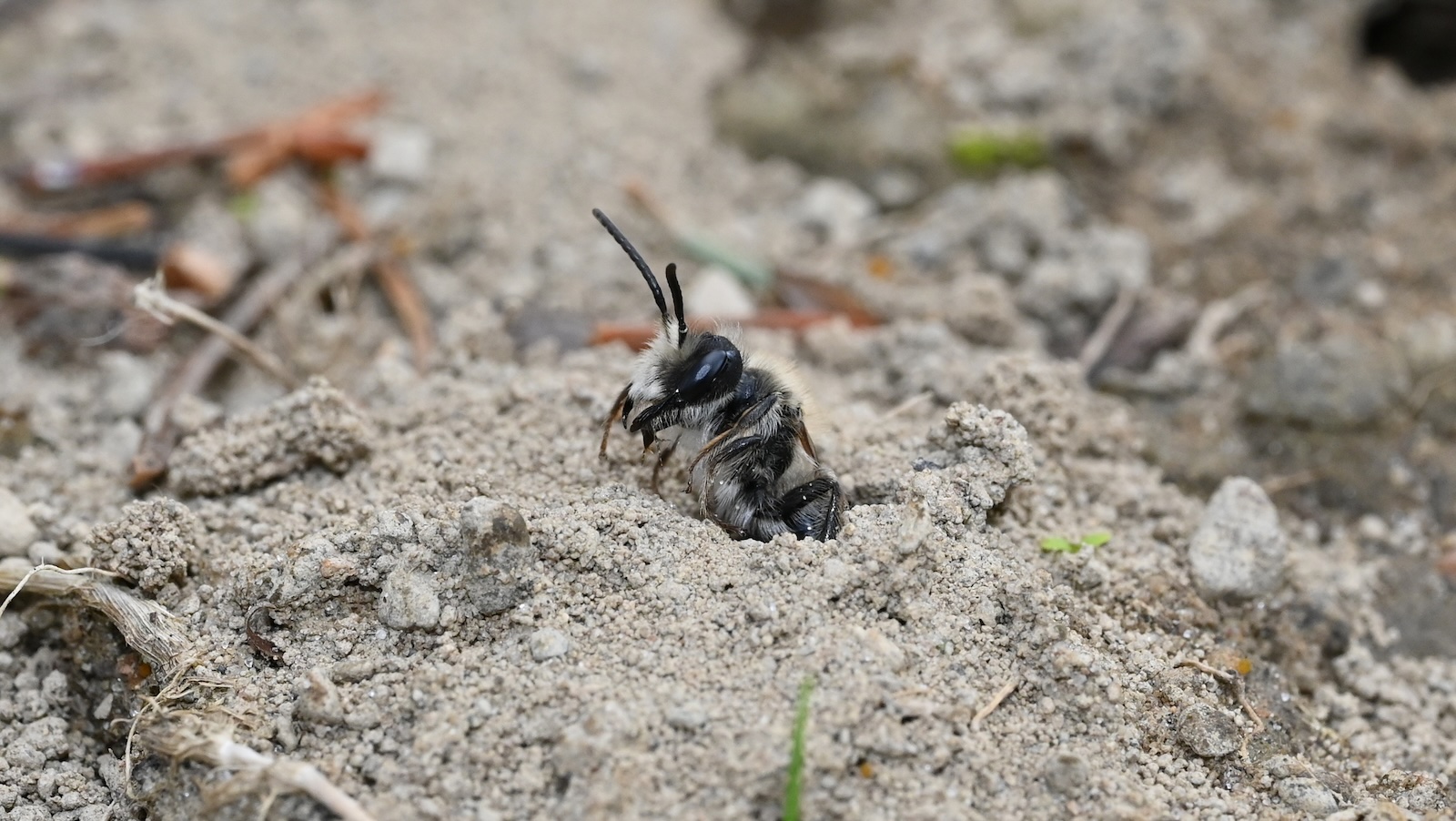
Furthermore, the maintenance of cemeteries, which usually involves keeping grass short-cropped, provides a thermal advantage. Bare or thinly covered soil warms up more quickly under the spring sun than land covered in deep brush or forest litter. This increased soil temperature allows the bees to become active earlier in the day and earlier in the season, giving them a head start on pollination and foraging.
Contrary to what might be expected, the frequent use of lawnmowers does not appear to deter the bees. Because their nests are underground, the passing of a mower is a minor, temporary disturbance. In fact, the removal of tall vegetation prevents the ground from being shaded, maintaining the warm microclimate the bees require.
The Role of the Cuckoo Bee and Ecosystem Balance
The presence of a massive host population has also attracted specialized predators, most notably Nomada imbricata, a variety of cuckoo bee. Much like the cuckoo bird, these bees are cleptoparasites; they do not build their own nests. Instead, they infiltrate the burrows of the miner bee and lay their eggs.
When the cuckoo bee larvae hatch, they are equipped with large mandibles used to kill the host larvae and consume the stored pollen. In some cases, the parasitic larvae actually decapitate the host offspring. While this sounds gruesome, ecologists view the presence of Nomada imbricata as a sign of a robust ecosystem. A parasite can only thrive where there is a massive and healthy population of hosts to exploit. The "arms race" between the miner bee and the cuckoo bee at East Lawn Cemetery is a microcosm of natural selection occurring in the middle of a residential area.
The Broader Context of Urban Refugia
The findings at East Lawn Cemetery are part of a broader shift in urban ecology. As natural forests and grasslands are partitioned by highways and housing developments, "novel ecosystems" like cemeteries, golf courses, and even highway medians are taking on new importance.
Seth Magle, senior director of the Urban Wildlife Institute at the Lincoln Park Zoo in Chicago, emphasizes that cemeteries provide a unique combination of resources. "It’s got trees, it’s got grass, it’s potentially got prey species for you… and then it largely lacks a couple of things you don’t like about parks, which are probably people and dogs," Magle stated.
Cemeteries act as "islands of silence." Unlike public parks, they are rarely used for high-impact recreation like frisbee or off-leash dog walking. This lack of foot traffic and animal disturbance allows more sensitive species to thrive. Beyond bees, researchers have documented a wide array of wildlife utilizing cemeteries as refuges:
- Mammals: Coyotes, foxes, and deer use cemeteries as corridors to move through urban areas safely.
- Birds: Owls and hawks find nesting sites in the mature, often exotic trees planted in older "rural-style" cemeteries.
- Migratory Species: Geese and migratory songbirds use the open spaces as stopover points during long-distance flights.
- Rare Flora: In some parts of the world, cemeteries contain the last remaining remnants of original prairie or old-growth forest because the land was never plowed for agriculture.
Economic Implications: Pollination and Agriculture
The significance of the regular miner bee extends far beyond the cemetery gates. New York State is the second-largest producer of apples in the United States, an industry valued at approximately $260 million annually. Andrena regularis is a highly efficient pollinator of apple blossoms.
While many farmers rely on rented honey bee colonies, native bees like the miner bee often do the heavy lifting for free. They are more active in cooler, damper weather than honey bees—a frequent condition during New York’s spring bloom. By maintaining a massive "reservoir" of bees in a cemetery, the surrounding agricultural lands receive a constant influx of pollinators, ensuring fruit set and crop yields even if commercial honey bee populations struggle with colony collapse disorder.
Management Recommendations for the Future
The Cornell study and insights from the California Academy of Sciences suggest that minor changes in cemetery management could yield massive benefits for biodiversity. Christopher Grinter, collection manager of entomology at the California Academy of Sciences, notes that recognizing these "unexpected places" of biodiversity is an "aha moment" for conservationists.
To better support these ecosystems, researchers suggest:
- Adjusted Mowing Schedules: Mowing earlier in the morning before bees emerge can prevent direct mortality of flying adults.
- Reduced Chemical Use: Limiting the use of rodenticides and insecticides is crucial. Rodenticides, in particular, can move up the food chain, killing the birds of prey that frequent cemeteries.
- Native Plant Integration: While the mowed grass is good for nesting, the bees need nectar and pollen. Planting native wildflowers in the peripheries of cemeteries provides the "fuel" the bees need for their digging and reproduction.
- Public Awareness: Educating the public that a "busy" cemetery lawn isn’t a sign of neglect, but a sign of a living, breathing ecosystem.
Conclusion: Life Among the Dead
The discovery of millions of miner bees in Ithaca serves as a poignant reminder that human structures and nature are not mutually exclusive. As urban areas continue to expand, the preservation of these "silent sanctuaries" becomes vital for the survival of species that cannot adapt to the high-intensity environment of a modern city center.
Cemeteries, designed to honor the past and provide a place for mourning, are inadvertently securing the future of the natural world. By fostering biodiversity in these final resting places, society can ensure that the vital services provided by insects like the miner bee—from urban cooling to the pollination of our food—continue for generations to come. As Seth Magle concludes, the challenge for the future is to create a world where we continue to urbanize but do so in a way that leaves space for the species that share our environment. In the quiet rows of East Lawn Cemetery, that balance seems to have been found.