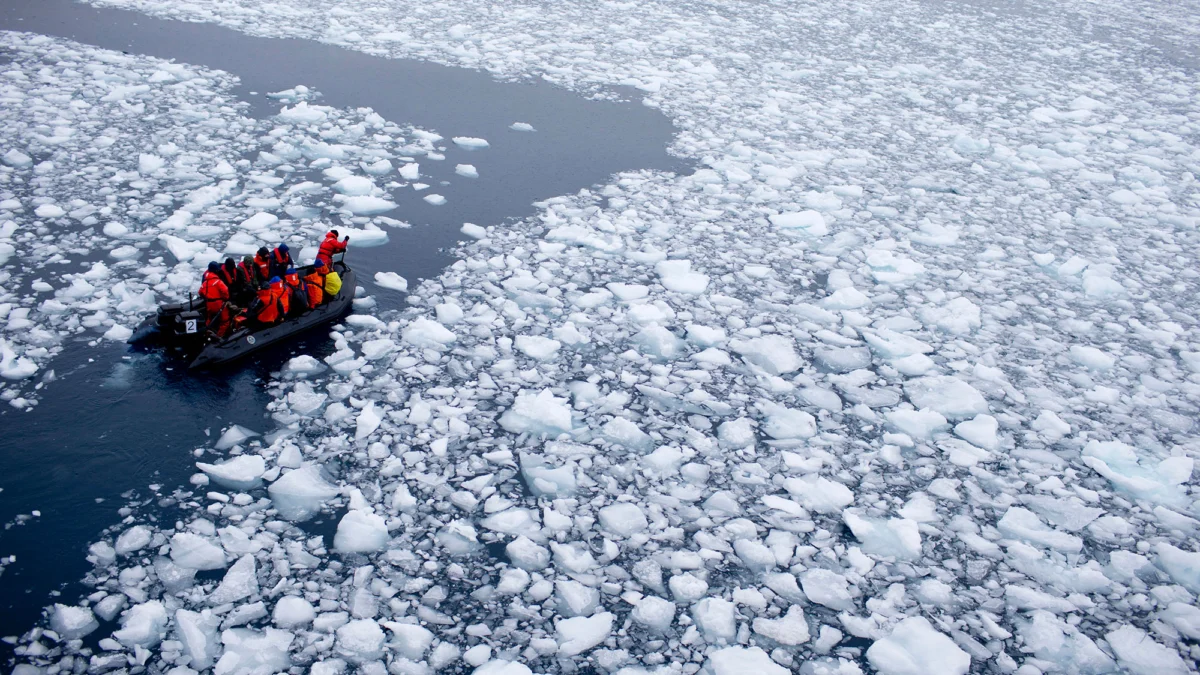
For decades, the behavior of Antarctic sea ice remained one of the most perplexing anomalies in climate science. While the Arctic experienced a steady and alarming decline in frozen coverage, the sea ice surrounding the southernmost continent appeared to defy global warming trends, actually expanding in extent from the late 1970s until 2014. However, this trend came to a sudden, jarring halt in 2016. Since then, Antarctic sea ice has undergone a precipitous contraction, reaching record lows that have left the scientific community scrambling for answers. New research, bolstered by data from a fleet of deep-diving autonomous robots, has finally shed light on the complex interplay of salinity, wind, and oceanic heat that triggered this dramatic shift, revealing a "heat trap" that has been decades in the making.
The Paradox of the Southern Ocean
Until approximately ten years ago, the Southern Ocean was often cited as a climate outlier. Despite the measurable rise in global atmospheric and oceanic temperatures, the floating fringe of sea ice that radiates from the Antarctic continent continued to grow. This expansion was frequently used by skeptics to question the reach of climate change, but for oceanographers, it represented a complex puzzle of fluid dynamics and atmospheric pressure.
The stability of the ice was predicated on a delicate balance of water density. In the frigid environment of the Antarctic, the surface water is cooled by the air, while warmer, saltier water remains trapped in the depths. This is the inverse of most global lakes and oceans, where the sun warms the surface and the depths remain cold. In the Southern Ocean, the existence of sea ice depends on keeping that deeper warmth sequestered away from the surface.
In 2016, the system reached a breaking point. The ice extent did not just retreat; it plummeted. This collapse was not a one-off event but the beginning of a new, lower-ice regime that has persisted for nearly a decade. Scientists now believe that the preceding years of ice growth were actually masking a massive accumulation of thermal energy below the surface—a reservoir of heat that was eventually unleashed with catastrophic results for the ice.
The Role of the Argo Float Network
Unlocking the secrets of the Southern Ocean’s depths is an immense logistical challenge. The region is characterized by some of the most violent storms on Earth, and for much of the year, it is shrouded in darkness or blocked by impenetrable ice. To gather data in these conditions, scientists turned to the Argo program, a global array of nearly 4,000 robotic floats that have revolutionized our understanding of the world’s oceans.
These torpedo-shaped machines, roughly the size of a human, are designed to drift at depths of up to 2,000 meters (about 6,500 feet). Every ten days, they ascend to the surface, measuring temperature and salinity throughout the water column. Once they reach the surface, they transmit their data to satellites before sinking back down to begin a new cycle.
"The ocean plays a huge role in modulating how sea ice can vary from year to year, decade to decade," said Earle Wilson, a polar oceanographer at Stanford University and the lead author of a new study published in the Proceedings of the National Academy of Sciences (PNAS). The Argo floats provided the "grunt work" necessary to see what was happening beneath the waves, allowing Wilson and his team to track changes in water density that are invisible to satellites.
The Mechanics of Stratification and the Heat Trap
The research identifies "stratification"—the layering of water based on density—as the primary driver of the Antarctic ice cycle. In the decades leading up to 2016, increased precipitation and the melting of land-based ice shelves added a layer of fresh water to the ocean’s surface. Because fresh water is less dense than salt water, it created a buoyant lid that prevented the deeper, saltier, and warmer water from rising.
This process created a "halocline," a vertical gradient in salinity that acted as an insulator. While the surface remained cold enough for sea ice to expand, the warm water below was effectively trapped. Deprived of a way to vent its heat into the atmosphere, the deep ocean began to warm at an accelerated rate, accumulating a massive amount of pent-up energy over several decades.
"What we witnessed was basically this very violent release of all that pent-up heat from below," Wilson explained. The study suggests that by 2016, the thermal pressure from below had become too great to be contained by the freshwater lid.
2016: The Great Atmospheric Shift
The catalyst for the release of this heat was a shift in atmospheric patterns. As the planet warms, the temperature gradient between the equator and the poles changes, which in turn alters the behavior of the Southern Annular Mode (SAM)—the primary driver of winds in the Southern Hemisphere.
Around 2016, these winds intensified and shifted their position. The increased wind stress began to "churn" the ocean, acting like a giant spoon in a cup of coffee. This mechanical mixing broke through the freshwater stratification, bringing the long-sequestered warm water to the surface. As this warm water came into contact with the underside of the sea ice, the results were immediate and devastating.
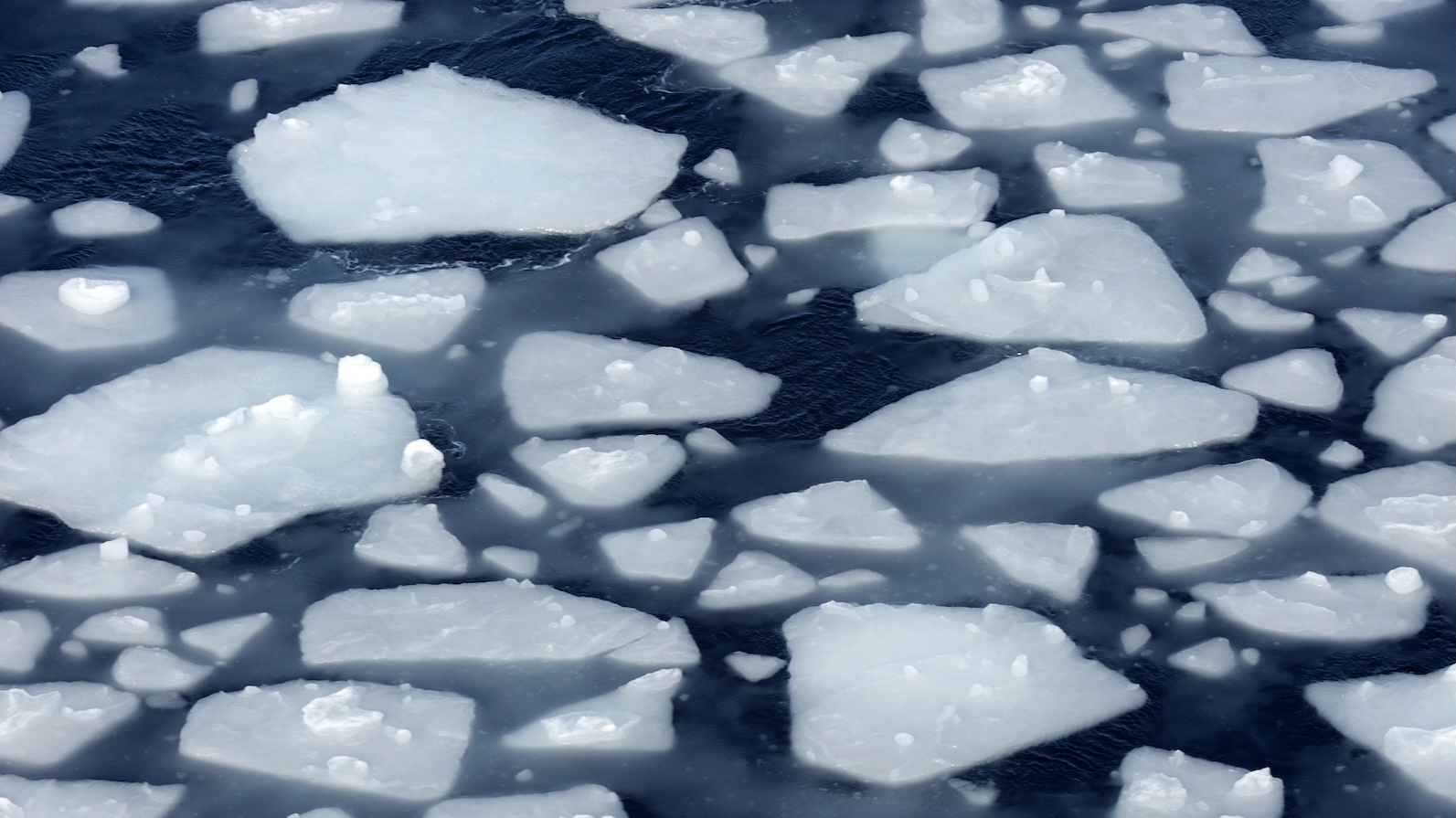
Beyond the thermal impact, the intensified winds also physically broke up the ice. Stronger winds create larger waves, which can shatter large floes into smaller pieces that melt more quickly. Additionally, the winds pushed ice away from the coast into warmer northern waters, further accelerating the decline.
A Timeline of Antarctic Transformation
The shift in Antarctic sea ice can be categorized into three distinct phases:
- 1979 – 2014: The Period of Expansion. Sea ice extent showed a modest but steady increase of about 1% per decade. During this time, freshwater stratification was strengthening, and the "heat trap" was being set.
- 2014 – 2016: The Plateau and Peak. Antarctic sea ice reached an all-time satellite-era record high in September 2014, covering approximately 20 million square kilometers.
- 2016 – Present: The Collapse and Stagnation. In 2016, the "heat release" occurred. By 2017, the ice had reached a record low. This was followed by a series of low-ice years, culminating in the summer of 2023, which saw an unprecedented "six-sigma" event—an anomaly so extreme that it was statistically expected to occur only once every 7.5 million years in a stable climate.
Broader Impact: The 190-Foot Threat
The loss of sea ice is far more than a local environmental change; it is a global security concern. While the melting of sea ice itself does not significantly raise sea levels (as it is already floating), its absence removes a vital protective barrier for the land-based Antarctic ice sheet.
Antarctica’s ice sheet contains enough frozen water to raise global sea levels by approximately 190 feet (58 meters). This massive reservoir of ice is held in place by floating ice shelves that act as buttresses. Sea ice serves as a "buffer" for these shelves, absorbing the energy of ocean waves and protecting the shelves from erosion.
"Recent research has shown that both atmospheric and oceanic warming is likely contributing to the sudden change in Antarctic sea-ice extent since 2016," said Zachary Labe, a climate scientist at Climate Central. "This paper helps to further develop the point that deeper ocean warmth is a significant player."
Without the sea ice buffer, the ice shelves are exposed to "underwater storms" and wave action that can cause them to fracture and collapse. If these shelves disappear, the land-based glaciers behind them will flow more rapidly into the sea, leading to an accelerated rise in global sea levels that would threaten every coastal city on Earth.
The Albedo Feedback Loop
Another critical implication of the ice loss is the "albedo effect." Sea ice is highly reflective; its bright white surface bounces up to 80% of the sun’s incoming solar radiation back into space. When the ice disappears, it reveals the dark ocean water beneath, which absorbs about 90% of that same solar energy.
This creates a self-reinforcing feedback loop: as the ice melts, the ocean absorbs more heat, which in turn melts more ice. This process not only warms the Southern Ocean but contributes to the overall increase in global temperatures, further destabilizing the polar regions.
Official Responses and the Need for Monitoring
The findings have led to calls for increased international cooperation in polar monitoring. The Southern Ocean remains one of the most data-sparse regions on the planet, and the current fleet of Argo floats, while invaluable, is insufficient to capture the full scope of the changes occurring.
"Overall, we need more international support to continue building observing networks across the Antarctic polar region," Labe emphasized. "This is critical given the rapid changes we are beginning to observe in this part of the world in a warming climate."
Scientific organizations are currently advocating for "Deep Argo"—a new generation of floats capable of descending to 6,000 meters—to better track the heat being absorbed by the very bottom of the ocean.
Conclusion: A Permanent Regime Shift?
The central question facing climatologists is whether the Antarctic has entered a "new normal." While natural variability has always played a role in the Southern Ocean, the sheer scale of the post-2016 decline suggests a fundamental regime shift.
The research by Wilson and his colleagues provides a roadmap for future climate models. By understanding the role of salinity and deep-ocean heat, scientists can better predict when the next "violent release" of energy might occur. While there may be years where the ice sees a temporary recovery due to specific atmospheric conditions, the underlying trend remains grim.
"The long-term, multidecade trend will be negative," Wilson concluded. "That would be my guess, but we don’t know for sure." What is certain is that the "strange" behavior of the Antarctic waters is no longer a mystery, but a warning of the profound changes occurring in the deep.