
A landmark joint report released by the World Meteorological Organization (WMO) and the Food and Agriculture Organization of the United Nations (FAO) has signaled a definitive shift in the global climate narrative, characterizing extreme heat not as a series of isolated anomalies, but as the new "baseline" for the global agricultural system. The 94-page document, which merges complex meteorological datasets with agricultural production metrics, outlines a harrowing trajectory for food security and worker safety as human-induced warming accelerates at an unprecedented rate. Central to the report’s findings is the realization that the compounding effects of heat domes, atmospheric blocks, and oscillating natural cycles are dismantling traditional farming calendars and pushing the biological limits of crops, livestock, and the human workforce.
The Brazilian Case Study: A Powerhouse Under Pressure
Brazil, one of the world’s most critical agricultural exporters, serves as the report’s primary country-level case study. The nation’s experience over the last several years provides a grim blueprint of how climate volatility can destabilize a major economy. In late April 2024, an intense heat wave gripped central and southern Brazil, with temperatures soaring for five consecutive days. This followed a terrifying event just a month prior, where the heat index in Rio de Janeiro hit a staggering 144.1 degrees Fahrenheit—the highest recorded in a decade.
The economic fallout has been tangible. Yields for soy and corn, the twin pillars of Brazilian agricultural commodities, plummeted in southeastern states like São Paulo. The heat did not discriminate, affecting everything from staple tubers like potatoes to high-value exports like arabica coffee and sugarcane. In the central-western regions, the livestock industry faced a crisis of its own, as pigs were subjected to severe heat stress for nearly a year, reducing growth rates and increasing mortality.
The report also highlights the "compounding" nature of these disasters. When a massive heat dome settled over the region, it acted as a physical barrier, blocking a cold front and forcing it to stall over the southernmost state of Rio Grande do Sul. This resulted in catastrophic rainfall and flooding that decimated local ecosystems and disrupted the national supply chain for pink shrimp. These events underscore a critical reality: extreme heat does not just dry out the land; it recalibrates the entire atmospheric engine, leading to secondary disasters that are equally destructive.
A Global Tapestry of Agricultural Disruption
While Brazil is the focal point, the WMO-FAO report documents a trail of heat-related destruction spanning every continent. The data suggests that the geographical "safe zones" for traditional agriculture are shrinking.
In Chile, the year 2016 marked a watershed moment for the aquaculture industry. Warming sea temperatures triggered massive, toxic algae blooms that suffocated an estimated 100,000 metric tons of farmed salmon and trout. This remains the largest aquaculture mortality event in history, highlighting that the "heat" crisis extends deep into the oceans.
In North America, the 2021 Pacific Northwest heat dome redefined the limits of temperate climates. Entire harvests of raspberries and blackberries were effectively "cooked" on the vine. Christmas tree farms, a major regional industry, saw a 70 percent decline in timber volume. Furthermore, the intersection of extreme heat and vegetative drying led to a 21 to 24 percent increase in the total forest area burned across North America that year, as heat-parched forests became tinderboxes.
The Asian continent has fared no better. India’s record-breaking heatwave in 2022 resulted in wheat yield losses of up to 34 percent in some states, forcing the government to implement export bans that sent global grain prices soaring. The dairy sector, a lifeline for rural Indian economies, saw a 15 percent drop in milk production as cattle suffered from prolonged thermal stress. Meanwhile, in the Fergana mountain range of Kyrgyzstan, 2024 brought spring temperatures 50 degrees Fahrenheit above seasonal averages. This "false spring" led to the premature melting of snowpacks, triggered massive locust outbreaks, and caused a dramatic decline in cereal harvests.
The Human Dimension: An Occupational Crisis
Perhaps the most alarming aspect of the report concerns the people who power the global food system. Human-caused warming is increasing at a rate that far outpaces current adaptation strategies. With the past 11 years ranking as the 11 warmest on record, the "residual risk" to human life is mounting.
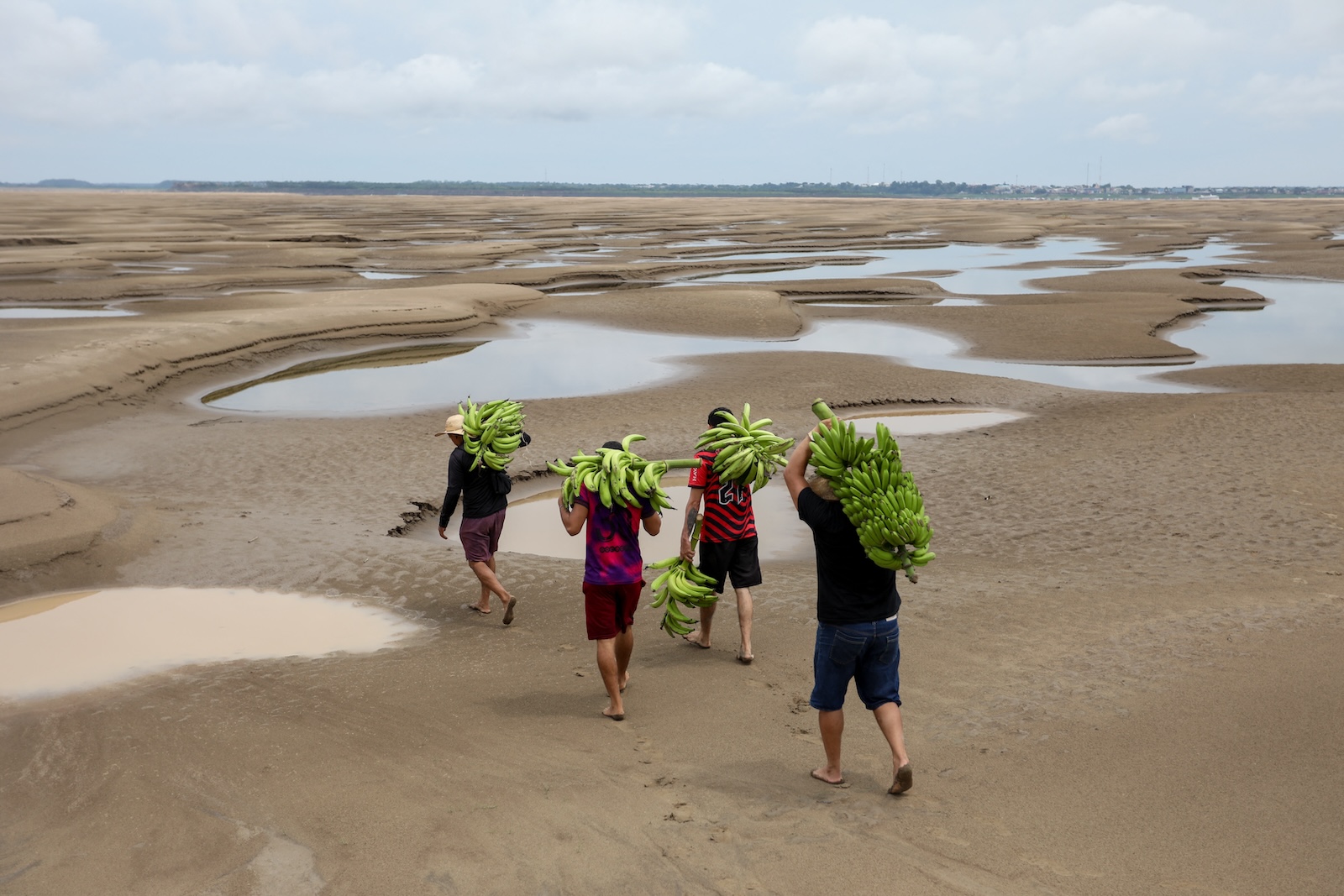
According to the report, if the world remains on a high-emissions trajectory, regions including South Asia, tropical Sub-Saharan Africa, and parts of Central and South America could experience up to 250 days a year where it is physically too hot to work outside by the turn of the century. This is not a future threat but an evolving occupational crisis. A 2024 report by the International Labour Organization (ILO) found that more than 70 percent of the global workforce—approximately 2.4 billion people—is already at high risk due to extreme temperatures.
In the summer of 2024, United Nations Secretary-General António Guterres issued a global "call to action," noting that heat is estimated to kill nearly half a million people annually—roughly 30 times the death toll of tropical cyclones. Guterres emphasized four pillars for global response: protecting the vulnerable, increasing worker protections, using science to boost resilience, and phasing out fossil fuels.
Expert Critique: The Gap Between Diagnosis and Prescription
Despite the depth of the WMO-FAO report, some experts argue that it fails to sufficiently address the human element of the crisis. Naia Ormaza Zulueta, a postdoctoral researcher at the University of British Columbia specializing in extreme heat and the agricultural workforce, suggests that while the "diagnosis" of the problem is sharper than ever, the "prescription" is lagging behind.
One of the primary criticisms involves how heat exposure is calculated. Zulueta points out that the report largely relies on daily averages, which often omit "wet-bulb" exposure—a metric that accounts for both heat and humidity. High wet-bulb temperatures are particularly dangerous because they prevent the human body from cooling itself through sweat. Furthermore, the report lacks data on nighttime heat exposure. For many agricultural workers, the lack of "nocturnal cooling" means their bodies never recover from daytime stress, leading to chronic kidney disease and other long-term health issues.
"The workers are present in the diagnosis, but they’re largely absent in the prescription," Zulueta stated. She noted that while the report offers detailed strategies for crops—such as shifting planting dates, developing heat-tolerant seeds, and expanding irrigation—the recommendations for laborers are often relegated to vague references to decade-old international agreements.
The exclusion of agencies like the International Labour Organization from the report’s authorship may have contributed to this oversight. Without a concrete roadmap for adapting food production to protect outdoor workers, the billions of people responsible for global food security remain in a state of extreme vulnerability.
Economic and Systemic Implications
The findings of the WMO and FAO have profound implications for global markets. Agriculture is not an isolated sector; it is the foundation of global trade and social stability. When heatwaves decimate harvests in "powerhouse" nations like Brazil or India, the result is a "butterfly effect" that leads to food inflation, trade protectionism, and social unrest in importing nations.
The report calls for a dramatic increase in global climate-related development finance for food systems. However, the current pace of investment is widely regarded as insufficient. As Martial Bernoux, senior natural resources officer at the FAO, noted, the global community is "not moving at a speed that is good enough."
The shift toward a "heat-baseline" world requires a total reimagining of the agricultural supply chain. This includes investing in early-warning systems that can predict heat-stress events weeks in advance, allowing farmers to take preemptive action. It also requires a fundamental shift in labor laws to include mandatory "shade and rest" breaks, hydration protocols, and a shift in working hours to avoid the peak thermal window of the day.
Conclusion
The joint report by the WMO and FAO serves as a definitive warning: the era of predictable agricultural cycles is over. The scorched fields of Brazil, the dying salmon of Chile, and the parched wheat of India are symptoms of a systemic failure to address the warming climate. While the world has made strides in understanding the meteorological drivers of these events, the focus must now shift toward a holistic adaptation strategy that prioritizes both the resilience of the crops and the safety of the humans who harvest them. As the planet continues to warm, the ability to produce food will depend less on traditional wisdom and more on our capacity to innovate in the face of an increasingly hostile environment.










Leave a Reply