
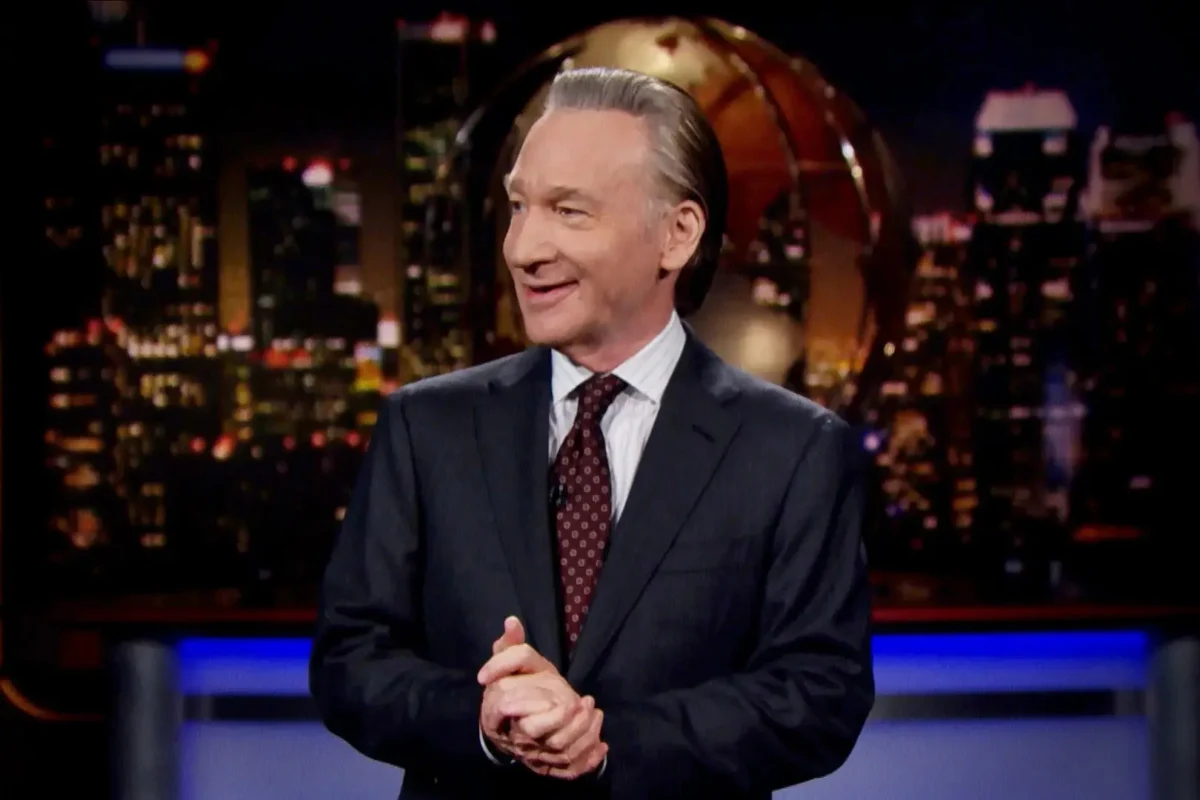
The comedic landscape was abuzz Friday night as Bill Maher, host of HBO’s "Real Time with Bill Maher," opened his latest episode with a characteristic blend of sharp wit and pointed commentary. While the New York Knicks were celebrating a decisive victory over the Philadelphia 76ers in the NBA Playoffs, Maher turned his attention to a decidedly less athletic, but equally dramatic, legal saga: the settlement between Blake Lively and Justin Baldoni. The monologue also delved into the recent release of Jeffrey Epstein’s purported suicide note, drawing parallels that resonated with the political undercurrents of the week.
A "Peace Deal" for Hollywood: Lively and Baldoni Settle
Mere hours before their highly anticipated legal battle was slated to go to trial, Blake Lively and Justin Baldoni reached an agreement, bringing an end to a protracted dispute that had captured public attention for months. The case, which stemmed from the production of the widely discussed film "It Ends with Us," saw Lively level accusations of sexual harassment against Baldoni, while Baldoni, in turn, filed a counterclaim for defamation.
Maher, in his signature style, framed the settlement as a momentous event, quipping, "I know why you’re happy. Great news. Peace at last. We have an agreement. A deal. A peace deal — not the Iran War, Blake Lively and Justin Baldoni. That’s who I’m talking about.” His dramatic introduction underscored the prolonged nature of the legal wrangling, which Maher suggested had been a significant fixture in public discourse for "like a year."
The terms of the settlement, as reported, involved no monetary exchange between the parties. However, the agreement leaves Lively with the potential to pursue Baldoni for her substantial attorney fees, a critical aspect of any protracted legal dispute. The film itself, "It Ends with Us," which served as the catalyst for the legal action, was met with a mixed critical reception, a point Maher did not shy away from referencing. He wryly remarked, "All this arguing and suing, and it turns out: no settlement money at all. And all over a movie called ‘It Ends with Us’ that everyone hated? Did you see that movie? It was harder to get through than the Strait of Hormuz." This jab highlighted the perceived disparity between the intensity of the legal conflict and the film’s reception.
Background of the Lively-Baldoni Dispute
The legal entanglement between Blake Lively and Justin Baldoni originated from their involvement in the film adaptation of Colleen Hoover’s bestselling novel, "It Ends with Us." Lively, a prominent actress, was slated to star in and produce the film, while Baldoni, an actor and director, was also deeply involved in its development. The precise details of the alleged sexual harassment and defamation claims remain largely private due to the nature of legal settlements, but public filings indicated a significant breakdown in their professional relationship.
The protracted legal process involved numerous court appearances, discovery phases, and the potential for extensive public testimony, all of which can incur considerable financial and emotional costs for those involved. The settlement, therefore, represents an avoidance of further escalation and a conclusion, albeit without a financial payout for either party in the immediate aftermath. The ability for Lively to seek attorney fees suggests that the settlement may have acknowledged certain merits in her claims, allowing for a potential recovery of legal expenses.
The Shadow of Epstein: A Suicide Note and Political Parallels
Transitioning from Hollywood disputes to darker, more unsettling revelations, Maher also addressed the recent release of Jeffrey Epstein’s purported suicide note. The note, unverified and officially submitted by a federal judge, was reportedly penned in July 2019, just weeks before Epstein was found deceased in his cell at the Metropolitan Correctional Center in Manhattan. The note’s peculiar closing line, "Whatcha want me to do — Bust out cryin!!," was noted for its uncanny resemblance to a phrase from "The Little Rascals," adding a layer of macabre absurdity to the circumstances.
Maher connected the release of the note to broader questions surrounding Epstein’s death and the ongoing investigations into his alleged sex trafficking ring. He highlighted the purported author of the note as Epstein’s cellmate, who, according to Maher’s interpretation of the events, was someone Epstein claimed had attempted to harm him. "Speaking of killing, apparently they found Jeffrey Epstein’s suicide note," Maher stated, before introducing the cellmate’s alleged perspective within the note.
The comedian then zeroed in on a specific passage from the note that resonated with current political discourse: "They investigated me — and then in all caps, it says, ‘FOUND NOTHING!!!’" Maher’s delivery of this line was pregnant with implication, as he followed with, "Who does that sound like? I can’t quite place it…" This rhetorical question clearly pointed towards President Donald Trump, a known associate of Epstein’s and a figure who has frequently asserted his innocence in various investigations.
The "Found Nothing!!!" Implication
Maher’s deliberate linkage between the note’s assertion of being investigated and found innocent, and Trump’s consistent declarations of being unfairly targeted and exonerated, serves as a potent form of political satire. The implication is that the phrasing within the note, whether coincidental or deliberately crafted to mirror such sentiments, echoes the rhetoric often employed by Trump when addressing investigations into his past or business dealings.
The release of this unverified note, particularly with its peculiar phrasing, has inevitably fueled further speculation and debate about the circumstances surrounding Epstein’s death. For Maher and his audience, it provided an opportunity to weave a narrative that connects the sensational details of a high-profile legal case to broader political commentary, a hallmark of his "Real Time" program. The note’s closing, "Thank you for your attention to this matter!", further amplified the sense of performative finality, which Maher subtly contrasted with the ongoing complexities and unanswered questions surrounding Epstein’s life and death.
Broader Implications and Public Perception
The juxtaposition of these two seemingly disparate news items – a celebrity legal settlement and the release of a deathbed note linked to a notorious figure – by Bill Maher underscores a common thread in contemporary media: the intersection of personal drama, legal entanglements, and public scrutiny, often with political undertones.
The Lively-Baldoni settlement, while a private matter, garnered public attention due to the fame of the individuals involved and the sensitive nature of the accusations. The resolution, or lack thereof in terms of immediate financial recompense, highlights the complexities of legal recourse and the often-unseen costs of litigation. The outcome, particularly the potential for Lively to recover attorney fees, could set a precedent or influence how similar disputes are approached in the future, emphasizing the financial stakes involved beyond just punitive damages.
The Epstein suicide note, on the other hand, taps into a more profound public concern regarding accountability, justice, and the opaque nature of powerful individuals and their networks. The unverified nature of the note, coupled with its suggestive phrasing, fuels ongoing theories and debates, particularly within political circles. The fact that such a document, even if of dubious authenticity, can be wielded in public discourse to draw parallels with prominent political figures speaks volumes about the current media and political climate.
Maher’s approach, to weave these narratives together, is not merely for comedic effect. It serves to highlight perceived hypocrisies, draw attention to what he views as significant societal or political issues, and encourage his audience to critically examine the information presented to them. The "Real Time" monologue, in this instance, acted as a microcosm of broader public discourse, reflecting anxieties about justice, celebrity, and the influence of power in both the entertainment industry and the political arena. The extended coverage and discussion surrounding these events indicate a public appetite for understanding the intricacies of these high-stakes dramas, even when the details remain shrouded in legal privacy or speculative interpretation. The legacy of both the legal disputes and the unanswered questions surrounding Epstein’s death continue to cast long shadows, prompting ongoing analysis and commentary from figures like Bill Maher.









Leave a Reply