
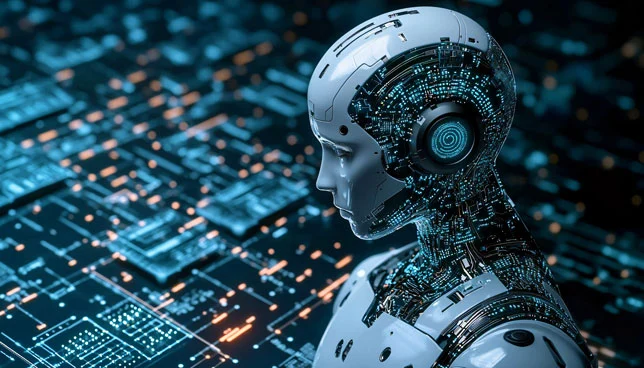
Meta Platforms has officially announced the acquisition of Assured Robot Intelligence (ARI), a specialized robotics artificial intelligence startup focused on the development of humanoid systems. This move marks a significant pivot for the social media and technology giant, signaling an aggressive expansion beyond digital-only software and generative AI models into the realm of "physical AI." By integrating ARI’s expertise into its research division, Meta aims to develop models that allow machines to operate, interact, and adapt within complex, real-world physical environments. While the financial specifics of the deal remain undisclosed, the acquisition is being viewed by industry analysts as a strategic talent and technology "acqui-hire" designed to bolster Meta’s internal robotics capabilities.
The acquisition was first confirmed following reports in The Wall Street Journal and a public announcement by ARI co-founder Xiaolong Wang on social media. According to Meta, the primary objective of bringing the ARI team on board is to leverage their research into robotic intelligence—specifically, the ability for machines to understand, predict, and respond to human behavior. This represents a foundational shift for Meta, which has spent the last decade focused primarily on social networking, digital advertising, and the "Metaverse" virtual reality ecosystem.
A Mission for Physical Artificial General Intelligence
The core mission of Assured Robot Intelligence since its inception just one year ago has been the pursuit of "Physical Artificial General Intelligence" (PAGI). In a statement following the acquisition, ARI co-founder Xiaolong Wang articulated the vision that drove the startup’s rapid development. Wang noted that while the industry has made massive strides in digital agents—such as chatbots and image generators—the next frontier is the creation of a general-purpose physical agent.
"Through deep customer engagements and real-world deployments, it became clear to us that serving the massive opportunity ahead requires training a truly general-purpose physical agent," Wang stated. He further emphasized that the ARI team believes the ideal form factor for such an agent is humanoid. Unlike traditional robotics that relies heavily on teleoperation (human remote control), ARI’s philosophy centers on "learning directly from human experience," allowing robots to observe and mimic human movements and decision-making processes to achieve autonomy.
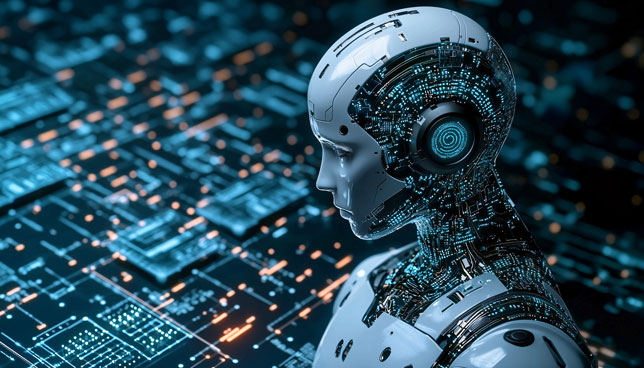
By joining Meta Superintelligence Labs (MSL), the ARI team hopes to scale this vision. Meta’s massive computational resources, vast data ecosystems, and existing AI infrastructure provide the necessary "foundational components" to move robotics from laboratory experiments into practical, personal superintelligence.
Integrating Specialized Talent into Meta Superintelligence Labs
The acquisition brings a high-caliber team of researchers and engineers into Meta’s fold. Leading the transition are ARI co-founders Xiaolong Wang and Lerrel Pinto, both of whom possess deep roots in the academic and industrial robotics sectors.
Xiaolong Wang, an Associate Professor at the University of California, San Diego, previously served as a researcher at Nvidia, a company that currently dominates the AI hardware market and has its own burgeoning robotics platform, Project GR00T. Wang’s research has focused on computer vision and reinforcement learning, critical components for enabling robots to "see" and "learn" from their surroundings.
Lerrel Pinto brings a similar level of expertise, having taught at New York University and co-founded Fauna Robotics. Fauna Robotics, a startup focused on small-scale humanoid systems, was notably acquired by Amazon earlier this year, highlighting a trend of major tech firms competing for the same pool of robotics talent.
The ARI team will be absorbed into Meta Superintelligence Labs (MSL), a specialized branch of Meta’s AI research organization. Their primary focus will be the development of "foundation models" for robot control. These models are intended to serve as the "brain" for various hardware platforms, enabling capabilities such as whole-body humanoid control, self-learning in unstructured environments, and the execution of intricate physical tasks ranging from industrial logistics to domestic household work.

The Strategic Shift: From Virtual Reality to Embodied AI
This acquisition comes at a time when Meta is significantly recalibrating its long-term investment strategy. For several years, Meta CEO Mark Zuckerberg championed the "Metaverse"—a vision of interconnected virtual worlds—as the future of the company. However, the explosive rise of generative AI has led to a strategic pivot. While Meta has not abandoned its hardware ambitions (such as Quest headsets and Ray-Ban smart glasses), it is increasingly focusing on "Embodied AI" or "Physical AI."
Embodied AI refers to artificial intelligence that is not confined to a screen or a server but is instead integrated into a physical body that can interact with the world. For Meta, this represents the logical evolution of its Llama series of large language models. While Llama can process text and code, a physical AI model would need to process tactile feedback, spatial dimensions, and gravitational physics.
To support this transition, Meta has dramatically increased its capital expenditure. Recent reports indicate that Meta has raised its projected capital spending for 2026 by an additional $10 billion, bringing the estimated range to between $125 billion and $145 billion. This surge in spending is attributed to the high costs of AI components—primarily GPUs from Nvidia—and the construction of specialized data centers capable of training next-generation foundation models.
The Competitive Landscape of Humanoid Robotics
Meta’s entry into the humanoid robotics space places it in direct competition with some of the biggest names in technology and automotive manufacturing. The race to develop a commercially viable humanoid robot has intensified over the last 24 months, with several key players emerging:
- Tesla: Elon Musk’s company is currently developing "Optimus," a humanoid robot intended for factory work and eventually home use. Tesla aims to leverage its experience in computer vision and battery technology from its electric vehicle division.
- Amazon: Through its acquisition of Fauna Robotics and its investment in Agility Robotics (the creators of the "Digit" robot), Amazon is focusing heavily on warehouse automation and logistics.
- OpenAI: The creators of ChatGPT have partnered with Figure AI to integrate advanced language models into humanoid hardware, enabling robots to communicate with humans while performing tasks.
- Google (Alphabet): Google DeepMind has been a pioneer in robotic learning, recently showcasing its RT-2 (Robotics Transformer 2) model, which allows robots to understand high-level commands like "pick up the extinct animal" (referring to a toy dinosaur).
Meta’s strategy appears to differ slightly from Tesla’s. While Tesla is building both the "brain" and the "body," Meta’s acquisition of ARI suggests a primary focus on the software layer—the intelligence that allows any humanoid hardware to function. By developing the foundational AI for robotics, Meta could potentially position itself as the "operating system" provider for a variety of robotic hardware manufacturers.

Technical Challenges and the "Sim-to-Real" Gap
Despite the excitement surrounding the ARI acquisition, the path to functional humanoid robots is fraught with technical hurdles. One of the most significant challenges in the field is the "sim-to-real" gap. While AI models can be trained efficiently in digital simulations where physics are predictable, the real world is messy. Factors such as varying lighting, unpredictable human movements, and the sheer complexity of "dexterous manipulation" (the ability to handle delicate objects with human-like grace) remain difficult for AI to master.
Furthermore, humanoid robots face practical constraints:
- Battery Life: Current humanoid prototypes often struggle to operate for more than a few hours before requiring a recharge.
- Safety and Regulation: A robot operating in a home or a crowded warehouse must be inherently safe, with fail-safes to prevent injury to humans.
- Cost: The sensors, actuators, and processors required for a high-fidelity humanoid robot currently cost hundreds of thousands of dollars, making them inaccessible for the consumer market.
Meta’s focus on "personal superintelligence" suggests an interest in eventually moving these systems into the home, but the company has not yet provided a timeline or a product roadmap.
Implications for the Future of Work and Society
The acquisition of ARI by Meta underscores a broader industrial consensus: the next decade of AI will be defined by its ability to perform physical labor. If Meta and its competitors succeed in developing general-purpose physical agents, the economic implications would be profound. Humanoid robots could address labor shortages in manufacturing, provide elder care in aging societies, and perform hazardous tasks in disaster relief or industrial maintenance.
For Meta, the move is also a defensive one. As the digital advertising market matures, the company needs new growth engines. By owning the "brains" of the next generation of physical machines, Meta ensures its relevance in a post-smartphone era.

Conclusion
The acquisition of Assured Robot Intelligence marks a definitive chapter in Meta’s evolution. By absorbing one of the most promising startups in the robotics AI space and integrating its founders into Meta Superintelligence Labs, the company is signaling that it no longer views AI as a purely digital endeavor.
While the vision of a humanoid robot in every home remains a distant prospect, Meta’s massive capital investments and strategic talent acquisitions suggest that the company is preparing for a future where AI is "embodied." As the ARI team begins its work within MSL, the industry will be watching closely to see if Meta can translate its dominance in social media and software into a leading position in the physical world. For now, the deal serves as a clear indicator that the race for physical artificial general intelligence has officially entered a new, high-stakes phase.










Leave a Reply