
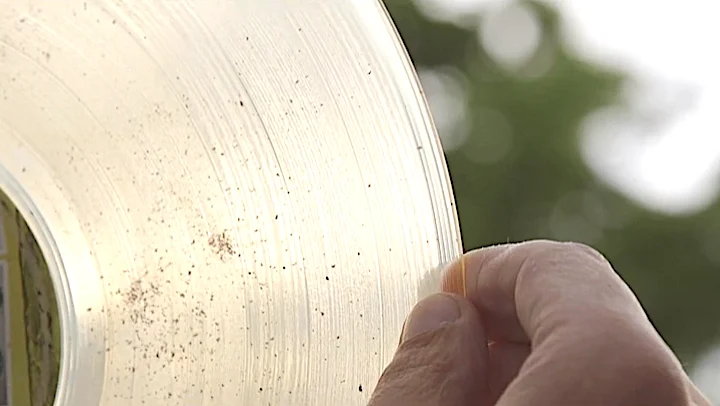
The traditional funeral industry, long defined by mahogany caskets and somber cemetery plots, is undergoing a radical transformation as a new generation seeks more personalized and idiosyncratic ways to commemorate the deceased. Among the most unique of these "death tech" innovations is the service provided by the United Kingdom-based company And Vinyly. Founded by musician and producer Jason Leach, the company offers a service that allows the cremated remains of a loved one to be pressed directly into a playable 12-inch vinyl record, effectively allowing the departed to "live on from beyond the groove."
This intersection of the recording industry and the funeral business reflects a broader societal shift toward "celebration of life" services over traditional religious rites. As cremation rates continue to climb globally—surpassing 60 percent in the United States and exceeding 75 percent in the United Kingdom—the demand for creative ways to house or utilize "cremains" has birthed a niche market. From turning ashes into memorial diamonds to launching them into low-earth orbit, the options for the modern consumer are limited only by their imagination and their budget.
The Genesis of a Musical Afterlife
The concept for And Vinyly was born in 2009, not out of a business plan, but as a conceptual exploration by Jason Leach. Leach, a veteran of the UK electronic music scene and founder of the label Subway Records, initially viewed the idea as a provocative artistic statement on mortality and the enduring nature of physical media. However, what began "just for fun" quickly resonated with a public looking for more tangible, interactive ways to remember those they have lost.
Leach’s motivation was rooted in the visceral nature of analog sound. In various interviews and documentaries detailing his work, he has emphasized the physical reality of a needle moving through a groove. To Leach, the record is more than a storage device for data; it is a physical object that interacts with the environment. When human ashes are introduced into the vinyl pressing process, the deceased becomes a literal part of that physical interaction.
Since its inception, And Vinyly has moved from a curiosity to a functioning bespoke service. The company has spent over a decade refining the technical process of incorporating grit—the cremated remains—into the delicate grooves of a record without rendering the audio completely unplayable. While the presence of the ash inevitably introduces surface noise, for many clients, these pops and crackles represent the "voice" of their loved one, an audio signature unique to that individual’s physical remains.
Technical Specifications and the Pressing Process
The process of creating a memorial record is both a technical challenge and a delicate labor of love. It begins after the cremation process is complete. A small amount of the deceased’s ashes—typically about a teaspoon per record—is sent to the company’s facilities. During the manufacturing stage, these ashes are sprinkled onto the "puck" or "biscuit" of raw PVC (polyvinyl chloride) before it is placed into the record press.
When the two stampers (the metal plates containing the audio grooves) come together under high pressure and heat, the ashes are flattened and embedded into the vinyl. The result is a translucent or marbled effect where the remains are visible to the naked eye, trapped forever within the medium.
Clients are given approximately 18 to 22 minutes of audio space per side. This presents a unique opportunity for curation. While some choose to record a final message to their descendants, others opt for a "soundtrack of their life," consisting of field recordings, ambient noise, or original compositions. However, the company is strictly bound by intellectual property law. Due to copyright restrictions, And Vinyly cannot press protected music—such as famous pop songs or rock anthems—without explicit permission from the rights holders, which is often prohibitively expensive or impossible to obtain for small, private pressings. Consequently, most records feature personal recordings, silence, or royalty-free audio.
The Economics of Alternative Funerals
Personalization in the death care industry comes with a significant price tag. The basic package offered by And Vinyly generally ranges between £1,000 and £3,000 (approximately $1,250 to $3,750 USD), depending on the complexity of the order and the number of copies produced. This price typically includes the mastering of the audio, the pressing of a limited run of records (usually around 10 copies), and bespoke cover art.
For those seeking a more elaborate tribute, the company offers "Rest in Vinyl" packages that can include original artwork by renowned illustrators or even the commissioning of original music written specifically for the deceased. When compared to the average cost of a traditional funeral in the UK or the US—which often exceeds $7,000 to $10,000—the memorial record is positioned as a premium but competitive alternative for those who forgo traditional burial and land costs.
The growth of this sector is supported by data from the National Funeral Directors Association (NFDA), which indicates that consumers are increasingly prioritizing "green" burials and "personalized experiences" over traditional aesthetics. The memorial vinyl sits comfortably within this trend, offering a space-saving, aesthetically pleasing, and culturally relevant alternative to the standard mantle-top urn.
Case Study: "Hearing Madge" and the Emotional Impact
The emotional weight of this service was captured in the short documentary "Hearing Madge," which follows a son’s journey to memorialize his mother through And Vinyly. The son, who had captured hours of recordings of his mother talking and laughing during her final years, used the service to ensure her voice would remain a physical presence in his home.
In the film, the son acknowledges the potential for the service to be viewed as macabre. "I’m sure a lot of people think that it’s creepy, a lot of people think it’s sacrilegious," he states. "But I know my mother wouldn’t have. She would’ve thought it was a hoot." This sentiment highlights a shift in how modern families view the remains of the dead—not as something to be feared or hidden away, but as something to be integrated into the lives of the living.
For Leach, the founder, the power of the record lies in its ability to move the air. "Sound is vibrating you, the room, and it’s actually moving the air around you," Leach explains. "And that’s what’s so powerful about hearing someone’s voice on a record. They’re actually moving the air and for me that’s powerful." This perspective frames the record not as a static memorial, but as an active, kinetic legacy.
Broader Implications and the Future of Death Care
The success of And Vinyly is part of a broader "Death Positive" movement that encourages open conversation about mortality and the rejection of the "one-size-fits-all" funeral model. This movement is fueled by a demographic shift as Baby Boomers and Gen X-ers begin to plan their own end-of-life arrangements with the same level of curation they applied to their lives.
Other companies in this space have seen similar interest. Eterneva and LifeGem, which turn carbon from ashes into lab-grown diamonds, have become multi-million dollar enterprises. Celestis, a company that launches portions of cremated remains into space, has conducted dozens of "memorial spaceflights." Even the environmental sector has seen growth with "human composting" (natural organic reduction), a process legalized in several US states that turns a body into nutrient-rich soil.
The rise of the memorial vinyl also coincides with the "Vinyl Revival," a cultural phenomenon where sales of physical records have grown for nearly two decades straight, even in the age of digital streaming. The desire for a physical, tactile connection to music mirrors the desire for a physical, tactile connection to the deceased.
However, the industry faces ongoing regulatory and ethical questions. The handling of human remains is strictly governed by health and safety laws, and companies like And Vinyly must ensure that their processes comply with local regulations regarding the transport and processing of "cremains." Furthermore, as "digital afterlives" become more common through social media legacies and AI-driven chatbots that mimic the deceased, the physical record stands as a defiant return to the analog.
Conclusion
As society continues to secularize and traditional mourning customs evolve, the ways in which we choose to be remembered are becoming increasingly reflective of our individual passions. For the audiophile, the musician, or the person who simply loved the sound of a crackling record, And Vinyly offers a way to turn the finality of death into a recurring loop of sound.
While the idea of pressing human remains into plastic may remain controversial to some, for many families, it provides a unique form of comfort. It transforms a somber reminder of loss into a celebration of life that can be shared, played, and heard. In an era where much of our lives is stored in the ephemeral "cloud," the memorial vinyl record offers a return to the physical, ensuring that even after the music stops, the groove remains.







Leave a Reply