
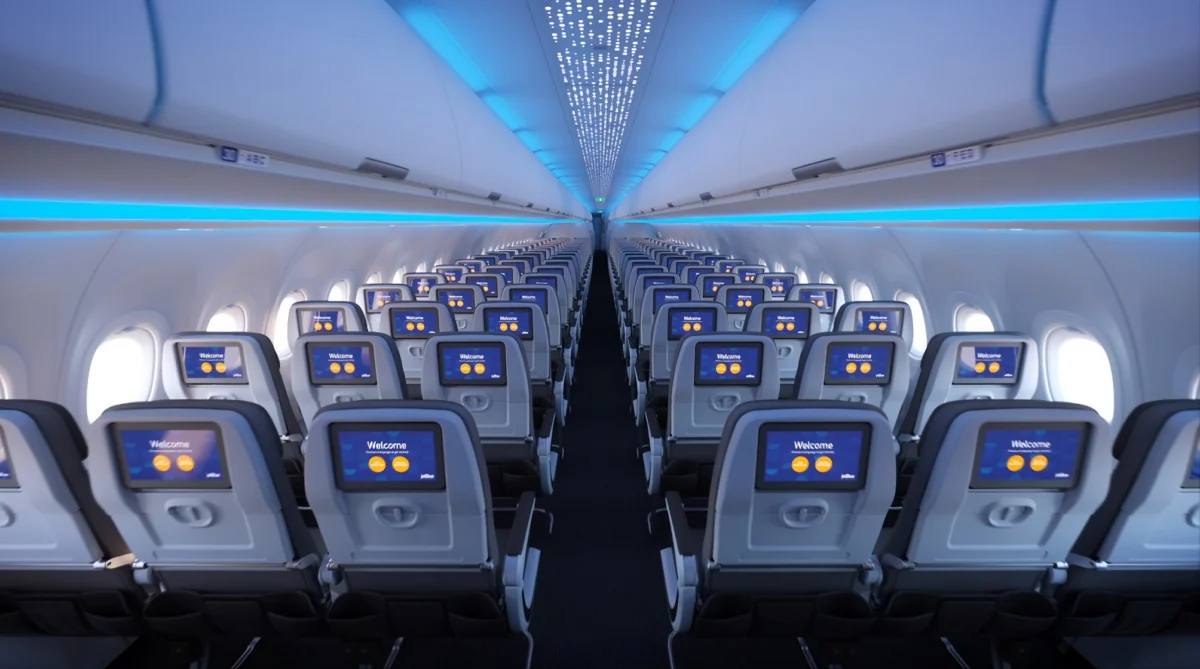
The operational disruption of JetBlue Flight 882, scheduled to depart from Hewanorra International Airport in St. Lucia to John F. Kennedy International Airport in New York, has ignited a significant debate regarding airline liability and passenger rights following birdstrike incidents. On Friday, May 8, 2026, the aircraft sustained damage to its left engine shortly before or during the departure sequence, rendering the plane grounded for immediate inspection and repairs. While the carrier successfully rescheduled the flight for 11:00 a.m. the following Saturday, the refusal to provide overnight hotel accommodations for stranded passengers has highlighted the stringent definitions of "controllable" versus "uncontrollable" delays within the aviation industry.
Chronology of Flight 882 and the Resulting Disruption
The incident began on the afternoon of Friday, May 8, when Flight 882 was prepared for its northbound journey to New York. According to passenger reports and flight tracking data, the aircraft encountered a birdstrike that specifically impacted the left engine. In aviation, a birdstrike—the collision between an airborne animal and a moving vehicle—is a critical safety event that requires an immediate cessation of operations to assess structural integrity and engine functionality.
Following the strike, JetBlue maintenance teams and airport officials in St. Lucia initiated a safety protocol. By Friday evening, it became evident that the aircraft would not be cleared for flight within the original window. Passengers were subsequently informed that the flight had been rescheduled for the following morning. However, as the airport began to close its public facilities for the night, travelers were informed that JetBlue would not be issuing vouchers for lodging, meals, or ground transportation.
The ensuing standoff at Hewanorra International Airport saw passengers expressing their frustrations through social media channels. One traveler, utilizing the handle @MonkeyInterlect, noted that after hours of delay, the airline maintained a firm refusal to provide accommodations despite the airport requiring passengers to vacate the premises. The airline’s response to these complaints remained consistent: because the delay was caused by a birdstrike, it fell outside the scope of events for which the airline takes financial responsibility.
The Legal Definition of Controllable vs. Uncontrollable Events
The central point of contention in the Flight 882 incident lies in the classification of the delay. Under the United States Department of Transportation (DOT) guidelines and the individual Contracts of Carriage maintained by major airlines, delays are categorized into two distinct groups.
Controllable delays are those attributed to the airline’s internal operations. These include maintenance issues identified during routine inspections, cabin cleanliness, baggage loading delays, and crew scheduling conflicts. In these instances, most major U.S. carriers, including JetBlue, have committed to providing meal vouchers for delays exceeding three hours and hotel accommodations for overnight cancellations.
Uncontrollable delays, conversely, are events deemed to be outside the airline’s reasonable sphere of influence. This category includes extreme weather conditions, Air Traffic Control (ATC) instructions, security incidents, and "acts of God." Birdstrikes are strictly classified as uncontrollable events. From a legal and regulatory standpoint, an airline cannot predict or prevent a bird from entering an engine’s flight path. Therefore, carriers argue that they should not be held financially liable for the downstream costs incurred by passengers, such as hotel stays or missed connections.
JetBlue’s official communication regarding the St. Lucia incident reinforced this stance. In a public statement, the airline clarified: "We know flight disruptions are challenging. Please know this is considered an uncontrollable situation. If you purchased travel insurance or have a travel credit card, we’ll be able to provide proof of disruption for your claim."
Comparative Global Regulations: The EU261 Precedent
The debate over birdstrikes and airline liability is not limited to the United States. In Europe, the Flight Compensation Regulation 261/2004 (EU261) provides some of the most robust passenger protections in the world. However, even under these strict consumer-oriented laws, birdstrikes are viewed through a lens of "extraordinary circumstances."
The European Court of Justice (ECJ) addressed this specific issue in 2017. The court ruled that a birdstrike, and any subsequent delay or cancellation resulting from it, constitutes an extraordinary circumstance that exempts an airline from the obligation to pay financial compensation. The court reasoned that while engine failures are generally part of the normal exercise of an air carrier’s activity, a birdstrike is not "inherent" to the operation of the aircraft and is beyond the carrier’s actual control.
While EU261 still requires airlines to provide "duty of care" (meals and hotels) regardless of the cause of the delay, U.S. domestic policy does not currently mandate such care for uncontrollable events. This creates a significant disparity in the passenger experience depending on the jurisdiction of the flight and the origin of the carrier.
Supporting Data: The Frequency and Impact of Birdstrikes
To understand why airlines maintain such rigid policies, one must look at the frequency and financial impact of wildlife strikes in the aviation sector. According to the Federal Aviation Administration (FAA) Wildlife Strike Database, there are approximately 17,000 reported wildlife strikes at U.S. airports annually. Between 1990 and 2022, the FAA recorded over 262,000 wildlife strikes with civil aircraft.
The financial toll is substantial. It is estimated that birdstrikes cost the global aviation industry more than $1.2 billion per year in direct damage and indirect costs related to delays and cancellations. A single engine ingestion can result in millions of dollars in repair costs, particularly if the fan blades or internal components of a turbofan engine are compromised.
From JetBlue’s perspective, the cost of the engine repair for the aircraft in St. Lucia represents a significant unplanned expense. Adding the cost of hotel rooms for an entire plane-load of passengers—potentially upwards of 150 people—would further exacerbate the financial loss from a single "uncontrollable" event.
JetBlue’s Financial Climate and Strategic Shift
The refusal to provide "above and beyond" service in the St. Lucia incident must also be viewed through the lens of JetBlue’s current financial position. The airline has faced a series of significant headwinds over the past 24 months, leading to a period of aggressive cost-cutting and revenue optimization.
Following the blocked merger with Spirit Airlines and the dissolution of the Northeast Alliance with American Airlines due to regulatory intervention, JetBlue has been forced to pivot its strategy to remain viable. The carrier has recently increased baggage fees and tightened its policies regarding cancellations and changes. Furthermore, rumors regarding the airline’s long-term financial stability have circulated within the industry, though the company has dismissed talk of bankruptcy as speculative.
Under the leadership of CEO Joanna Geraghty, JetBlue has implemented the "JetForward" initiative, which focuses on returning the airline to profitability by emphasizing core strengths and minimizing "non-essential" expenditures. In this environment, the airline’s management is unlikely to authorize discretionary spending for passenger accommodations that are not legally required by their Contract of Carriage or DOT mandates.
The Role of Travel Insurance and Credit Card Protections
As JetBlue noted in its response to the stranded passengers, the primary safety net for travelers in "uncontrollable" situations is third-party insurance. Modern travel insurance policies and high-end credit cards often include "Trip Delay Coverage."
These protections typically kick in after a delay of six to twelve hours and cover reasonable expenses such as lodging, meals, and toiletries. For passengers on Flight 882, those who paid with premium travel cards (such as the Chase Sapphire Reserve or the American Express Platinum) likely had access to $500 or more in reimbursement for their overnight stay in St. Lucia.
However, many travelers remain unaware of these benefits or choose not to purchase independent travel insurance, leaving them vulnerable when airlines adhere strictly to the minimum legal requirements. This incident serves as a reminder of the shift in the "social contract" between airlines and passengers, where the burden of risk for external events is increasingly placed on the consumer.
Analysis of Implications for the Aviation Industry
The incident in St. Lucia highlights a growing friction point in the U.S. aviation industry. While the Biden administration and the DOT have pushed for expanded passenger rights—including the creation of a "Customer Service Dashboard" to hold airlines accountable—the definition of what constitutes a "controllable" event remains a major loophole in consumer protection.
If birdstrikes continue to be classified as uncontrollable, passengers will remain responsible for their own welfare during these events. This creates a reputational risk for airlines. While JetBlue is legally protected, the "optics" of leaving passengers to find their own accommodations in a foreign country after a mechanical failure (even one caused by a bird) can damage brand loyalty.
Furthermore, this incident may prompt further discussion among regulators regarding a universal "duty of care" standard similar to that of the European Union. Advocates argue that while an airline should not have to pay a cash penalty for a birdstrike, they should still be responsible for ensuring their customers have a safe place to sleep if the airline’s equipment fails to get them to their destination.
Conclusion
JetBlue Flight 882’s cancellation in St. Lucia underscores the rigid operational and legal frameworks that govern modern air travel. By adhering to the strict definition of a birdstrike as an uncontrollable event, JetBlue saved tens of thousands of dollars in accommodation costs but faced a significant backlash from the traveling public. As the airline industry continues to navigate a volatile economic landscape, the balance between financial discipline and customer service will remain a central challenge. For now, the events of May 8 serve as a stark reminder to travelers that in the eyes of the law, not all flight cancellations are created equal, and the responsibility for "acts of God" often lands squarely on the passenger.








Leave a Reply