
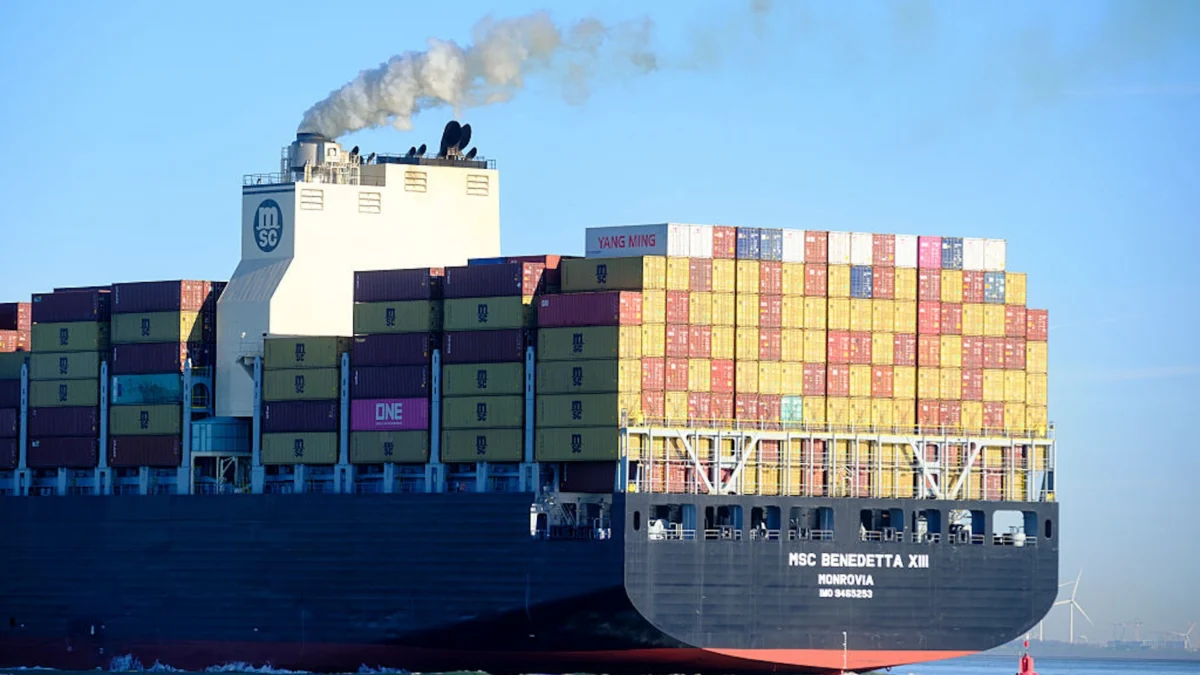
The international maritime sector, a cornerstone of the global economy responsible for transporting approximately 90 percent of all traded goods, stands at a critical crossroads. For decades, the giant vessels that crisscross the world’s oceans—delivering everything from electronics and apparel to jet fuel and raw materials—have relied on some of the most carbon-intensive fuels in existence. This reliance on "bunker fuel," essentially the viscous sludge remaining after the crude oil refining process, has made the shipping industry a significant contributor to the climate crisis, accounting for roughly 3 percent of total global carbon emissions. This figure, while seemingly small, represents nearly one billion metric tons of carbon dioxide annually, a footprint larger than that of many industrialized nations.
In a recent and high-stakes gathering of United Nations member states in London, the future of this sector’s environmental footprint was the primary focus of intense negotiation. The International Maritime Organization (IMO), the specialized UN agency charged with regulating global shipping, had previously been on the verge of adopting a landmark strategy known as the Net-Zero Framework (NZF). This framework’s centerpiece is a proposed per-ton fee on greenhouse gas emissions that exceed a specific threshold—a mechanism designed to incentivize the transition to cleaner energy sources. However, the path toward this ambitious goal has been fraught with political friction and diplomatic maneuvering, particularly from the United States.
The Resilience of the Net-Zero Framework
Despite concerted efforts to derail the original proposal, the most recent round of talks concluded with a surprising degree of momentum for the NZF. While the administration of the United States has spent months lobbying against the framework, threatening supportive nations with visa restrictions, trade tariffs, and increased port fees, the "watered-down" alternatives failed to gain significant traction. Instead, a slim but vocal majority of member states reaffirmed their commitment to the original vision of the NZF.
"A genuine spirit of collaboration and optimism pervaded the negotiations," observed Em Fenton, a senior director at Opportunity Green, a U.K.-based climate advocacy group that participated in the London sessions. Fenton noted that while there were clear factions seeking to stall progress, the majority of delegates remained focused on a unified global solution. This resilience suggests that a narrow but viable path remains for the adoption of a global carbon levy, even in the face of opposition from the world’s largest economy.
The U.S. opposition is rooted in concerns over domestic economic impacts. In official documents submitted to the IMO, American representatives argued that a carbon tax or "economic element" within the framework would place an undue burden on consumers and businesses by raising the cost of imported goods. The U.S. position was blunt, stating that the most appropriate path forward would be to end consideration of the Net-Zero Framework entirely. This stance has created a significant rift between the U.S. and many of its traditional allies, as well as developing nations that are disproportionately affected by climate change.
The Complexity of Maritime Geopolitics and Flag States
To understand why the NZF is so difficult to pass, one must look at the unique legal structure of international shipping. Under the rules of the IMO, regulations can be blocked by a coalition of countries that represent either one-third of the member states or a group of countries that control 50 percent of the world’s shipping tonnage. This "blocking arithmetic" gives outsized power to a handful of nations known as "flag states."
In the shipping industry, a vessel can be owned by a company in one country, managed by an entity in another, and registered—or "flagged"—in a third. This practice, often used for tax and regulatory advantages, has resulted in four countries—Liberia, Panama, the Bahamas, and the Marshall Islands—accounting for nearly half of the world’s registered shipping tonnage. Because some of these key flag states have voiced opposition to the NZF, the threshold for blocking the measure is dangerously close.
Evelyne Williams, a research associate with the Center on Global Energy Policy at Columbia University, noted that the industry is already "in the neighborhood" of the 50 percent blocking threshold. However, she maintained a sense of "cautious optimism," noting that the framework has not been abandoned and continues to be the primary vehicle for discussion.
Industry Support for a Global Carbon Tax
In a paradoxical twist, while some governments are fighting the carbon levy, many of the world’s largest shipping companies are advocating for it. Industry giants and trade organizations, such as BIMCO, which represents a vast majority of the world’s shipping fleet, have expressed support for a uniform global tax. Their reasoning is pragmatic: shipping is a global business, and companies want to avoid a fragmented "patchwork" of regional regulations.
Currently, shippers are already beginning to navigate the European Union’s Emissions Trading System (ETS), which recently expanded to include maritime transport. Industry leaders fear that if the IMO fails to establish a global standard, other regions will follow the EU’s lead with their own unique rules, creating an administrative and financial nightmare for companies operating across multiple jurisdictions.
"Our industry needs the IMO as our global regulator," stated David Loosley, CEO and Secretary General of BIMCO. He emphasized that without a global consensus, regulations would be ineffective and fail to provide a "level playing field." For the industry, a predictable global fee is preferable to the uncertainty of varying regional mandates, as it allows for long-term investment in new, low-carbon technologies like green hydrogen, ammonia, and methanol-powered engines.
Tactics of Misinformation and Economic Alarmism
The negotiations in London were also marked by controversy regarding the data used to influence the debate. U.S. delegates reportedly distributed leaflets containing projections of the economic hardships that the NZF would impose on specific countries. One such handout focused on Peru, suggesting that compliance costs could reach nearly $800 million.
However, climate experts and independent analysts who reviewed these figures described them as misleading. They argued that the analysis utilized outdated assumptions and failed to account for the potential reinvestment of carbon levy revenues into maritime infrastructure and green energy transitions in developing nations. Em Fenton of Opportunity Green characterized the distribution of this data as a "clear effort" by a country acting in its own self-interest to use misinformation to the detriment of others. The U.S. State Department has not officially commented on these allegations of economic exaggeration.
Chronology of the Decarbonization Effort
The current struggle is the latest chapter in a multi-year effort to green the high seas. The timeline of these negotiations reveals the slow and often frustrating pace of international maritime policy:
- April 2018: The IMO adopts its initial strategy on the reduction of greenhouse gas emissions from ships, aiming to reduce total annual emissions by at least 50 percent by 2050 compared to 2008 levels.
- July 2023: Under pressure from climate-vulnerable nations and environmental groups, the IMO adopts a revised strategy, committing to reach net-zero GHG emissions by or around 2050, with "indicative checkpoints" for 2030 and 2040.
- Late 2023: The Trump administration intensifies its opposition, leading to a one-year delay in the vote to adopt the specific mechanisms of the Net-Zero Framework.
- April 2024: Recent London meetings show a slim majority of member states still favor the NZF over weaker alternatives proposed by nations like Japan, Liberia, and Argentina.
- November 2024: A critical session is scheduled where the technical details of the framework, including the distribution of funds and the exact carbon price, will be debated. This is the earliest possible window for a definitive vote on the adoption of the framework.
Broader Implications and the Path to November
The stakes for the upcoming November meeting could not be higher. If the Net-Zero Framework is adopted, it would represent one of the most significant pieces of global climate policy ever enacted, creating a massive pool of capital that could be used to fund the decarbonization of the global South’s maritime infrastructure. It would also provide the necessary market signal for shipbuilders and engine manufacturers to move away from fossil fuel designs.
If the framework fails, however, the shipping industry’s emissions are projected to grow as global trade continues to expand. This would likely trigger a wave of unilateral regional regulations, increasing costs for consumers and creating trade tensions between blocs with different environmental standards.
The next few months will be characterized by intense bilateral negotiations and technical discussions. Key points of contention remain, such as how the revenue from the carbon fee will be distributed—whether it will stay within the shipping industry to fund research and development or be allocated to developing nations to help them adapt to climate change.
As the maritime world looks toward the November summit, the central question remains: can the collective will of a slim majority overcome the economic and political leverage of the world’s most powerful nation and the strategic blocking power of the major flag states? The answer will determine whether the "sludge-fueled" era of global trade is finally coming to an end, or if the shipping sector will remain a significant holdout in the global race to net-zero.










Leave a Reply