
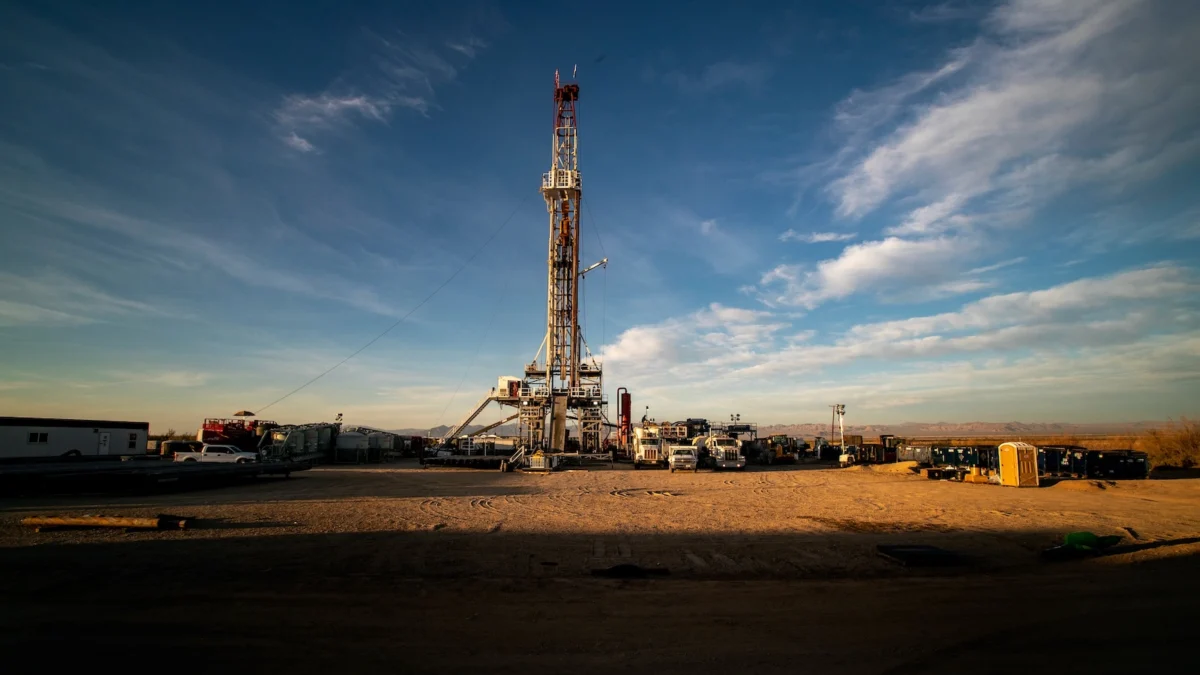
When the NASDAQ exchange opens on Wednesday morning, investors will be introduced to a new ticker symbol that many analysts believe marks a turning point for the American energy sector: FRVO. Fervo Energy, a leader in next-generation geothermal power, is moving forward with an initial public offering (IPO) that aims to raise approximately $1.8 billion. If successful, this debut would represent one of the largest renewable energy listings in the history of Wall Street, signaling a robust return of investor confidence in clean technology despite a volatile political and economic landscape.
The company’s move to go public comes at a critical juncture for the U.S. power grid. With the rapid expansion of artificial intelligence and the massive data centers required to support it, the demand for reliable, carbon-free "baseload" power has never been higher. Fervo Energy’s specialized approach to geothermal electricity—harnessing the earth’s internal heat to provide constant, 24/7 power—is being positioned as the missing piece of the renewable energy puzzle, offering a steady alternative to the intermittent nature of wind and solar.
The Mechanics of Next-Generation Geothermal Power
At its most fundamental level, geothermal energy is a simple concept: it involves tapping into the heat stored beneath the Earth’s crust to create steam, which then drives turbines to generate electricity. However, the traditional geothermal industry has long been limited by geography, restricted to "hot spots" where tectonic activity brings heat close to the surface, such as in parts of Iceland or California.
Fervo Energy is attempting to break these geographic constraints through "Enhanced Geothermal Systems" (EGS). By utilizing horizontal drilling techniques and fiber-optic sensing technology—innovations originally perfected by the shale oil and gas industry—Fervo can reach deeper and hotter rock formations that were previously inaccessible. This allows for the creation of artificial reservoirs where water can be injected, heated, and returned to the surface as steam, effectively making geothermal power viable in a much wider array of locations.
"Innovation is allowing these technologies to cover a wider variety of sites," noted Zainab Gilani, a geothermal analyst with the research firm Cleantech Group. The primary challenge remains cost. Currently, geothermal projects can cost upwards of $7,000 per kilowatt. Fervo’s goal is to leverage its technological breakthroughs to scale operations and eventually drive that price down to $3,000 per kilowatt. The success of the IPO is seen as a vital step in securing the capital necessary to reach that economy of scale.
A Chronology of Growth: From Nevada to Utah
Fervo’s journey to the NASDAQ has been defined by a series of successful technical demonstrations and high-profile partnerships. The company first proved its commercial viability at a pilot facility in Nevada. That project successfully deployed Fervo’s horizontal drilling technology to produce enough clean energy to power roughly 2,600 homes. While modest in scale, the Nevada project served as a "proof of concept" that convinced skeptics the technology could work outside of laboratory settings.
Building on that success, Fervo is currently constructing its flagship project, Cape Station, located in Beaver County, Utah. This facility is designed to be a massive leap forward, intended to produce more than 100 times the electricity of the Nevada site. Cape Station is slated to begin delivering power to the grid later this year, and its progress has been a magnet for major institutional and private investment.
The company’s backers include a "who’s who" of the tech and climate investment world. Bill Gates’ Breakthrough Energy Ventures has been a long-time supporter, viewing geothermal as a cornerstone of a zero-carbon future. Perhaps more significantly, Alphabet (the parent company of Google) has not only invested in Fervo but has also signed power purchase agreements to use Fervo’s geothermal energy to supply its energy-hungry data centers. This relationship highlights the growing synergy between the "Big Tech" AI boom and the "Clean Tech" energy revolution.
Market Dynamics: The AI Boom and Global Instability
The timing of the Fervo IPO is influenced by two major external factors: the insatiable energy appetite of the artificial intelligence sector and the geopolitical instability affecting global energy prices.
As tech giants like Google, Microsoft, and Amazon race to build out the infrastructure for AI, they have run into a significant obstacle: the limitations of the U.S. power grid. Traditional renewable sources like solar and wind are valuable but require massive battery storage to provide the constant uptime required by data centers. Geothermal, which runs 24 hours a day regardless of weather conditions, offers a "firm" power solution that aligns perfectly with the needs of the tech industry.
Simultaneously, the ongoing conflict in Iran and broader Middle Eastern tensions have kept global energy prices high and volatile. This has created a renewed sense of urgency for domestic energy independence and stable pricing. Fervo recently responded to this heightened market interest by "upsizing" its IPO. Originally, the company planned to sell 55.6 million shares at a price between $21 and $24. However, citing strong demand from institutional investors, the target was boosted to 70 million shares at an estimated price of $25 to $26. This revised offering values the company at approximately $7.4 billion.
Political Headwinds and the Resilience of Clean Tech
The Fervo IPO is also being closely watched as a bellwether for the clean energy industry’s ability to survive political shifts. The industry saw a massive influx of support following the 2022 Inflation Reduction Act (IRA), which provided billions in subsidies and tax credits for green technologies. However, the political landscape has changed significantly.
In a move that sent shockwaves through the renewable sector, the return of Donald Trump to the presidency, supported by a new Congressional majority, led to the dismantling of large portions of the IRA. Many offshore wind projects were canceled, and federal policy shifted back toward a "fossil-fuel first" mandate. Despite this rollback, Fervo Energy has managed to maintain its momentum, recently securing $421 million in non-recourse project financing for Cape Station—a sign that private capital is willing to step in where federal support has receded.
"You’re in this situation where it is very obvious that the oil and gas sector is doing the best it can," said Jigar Shah, a former senior official at the Department of Energy and now a managing partner at Multiplier. "But the climate sector is the one that’s surging. There is a level of confidence coming to our sector… When you’re 90 percent of everything that gets added to the grid every year, you’re no longer ‘alternative’ energy."
Analysis of Implications and Future Outlook
The Fervo IPO follows the successful public debut of X-Energy, an Amazon-backed developer of small modular nuclear reactors, which raised $1 billion earlier this year and is now valued at over $9 billion. Together, these two IPOs suggest that the market is moving away from speculative "green" startups and toward companies that can provide industrial-scale, reliable baseload power.
However, significant risks remain. Experts like Rob Gramlich, president of the consultancy Grid Strategies, warn that while the technology is promising, it may still be years away from having a transformative impact on the national grid. "They’re just not here yet on any large scale," Gramlich noted, suggesting that geothermal’s true "golden age" might not arrive until the 2040s.
For investors, the Fervo debut is a high-stakes bet on the future of the American energy transition. If Fervo can meet its goals of lowering costs and successfully scaling the Cape Station project, it could unlock a nearly limitless source of clean energy beneath the feet of the American public.
As Gernot Wagner, a climate economist at Columbia Business School, succinctly put it: "This is a very, very big deal. Money speaks." On Wednesday morning, as the ticker FRVO begins to blink on screens across Wall Street, the volume of that money will provide a definitive answer on whether the world is ready to embrace geothermal as a primary pillar of the global power supply.










Leave a Reply