
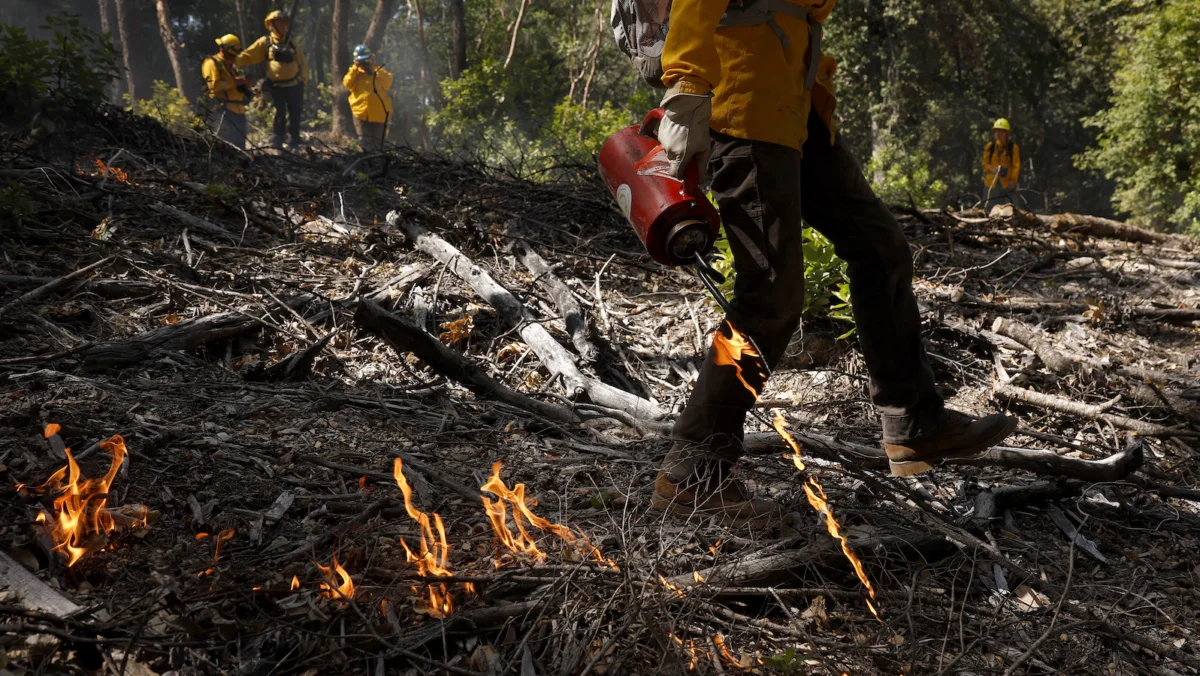
The United States Forest Service has long maintained a complex relationship with the nation’s vast woodlands, balancing the needs of conservation, industry, and public safety. For decades, the agency has employed various "fuel treatment" strategies—clearing underbrush, thinning smaller trees, and conducting prescribed burns—to mitigate the catastrophic potential of wildfires. While these methods have deep roots in Indigenous land management practices and have been lauded by ecologists for their biological benefits, a landmark study published in the journal Science has finally attached a definitive price tag to their efficacy. Researchers have found that proactive forest management is not just an ecological necessity but a high-yield financial investment, returning nearly four dollars for every dollar spent by the federal government.
The Economic Efficiency of Fuel Treatments
The study, led by Frederik Strabo, an economist at the University of California, Davis, offers a rigorous quantitative analysis of an area that has historically lacked hard data: the direct economic return on investment (ROI) for wildfire prevention. According to the research, every dollar the U.S. Forest Service spent on fuel treatments between 2017 and 2023 avoided approximately $3.73 in damages related to smoke exposure, property destruction, and carbon emissions.
"A lot of people have suggested that there could be potential economic benefits," Strabo noted regarding the motivation behind the research. "But it’s been a pretty understudied area." By bridging the gap between forestry science and fiscal accounting, the study provides a new framework for policymakers who must justify the high costs of land management in an era of tightening federal budgets.
The research team analyzed high-resolution data from 285 wildfires across 11 Western states. These specific fires were chosen because they burned through areas where the Forest Service had previously implemented fuel reduction measures. The results were stark: on average, these treatments decreased the total area burned by 36 percent. More importantly, they reduced the amount of land burned at "moderate to high severity"—the type of fire that kills mature trees and sterilizes soil—by 26 percent.
A Chronology of Wildfire Management: From Suppression to Prevention
To understand the significance of these findings, one must look at the historical trajectory of American wildfire policy. For much of the 20th century, the U.S. Forest Service operated under a policy of "total suppression," most famously exemplified by the "10 a.m. policy" established in 1935, which dictated that every fire should be suppressed by 10 a.m. the day after it was reported.
While intended to protect timber resources and communities, this approach ignored the natural role of fire in Western ecosystems. By preventing small, frequent fires, the government inadvertently allowed "fuel loads"—dry brush, dead limbs, and overcrowded saplings—to accumulate to unnatural levels. This created a "tinderbox" effect that, when coupled with a warming climate, led to the era of the "megafire."
In contrast, Indigenous nations across North America practiced cultural burning for centuries, using low-intensity fires to maintain ecosystem health and prevent the very catastrophes the modern U.S. now faces. The shift back toward "active management" began in earnest in the late 20th century, culminating in the Forest Service’s 2022 10-year wildfire plan, which sought to treat an additional 20 million acres of National Forest land. The Strabo study acts as a retrospective validation of this strategic pivot, suggesting that the "fire paradox"—where suppressing fire today leads to worse fires tomorrow—can be solved through calculated financial investment in prevention.
Breaking Down the Savings: Smoke, Property, and Carbon
The $3.73 ROI is derived from three primary categories of avoided harm. The researchers modeled the economic benefits across health, infrastructure, and climate metrics to reach a total estimated savings of billions of dollars.
1. Health and Workforce Productivity ($1.39 Billion)
The largest share of the avoided costs comes from the mitigation of wildfire smoke. Wildfire smoke is a complex cocktail of fine particulate matter (PM2.5) that can travel thousands of miles, causing respiratory and cardiovascular issues. The study estimates that fuel treatments prevented $1.39 billion in losses tied to healthcare costs and lost labor productivity. When fires burn at lower intensities due to treatment, they produce less toxic smoke, directly benefiting the health of millions of citizens far removed from the fire line.
2. Structural Damage ($895 Million)
As the "Wildland-Urban Interface" (WUI) expands, more homes and businesses are at risk. The study found that fuel treatments prevented $895 million in property damage. By slowing the advance of a fire and reducing its heat intensity, these treatments give firefighters a "holding line" where they can more effectively defend structures.
3. Carbon Emissions ($503 Million)
In an era of climate change, wildfires have become significant sources of carbon dioxide. Massive, high-intensity fires can release as much carbon in a few weeks as several million cars do in a year. The study calculated that by reducing the severity and size of fires, fuel treatments saved $503 million in "social costs" of carbon emissions, helping to preserve the forest’s role as a carbon sink rather than a carbon source.
The research also highlighted an "economy of scale." Treatments covering more than 2,400 acres were found to be the most cost-effective, suggesting that landscape-level interventions are more efficient than small, fragmented patches of clearing.
Divergent Perspectives: The Value of the Intangible
Despite the impressive figures, the study has sparked a debate among experts regarding the "monetization" of public lands. David Calkin, a former Forest Service research scientist, described the analysis as "novel" but expressed reservations about the math.
"A lot of the values of fuel management are non-market," Calkin argued. He pointed out that things like biodiversity, watershed protection, and public recreation access are notoriously difficult to quantify. Calkin also warned that focusing on ROI might lead to overestimating the protection of property, noting that "the best way to protect a structure is at the structure itself," rather than through remote forest thinning.
Conversely, Strabo noted that his study might actually be an underestimate. The research did not include the multi-billion dollar outdoor recreation industry, which suffers when national parks and forests are closed due to fire or choked by smoke. "We’re only capturing a specific subset of benefits," Strabo said, suggesting the true ROI could be significantly higher.
Political Shifts and the Future of the Forest Service
The release of this study comes at a time of significant political transition. The federal government’s approach to forest management has undergone a visible shift following the return of Donald Trump to the presidency. While the 2022 10-year plan focused heavily on prescribed burns and thinning, the current administration has signaled a move back toward aggressive suppression.
In 2025, the Forest Service reduced vegetation on approximately 1 million fewer acres than in 2024. A spokesperson for the agency attributed this decline to "elevated wildfire activity in the Southeast," which diverted resources. However, critics and environmental analysts worry the agency is being pressured to prioritize "full suppression" over the proactive work that the Science study proves is more cost-effective.
Heather Stricker, a climate and lands analyst with the Sierra Club, argued that the administration’s focus on suppression is "misguided." She noted that while suppression sounds protective, it often backfires by allowing fuel to build up further. "This paper reiterated a lot of previous research, but then took it a step further to quantify the cost savings," Stricker said.
There is also growing concern over the administration’s plans to increase logging on federal lands. Environmental groups fear that "fuel treatment" could become a euphemism for commercial clear-cutting of old-growth forests, which are more fire-resistant than the young, even-aged stands that often replace them. The study itself acknowledges this tension, noting that "public pressure and risk aversion" often skew resources toward suppression because it is more visible and politically palatable than the slow, quiet work of prevention.
Implications for Policy and Climate Resilience
The findings of the Strabo study suggest that the United States is currently underfunding a critical public good. If fuel treatments provide a nearly 4-to-1 return on investment, the current funding gap represents a massive missed opportunity for both the treasury and the environment.
The 2021 Caldor Fire near Lake Tahoe serves as a primary example in the research. While the fire was devastating, previous fuel treatments were credited with slowing the fire’s run toward South Lake Tahoe, allowing for evacuations and preventing a total urban catastrophe. The study suggests that without these treatments, the "economically consequential" fires of the last decade would have been even more disastrous.
As wildfire seasons become longer and more intense due to global temperature rises, the debate over forest management will only intensify. The UC Davis research provides a new "missing link" for decision-makers, offering a financial justification for moving away from the reactive "firefighting" model and toward a proactive "land stewardship" model.
For the Forest Service, the challenge remains: how to balance the immediate political pressure to extinguish every flame with the long-term economic and ecological reality that fire is an inevitable part of the landscape—one that is far cheaper to manage than it is to fight. As Strabo concluded, "We could have these economic and ecological benefits if we scaled it up. It’s a critically underfunded public good."









Leave a Reply