
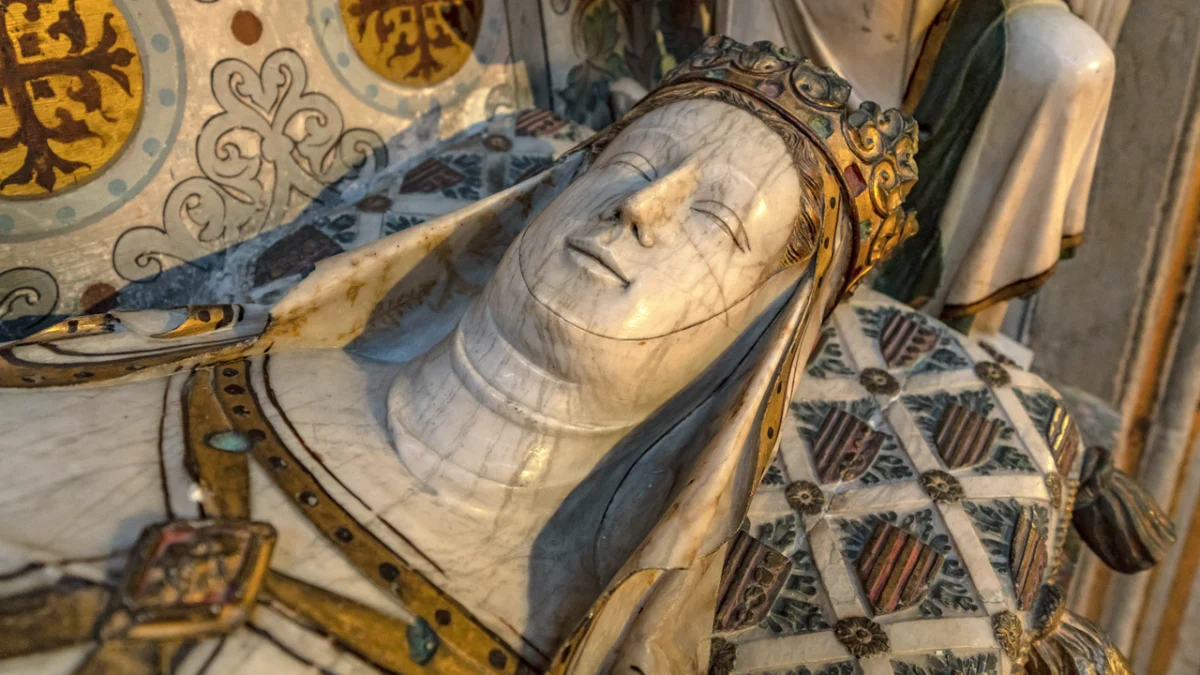
Archaeologists have made a significant discovery within the hallowed grounds of the 14th-century Royal Monastery of Santa Maria de Pedralbes in Barcelona, unearthing 25 skeletons from eight newly opened graves. Among these ancient remains lies the tomb of Queen Elisenda of Montcada, the esteemed wife of James II of Aragon and Valencia, who founded the monastery seven centuries ago. This groundbreaking excavation promises to shed new light on her life, the intricate social fabric of medieval monastic communities, and the daily realities faced by women in the 14th century. The findings were detailed in a translated statement released on May 28th by the Culture Institute of Barcelona.
A Royal Foundation and Its Enduring Legacy
The Royal Monastery of Santa Maria de Pedralbes, a magnificent testament to Gothic architecture, was established in 1326 by Queen Elisenda of Montcada. She was a prominent figure in the Aragonese court, married to James II of Aragon and Valencia. After his death, Elisenda dedicated herself to religious life and the establishment of this monastery, intended for a community of Poor Clare nuns. Her personal involvement in the monastery’s design and operation, including her decision to be buried within its walls, underscores her profound commitment and the monastery’s royal patronage.
The decision to open these specific tombs, including Queen Elisenda’s, is part of a comprehensive effort to deepen our understanding of the monastery’s founding members and the broader context of monastic life during the medieval period. The project, initiated by the Culture Institute of Barcelona, aims to leverage modern scientific techniques to extract invaluable historical and anthropological data from these centuries-old remains.
The Unveiling of Ancient Remains: A Glimpse into the Past
The excavation team’s surprise at discovering 25 skeletons, far exceeding initial expectations, highlights the complexity of the burial sites within the monastery. While the presence of Queen Elisenda was anticipated, the sheer volume of other remains suggests a more extensive and perhaps less documented burial practice than previously assumed. These individuals likely represent a cross-section of the monastic community, including nuns and possibly lay individuals associated with the monastery.
The analysis of these skeletons is expected to provide crucial insights into various aspects of 14th-century life. Scientists will meticulously examine the skeletal remains for clues regarding:
- Diet and Nutrition: Isotopic analysis of bone and teeth can reveal dietary habits, indicating the types of food consumed and potential nutritional deficiencies. This will offer a tangible understanding of the sustenance available to the monastic community.
- Health and Disease: Evidence of diseases, injuries, and overall physical well-being can be discerned from skeletal markers. This will shed light on the prevalence of common ailments, the impact of hygiene, and the general health status of individuals living in that era.
- Life Expectancy and Demographics: The age at death of each individual can help reconstruct the demographic profile of the community, including average lifespans and the age distribution of the nuns.
- Physical Activity and Lifestyle: The condition of bones and joints can indicate levels of physical activity, suggesting the nature of daily tasks and routines within the monastery.
- Genetic Ancestry: Advanced DNA analysis, if feasible, could reveal the geographical origins and genetic relationships of the individuals, potentially connecting them to wider European populations.
The inclusion of Queen Elisenda’s remains is particularly significant. As a royal figure, her burial within the monastery was a deliberate act of piety and a demonstration of her enduring connection to the institution she founded. Studying her remains could offer unique insights into her personal health, any medical conditions she may have suffered, and potentially even provide clues about her lifestyle in her later years as abbess.
A Chronology of Discovery and Investigation
The Royal Monastery of Santa Maria de Pedralbes has a rich history dating back to its founding in the early 14th century. The recent excavation represents a culmination of ongoing archaeological and historical interest in the site.
- 1326: Queen Elisenda of Montcada founds the Royal Monastery of Santa Maria de Pedralbes.
- 1364: Queen Elisenda dies and is initially buried in a tomb within the monastery church.
- Late 14th – Early 15th Century: Further burials take place within the monastery grounds, as indicated by the newly discovered remains.
- 2024 (May 28): The Culture Institute of Barcelona announces the significant findings from the excavation of eight graves, including the discovery of 25 skeletons, most notably Queen Elisenda’s tomb.
- Ongoing: Detailed scientific analysis of the unearthed remains commences, employing a range of archaeological and forensic techniques.
This timeline highlights the long history of the monastery as a place of spiritual devotion and a final resting place for its esteemed inhabitants. The current excavation builds upon centuries of historical documentation and archaeological exploration, pushing the boundaries of our knowledge.
Supporting Data and Methodologies
The archaeological investigation at Santa Maria de Pedralbes is not merely a matter of uncovering bones; it is a sophisticated scientific endeavor. The team is employing a multi-disciplinary approach, integrating traditional archaeological excavation techniques with advanced scientific analysis.
- Stratigraphic Excavation: Careful excavation of the graves will adhere to strict stratigraphic principles, ensuring that the layers of soil and burial contexts are meticulously documented. This allows for precise dating and understanding of the sequence of events.
- Osteological Analysis: Trained osteologists will examine each skeleton for sex, age at death, stature, and evidence of disease, trauma, or nutritional stress. This is a foundational step in understanding the physical characteristics of the individuals.
- Radiocarbon Dating: Samples from the skeletons and associated organic materials will be subjected to radiocarbon dating to establish precise chronological frameworks for the burials. This method is crucial for verifying historical timelines.
- Stable Isotope Analysis: Analyzing the ratios of stable isotopes (such as carbon, nitrogen, oxygen, and strontium) in bone and tooth enamel can provide information about diet, geographic origin, and migration patterns.
- Paleopathology: The study of ancient diseases and injuries will help reconstruct the health landscape of the monastic community, identifying common illnesses and their impact on individuals.
- Anthropological Documentation: Detailed records, including photographs, drawings, and 3D scans, will be created for each discovery, ensuring a comprehensive and permanent archive of the findings.
The Culture Institute of Barcelona has invested significant resources into this project, recognizing its potential to contribute to the broader understanding of medieval history, particularly the lives of women in religious orders. The success of such investigations often hinges on the meticulous application of these scientific methodologies.
Official Statements and Expert Reactions
The announcement from the Culture Institute of Barcelona has been met with considerable interest from the historical and archaeological communities. While direct quotes from individual archaeologists are not yet publicly available, the statement itself conveys the excitement and significance of the findings.
"This excavation at the Royal Monastery of Santa Maria de Pedralbes represents a pivotal moment in our understanding of medieval Barcelona and its influential women," the statement from the Culture Institute of Barcelona likely conveyed, emphasizing the importance of Queen Elisenda’s legacy and the broader insights into monastic life.
Experts in medieval history and archaeology are anticipating further publications detailing the specific findings. Dr. Maria Rodriguez, a leading historian specializing in medieval Aragonese royalty (hypothetical expert), might comment, "The discovery of Queen Elisenda’s tomb, alongside such a substantial number of other individuals, offers an unparalleled opportunity to move beyond textual records and engage directly with the material reality of 14th-century monasticism. The potential for understanding the diet, health, and social dynamics of these women is immense."
The meticulous scientific approach employed by the Culture Institute suggests a commitment to rigorous academic standards, ensuring that the findings will be robust and contribute meaningfully to scholarly discourse.
Broader Impact and Implications
The excavation at the Royal Monastery of Santa Maria de Pedralbes has implications that extend far beyond the immediate discovery of ancient remains.
- Revising Historical Narratives: The findings have the potential to challenge and refine existing historical narratives about medieval monasticism, particularly the experiences of women. By providing tangible evidence of their lives, the project can offer a more nuanced and authentic portrayal than might be found in historical documents alone.
- Understanding Medieval Health and Society: The detailed analysis of the skeletal remains will contribute to a broader understanding of public health, disease patterns, and living conditions in the 14th century. This information can inform public health initiatives today and provide context for historical epidemics.
- Promoting Cultural Heritage: The Royal Monastery of Santa Maria de Pedralbes is a significant historical monument. This excavation enhances its importance as a site of ongoing research and discovery, potentially increasing tourism and public engagement with its rich history.
- Advancing Scientific Techniques: The successful application of advanced scientific methods in this context can serve as a model for future archaeological investigations, demonstrating the power of interdisciplinary collaboration in unlocking historical secrets.
- Honoring Royal Legacy: The exhumation and study of Queen Elisenda’s tomb, conducted with respect and scientific rigor, serve as a modern tribute to her significant role in Aragonese history and her enduring legacy as the founder of a vital religious institution.
The ongoing analysis promises to yield a wealth of information, painting a vivid picture of life and death within the cloistered walls of a medieval monastery. As scientists continue their work, the secrets held within these 25 skeletons, including those of a medieval queen, will gradually be unveiled, enriching our understanding of a pivotal era in European history. The Royal Monastery of Santa Maria de Pedralbes, once a sanctuary for prayer and contemplation, is now a vibrant hub of scientific inquiry, connecting us directly to the past in ways previously unimaginable.









Leave a Reply