
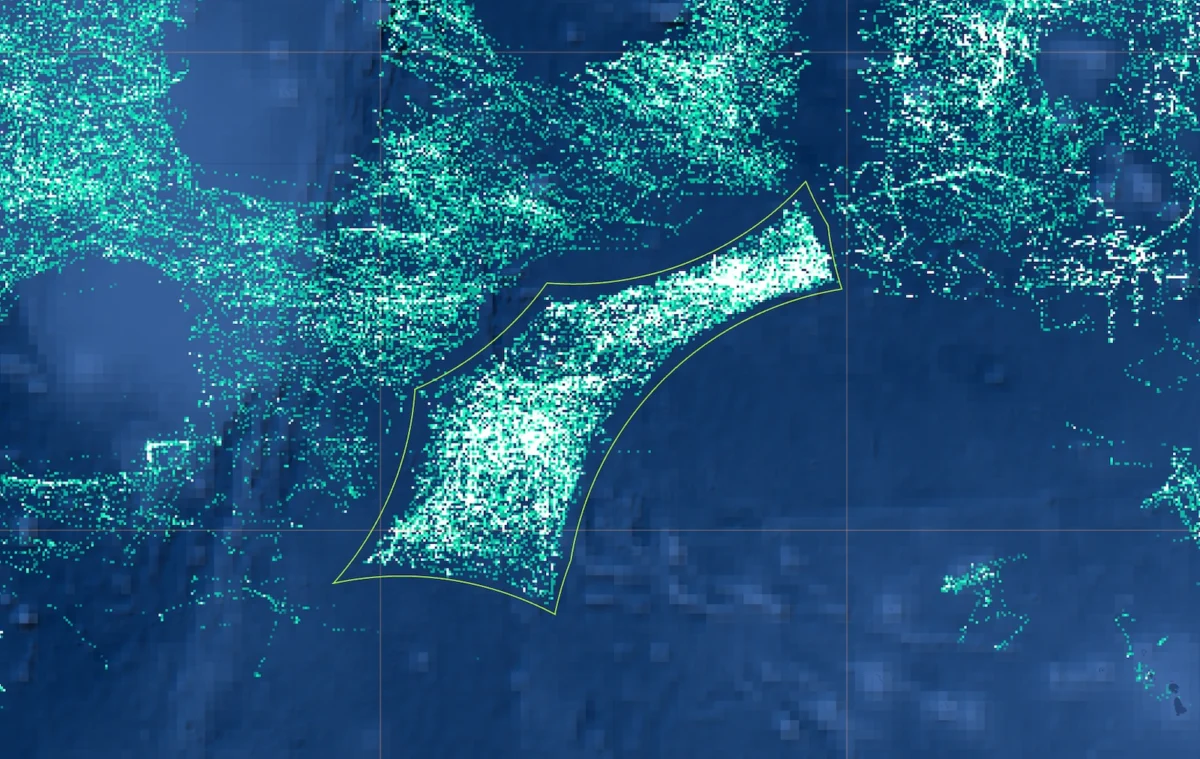
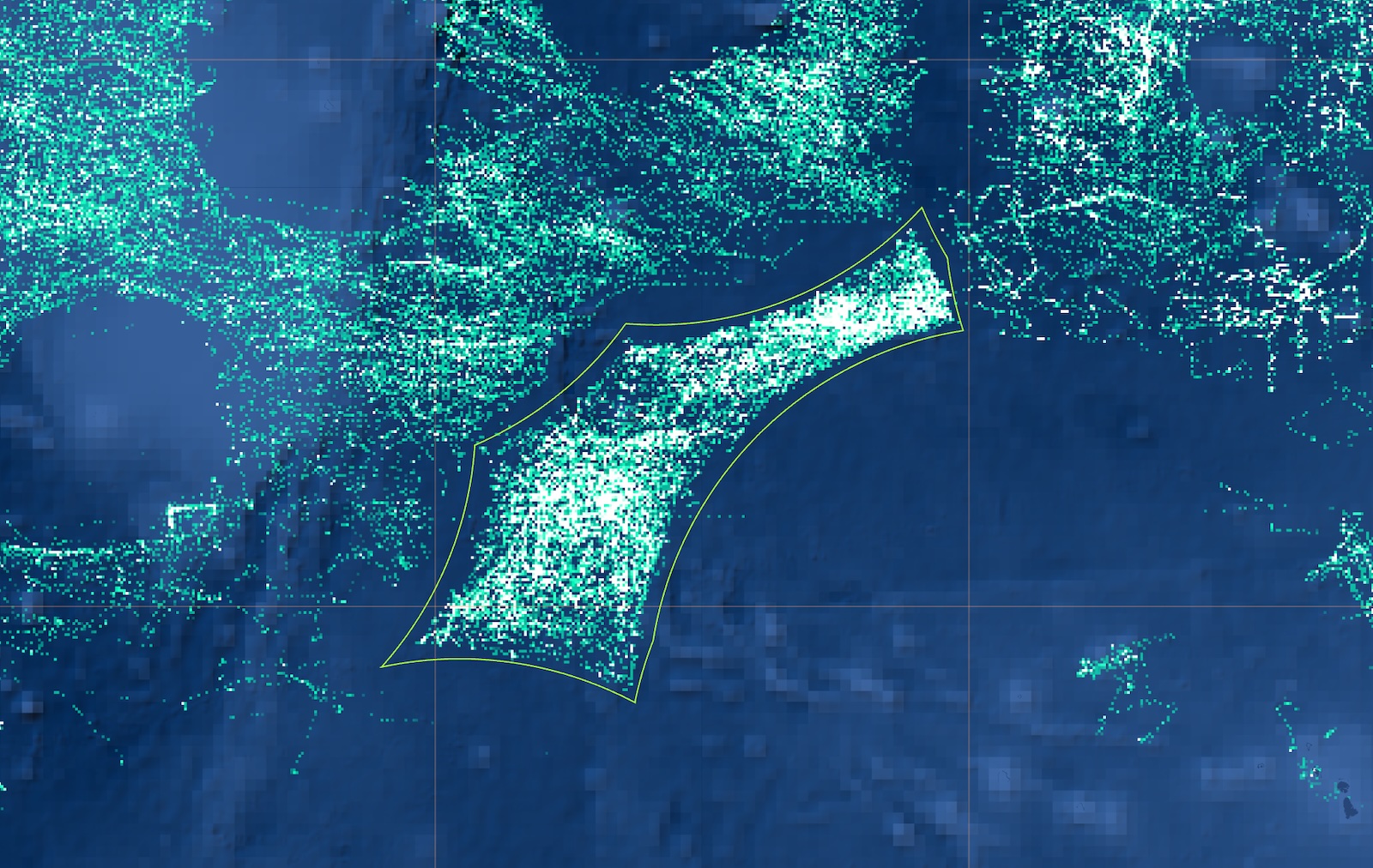
In a move that has reignited global tensions over the future of the ocean floor, a California-based startup has applied for United States government authorization to explore nearly 25 million acres of international waters for mineral extraction. The company, American Deep Sea Minerals, is targeting a specific region of the Pacific Ocean known as Eastern High Seas Pocket 3, an area of the high seas entirely encircled by the exclusive economic zones (EEZs) of French Polynesia, the Cook Islands, and Kiribati. This application marks a significant escalation in the race to secure critical minerals and highlights a growing rift between the United States and the international community regarding the governance of the deep sea.
The proposed exploration area is a vital corridor for global fisheries, hosting significant populations of albacore, yellowfin, and bigeye tuna. Dozens of commercial fishing vessels traverse these waters annually, supporting the economies of neighboring Pacific nations. The sudden interest in mining this region for manganese, cobalt, nickel, and copper—essential components for electric vehicle batteries and advanced military hardware—has raised alarms among marine scientists, environmental advocates, and regional leaders who fear the ecological and economic consequences of industrial activity in such a sensitive environment.
The Legal Framework and a History of Divergence
The application submitted by American Deep Sea Minerals represents a direct challenge to the established international order of ocean governance. Under the United Nations Convention on the Law of the Sea (UNCLOS), the International Seabed Authority (ISA) is the sole regulatory body tasked with managing mineral-related activities in the "Area," which refers to the seabed and subsoil beyond the limits of national jurisdiction. The ISA operates on the principle that the high seas are the "common heritage of humankind," requiring that any benefits derived from deep-sea mining be shared globally.
However, the United States has never ratified UNCLOS. While the U.S. generally recognizes the treaty’s provisions as customary international law, it has maintained a separate legal path for its own companies since the late 20th century. In 1980, during the Carter administration, Congress passed the Deep Seabed Hard Mineral Resources Act (DSHMRA). This legislation was intended as an interim measure to allow American firms to begin exploration while UNCLOS was being negotiated. Decades later, with the treaty still unratified by the U.S. Senate, the Trump administration has revitalized this domestic law to bypass the ISA’s ongoing negotiations.
The Trump administration’s stance, reiterated in early 2024, asserts that the U.S. does not need international permission to authorize seabed mining. By processing applications under DSHMRA, the U.S. is effectively creating a parallel regulatory system, a move that critics argue undermines decades of diplomatic efforts to ensure a unified approach to protecting the deep ocean.
Profile of the Applicant: American Deep Sea Minerals
Despite the scale of its 25-million-acre request, American Deep Sea Minerals remains an enigmatic entity. The company, led by San Francisco-based financial analyst Graham Goulet, does not currently possess the specialized ships, robotic harvesters, or processing infrastructure required for deep-sea operations. This lack of physical assets has led legal experts to characterize the firm as an "idea company" or a speculative venture.
Coalter Lathrop, a specialist in international ocean law, noted that the company’s strategy mirrors land speculation. By securing a U.S.-backed license for a massive swath of the ocean floor for a relatively modest application fee of $100,000, the company’s valuation could skyrocket, allowing it to later partner with or sell its rights to established industrial giants with the necessary technical expertise. Goulet, however, maintains that the company is developing its exploration program in collaboration with experts in marine geology, offshore engineering, and environmental science. The company recently hired Wouter Duijnstee, an environmental engineer with experience at Allseas, a major offshore contractor, suggesting a move toward technical feasibility.

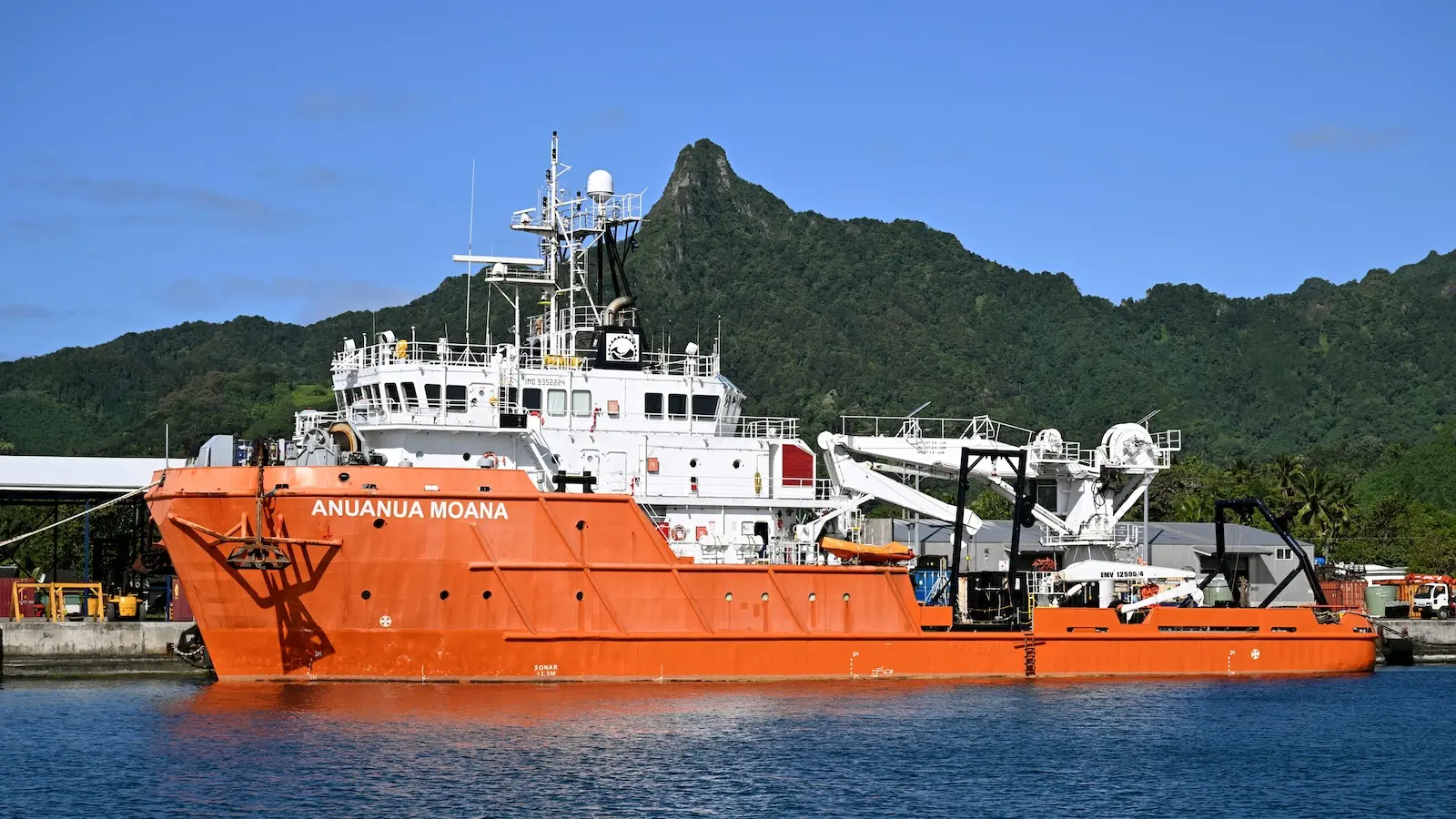
The company’s application, which is open for public comment through August 3, indicates an intent to charter the MV Anuanua Moana, a research vessel owned by the Cook Islands. This detail underscores the complex web of relationships forming in the region, as the startup seeks to utilize local resources to explore international waters.
A Region Divided: Economic Necessity vs. Conservation
The Pacific nations neighboring the proposed mining site are currently navigating a difficult choice between environmental preservation and economic development. This disparity is most evident in the contrasting policies of French Polynesia and its neighbors, the Cook Islands and Kiribati.
French Polynesia has emerged as a global leader in ocean conservation. Under the leadership of President Moetai Brotherson, the territory has established the world’s largest contiguous marine protected area, Tainui Atea, and enacted a total ban on seabed mining within its waters. Brotherson has been vocal in his opposition, stating that mining the "cradle of life" is an unacceptable risk to the planet. French President Emmanuel Macron has echoed this sentiment, asserting that the deep sea is "not for sale."
In contrast, the Cook Islands and Kiribati have shown a greater willingness to explore the potential of the industry. For these nations, the revenue generated from polymetallic nodules—fist-sized lumps of ore found on the seafloor—could be "transformational." In the Cook Islands, where the average annual income is approximately $9,000, and in Kiribati, where it is roughly $3,000, the prospect of mining royalties offers a path to economic independence and climate change adaptation funding. Prime Minister Mark Brown of the Cook Islands has argued that the minerals are necessary for the global green energy transition and that his nation has a right to benefit from its natural resources.
Scientific Concerns and Environmental Risks
The scientific community remains largely cautious, if not outright opposed, to the commencement of commercial mining. The primary concern involves the disruption of the benthic environment and the creation of sediment plumes. When mining machines crawl along the seafloor, they kick up clouds of silt that can remain suspended for long periods and travel hundreds of miles with ocean currents.
Recent studies have highlighted several potential catastrophic impacts:
- Food Web Disruption: Research published in Nature Communications suggests that mining waste released near the surface could starve zooplankton, the foundation of the marine food web. This would have a cascading effect, eventually reducing the populations of commercially vital species like tuna.
- Toxicity: The extraction process can release heavy metals and other toxins into the water column, potentially contaminating seafood and harming marine mammals.
- Biodiversity Loss: Deep-sea ecosystems are among the least understood on Earth. Scientists estimate that mining could reduce the abundance and diversity of life on the ocean floor by at least one-third, with many species likely to go extinct before they are even discovered.
- Carbon Sequestration: There are concerns that disturbing the seabed could interfere with the ocean’s ability to store carbon, potentially exacerbating global warming.
Indigenous Perspectives and Colonial Boundaries
For many Indigenous Pacific Islanders, the debate over EEZs and international waters is viewed through a lens of colonial history. Solomon Kahoʻohalahala, a Native Hawaiian activist and cultural practitioner, has argued that the boundaries drawn by the UN and modern states do not reflect the reality of the ocean. "The ocean doesn’t know any boundaries," Kahoʻohalahala has stated, emphasizing that Pacific peoples have a genealogical and spiritual connection to the sea that transcends legal jurisdictions.
Advocates point out that the legal frameworks governing the ocean were largely created by continental powers, often excluding the voices of the island communities that are most dependent on the sea. They argue that any activity in the high seas that impacts the health of neighboring waters is a violation of their rights and traditional knowledge.
Future Implications and Geopolitical Consequences
The approval of American Deep Sea Minerals’ application would set a significant precedent. If the United States begins issuing licenses in the high seas unilaterally, it could trigger a "gold rush" where other non-UNCLOS nations or even member states decide to bypass the ISA’s regulatory framework. This would likely lead to a fragmented and poorly regulated industry, increasing the risk of environmental disasters and international legal disputes.
Furthermore, there is the issue of sovereign rights over the extended continental shelf. Under UNCLOS, countries can claim rights to the seabed beyond 200 miles if they can prove their continental shelf extends that far. If French Polynesia or its neighbors successfully claim parts of the seabed in Pocket 3, any U.S.-issued license would become legally void under international law, creating a potential for high-seas standoffs.
As the ISA continues its negotiations in Jamaica this month, the world is watching to see if a consensus can be reached on a "Mining Code" that balances resource extraction with environmental protection. The American Deep Sea Minerals application serves as a reminder that as the global demand for minerals grows, the pressure to exploit the last frontier on Earth is becoming increasingly difficult to contain. The outcome will determine whether the deep ocean remains the "common heritage of humankind" or becomes the next arena for industrial exploitation and geopolitical rivalry.










Leave a Reply