
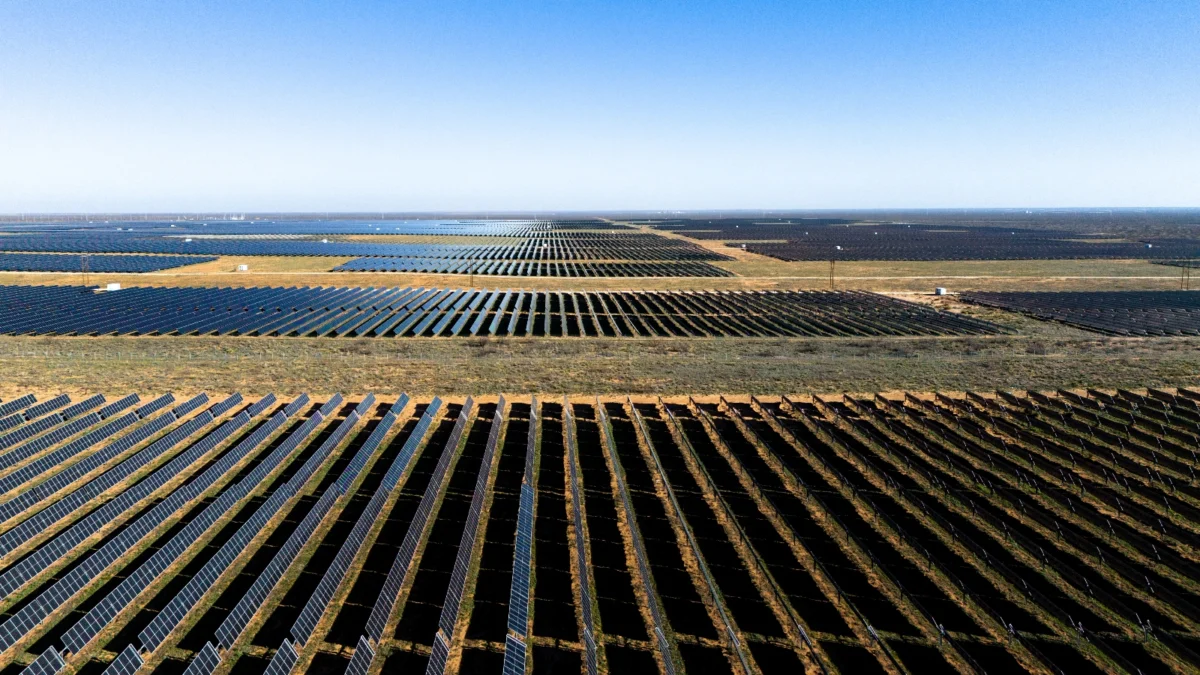
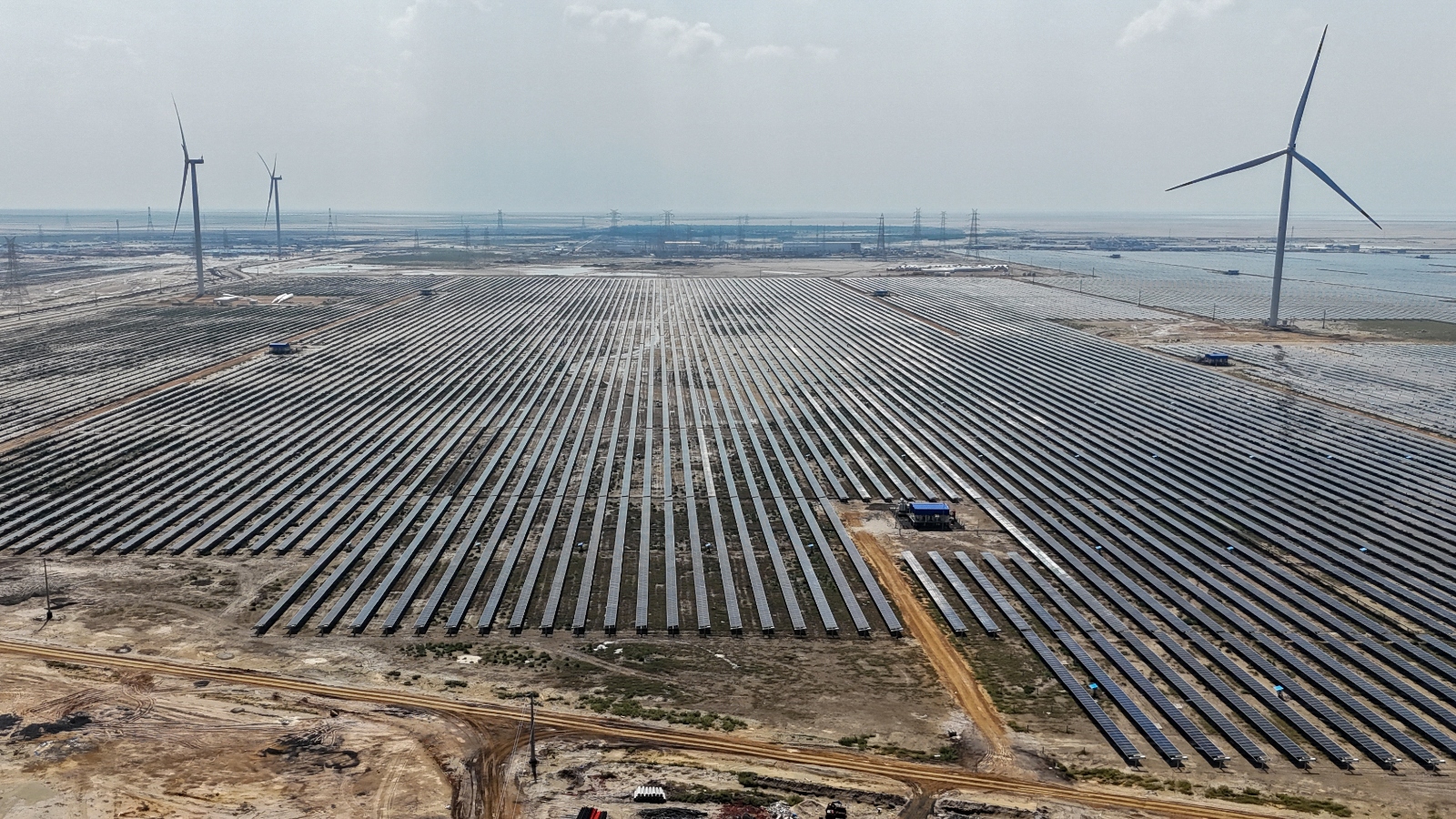
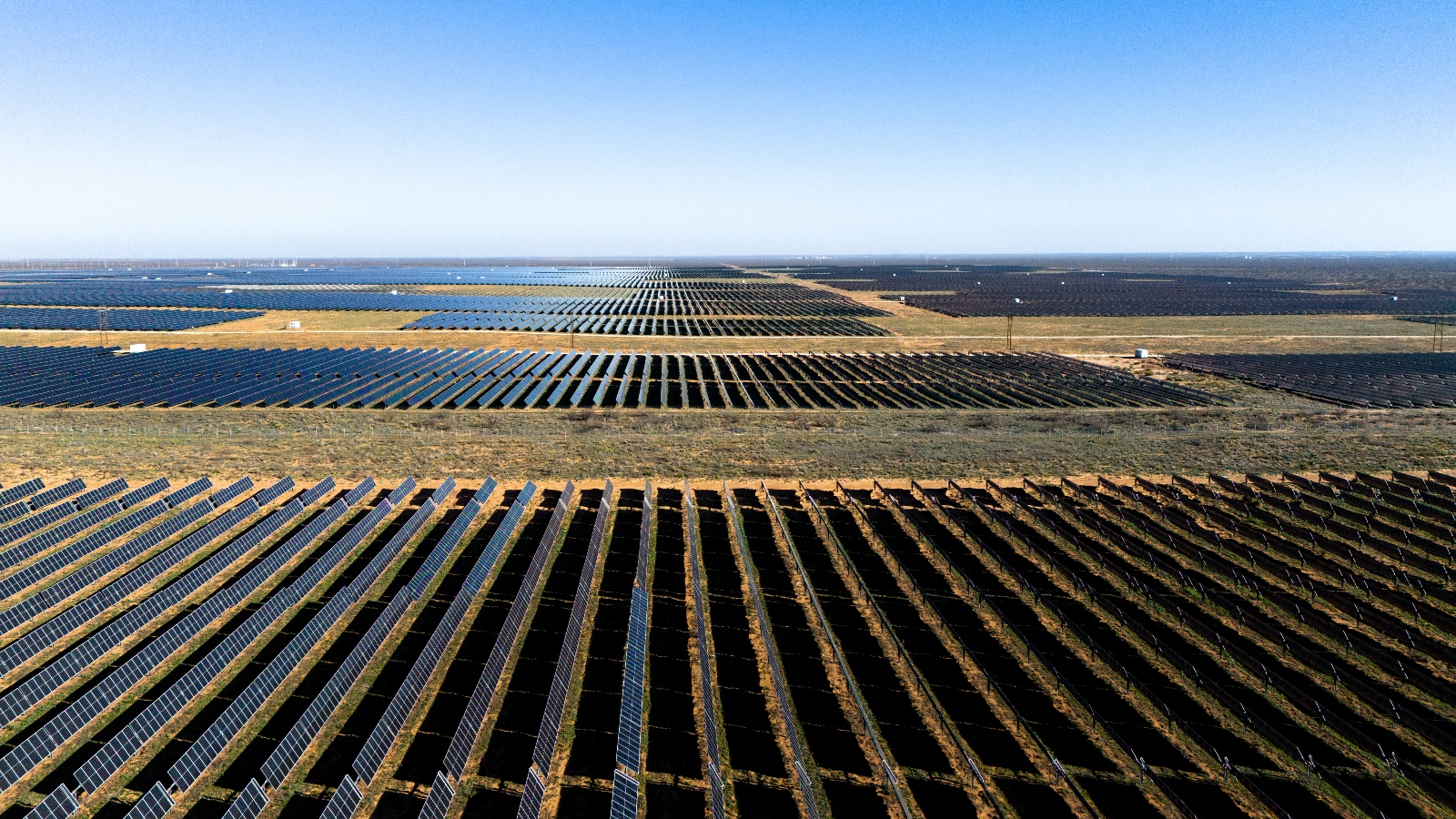
A vast expanse of solar panels is rapidly transforming one of the planet’s most inhospitable environments, the Rann of Kutch, into the epicenter of a global energy shift. By 2029, nearly 60 million solar modules will cover 280 square miles of this Indian salt desert, stretching to the edge of the international border with Pakistan. Known as the Khavda solar park, this monumental project is designed to become the world’s largest and most powerful supplier of solar electricity. With a projected generating capacity of 30 gigawatts, the facility will produce 30 times the power of a standard coal or nuclear plant—enough to meet the entire annual electricity needs of a nation like Austria.
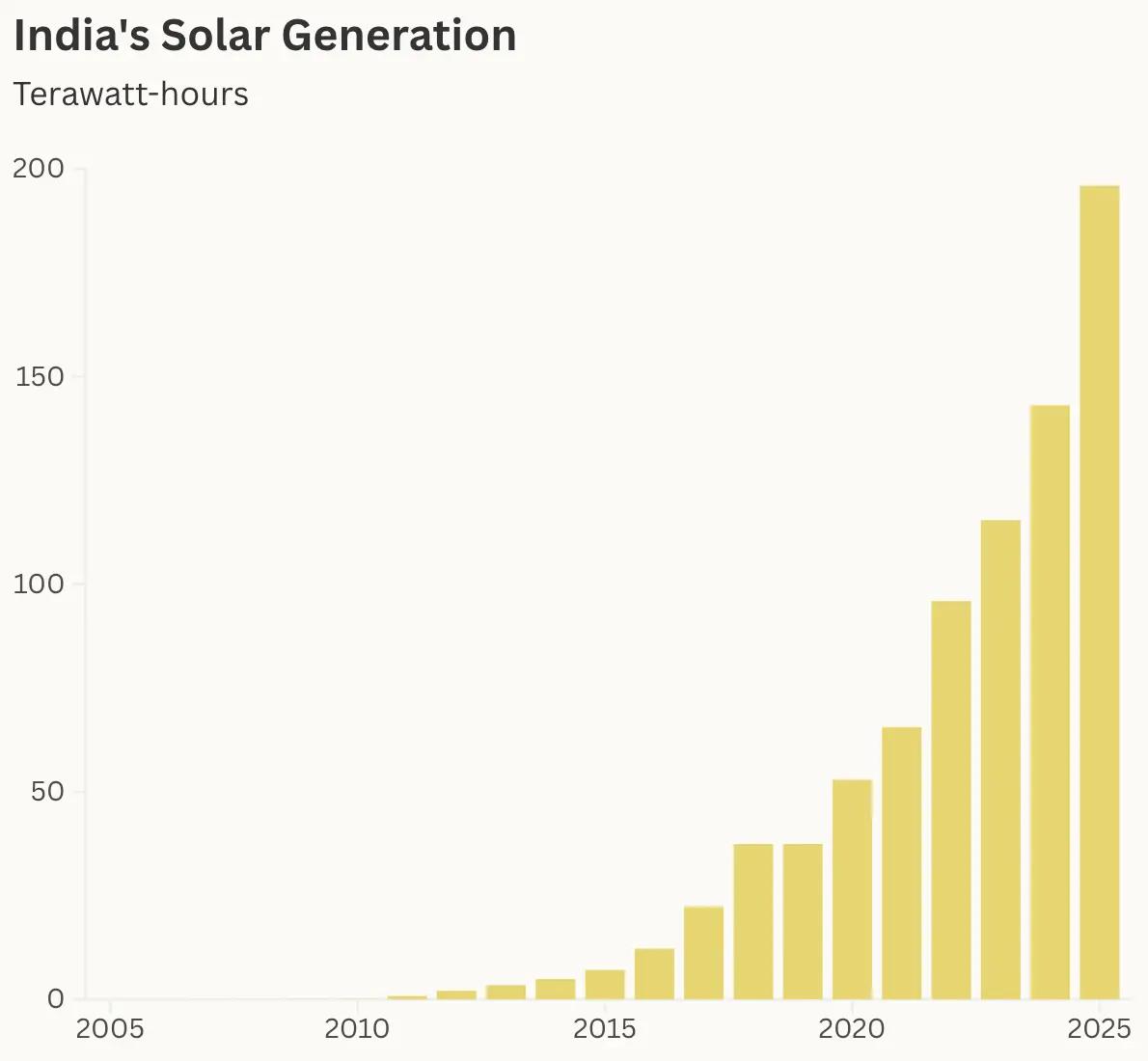
As India’s economy continues to outpace China’s in terms of growth rate, the Khavda project serves as a physical manifestation of the country’s aggressive strategy to bypass traditional, carbon-heavy industrialization. India’s installed solar capacity has been expanding at a remarkable rate of 40 percent annually. In March 2024, the nation crossed the 150-gigawatt milestone, and government projections suggest this figure will double by the end of the decade. This trajectory suggests that India, the world’s most populous nation, is positioned to become the first major global power to fuel its industrial development primarily through solar energy rather than fossil fuels.
A Strategic Pivot: From Coal Reliance to Solar Leadership
The speed of India’s solar adoption has defied the expectations of global energy analysts. Only a decade ago, solar power in India was largely limited to small-scale rooftop arrays and isolated microgrids serving rural communities. At the time, the prevailing narrative suggested that India would follow the historical path of the West and China, relying on vast domestic coal reserves to power its economic rise. In 2015, Prime Minister Narendra Modi’s administration even announced intentions to double domestic coal production by 2020.
On the international stage, Indian officials frequently defended their right to use fossil fuels, arguing that developed nations had already reaped the benefits of carbon-intensive growth. At the COP26 climate summit in Glasgow, Environment Minister Bhupender Yadav famously challenged the global community, asking how developing nations could be expected to phase out coal while still prioritizing poverty reduction. Despite this diplomatic friction, the domestic landscape was already shifting. Falling costs for photovoltaic technology and India’s high solar irradiance made the transition to renewables an economic imperative rather than just an environmental one. By 2023, for the first time in the country’s history, non-fossil fuel sources accounted for more than half of India’s total installed generating capacity.
The Role of the Adani Group and Geopolitical Context
The Khavda solar park is being spearheaded by the Adani Group, India’s largest private power producer and the world’s second-largest solar developer. Founded by Gautam Adani, the conglomerate has seen its fortunes rise in tandem with India’s infrastructure needs. However, the project’s scale and location have not been without controversy. In 2023, long-standing military protocols that prohibited construction within six miles of the sensitive Pakistan border were relaxed, allowing the Adani Group to secure the land for the Khavda complex.
Furthermore, the project has navigated significant legal and political scrutiny. In 2024, the U.S. Department of Justice raised allegations regarding potential bribery involving Indian officials to secure solar supply contracts. While the case was eventually dropped following Adani’s commitment to invest in U.S. energy infrastructure, the incident highlighted the complex intersection of corporate power and national policy in India’s energy transition.
Technologically, the Khavda complex is a marvel of modern engineering. To maintain efficiency in the harsh desert environment, the panels are serviced by a fleet of specialized robots that perform "dry cleaning" at night. This process removes accumulated salt and dust without consuming the region’s scarce freshwater resources. The site also incorporates a massive wind farm along the Arabian Sea coast, providing a hybrid energy solution that ensures power generation continues even after the sun sets.
Overcoming the "Gridlock" and the Storage Challenge
While the generation capacity of projects like Khavda is unprecedented, India faces a significant challenge in delivering that power to its people. Currently, coal remains the backbone of the national grid, providing roughly 70 percent of total power generation and supporting the country’s industrial baseload. This reliance makes India the world’s third-largest emitter of carbon dioxide and contributes to some of the most severe urban air pollution on Earth.
A major bottleneck in the transition is the national power grid itself. Research from the Institute for Energy Economics and Financial Analysis (IEEFA) indicates that solar plant construction typically takes 18 to 24 months, whereas large-scale transmission projects can take up to five years. Last year, nearly 40 percent of the solar power generated in western India failed to reach consumers due to grid constraints. In response, the Ministry of New and Renewable Energy has pledged over $100 billion to expand the grid by nearly 30 percent by 2032, creating "green energy corridors" that link remote solar hubs to industrial centers like Mumbai and Delhi.
Storage represents the second half of the puzzle. Solar energy is inherently intermittent, peaking during the day when industrial demand is high but falling to zero at night. To bridge this gap, India is turning to two primary solutions: pumped hydro and lithium-ion batteries.
- Pumped Hydro Storage: India is identifying 120 potential sites for pumped-storage projects, which act as "water batteries." By using surplus solar power to pump water to high-altitude reservoirs during the day and releasing it through turbines at night, the grid can maintain a steady flow of electricity. A 1.4-gigawatt project at the Gandhi Sagar reservoir is slated to begin operations later this year.
- Battery Energy Storage Systems (BESS): With global battery prices falling by more than 50 percent since 2023, large-scale battery storage has become economically viable. The Indian government now mandates that new solar installations include storage capabilities. At Khavda, Adani is constructing what is expected to be the world’s largest battery system, capable of discharging over a gigawatt of power for three hours every evening.
The China Dependency and Land Use Conflicts
India’s solar ambitions are also entangled with its complex relationship with China. While India has successfully ramped up the assembly of solar panels, it remains heavily dependent on Chinese manufacturers for the raw materials and components, such as silicon wafers and lithium-ion cells. Approximately three-quarters of the batteries and the vast majority of the photovoltaic cells used in Indian projects originate in China. The Indian government is currently incentivizing domestic manufacturing through "Production Linked Incentive" (PLI) schemes to reduce this strategic vulnerability.
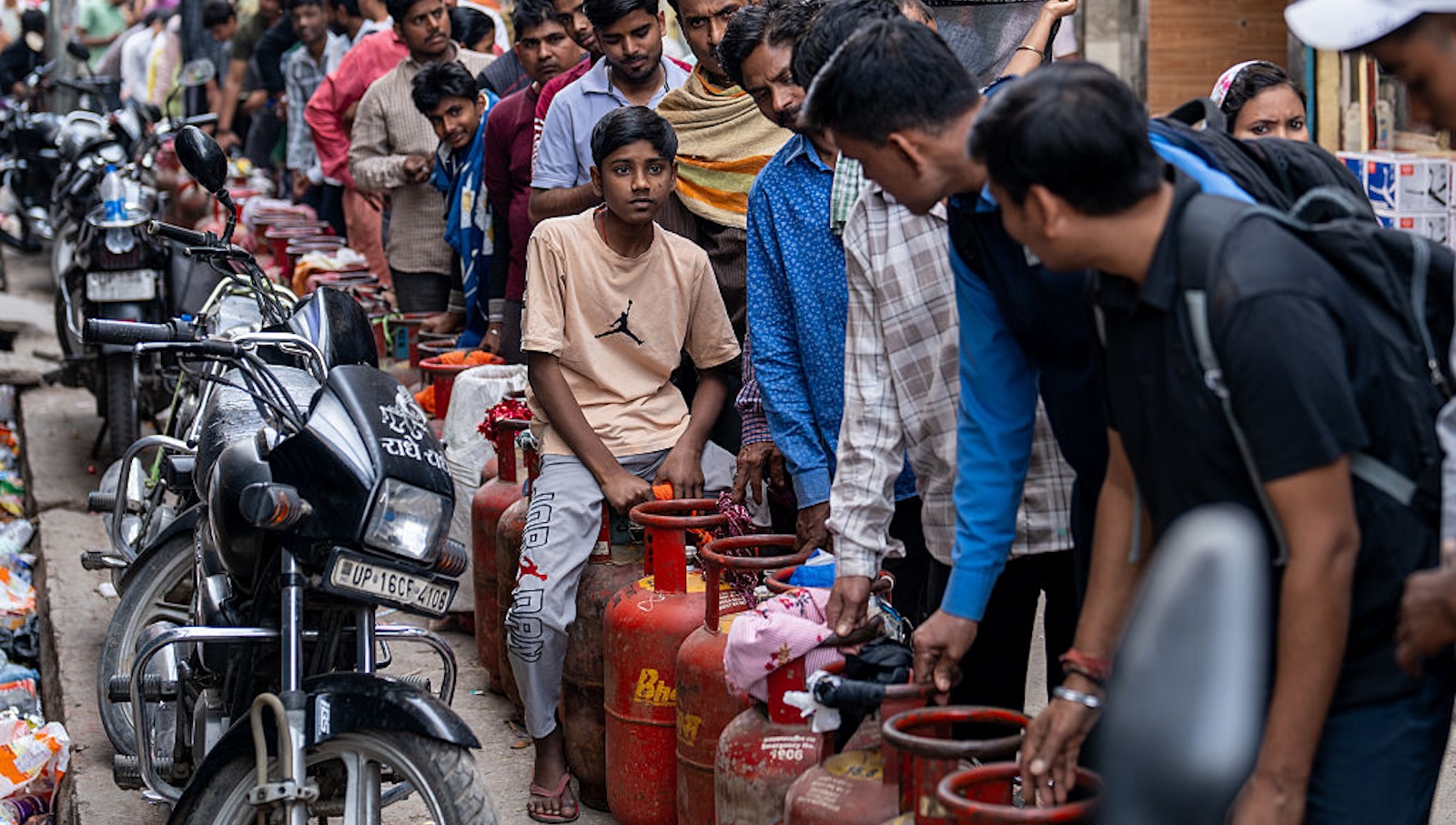
Land availability presents another long-term hurdle. India is roughly one-third the size of China but supports a larger population, making land a premium commodity. In many regions, the acquisition of land for solar farms has displaced small-scale farmers, leading to social unrest. While "agrivoltaics"—the practice of farming beneath elevated solar panels—offers a potential compromise, it is not yet widely implemented. In the Rann of Kutch, the use of uninhabited salt flats avoids human displacement but raises environmental concerns regarding the Rann of Kutch Wildlife Sanctuary. The area is a critical habitat for the critically endangered Great Indian Bustard and serves as a vital stopover for migratory birds on the Central Asian Flyway.
The "Steel Elephant" and the Path to 2047
Despite the progress in the power sector, certain industries remain difficult to decarbonize. The steel industry is the most prominent example. India plans to double its steel production over the next decade to support its infrastructure boom. However, traditional steel manufacturing requires coking coal for high-heat blast furnaces, a process that solar electricity cannot yet easily replace. Decarbonizing this "elephant in the room" will likely require the development of green hydrogen technology, a field in which India is also beginning to invest.
Conversely, the transportation sector is seeing a rapid "green" transformation. India has electrified nearly its entire 42,000-mile broad-gauge railway network over the last ten years. On the streets, the transition is led by the humble motorized rickshaw. Today, 60 percent of all new three-wheeler sales in India are electric, making the country a global leader in small-vehicle electrification. Recent disruptions in global oil and gas markets have only strengthened the government’s resolve to move away from imported fossil fuels.

Conclusion: A Global Blueprint for Green Growth
As India approaches the centenary of its independence in 2047, its energy choices will have profound implications for the global climate. Currently, India’s per capita electricity consumption is just a fraction of the global average—one-tenth that of the United States and one-fifth that of China. If India were to close this gap using the coal-reliant model of the 20th century, the resulting carbon emissions would likely render global climate goals unreachable.
Instead, by leveraging the vast potential of the Rann of Kutch and integrating advanced storage and grid technologies, India is attempting a feat never before achieved: powering a modern industrial revolution with the sun. If successful, the Khavda solar park and the broader national strategy will serve as a blueprint for other emerging economies, proving that economic prosperity and environmental sustainability are not mutually exclusive. The transition from "building on coal" to "building on sun" represents not just a change in infrastructure, but a fundamental shift in the global energy paradigm.









Leave a Reply