
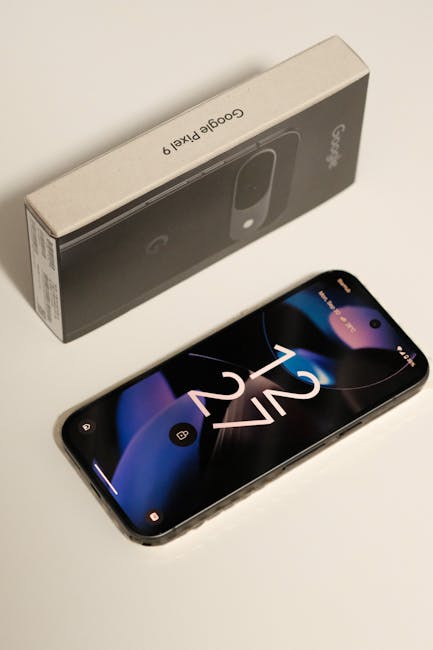
Google Pixel Fold News: Unpacking the Rumored Foldable’s Features, Specs, and Release Date
The foldable smartphone market, once a niche experiment, is rapidly evolving into a mainstream category, and Google’s entry into this space has been the subject of intense speculation. While the company has yet to officially announce a foldable device, a steady stream of rumors and leaks surrounding a rumored Google Pixel Fold has painted a surprisingly detailed picture of what could be the tech giant’s ambitious foray into the folding form factor. This article consolidates the most credible and persistent rumors, offering a comprehensive overview of the Pixel Fold’s potential design, hardware, software features, and anticipated release timeline, all while keeping SEO best practices in mind to attract enthusiasts and potential buyers searching for the latest foldable phone information.
Design and Display: A Tale of Two Screens
The most consistent rumors surrounding the Pixel Fold revolve around its design, specifically its dual-screen configuration. Unlike some early foldables that prioritized a wider, tablet-like inner display when unfolded, the Pixel Fold is heavily rumored to adopt a more conventional, book-style folding mechanism. This means it will function much like a standard smartphone when closed, featuring a relatively narrow external display. This approach aims to offer a more familiar and pocketable experience for everyday tasks. Reports suggest the external display will likely be around 6.2 to 6.4 inches, utilizing an OLED panel with a high refresh rate, possibly 120Hz, to ensure smooth scrolling and responsiveness. The aspect ratio is also rumored to be wider than many current flagship phones, suggesting a more comfortable grip and typing experience.
The true magic, however, lies in the internal, foldable display. This larger panel, expected to be in the 7.6 to 8-inch range, will transform the Pixel Fold into a mini-tablet. Similar to its external counterpart, this inner screen is also anticipated to boast a 120Hz refresh rate for an immersive viewing experience, ideal for media consumption, gaming, and productivity. The aspect ratio of the internal display is rumored to be closer to a square, facilitating multitasking and offering ample space for split-screen applications. Durability of the foldable screen remains a key concern for any foldable device, and while specific details are scarce, it’s expected that Google will employ a UTG (Ultra-Thin Glass) layer or a similar advanced flexible display technology to enhance its resilience. The hinge mechanism is another critical component, and leaks point towards a robust and refined hinge designed for smooth operation and minimal creasing on the inner display.
Performance and Powerhouse: Tensor Chip at the Core
Underpinning the Pixel Fold’s capabilities will undoubtedly be Google’s proprietary Tensor chipset. While the exact generation remains speculative, it’s highly probable that the device will feature either the Tensor G2, which powers the Pixel 7 series, or a next-generation Tensor G3 chip, if the release timeline aligns with its development. The Tensor chip is renowned for its AI and machine learning prowess, which Google leverages to enhance camera performance, optimize battery life, and power unique software features. For a foldable device, these AI capabilities will be crucial for seamless transitions between the two displays, intelligent app scaling, and efficient power management across its dual-screen setup.
In terms of RAM and storage, leaks suggest a configuration that befits a flagship device, likely with 12GB of RAM to handle demanding multitasking scenarios inherent to a foldable. Storage options are expected to be generous, with configurations ranging from 256GB up to 512GB, catering to users who store a significant amount of media and applications. The inclusion of a capable processor and ample RAM is essential to ensure that the Pixel Fold delivers a fluid and responsive user experience, whether it’s being used as a compact smartphone or a more expansive tablet.
Camera System: Pixel’s Photography Prowess Extended
Google’s Pixel phones are synonymous with exceptional camera performance, and the Pixel Fold is expected to carry on this legacy. While the exact camera hardware is still subject to rumor, it’s anticipated that the device will feature a versatile rear camera system. Leaks suggest a triple-lens setup, possibly including a main wide-angle sensor, an ultrawide lens, and a telephoto lens for optical zoom. The telephoto lens, in particular, would be a significant addition, allowing for more creative framing and detailed shots from a distance.
The selfie camera situation is also an interesting aspect of a foldable. It’s rumored that the Pixel Fold will feature at least one front-facing camera on the external display, enabling quick selfies and video calls. Additionally, a second, potentially under-display camera, might be integrated into the internal display, offering a more immersive selfie experience when the device is unfolded for tablet-like usage. Google’s computational photography algorithms, a hallmark of the Pixel line, will undoubtedly be at play, optimizing image quality, enhancing low-light performance, and providing advanced features like Night Sight and Portrait Mode across both cameras.
Software Experience: Optimized for the Foldable Form Factor
A key differentiator for any foldable device is its software optimization. Google, being the architect of Android, is in a prime position to deliver a seamless and intuitive user experience on the Pixel Fold. Rumors suggest that the company is heavily investing in adapting Android for the foldable form factor, ensuring that apps scale gracefully between the external and internal displays. Features like enhanced split-screen multitasking, drag-and-drop functionality between apps, and intelligent app continuity, where an app seamlessly transitions from one screen to the other, are all expected to be prominent.
The Pixel Fold will likely run on the latest version of Android, with Google’s signature Pixel UI overlay. This means users can expect a clean, user-friendly interface with exclusive Pixel features, such as Call Screen, Hold For Me, and advanced speech recognition. The integration of Google Assistant will also be crucial, with the assistant likely offering contextual awareness and enhanced functionality across both screens. For productivity-minded users, the ability to run multiple apps side-by-side and easily switch between them will be a major draw.
Battery Life and Charging: Balancing Power Demands
The dual-screen nature of foldable phones presents a significant challenge for battery life. However, rumors suggest that Google is addressing this with a substantial battery capacity for the Pixel Fold. While exact figures are speculative, it’s anticipated to be in the ballpark of 4,500 mAh to 5,000 mAh, which would be a competitive offering for a foldable device.
Fast charging capabilities are also expected to be a priority, with support for wired charging speeds likely to be in the 20W to 30W range, bringing the device back up to a usable charge relatively quickly. Wireless charging is also a near-certainty, providing convenience for users. Battery optimization through software, powered by the Tensor chip, will be crucial to maximizing the longevity of the Pixel Fold’s battery throughout the day, especially when utilizing both displays extensively.
Connectivity and Other Features: The Modern Standard
Beyond the core components, the Pixel Fold is expected to offer the full suite of modern connectivity features. This includes 5G support for ultra-fast mobile data, Wi-Fi 6E for enhanced wireless networking, and Bluetooth 5.2 or newer for seamless peripheral connections. NFC for contactless payments and an in-display fingerprint sensor for secure authentication are also highly probable.
Water resistance, a feature that has been slowly trickling into the foldable market, is also rumored to be a possibility for the Pixel Fold, though the exact IP rating is unknown. Given the complexity of a foldable hinge, achieving a high level of water and dust resistance is a significant engineering feat.
Release Date and Pricing: When and How Much?
The release date of the Google Pixel Fold has been a moving target, with various rumors pointing to different timelines. Initial speculation suggested a launch alongside the Pixel 7 series in late 2022, but this did not materialize. More recent and persistent rumors point towards an unveiling at Google I/O in May 2023, with a subsequent release in the following months. This timeline aligns with Google’s typical product launch cycles and allows for ample software refinement.
The pricing of the Pixel Fold is perhaps the most anticipated, and also the most daunting, aspect. Foldable smartphones have historically commanded a premium price tag due to their complex engineering and specialized components. Early estimates and industry analyses suggest that the Pixel Fold could be priced competitively within the premium foldable segment, likely starting in the $1,500 to $1,800 USD range. This would position it against established foldable offerings from Samsung and other manufacturers, making it a significant investment for consumers. The success of the Pixel Fold will depend not only on its hardware and software but also on its ability to justify its premium price point through a compelling and differentiated user experience. The ongoing rumors and the anticipation surrounding this device underscore Google’s potential to shake up the foldable market and offer a compelling alternative to existing options.




Leave a Reply