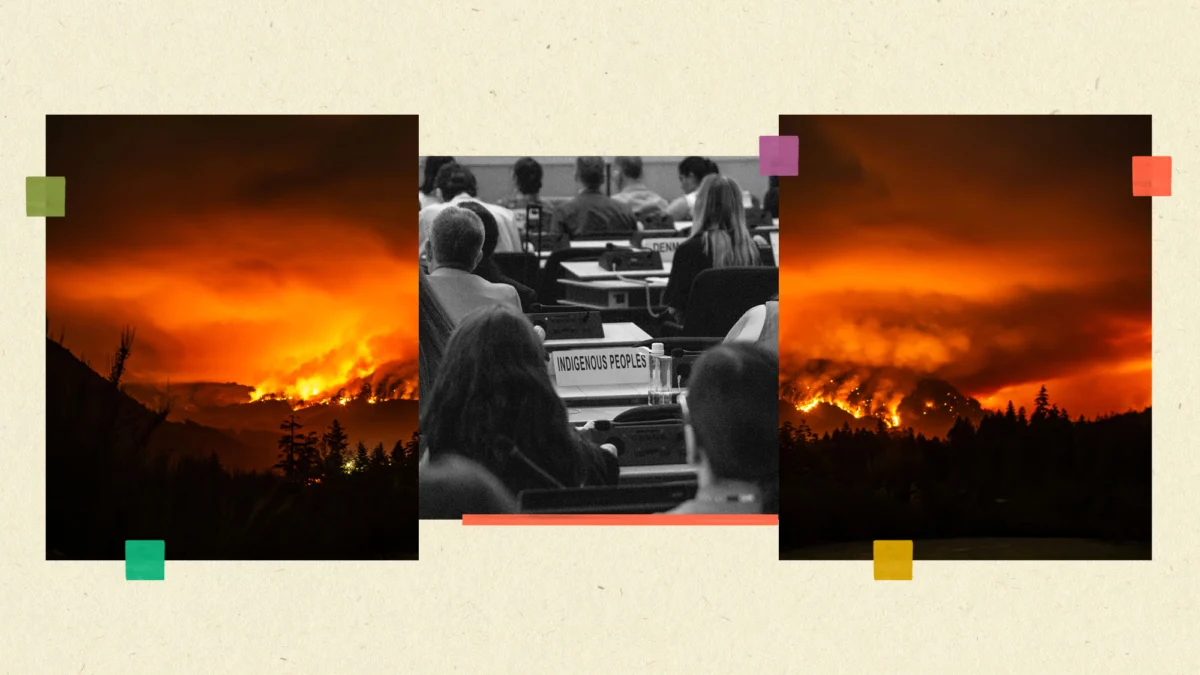
The scale of the 2026 wildfire season in Canada has reached a critical inflection point, with more than 900 active blazes currently tearing through the country’s vast forested landscapes. While the environmental toll is immense, the human cost is being felt most acutely by First Nations, where the intersection of climate change and systemic administrative hurdles has left thousands of residents in peril. As of the latest reports, 13 Indigenous Nations remain under mandatory evacuation orders, a directive that has uprooted 2,182 people from their ancestral lands. Of the 903 fires burning nationwide, 750 are classified as out of control, highlighting a national emergency that has overwhelmed local resources and sparked a heated debate over federal recognition and emergency funding.
The most harrowing account of the current crisis comes from the Namaygoosisagagun (Collins) First Nation in Northern Ontario. On Wednesday, a fast-moving wildfire advanced with such velocity that it decimated the entire community in less than an hour. The speed of the fire left residents with virtually no time to prepare; many reported having only minutes to snatch essential belongings before their homes were engulfed in flames. Because the community is inaccessible by road—located approximately 125 miles north of Thunder Bay—the evacuation was a desperate, self-led operation. More than two dozen residents were forced to flee by boat, watching from the water as their community was reduced to ash.
Anishinabek Nation Grand Council Chief Linda Debassige confirmed the devastation in a somber public statement, noting that while a full assessment of the damage is pending, all community members have thankfully been accounted for. “It is with heartfelt sadness that I share that our member First Nation, Namaygoosisagagun First Nation, has been devastated by an unexpected and fast-moving wildfire,” Debassige said. She described the event as a total loss of community buildings and private residences, leaving a population with nowhere to return to.
A Chronology of the Crisis and the Absence of Warning
The tragedy at Namaygoosisagagun has raised serious questions regarding the efficacy of provincial and federal emergency alert systems. According to community leaders, the residents of Collins First Nation received no advance warning from provincial fire officials or national emergency management agencies. The evacuation was only made possible because community members took it upon themselves to go door-to-door, alerting their neighbors as the smoke thickened and the roar of the approaching fire became audible.
This lack of communication is part of a broader pattern of frustration voiced by Indigenous leadership across Ontario. On Wednesday, as the fires intensified, Ontario Chiefs held an emergency meeting to address what they described as a "crisis communication gap." The timeline of the week’s events suggests a breakdown in the bureaucratic machinery meant to protect vulnerable populations:
- Early Week: High temperatures and dry conditions led to a surge in lightning-ignited fires across Northern Ontario.
- Wednesday Morning: Mandatory evacuation orders were issued for several First Nations, including Whitesand First Nation, Kiashke Zaaging Anishinaabek, and Animbiigoo Zaagi’igan Anishinaabek, supported by the Ontario Provincial Police.
- Wednesday Afternoon: The fire reached Namaygoosisagagun. With no official support, the community evacuated by boat.
- Thursday: The Assembly of First Nations (AFN) convened in Ottawa, passing emergency resolutions to secure aid for the displaced.
- Friday: National data confirmed 903 active fires, with 43 new starts in the preceding 24-hour period alone.
The Struggle for Recognition and Federal Aid
The recovery efforts for Namaygoosisagagun are currently mired in a complex legal and administrative dispute. While the residents are recognized as First Nations people under the federal Indian Act, the community itself is not officially recognized as a "First Nation" by the Canadian government. This distinction, which leadership has fought to change for decades, has created a catastrophic barrier to accessing emergency funds.
Meaghan Daniel, a lawyer representing the Collins First Nation, has formally challenged the federal government’s stance. In a letter addressed to Indigenous Services Minister Mandy Gull-Masty, Daniel argued that denying the community access to recovery and reconstruction support would be a death knell for the settlement. The letter emphasized that without the same emergency resources provided to recognized nations, Namaygoosisagagun might lose the opportunity to rebuild entirely.
"In those circumstances, the question is not merely whether recovery will be delayed," the letter stated. "It is whether Namaygoosisagagun will have a future in the place it has called home since time immemorial."
In response to these allegations of neglect, Indigenous Services Canada spokesperson Eric Head stated that the agency is now working to determine the community’s immediate needs. However, for many Indigenous advocates, this "reactive" approach is emblematic of a system that prioritizes "financial discussions and technicalities" over human lives.
Regional Impact: Ontario as the Epicenter
While wildfires are burning from British Columbia to Quebec, Ontario has emerged as the current epicenter of the crisis for Indigenous communities. Of the 193 fires currently burning in the province, many are concentrated in the remote northern regions where infrastructure is sparse and fire suppression is logistically difficult.
The Chiefs of Ontario have reported that seven First Nations have been forced to flee their territories entirely. Beyond the immediate threat of fire, the health impacts of heavy smoke have forced evacuations of the elderly and those with respiratory issues in dozens of other communities. The mandatory orders issued for Nations such as Whitesand and Kiashke Zaaging Anishinaabek were facilitated by the Ontario Provincial Police, but leadership maintains that the process for declaring a state of emergency remains unnecessarily cumbersome.
Ontario Regional Chief Abram Benedict has been vocal about the danger of jurisdictional disputes. "Administrative delays have immediate consequences and put lives at risk," Benedict said during a press briefing. He stressed that the priority should be the safe extraction of people, yet leaders are often forced to navigate a labyrinth of paperwork and "who-pays-for-what" debates while flames are on the horizon.
Supporting Data and the Broader Environmental Context
The 2026 wildfire season follows a multi-year trend of increasing fire intensity in the Canadian boreal forest. According to the Canadian Interagency Forest Fire Centre (CIFFC), the number of "out of control" fires has increased by nearly 20 percent compared to the ten-year average for this time of year.
Data from Natural Resources Canada suggests that Indigenous communities are disproportionately affected by these events. Although Indigenous people make up approximately 5 percent of the Canadian population, they often account for nearly one-third of all wildfire-related evacuations. This disparity is attributed to several factors:
- Geographic Isolation: Many First Nations are located in high-risk "wildland-urban interface" zones with limited road access.
- Infrastructure Gaps: Remote communities often lack the localized firefighting equipment and water pressure systems necessary to combat large-scale blazes.
- Communication Barriers: Satellite-based emergency alerts often fail to reach remote areas with poor cellular coverage.
Official Responses and the Path Forward
At the national level, the Assembly of First Nations (AFN) has moved to codify support through emergency resolutions. These resolutions call on the federal government to provide not just immediate relief, but long-term, ongoing support throughout the duration of the crisis. The AFN is also pushing for a fundamental shift in how emergency management is handled, advocating for Indigenous-led fire services that are funded directly rather than through provincial intermediaries.
The Anishinabek Nation has called for a period of mourning and privacy for the people of Namaygoosisagagun, while also pledging that the "Anishinabek Nation family" will stand by them during the reconstruction process. Chief Paavola of the Namaygoosisagagun First Nation remains focused on the immediate welfare of his displaced citizens, many of whom are currently housed in temporary shelters in Thunder Bay and surrounding municipalities.
Analysis of Implications
The destruction of Namaygoosisagagun is more than a natural disaster; it is a catalyst for a broader discussion on the rights of "unrecognized" Indigenous communities in Canada. If the federal government maintains its rigid interpretation of the Indian Act during this crisis, it risks setting a precedent that leaves thousands of Indigenous people without a safety net during future climate-driven catastrophes.
Furthermore, the "boat-only" evacuation of Collins First Nation serves as a stark reminder of the infrastructure deficit in Northern Canada. As wildfire seasons become longer and more volatile, the lack of all-weather roads and robust communication networks in Indigenous territories becomes a matter of life and death. The ongoing frustration expressed by leaders like Chief Abram Benedict suggests that the relationship between First Nations and federal emergency agencies requires a complete overhaul—one that moves away from colonial-era bureaucratic hurdles and toward a model of partnership and rapid response.
As the 750 out-of-control fires continue to burn, the focus remains on the 2,182 displaced individuals. For the people of Namaygoosisagagun, the fire has taken their homes, their history, and their community hub. The coming weeks will determine whether the Canadian government will provide the necessary resources to ensure that their "future in the place they have called home since time immemorial" is preserved, or if the administrative technicalities of the Indian Act will prevent a community from rising from the ashes.