In the hyper-arid expanse of Chile’s Atacama Desert, where some regions have not recorded a single drop of rainfall in human history, the struggle for freshwater is a defining characteristic of daily life. For decades, the scattered rural communities and growing urban fringes of northern Chile have relied on expensive and often unreliable methods to secure this vital resource, ranging from deep-well extraction to the logistical nightmare of trucking water across hundreds of miles of desert terrain. However, a growing movement of scientists, community leaders, and "fog catchers" is looking toward the horizon—specifically at the dense, low-hanging clouds known locally as the camanchaca—to provide a sustainable alternative.
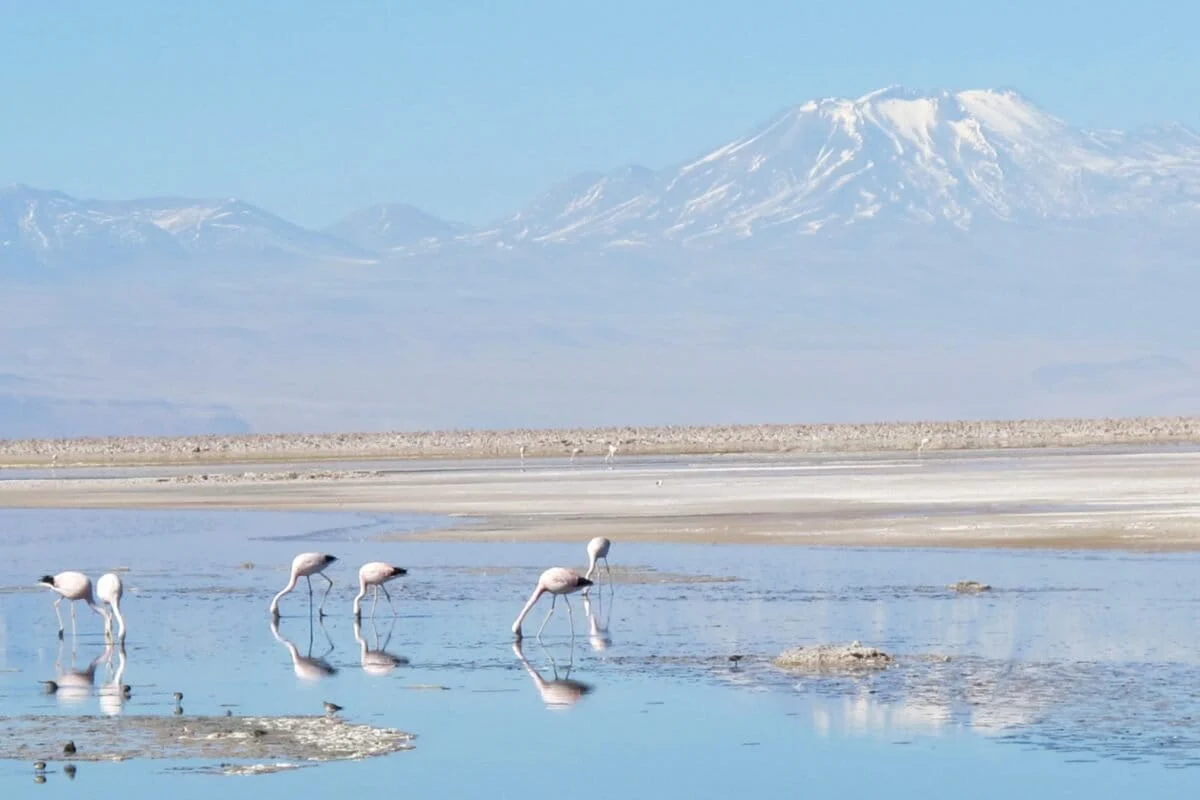
The Atacama Desert is widely recognized as the driest non-polar place on Earth. Its extreme aridity is caused by its unique geography: it is wedged between the high Andes Mountains to the east, which block moist Amazonian air, and the Chilean Coastal Range to the west, which prevents Pacific moisture from moving inland. Despite this, a peculiar meteorological phenomenon occurs along the coast. Cold air currents from the Pacific Ocean cool into a thick layer of stratocumulus clouds. These clouds blow inland but are trapped by the coastal cliffs, settling at altitudes between 500 and 1,200 meters. This fog contains thousands of liters of uncollected freshwater, suspended in the air as microscopic droplets.
The Evolution of Fog Harvesting: From Ancient Trees to Modern Mesh
The concept of capturing moisture from the air is not a modern invention but a refinement of ancient ecological observations. Historically, indigenous populations in various arid regions observed how certain vegetation, such as the "fountain trees" (junipers and pines) of the Canary Islands or the olive trees in Oman, acted as natural condensers. Water would collect on the leaves and needles, eventually dripping into the soil or being caught in stone cisterns built beneath the branches.

In the early 20th century, the scientific community began to formalize these observations. In South Africa, researchers during the 1900s modified rain gauges to measure the volume of water intercepted by vegetation. By 1969, South African scientists had developed more systematic harvesting methods using plastic screens to intercept wind-blown fog. However, it was in northern Chile where the technology truly evolved into a viable community-scale water source.
The modern Chilean fog catcher, or atrapanieblas, was pioneered in the 1950s by researchers in the Antofagasta region. The real breakthrough occurred in 1987 in the fishing village of Chungungo. Facing a severe water crisis, the community installed 100 large-scale collectors. These structures consisted of two poles supporting large sheets of Raschel mesh—a durable, inexpensive polyethylene material typically used for greenhouse shading. The mesh was designed to intercept the movement of water droplets carried by the wind. As the fog passed through the mesh, the droplets would cling to the fibers, coalesce into larger drops, and eventually trickle down into a receptacle connected to a filtration and storage system. At its peak, the Chungungo project provided approximately 33 liters of clean water per day to each of the community’s 300 residents, proving that the atmosphere could serve as a reliable "aerial aquifer."
The "Crazy Cloud People" and the Atacama Fog Catchers Group
Despite the success of early pilots, fog harvesting was initially met with skepticism by the broader public and government officials. Orlando Rojas Figueroa, president of the Atacama Fog Catchers Group, recalls the early days of his involvement in the 1990s. At the time, those attempting to "mine the clouds" were frequently dismissed by neighboring communities. "They called them the crazy cloud people," Rojas said. "People would say, ‘What are these guys going to do with the clouds?’"
The persistence of these pioneers eventually yielded undeniable results. By experimenting with the placement of collectors, Rojas and his team discovered that the crests of coastal hills provided the optimal wind and fog density. Their yields grew from 400 liters per day in the early stages to over 1,000 liters by 2004. Today, the Atacama Fog Catchers Group has demonstrated the ability to harvest as much as 12,000 liters of water in a single day under peak conditions.

This water is not merely for survival; it has become the backbone of a localized agricultural economy. In a region where traditional farming is nearly impossible, fog water is being used to cultivate a diverse array of produce, including potatoes, lettuce, lemons, peaches, pomegranates, and figs. The group has even moved into the commercial sector, selling bottled fog water to highlight the purity and potential of the resource.
Scientific Validation and the Alto Hospicio Study
To move fog harvesting from a community niche to a pillar of national water policy, researchers have focused on rigorous data collection and site optimization. A landmark 2023 study led by Virginia Carter, an associate researcher at the Atacama Desert Center and a National Geographic explorer, examined the potential of fog-water collection in Alto Hospicio. This urban area has historically been dependent on groundwater, a resource that is being depleted at an unsustainable rate.
The research team utilized the Standard Fog Collector (SFC), an internationally recognized device consisting of a one-square-meter mesh frame. By analyzing meteorological factors such as air temperature, solar radiation, relative humidity, and wind speed, the researchers identified "hotspots" for collection. They determined that the highest potential exists just outside urban limits, at altitudes between 700 and 1,100 meters above sea level.
The findings were significant: in these optimal locations, a single square meter of mesh could collect between 0.2 and 4.9 liters of water per day. The study projected that if a community invested in 1,000 square meters of fog collectors—a relatively small footprint—they could generate up to 4,900 liters of water daily. However, the researchers emphasized that fog is a variable resource. Unlike a piped utility, fog density fluctuates with the seasons and daily weather patterns, necessitating robust storage solutions to ensure a steady supply during "clear" periods.

Integrating Fog Harvesting into Public Policy
The primary challenge facing fog harvesting today is not technological, but institutional. While the cost of building a fog catcher is low—requiring only mesh, poles, and piping—the infrastructure for large-scale storage, distribution, and maintenance requires government backing.
Virginia Carter has made it her mission to bridge the gap between grassroots success and public policy. With support from the National Geographic Society, she has established fog-monitoring stations in Paposo, a rural town that currently relies entirely on water trucks. "My goal is to strengthen the role of fog collection in water policy," Carter stated. "By promoting it, we’ll be able to expand the use of this technology beyond isolated pilot projects."
Currently, the municipal government of Alto Hospicio has begun to show interest, albeit cautiously. The tourism and heritage office has integrated fog harvesting into its cultural and environmental education programs. They have identified native species, such as Tillandsia plants, which have survived for millennia by absorbing fog moisture, using them as biological indicators for where to place new collectors. While these municipal projects currently focus on awareness and tourism, they represent a critical first step toward official "buy-in."
Broader Impacts and the Future of Arid Land Resilience
The implications of successful fog harvesting in the Atacama extend far beyond the borders of Chile. As climate change exacerbates water scarcity globally, the lessons learned in the Chilean desert provide a blueprint for other arid coastal regions, such as those in Peru, Morocco, Namibia, and parts of the Middle East.

From an environmental perspective, fog harvesting is one of the least invasive methods of water acquisition. It requires no electricity (relying on gravity and wind), produces no carbon emissions, and does not deplete finite groundwater reserves. Furthermore, it fosters "water sovereignty" for marginalized communities, reducing their dependence on expensive private water vendors and vulnerable centralized infrastructure.
However, as Nicolás Prado, an official in the Alto Hospicio tourism office, points out, the transition requires a shift in mindset. "There’s still a lack of confidence and political will," Prado noted. He argues that the simplicity of the technology—the fact that anyone can build a collector with basic materials—is paradoxically what makes it difficult for large-scale commercial or political entities to embrace, as it does not fit the traditional model of high-capital, profit-driven utility management.
Ultimately, the future of the Atacama Desert may depend on its ability to look upward. While the ground remains parched, the sky offers a consistent, if ethereal, reservoir. Through the marriage of indigenous observation, community organization, and modern meteorological science, the "crazy cloud people" of Chile are proving that even in the driest place on Earth, water is available to those who know how to catch it. The expansion of these projects from small-scale farms to municipal water strategies could represent the most significant shift in desert survival since the invention of the well.