The latest installment of Larry David’s HBO comedy series, Life, Larry, and the Pursuit of Unhappiness, has delivered a sharp and unflinching critique of a prominent political figure, directly parodying Robert F. Kennedy Jr. and his controversial stances on public health. Episode 4, titled "Deepthroat," eschews the usual parade of Curb Your Enthusiasm alumni to focus its satirical lens on the U.S. Department of Health and Human Services Secretary, specifically targeting his well-documented skepticism regarding vaccines. This move marks a significant departure from the show’s established pattern of guest appearances and signals a more direct engagement with contemporary political discourse.
A Satirical Salvo in the Face of Public Health Debates
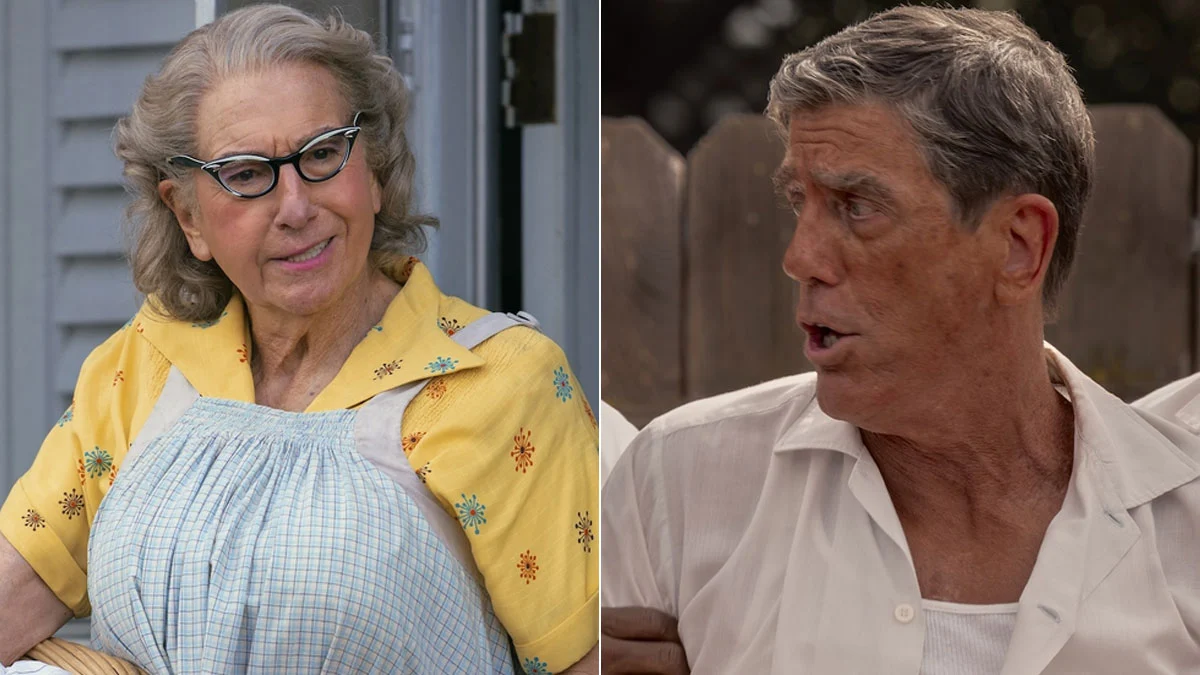
The central sketch of "Deepthroat" imagines a conversation between the mother of Jonas Salk, the developer of the polio vaccine, portrayed by David in drag, and her neighbor Evelyn, played by Judy Gold. The scene opens with a triumphant portrayal of Salk’s mother celebrating her son’s groundbreaking achievement. However, this celebratory atmosphere is abruptly shattered by another neighbor, Bobby (Gregg "Jeep" Perrie), who erupts in a tirade against vaccines, vehemently claiming they are dangerous and will cause heart attacks. This character’s impassioned, albeit ill-informed, outburst directly mirrors the rhetoric often employed by vaccine skeptics, a group with which Robert F. Kennedy Jr. has become increasingly associated.
The choice to center this critique on Bobby’s character, and by extension, RFK Jr., is particularly pointed. Jonas Salk’s polio vaccine, introduced in the mid-1950s, is widely regarded as one of the most significant public health triumphs of the 20th century, eradicating a devastating disease that once instilled widespread fear. By juxtaposing this historical victory with contemporary anti-vaccine sentiments, David’s sketch highlights the perceived absurdity and potential danger of rejecting established scientific consensus. The scene culminates with David’s character, still in drag as Salk’s mother, directly addressing the absurdity of the situation, stating, "If some idiot, some moron, ever put you in charge, that would be a dark day for humanity." This powerful indictment is followed by Bobby’s removal to a psychiatric ward, a narrative device that underscores the show’s view of such viewpoints as irrational and detached from reality.
The Erosion of a Friendship and the Rise of Political Divergence
The decision to target Robert F. Kennedy Jr. is not without personal history. Reports indicate that David and Kennedy were once acquainted, with David having played a role in introducing Hines to Kennedy. However, their friendship reportedly soured following Kennedy’s alignment with the current presidential administration, a political shift that appears to have created an unbridgeable ideological chasm. This personal connection adds a layer of poignancy to the satirical attack, suggesting that David’s critique stems not just from a general opposition to vaccine skepticism but from a specific disillusionment with a former associate.
This incident follows a pattern of Life, Larry, and the Pursuit of Unhappiness engaging with politically charged figures. In an earlier episode, the show featured a sketch where David, alongside Rob Reiner portraying George Washington, delivered a scathing critique of former President Donald Trump. These instances suggest a deliberate strategy by David to use his platform not only for observational humor but also to comment on the political landscape, employing his signature brand of social commentary to dissect contemporary controversies.
Data and Context: The Public Health Landscape
The controversy surrounding vaccine skepticism and the broader public health discourse is a complex and multifaceted issue with significant societal implications. The Centers for Disease Control and Prevention (CDC) in the United States has consistently affirmed the safety and efficacy of vaccines, citing decades of scientific research and real-world data. According to CDC statistics, routine childhood vaccination has prevented millions of cases of preventable diseases, hospitalizations, and deaths annually. For instance, the measles vaccine alone is credited with averting an estimated 57 million cases of the disease between 2000 and 2020 in the U.S.
Despite overwhelming scientific consensus, a segment of the population, often referred to as vaccine hesitant or opposed, harbors doubts about vaccine safety. These concerns have been amplified by misinformation and disinformation campaigns, particularly on social media platforms. The COVID-19 pandemic further exacerbated these divisions, with debates over vaccine mandates, efficacy, and potential side effects becoming highly politicized. Organizations like the World Health Organization (WHO) have identified vaccine hesitancy as one of the top ten global health threats, recognizing its potential to undermine herd immunity and lead to resurgences of once-controlled infectious diseases.
Robert F. Kennedy Jr.’s public profile has become increasingly intertwined with these debates. He has been a vocal critic of vaccine policies and has promoted theories questioning the safety of various vaccines, including those for childhood illnesses. While his supporters view him as a courageous advocate for individual liberty and a challenger to pharmaceutical industry influence, his critics, including public health officials and medical professionals, accuse him of spreading dangerous misinformation that endangers public health. His appointment as Secretary of Health and Human Services under the current administration has brought these concerns to the forefront of public discussion, making him a significant figure in the ongoing debate over public health policy.
Broader Impact and Implications
Larry David’s decision to directly satirize Robert F. Kennedy Jr. and his views on vaccines carries significant implications. Firstly, it signals the increasing willingness of prominent entertainment figures to engage with highly divisive political and social issues. In an era where political polarization is rampant, such commentary from a beloved and influential comedian can amplify public discourse and potentially shape public opinion. David’s established comedic persona, known for its unflinching honesty and willingness to tackle uncomfortable truths, lends considerable weight to his critique.
Secondly, the sketch serves as a potent reminder of the historical context of vaccination. By referencing Jonas Salk and the polio vaccine, David underscores the tangible benefits of widespread immunization campaigns and the progress humanity has made in combating infectious diseases. This historical perspective is crucial in counteracting the narrative that vaccines are a modern invention with unknown risks, highlighting instead their legacy as life-saving medical interventions.
The broader impact of this satire can be analyzed through several lenses:
- Public Health Advocacy: The sketch can serve as a tool for public health advocates to reinforce the importance of vaccination and to highlight the perceived irrationality of anti-vaccine sentiments. By framing these views as "idiotic" and "moronic," David’s commentary may resonate with audiences who are already skeptical of vaccine misinformation.
- Political Discourse: The inclusion of such direct political commentary in a popular HBO series contributes to the ongoing national conversation about public health policy, scientific integrity, and the role of political figures in shaping these debates. It adds a cultural dimension to the often-technical discussions surrounding vaccine safety and efficacy.
- Comedic Satire as a Tool: The effectiveness of satire in influencing public opinion is a long-standing debate. However, Larry David’s particular brand of observational and often cringe-inducing humor has a proven track record of making audiences think critically about social norms and behaviors. In this instance, the humor derives from the stark contrast between scientific achievement and unfounded fear.
- Potential for Backlash: It is also important to acknowledge that such direct and pointed satire can elicit strong reactions, both positive and negative. While supporters of public health consensus may applaud David’s stance, those who identify with vaccine skepticism may view the portrayal as unfair or biased, potentially leading to further entrenchment of their views.
The episode, "Deepthroat," premieres on HBO and HBO Max, with new episodes released on Fridays. The series’ willingness to engage with such contemporary and contentious issues suggests a deliberate effort by Larry David to remain relevant and to use his comedic genius to address the complexities of modern life and the pursuit of happiness—or, in this case, the potential for profound unhappiness brought about by misguided beliefs. The future trajectory of Life, Larry, and the Pursuit of Unhappiness will likely be closely watched to see if this direct engagement with political figures and public health debates becomes a recurring theme.