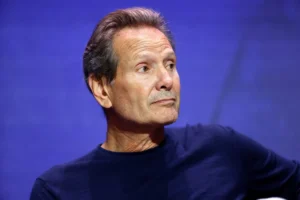
Nouriel Roubini, the formidable economist whose prescient warnings about the impending 2008 financial crisis earned him the moniker "Dr. Doom," has recently surprised observers by striking a notably more optimistic chord regarding the advent of artificial intelligence. Known for his stark, often pessimistic forecasts, Roubini has instead embraced a brighter outlook on AI’s transformative potential, a technology that has otherwise fueled widespread apocalyptic predictions among various pundits and experts. His latest pronouncements, delivered during a recent interview on Bloomberg TV, outline a future where AI not only reshapes the global economy but also necessitates a fundamental rethinking of social welfare systems, including the widespread adoption of Universal Basic Income (UBI).
The Looming Labor Market Disruption and Social Security Challenge
Roubini’s vision begins with a stark prediction concerning the future of work. He anticipates that within the next 20 to 25 years, a substantial portion of the global population’s labor will be rendered obsolete, replaced by advanced AI and robotics. This profound shift, he argues, will necessitate radical policy responses, particularly in light of existing social safety net challenges. During the Bloomberg interview, Roubini was specifically asked about potential solutions for the U.S. Social Security system, whose trust fund, a critical source of benefits, is projected to be depleted by 2032. Traditional remedies, such as merely raising the retirement age, would prove woefully inadequate in a landscape dominated by AI-driven automation.
The economist unequivocally stated, "Eventually, we need some form of universal basic income for everybody while they work and once they retire. We’re already on the way." This assertion underscores a growing consensus among some futurists and economists that the scale of AI’s impact on employment will demand a new paradigm for economic security. The World Economic Forum’s "Future of Jobs Report 2023" projected that 23% of jobs are expected to change in the next five years, with 69 million new jobs created and 83 million eliminated, resulting in a net decrease of 14 million jobs. While these figures represent a fraction of the workforce, the report also highlighted the accelerating pace of automation and AI adoption, suggesting that Roubini’s long-term forecast, while aggressive, aligns with the trajectory of technological advancement. The displacement will not be limited to blue-collar jobs; white-collar, cognitive tasks are increasingly vulnerable to sophisticated AI systems.
The AI Revolution: A Catalyst for Unprecedented Economic Growth
Contrary to the common narrative of AI leading to economic stagnation or widespread poverty, Roubini posits that the AI revolution will be the most significant technological innovation in human history. He believes it will rapidly evolve into Artificial General Intelligence (AGI), where AI systems will match or even surpass human cognitive capabilities across a broad spectrum of tasks. This breakthrough, in his view, will unlock an era of unprecedented economic growth. Roubini projects that global Gross Domestic Product (GDP) growth rates, currently hovering around 2%-4% by the end of the current decade, could accelerate dramatically, reaching 6% by 2040 and an astonishing 10% by 2050.
To put this into context, global GDP growth has averaged around 3-4% annually over the past few decades, with only brief periods of higher growth, often followed by corrections. A sustained 6% or 10% growth rate would represent a monumental leap in human productivity and wealth creation, fundamentally reshaping living standards and economic structures worldwide. Such an acceleration would imply exponential advancements in every sector, from healthcare and manufacturing to scientific research and logistics, driven by hyper-efficient AI systems. This surge in productivity would theoretically generate immense wealth, creating the fiscal capacity for governments to implement extensive social programs.
Universal Basic Income: The Inevitable Social Contract
With AI poised to generate such immense wealth while simultaneously displacing human labor, Roubini argues that a new social contract becomes imperative. He envisions two primary mechanisms for wealth redistribution: "ex-post distribution," which is essentially Universal Basic Income, and "ex-ante" distribution, a form of state capitalism or "socialism."
Universal Basic Income (UBI) involves providing a regular, unconditional cash payment to all citizens, regardless of their income, wealth, or employment status. The concept, which dates back to thinkers like Thomas More in his 16th-century work Utopia and later gained traction with Enlightenment figures like Thomas Paine, has seen a resurgence in contemporary discussions, particularly in response to automation fears. Proponents argue that UBI can reduce poverty, improve public health, foster entrepreneurship, and provide a stable economic floor in a rapidly changing world. Critics, however, raise concerns about its cost, potential disincentives to work, and inflationary pressures.
Despite these debates, several governments and organizations have experimented with UBI pilots. Finland conducted a two-year UBI trial from 2017 to 2018, providing 2,000 unemployed individuals with €560 per month. Preliminary findings indicated improvements in participants’ well-being and mental health, though its direct impact on employment was less conclusive. Similarly, the city of Stockton, California, launched the Stockton Economic Empowerment Demonstration (SEED) in 2019, providing $500 per month to 125 residents. Results showed recipients were more likely to find full-time employment, reported improved financial stability, and reduced income volatility, debunking some fears about work disincentives. These trials, while small-scale, offer early insights into the practicalities and potential benefits of UBI.
The "Socialist" Alternative: Government Stakes in Big Tech
Roubini’s "ex-ante" distribution proposal is perhaps even more radical. He suggests that governments could take direct equity stakes in major AI companies, thereby allowing the public to share in the wealth generated by these "winners" of the AI revolution. "Essentially, the government is going to take over some fraction of the big tech firms," Roubini explained. This idea, while seemingly bold, has already been floated within the tech industry itself.
He alluded to a Financial Times report which indicated that OpenAI, the creator of ChatGPT, has discussed the possibility of giving governments a 5% stake in the company. This proposition, reportedly from OpenAI CEO Sam Altman, would allow the public to directly benefit from the immense upside potential of advanced AI technologies. While Altman himself has had a nuanced and evolving stance on UBI, having initially been a strong proponent before reportedly backing away from the idea due to concerns about its implementation and potential for inefficiency, his willingness to consider government equity stakes signals a recognition within the tech elite of the need for broader societal benefit sharing. The critical question remains whether other major U.S. AI rivals would be willing to adopt similar models, potentially facing shareholder resistance and concerns over government intervention in private enterprise.
This "socialist" approach, as Roubini terms it, would effectively transform AI companies into quasi-public utilities, with a portion of their profits directly flowing into public coffers. Such a model could provide a sustainable funding mechanism for UBI and other social programs, bypassing the traditional tax-and-redistribute model by directly socializing a fraction of the means of AI production.
Converging Visions: From Roubini to Musk
Roubini’s seemingly futuristic vision is not an isolated one. His predictions resonate with the views of other prominent tech leaders, most notably Elon Musk, CEO of SpaceX and Tesla. Musk has repeatedly articulated a similar belief that within two decades, advancements in AI and robotics will reach a point where human labor becomes largely optional.
In a December episode of the People by WTF podcast, Musk elaborated on this concept, stating, "You can grow your own vegetables in your garden or you could go to the store and buy vegetables. It’s much harder to grow your own vegetables. But some people like to grow their vegetables, which is fine. But it’ll be optional, in that way, is my prediction." This shared sentiment from two influential, albeit very different, figures underscores a growing belief that humanity is on the cusp of a profound societal transformation, moving beyond a work-centric existence to one where machines handle the drudgery, freeing humans for other pursuits.
The Optimistic "Dr. Doom": A Radical Reinterpretation
When pressed on the potentially disruptive nature of his forecasts, Roubini firmly denied any gloominess, instead labeling his outlook as profoundly optimistic. His optimism stems from the core assumption of a 10% sustained economic growth rate coupled with the liberating prospect of "machines doing all the work." This perspective reframes the traditional anxieties surrounding automation, suggesting that while the transition will be challenging, the ultimate outcome could be an unprecedented era of abundance and human flourishing, liberated from the necessity of labor.
Broader Implications and Challenges of the AI-Driven Future
Roubini’s predictions, while optimistic in their ultimate outcome, carry profound implications across economic, social, and political spheres, presenting a myriad of challenges that society must grapple with during the transition.
Economic Transformation: The shift to an AI-driven economy with 10% annual GDP growth would necessitate a complete overhaul of economic models. Traditional metrics of employment, productivity, and value creation would need re-evaluation. The concentration of wealth, even if partially redistributed, could reach unprecedented levels, posing regulatory and ethical dilemmas. The global economic order could also be severely disrupted, with nations at the forefront of AI development potentially gaining immense power and wealth, exacerbating existing international inequalities.
Societal Restructuring: A future where work is optional challenges the very foundations of human identity and societal structure. For centuries, work has been central to self-worth, social status, and community building. How would individuals find purpose, meaning, and engagement in a post-labor society? Education systems would need to radically shift focus from vocational training to fostering creativity, critical thinking, and interpersonal skills. The concept of leisure would expand exponentially, requiring new cultural norms and infrastructure to support widespread non-work activities.
Political Feasibility and Governance: Implementing UBI on a national or global scale would require immense political will and complex logistical frameworks. The funding mechanisms, whether through progressive taxation of AI-generated profits or direct equity stakes, would face fierce opposition from entrenched economic interests. The debate between "ex-post" (UBI) and "ex-ante" (state-owned tech stakes) distribution also touches upon fundamental ideological differences regarding the role of government in the economy. Crafting policies that manage the transition, including retraining programs for displaced workers and ensuring equitable access to AI benefits, would be a monumental governance challenge.
Ethical and Control Considerations: Beyond the economic and social implications, the development of AGI itself raises critical ethical questions. Ensuring that AI systems are aligned with human values, are transparent, and remain under human control is paramount. The potential for misuse, algorithmic bias, or unintended consequences from highly autonomous AI systems represents a significant risk that must be addressed proactively through robust ethical frameworks and international collaboration.
Conclusion: A New Horizon for Humanity
Nouriel Roubini, the economist once synonymous with grim forecasts, now presents a surprisingly hopeful yet equally radical vision for humanity’s future. His prediction of a world transformed by advanced AI, characterized by unprecedented economic growth and the widespread adoption of Universal Basic Income, challenges conventional wisdom and demands serious consideration. While the path to this future is fraught with economic disruption, social upheaval, and profound ethical dilemmas, Roubini, alongside visionaries like Elon Musk, suggests that the ultimate destination could be an era of abundance and liberation from labor. This bold reinterpretation of humanity’s trajectory in the age of AI compels policymakers, technologists, and society at large to engage in urgent, proactive planning to navigate the complexities of this inevitable transition and harness its potential for a truly optimistic future.